



COVID-19: A Story of Grief and Forgiveness
The COVID-19 pandemic was a time in which governments around the world took drastic and, in many cases, disproportionate measures to stop the spread of the Sars-CoV2 virus. It is now 2025, and Australia is still dealing with the collateral of those measures.
In 2020, I became concerned about a potential COVID response that would involve mandates, lockdowns, and widespread restrictions on civil liberties. At that time, I considered that, if such a COVID response were to take place, there would be very little that the Australian public could do to stop this response.
I considered the social, psychological, and economic pressures that people would be placed under if there were lockdowns and mandates. I was convinced that the vast majority of people would comply with the measures, and that protests, petitions, and efforts to lobby the government would be largely ineffective throughout that period. It was at this time that I began to grieve for the difficulties that the Australian people would likely face over the coming years.
Personal Cost
I remained on the outskirts of society throughout the pandemic. I did not receive the COVID-19 vaccines, and for a period of time, I lost my right to work within my profession. The COVID response took an enormous toll on me socially, psychologically, and economically.
Further, I contracted COVID-19 two times: and both of those times, I caught it from a person who had been fully vaccinated. I have had to find it within myself to forgive: both the government, and also the people who directed hatred and discrimination towards the unvaccinated. I anticipated that much of this hatred would be due to misinformation that the vaccines would stop people from being able to spread the virus.
In 2022, I experienced health issues associated with the fallout of the COVID-19 response. ‘Immediate Action’ was taken on my AHPRA registration, and I was asked to agree to a Condition: ‘not to practice as a Registered Psychologist’. I lost my job, and my ability to work in the field I had trained to work in for close to ten years. When I could no longer afford rent, and faced homelessness, I moved back in with my parents.
Since that time, I have managed to get my health back on track, and have returned to working full-time. I do not blame the health regulators for taking the action that they did, and if I had been in their position, I likely would have done the same. I also recognise that the AHPRA statement of 2021 was not a ‘gag order’ per se, even though it may have been interpreted as such. A clear analysis of the wording reveals that the Statement reflects the pre-existing vaccination stance of AHPRA prior to the pandemic. The health regulators are not perfect. But I have faith in the work that they do in protecting the public when necessary.
Fallout
We are now in 2025, and the COVID response that I anticipated came to pass. Many people have lost trust, faith, and confidence in our institutions. There is now widespread vaccine hesitancy that will likely result in casualties.
The question stands as to how we find a way forward, following the authoritarian measures and encroachment of civil liberties that occurred throughout the pandemic. Certainly, the extreme and disproportionate measures that took place in Victoria, in particular, can not occur again.
The pandemic taught us the consequences of over-reliance on fear-based predictive modelling that is based on worst-case scenarios. The pandemic also taught us how quickly our democracy can slide into authoritarianism in the event of a large-scale crisis. Mass testing of healthy, asymptomatic people became the tool through which civil liberties were denied. For a virus that, for the vast majority, turned out to be very mild, such a response undermined our social cohesion and presented a direct threat to our democratic values.
I was never afraid of the coronavirus. I was very afraid however, of the response to the coronavirus. That fear turned out to be well-founded.
We, as a country, can do better. The path forward must inevitably involve forgiveness.
___
Image courtesy of Adobe.
2 Comments
Leave A Comment
Recent Articles:
13 October 2026
2.6 MINS
Allegra Spender’s proposed bill reignites debate over discrimination protections, religious freedom and the right of faith-based schools to uphold their beliefs and values.

13 October 2026
3.9 MINS
Tasmania’s proposed conversion practices law raises serious concerns for churches, parents and faith-based schools, with broad definitions, severe penalties and uncertain protections for religious freedom.
13 October 2026
2.1 MINS
Victoria’s assisted dying deaths have surged by 300 per cent since legalisation, while a disturbing case involving a patient’s partner raises urgent questions about safeguards.

13 October 2026
1.8 MINS
Australia faces mounting geopolitical, economic and defence threats, but its political leaders lack the statesmanship, bold vision and decisive communication needed to prepare the nation.
13 October 2026
2.8 MINS
The church in Ephesus had so much going for it. Yet despite their hard work, perseverance, endurance, and discernment, there was something deeply wrong: they had left their first love.
12 October 2026
4.6 MINS
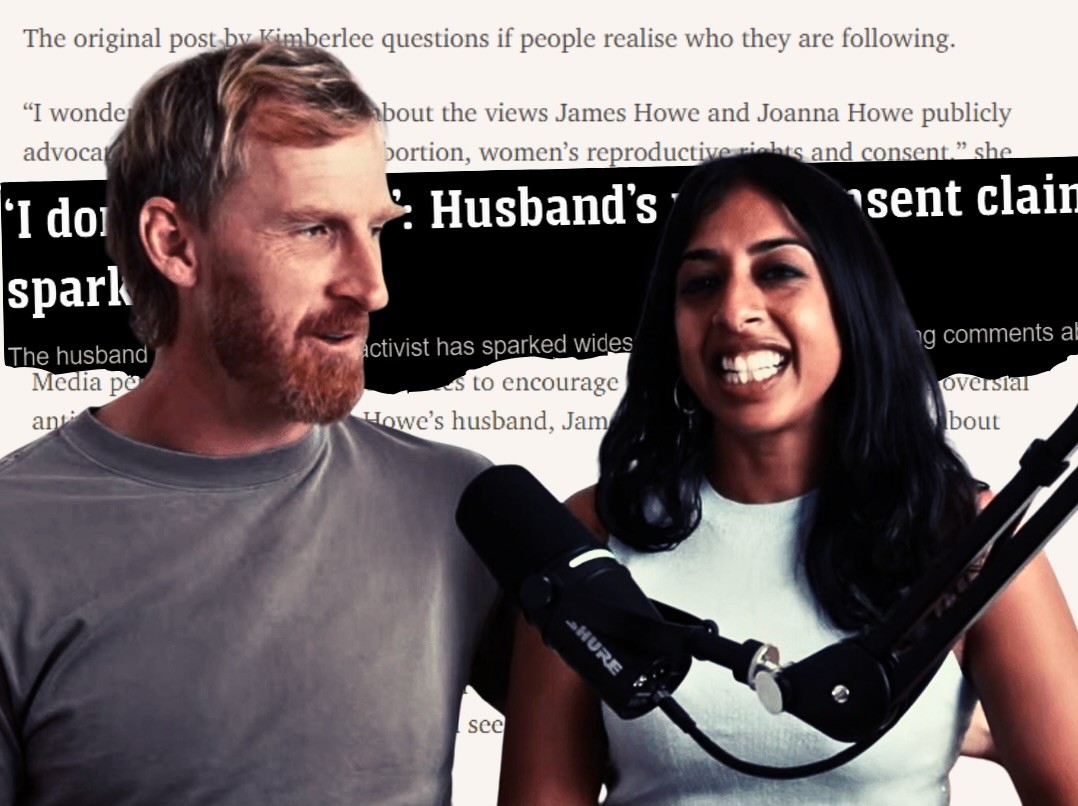
Learn how journalists use loaded language, selective quotes and misleading headlines to shape public opinion, using a controversial report about James and Joanna Howe as a case study.
12 October 2026
3.1 MINS
The proposed livestream of Nidal Hasan’s execution has reignited debate over justice, deterrence and public accountability, with critics comparing American justice to ISIS propaganda.



Beautiful story of love and forgiveness in the midst of the darkness caused by the plandemic. Sorry i meant to say pandemic!
Govts acted like dictatorships and many people, including me , still live with the serious side effects of the vaccines. It has ruined my life ! I will never have another vaccine again + now distrust Govt + doctors.