


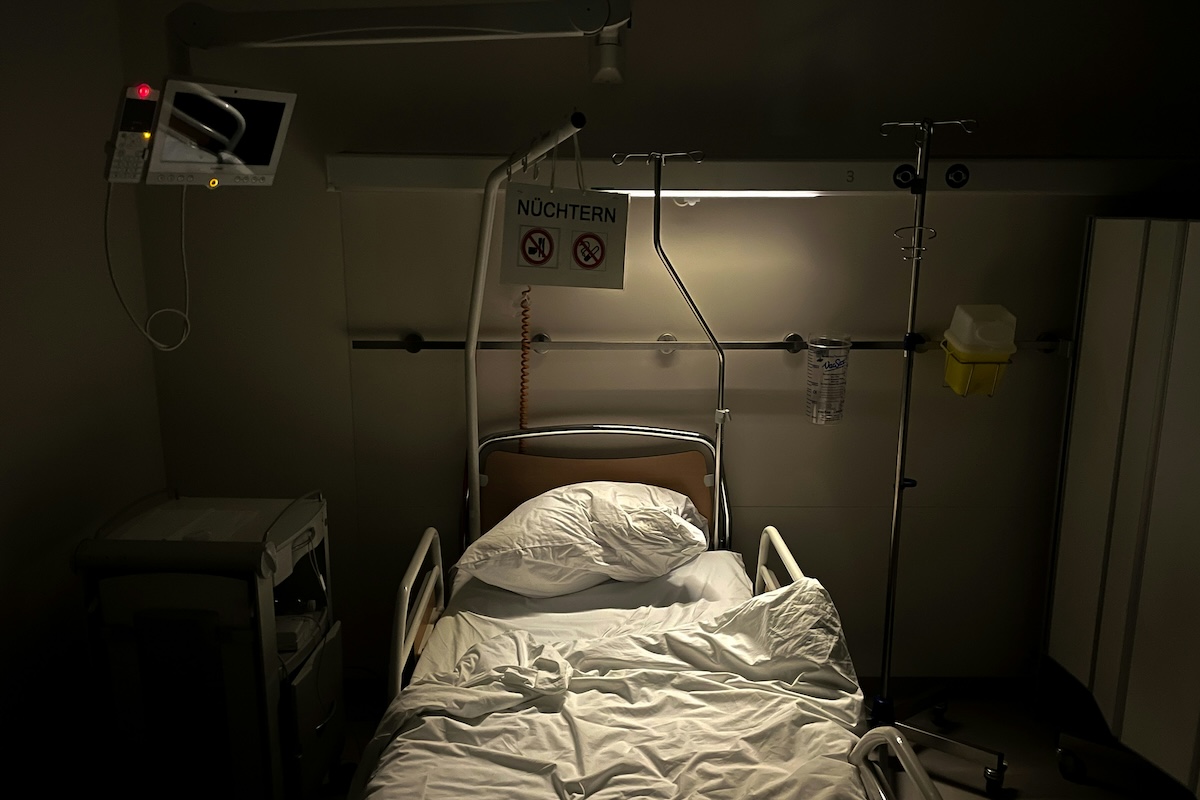
ACT Considers Expanding Euthanasia Laws to Include Non-Consenting Patients
In an Australia first, the ACT Labor government is considering assisted suicide for patients who lose decision-making capacity — alarming pro-life groups who have long warned of a slippery slope regarding euthanasia.
The ACT Labor government has proposed extending its euthanasia laws to include people who can no longer give consent — an unprecedented move in Australia that would vindicate long-standing pro-life warnings about the slippery slope of assisted suicide legislation.
Health Minister Rachel Stephen-Smith informed the ACT Legislative Assembly last Wednesday that the government will consider expanding its voluntary assisted dying (VAD) laws after they take effect in November 2025.
The current legislation, passed in June 2023, requires individuals to have full decision-making capacity at the time they request assisted suicide. However, Labor MLA Marisa Paterson and other advocates have pushed for patients to be allowed to make advanced directives for euthanasia before losing capacity.
According to Ms Stephen-Smith, the ACT Health Directorate has already conducted consultations with clinicians, families, and international experts. A broader community consultation is expected in early 2026.
“We would bring together experts, community groups, advocates and clinicians to further consider the issue and engage in a co-design process for a potential ACT model,” she said.
The Ethics of Non-Consenting Euthanasia
Health Minister Stephen-Smith acknowledged the ethical and human rights implications of administering lethal drugs to someone who cannot understand or communicate their decision.
“While this issue may appear relatively straightforward on paper, in reality it is complex and nuanced,” she said. “To be voluntary, an individual must be able to understand the decision they are making and communicate that.”
Despite the caution, pressure remains from groups like the ACT Greens and Dying with Dignity ACT.
MLA Andrew Braddock claimed that the community should be able to choose euthanasia before cognitive decline begins. “We want to ensure the scope of the scheme aligns with the Canberra community’s wishes for end-of-life choices to prevent intolerable suffering,” he said.
Christian organisations, including the Canberra Declaration, have long voiced strong opposition to euthanasia laws, citing global evidence of safeguards eroding over time. The group warns that broadening access to include those who cannot consent risks turning the “right to die” into a “duty to die.”
“The most vulnerable will be at risk,” Canberra Declaration co-founder Warwick Marsh told The Daily Declaration. “Many other jurisdictions insisted there would be no slippery slope, but history proves this has not been the case.”
As one example, Belgium legalised euthanasia in 2002, allowing adults with “unbearable” physical or mental suffering to end their lives, even in the absence of a terminal condition. In 2014, it became the first country to extend this to minors with terminal conditions, with parental consent.
The Netherlands, which also legalised euthanasia in 2002, now permits it for “unbearable suffering” in non-terminal cases, including for minors aged 12+ with parental consent. Its laws have also expanded to cover mental illnesses like depression, autism, and intellectual disabilities, with advance directives for dementia patients.
Canada legalised Medical Assistance in Dying (MAID) in 2016 for “grievous and irremediable” conditions, initially requiring a “reasonably foreseeable” death. A 2019 court ruling removed this limit and allowing MAID for non-terminal cases. Mental illness eligibility, originally planned for 2023, has been delayed until 2027.
A Compassionate Alternative to Euthanasia
On the basis of such developments, the Canberra Declaration highlights the inevitability of expansion once assisted suicide becomes normalised.
Examples the group cites include a 20-something sexual abuse survivor and a 41-year-old alcoholic who were both euthanised in the Netherlands in recent years. One case even involved a patient being euthanised while resisting.
“These horror stories are not hypothetical,” says Bill Muehlenberg, a Canberra Declaration co-drafter and author of The Challenge of Euthanasia. “They are a stark warning of what happens when the sanctity of life is compromised.”
The Canberra Declaration maintains that society’s compassion must not be measured by the efficiency with which it ends suffering, but by the commitment to walk alongside sufferers in their pain. The group champions improved palliative care, patient advocacy, and family support as dignified alternatives to assisted dying.
The ACT government insists no immediate changes will occur before observing the law in action for at least 12 months following its commencement. But for Christian groups and others concerned about creeping euthanasia laws, the proposed review process underscores the need for continued vigilance.
For them, the principle remains simple: life is sacred from beginning to end. As debate continues in the ACT, the challenge for lawmakers will be to listen to those calling for the community to choose life — especially for those who can no longer speak for themselves.
___
Image courtesy of Unsplash.
6 Comments
Leave A Comment
Recent Articles:

27 October 2026
1.5 MINS
Labor’s Digital Duty of Care Bill threatens free speech, empowers covert online surveillance, and imposes potentially burdensome regulations on Australian businesses.

27 October 2026
10.3 MINS
As Tasmania and Western Australia consider conversion therapy bans, a former LGBT+ ministry leader warns of threats to religious freedom, personal choice and Christian discipleship.

27 October 2026
4.9 MINS
Nine Christians have been killed in a terrorist attack on a Jordanian church, prompting fierce condemnation, demands for justice and renewed concerns about religious persecution.

27 October 2026
3.6 MINS
For 25 years, the Mount Moriah Trust has supported struggling Christians across the Holy Land, bringing practical assistance, encouragement and hope to believers facing hardship and persecution.

27 October 2026
1.3 MINS
Moira Deeming’s re-election campaign has energised Family First supporters, raising $90,000 as the party prepares for a crucial Victorian election and a potential breakthrough.
27 October 2026
3.1 MINS
As the disciples discovered through a huge haul of fish, we can trust Jesus for a net-breaking, boat-sinking catch of people.

26 October 2026
4.5 MINS
OECD chief Mathias Cormann warns Australia is losing its competitive edge, as excessive regulation, housing pressures, immigration challenges and declining public trust threaten national prosperity.



My, they do like to play at pretending to be God.
Very sad article!!!!
Down the hill we go…as has been stated many times.
Basically the real reason is financial, families can’t afford the care and governments can’t balance a budget to allow subsidized long term care, but then the other factor of responsibility is no one really want the burden of caring for an incapacitated person …. it’s just easier and better for them now isn’t it, much more humane…. now where’s my inheritance.
so youre for the death penalty but against euthanasia and abortion
its this kind of crosseyed inconsistency that keeps modern christianity a fringe interest with increasingly little clout or credibility.
its why evangelicals are about as numerous and popular as muslims in australia despite white anglos being the clear, vast majority
your message doesnt resonate for lots of good reason, this is just one small example
This is a really thought-provoking article. The ACT’s consideration of euthanasia for non-consenting patients raises serious ethical questions, and it’s hard not to feel concerned about where this could lead. The examples from Belgium, the Netherlands, and Canada show how easily these laws can expand over time. I appreciate that the article highlights compassionate alternatives like palliative care and family support—they seem like a safer, more humane approach. It also makes me think about how global medical tourism could be affected, since people might travel to countries with different euthanasia laws for end-of-life options. https://bookclinics.com has helped many people. Overall, it’s a complex debate with no easy answers, but awareness and caution are crucial.