



How Can We Flourish as Death Approaches?
Most people have never heard of multiple myeloma, but every year, nearly 3000 Australians are diagnosed with this life-limiting blood cancer. It can lead to infections, broken bones, kidney problems, anaemia, and possibly death. With modern drugs, it is treatable – but it is not curable.
How do doctors and patients deal with the distressing news that they have multiple myeloma?
Not well, according to Xavier Symons, director of the Plunkett Centre at Australian Catholic University, and colleagues, the authors of a recent article in the journal Supportive Care in Cancer.
Difficult Conversation
“What we found in the study is that generally health professionals are not doing an especially good job of these conversations [about life-limiting illness], and it’s not just because they’re completely tone deaf.
It’s because they are reluctant to raise the topic because of fear of making the situation worse,” Symons told The Catholic Weekly.
“They don’t want to alarm the patient. But the irony is of course that the patient’s been diagnosed with a life-limiting illness. It’s probably like the worst possible news they can get.”
The underlying problem highlighted by Symons and his co-authors is that people don’t believe that a patient’s last months can be a fulfilling and fruitful time. But with death approaching, there are many opportunities for personal growth.
“Flourishing – encompassing emotional, psychological, and social well-being – remains achievable even toward the end of life,” they write.
Finding Meaning
The findings also have implications for debates about voluntary assisted dying, Symons said.
“What happens often in the assisted dying discourse is that the discussion ends up focusing on euthanasia as a right, or perhaps as a kind of means by which people can end the situation of intolerable suffering,” Symons told The Catholic Weekly.
“What doesn’t get discussed is other things we might do to help people who are suffering at the end of life. That’s where our paper comes in, focusing on a particular population group: people with multiple myeloma or smouldering myeloma.
“Patients want to find meaning in their anxiety and suffering, but too often doctors are too absorbed in the nitty-gritty of clinical work to help them.”
The researchers also found that many doctors feel uncomfortable with conversations about death, “leading to avoidance or minimisation of these conversations [and] likely compounding the experience of death as being the ‘elephant in the room’.”
“There’s a mistake that health professionals can make where they think my job is just to focus on physical needs and symptoms and prognosis, and quantifiable outcomes,” says Symons.
“What gets missed is the broader psychological and spiritual needs of the patient. But that’s part of the experience of illness and particularly serious illness and life-limiting illness.”
Symons suggests that haematologists – the medical specialists who deal with blood diseases – would benefit from training modules about end-of-life conversations. Patients also need counselling about how to handle their distress when they are diagnosed with multiple myeloma, or its precursor, smouldering multiple myeloma.
It can be a very difficult time, especially since the prognosis is often so uncertain. Life expectancy could be one year, or ten years. Patients with smouldering multiple myeloma might never experience the full-blown disease, but they have to live with the fear that they will eventually take a bad turn.
Multiple myeloma patients tend to have multiple trips to doctors. Unsurprisingly, as co-author Matthew Iasiello told The Catholic Weekly, many patients are plagued by “scanxiety” – the stress and fear felt before, during, and after medical imaging tests.
Some patients are comfortable with the realisation that they might die soon and share it with friends and family. But others told the researchers that a multiple myeloma diagnosis knocked them for six. Some cope by suppressing their anxiety:
“I used to wake up in sweats in the night time, going. ‘Oh, my God, I’m going to die! I’m going to leave my children. They’re not going to have a mother,” one patient told researchers.
“And it was just chewing up mental space in my head and making me feel terrible. And so I’ve stopped doing that. It’s not worth it.”
Fear and Loneliness
A common problem for patients is loneliness. Their struggle to shield family and friends from grief often keeps them from processing their own thoughts about their future.
“The burden of dying is not only about managing one’s own mortality but also navigating the emotional needs of others, often leaving patients unsupported in their own processing of death,” the researchers say.
Another issue is for some patients was a belief that they had been “ghosted”. Their friends didn’t know how to deal with death and dying.
“While some struggled with practical matters such as financial preparations, others found the silence or withdrawal of friends to be particularly painful, with avoidance reinforcing feelings of isolation,” the researchers write.
This is unfortunate not only for the person who is ill, Iasiello said, but also for the friends who withdraw. Illness can open the door to the kinds of conversations people otherwise spend years avoiding. It’s unfortunate, but this could be a lost opportunity for their friends, said Iasiello.
“So often our conversations are just small talk, but illness is a chance to have deep and meaningful discussions,” he said.
___
Republished with thanks to The Catholic Weekly. Image courtesy of Adobe.
2 Comments
Leave A Comment
Recent Articles:
27 October 2026
3.1 MINS
As the disciples discovered through a huge haul of fish, we can trust Jesus for a net-breaking, boat-sinking catch of people.
26 October 2026
4.5 MINS
OECD chief Mathias Cormann warns Australia is losing its competitive edge, as excessive regulation, housing pressures, immigration challenges and declining public trust threaten national prosperity.

26 October 2026
2.5 MINS
Nation First exposes the rush to weaponise the Haines attack against Pauline Hanson, conservative voices and men before investigators established a motive.
26 October 2026
5.1 MINS
Anthony Albanese calls for civility after the Helen Haines attack, but revelations of a political dirt file raise uncomfortable questions about his government’s own conduct.

26 October 2026
3 MINS
Australia’s national resilience inquiry overlooks a critical weakness: decades of deindustrialisation have left the nation dangerously dependent on imports, unprepared for compounding threats and strategic disruption.
26 October 2026
2.9 MINS
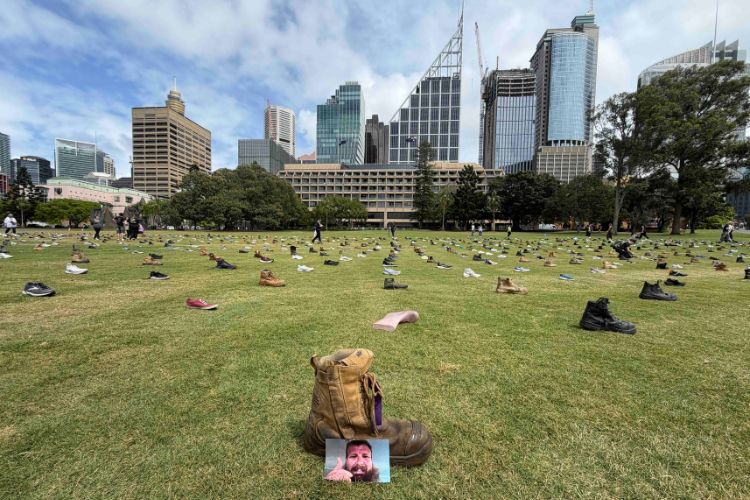
A powerful display of thousands of shoes highlights Australia’s escalating male suicide crisis, while Dads4Kids celebrates fatherhood, family connections and practical action to strengthen generations.
26 October 2026
3.2 MINS
Following Paul's example in Ephesians 1, let us pray for the Father to open the eyes of our hearts so that we may grasp the hope of his calling, the riches of his glorious inheritance in the saints, and the greatness of his power towards us who believe.



Sensitive and well presented article. Thank you Michael.
Personal experience –too many doctors lie to dying patients and their families (“You’ll live for many years “), or, they take legal action to override the wishes of the dying person as contained in a Legal Document made by a Law Firm. Nothing is done to sensitively assist the mental and spiritual needs of the dying and family. Often it is a “bun fight ” in which the doctor(s) ignore the patient and their families’ wishes about medical treatment. I hate the lies the doctors told my husband and the stupid treatment 2 months in a hospital bed having daily blood transfusions, while everybody could see the transfusion exiting his body as soon it went in ! I refused to attend the doctor killing of my mother “at 2pm” (euthanasia was illegal in 2001 in SA ). The bitterness before she died was horrible–she did not want to die , but, the Nursing Home was shutting the next day and going to be demolished . I guess one day, those monsters (doctors ) will kill me against my will , unless , I have the good fortune to die when they are not around !