


US Visa Ban on Foreign Censors Could Hit Australian Officials
America’s new visa policy ban to block foreign officials who pressure US platforms to censor content, with Australian officials potentially in the crosshairs.
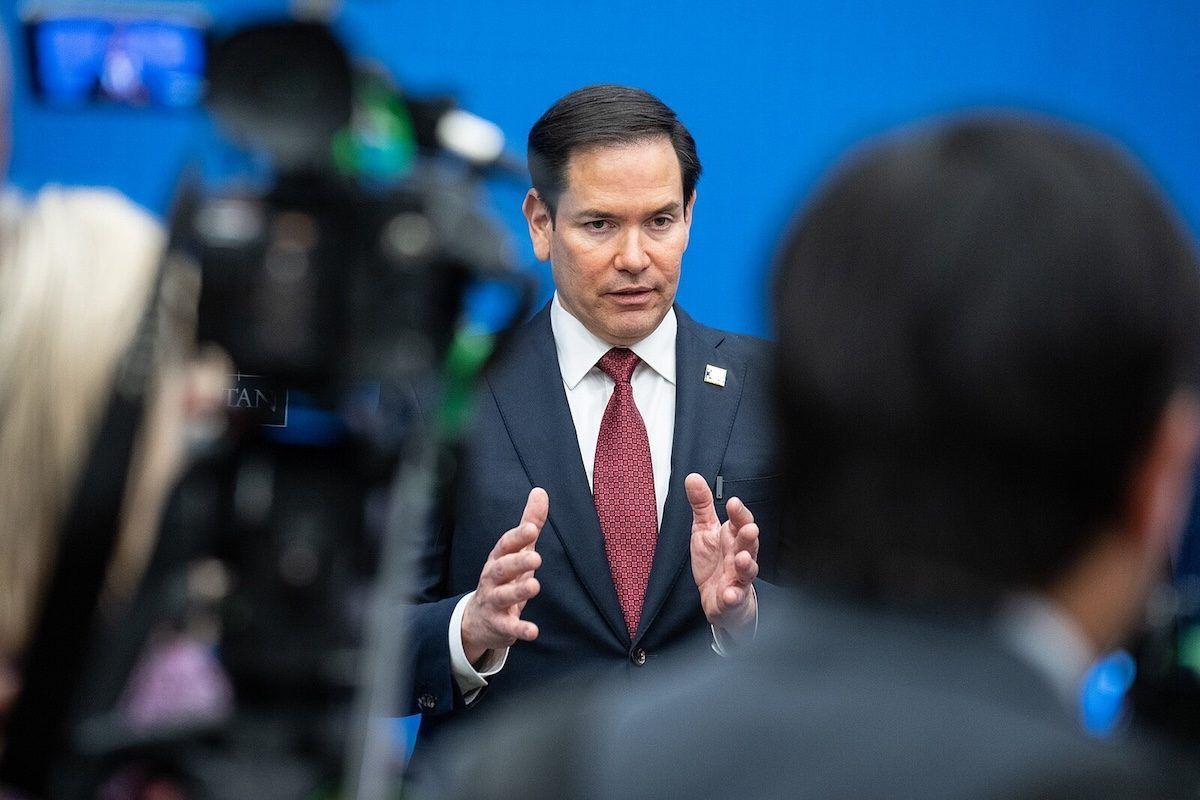
In a bold escalation of America’s global free speech campaign, US Secretary of State Marco Rubio has announced a visa ban targeting foreign officials who attempt to censor Americans or pressure US-based tech platforms to remove content. The move, authorised under Section 212 of the Immigration and Nationality Act, will also extend to immediate family members of such officials.
Rubio declared the policy on Wednesday, saying, “It is unacceptable for foreign officials to issue or threaten arrest warrants on US citizens or US residents for social media posts on American platforms while physically present on US soil.” He added that any foreign attempts to impose content moderation policies on American companies would be treated as a violation of US sovereignty.
Though implicitly directed at authoritarian regimes, the rules also raise concerns about countries like Australia, where recent online laws have prompted comparisons to those of historically repressive states.
Australia has played a prominent role in advancing online content regulation, particularly under the leadership of Prime Minister Anthony Albanese and Communications Minister Michelle Rowland. In 2024, the Labor government introduced the Combatting Misinformation and Disinformation Bill, aiming to give the Australian Communications and Media Authority (ACMA) sweeping powers to enforce takedowns of content deemed harmful or misleading. The bill was later withdrawn following significant public and expert concern.
Critics in the US argue that such laws risk extending Australian standards to the United States by compelling global platforms like X, Meta, and Google to enforce them beyond national borders — a “spillover effect” that Rubio has warned threatens American free speech.
Secretary Rubio’s policy appears crafted to strike back at such encroachments.
In April, he shut down the State Department’s Global Engagement Center (GEC), which had previously partnered with foreign NGOs in support of censorship efforts. He also floated sanctions against Brazilian Supreme Court Justice Alexandre de Moraes for pressuring Elon Musk to censor dissenting voices on X.
For too long, Americans have been fined, harassed, and even charged by foreign authorities for exercising their free speech rights.
Today, I am announcing a new visa restriction policy that will apply to foreign officials and persons who are complicit in censoring Americans.…
— Secretary Marco Rubio (@SecRubio) May 28, 2025
Australian Officials Possibly Affected by Visa Ban
While Prime Minister Albanese is unlikely to be targeted due to the diplomatic fallout it would cause between two close allies, Communications Minister Michelle Rowland is a more plausible candidate for potential visa restrictions. Rowland was a driving force behind the 2024 misinformation legislation and publicly defended its despite opposition from civil liberties groups and tech companies.
Julie Inman Grant, Australia’s eSafety Commissioner since 2017, has been a key figure in online censorship efforts. Her office publicly clashed with X in 2024 over demands to remove posts about a Sydney stabbing, with Elon Musk accusing her of trying to override American constitutional protections. However, as a dual US-Australian citizen, Inman Grant would likely not be subject to the visa ban.
Other Australian figures could also potentially face US visa restrictions. Home Affairs Minister Tony Burke, who oversees cybersecurity and online safety policies, has supported measures under the Online Safety Act that could pressure US-based platforms.
Shadow Communications Minister Paul Fletcher, a key architect of the Online Safety Act 2021 who continues to back robust online safety rules, and Shadow Attorney-General Michaelia Cash, a former proponent of the Act now advocating for global content standards, could be seen as lower-risk but symbolically significant targets for such measures.
BREAKING: The Trump State Department is now going to issue visa bans on foreign officials who have attempted to censor American social media platforms. This won’t just hit authoritarians in places like China, but also their copycats in places like Europe, whose idea of…
— Charlie Kirk (@charliekirk11) May 28, 2025
Censorship as a Foreign Policy Issue
The Trump administration has made clear that it views freedom of expression not only as a domestic constitutional right but also as a central pillar of foreign policy.
This stance was underscored by a recent State Department release seen by the Wall Street Journal declaring that “the United States is committed to shutting down the global censorship-industrial complex”.
It is also evidence by Vice President J.D. Vance and Secretary Rubio’s open criticism of European and Latin American governments for using “lawfare” to silence dissent.
In April, senior US diplomats visited France and Ireland to protest censorship actions under Europe’s Digital Services Act, warning that such laws could become a backdoor mechanism for censoring American citizens.
By tying visa eligibility to a country’s respect for American speech rights, the US is signalling a more assertive global posture — one that could put allied officials in an awkward position.
Though it remains unclear how aggressively the US State Department will enforce the new visa policy, it sends a clear message: censorship does not stop at borders, and neither will the nation’s defence of free speech.
___
Image courtesy of Wikimedia Commons.
3 Comments
Leave A Comment
Recent Articles:
18 October 2026
2.7 MINS
Every season of life belongs to Christ, and we don't retire from discipleship as we grow older. In fact, our older years hold unique gifts for the younger generations.
17 October 2026
3.4 MINS
Seeking the face of God means surrender, laying aside our agenda and wants. Revival begins when we want God himself more than we want the outcome.
16 October 2026
4 MINS
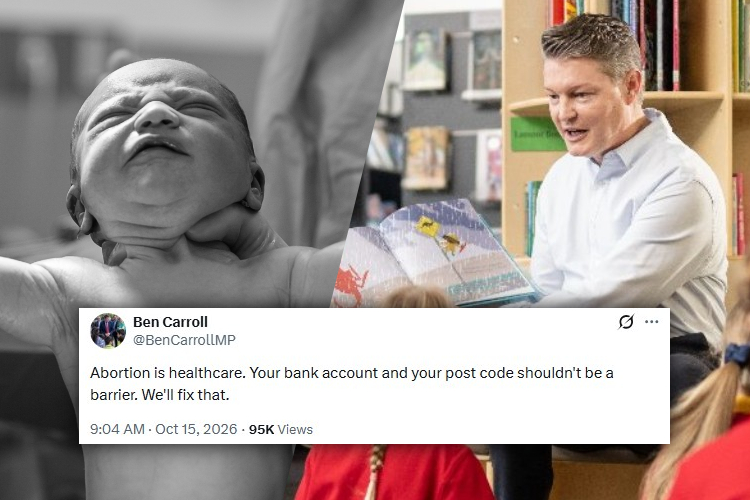
A desperate Victorian Labor Party is peddling taxpayer-funded abortions as free “healthcare”. In a shameless attempt to stay in power, they're willing to do anything — including killing the unborn and forcing taxpayers to pay for it.
16 October 2026
4 MINS
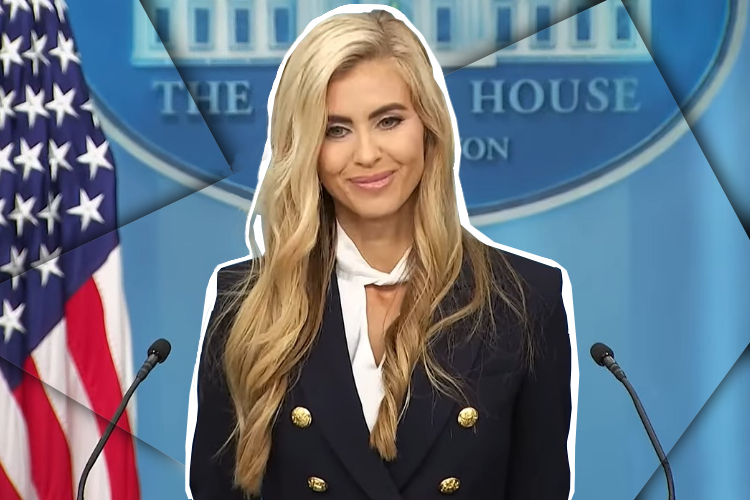
Katie Zacharia’s first days as White House Press Secretary have sparked fierce media criticism, but her remarkable testimony of surviving an abortion attempt tells a deeper story.
16 October 2026
3.4 MINS
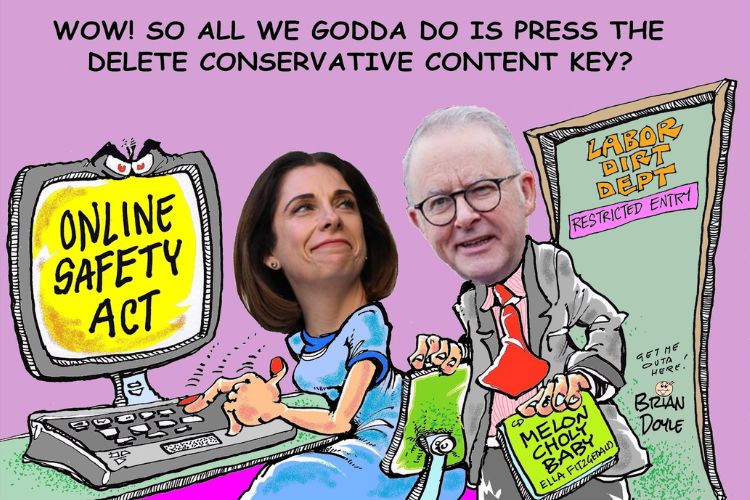
Australia’s proposed digital duty of care laws promise greater online safety and increased user control by switching off algorithms, but critics warn they could give ministers sweeping powers to restrict lawful content and threaten free speech.
A Million Women Movement Marks Second Anniversary: “Look What the Lord Has Done! Ishtar Has Fallen!”
16 October 2026
2.8 MINS
Two years after A Million Women gathered in Washington for ten hours of prayer and fasting, organisers point to victories they believe reflect God’s answers to intercession.

16 October 2026
2.6 MINS
Euthanasia accounted for 4% of all deaths in Belgium in 2025, with growing numbers involving people who were not terminally ill, dementia patients and psychiatric conditions.



Hallelujah! God bless Elon! His huge $ sacrifice on behalf of free speech was worth it and will win him eternal rewards I’m sure. He’s letting the light in and as he says “sunlight is the best disinfectant”. 8:32!
That’s most of the new/old government taken care of, and a good chunk of the Liberal party too. But I’m still waiting to see what Trump will do about Ambassador Kruddfuhrer, author of numerous now-deleted tweets that criticised and mocked the US President.
Yes!Yes!Yes!