



Turning Your Trauma Into Your Testimony
From Danny Abdallah to Joseph, this powerful reflection on trauma explores the transforming journey of forgiveness — costly, courageous, and ultimately freeing through God’s grace.
Danny Abdallah, the father who has forgiven the man who killed his three children, said:
His main reason for forgiveness, aside from his faith, was not having the feeling of “revenge and bitterness and anger” in his household that could be passed down to his kids.
That’s certainly a powerful reason to forgive. Children growing up in a household burdened with revenge, bitterness and anger, after the grief of losing their siblings, would be devastating. But it required extraordinary courage to live that out on a daily basis.
As Danny would agree, he couldn’t have done it without God’s help. Fortunately, the killer of his children showed great remorse, and the two have since become firm friends, sharing their Christian faith. However, most of us could not imagine the grief and anguish the Abdullah family have endured.
The power of forgiveness
Jesus taught us to forgive as we have been forgiven. There is something profoundly transformational about the forgiveness journey. It most likely won’t be instantaneous, but more likely a slow and protracted process of constantly seeking God’s help to forgive again and again. Family milestones, people, places and even smells can all act as triggers for what has been lost, betrayed or stolen.
Forgiveness is many-faceted. After more than 20 years interacting with women who have a family member in jail, through the Kairos Outside Prison Ministry, I have witnessed firsthand how hard it is to forgive when someone you loved and trusted betrayed and abused that trust. But I have also rejoiced with those who have forgiven and found freedom in that forgiveness.
It is wonderful to see them set free from the bondage of anger, hatred and denial. Forgiveness provides a new beginning and eternal hope.
Forgiveness does not always mean reconciliation
While reconciliation is our goal, many times it is not possible or safe. The prospect of reconciliation should not be a barrier to forgiveness. Forgiveness is between me and God. I forgive the wrong done to me and eventually will be able to seek grace and blessing for the one who has wronged me.
In some cases, the perpetrator does not want your forgiveness, as that would mean acknowledging their guilt. Also, reconciliation may not be safe, particularly in the case of mental illness, substance or sexual abuse. Or in the case of death, impossible.
Healing of memories
Most people who have been traumatised will spend some time hiding behind a mask. They dare not reveal their true selves for fear of shame, embarrassment and guilt, or just the horror of reliving their experience. It is a way to survive. The cover-up of what they are going through may result in lying about their real situation. This is where it is critical for them to be given space and a safe place to unburdened and be released, so a bridge can be built to their heart that Jesus will walk over.
A beautiful verse in Revelation tells us:
We overcome evil by the blood of the Lamb and the word of our testimony.
— Revelation 12:11
Believers triumph over evil by accepting Jesus’ sacrificial death on the cross, which pays the penalty for sin and provides a pathway for reconciliation with God, our Heavenly Father. No one can argue with your lived experience. You know what you have been through. When you are able to express that in words, recognising the forgiveness, mercy and grace that Jesus has given you, this becomes your testimony.
As you tell your story, witnessing to the transformational power of forgiveness in your own life, it not only blesses those who hear it, but allows you to own the reality of your experience. As you praise God for the new life He has given you, in a miraculous way, He heals your memories. In the telling, you realise you are not all churned up. You have accepted the reality of your past trauma and can now live freely in the knowledge that God was with you through it, and He always will be.
Not only the Abdullahs, but Rose Batty, Nelson Mandela, Corrie Ten Boom and so many others have shown remarkable courage and shared in considerable detail their forgiveness journeys.
Biblical characters exemplifying this truth
Joseph: Nothing could have prepared Joseph’s brothers for the revelation that the ‘Egyptian’ standing before them was actually their brother. Despite their appalling treatment, selling him into slavery, not minding if he lived or died, Joseph was able to say:
“But as for you, you meant evil against me; but God meant it for good, in order to bring about this day, to save many people.” — Genesis 50:20
When we look closely at Joseph’s life, including betrayal by his brothers and wrongful imprisonment, he could so easily have been resentful, angry and bitter. Instead, the hand of God was revealed to him, and he was used to bless an entire nation.
Saul, who became Paul: Holding the cloaks of the murderers of Stephen. Perpetrating violence against those who followed Jesus. Saul believed he was doing God’s will. An encounter with the Risen Jesus on the Damascus Road changed his perspective completely. But although he never forgot what he had been, he was used mightily by God to give us most of the books of the New Testament. He knew, both in his head and his heart, that he was forgiven. This sure and certain knowledge equipped him for sacrificial service with eternal consequences for us all.
David: A conniving murderer, adulterer, liar and thief. Yet the Lord calls him: “A man after my own heart.” Although there were disastrous consequences as a result of his sin, David recognised God’s forgiveness and continually returned to worship and praise the God of his salvation.
Peter: A passionate and impatient man who swore he was vehemently loyal to Jesus. Then, in an instant, betrayed even knowing Him. After the resurrection, Jesus restored him, and he was used mightily in the spread of the Gospel and the establishment of the early church.
There are many more examples, both in history and in recent times, of trauma being turned into testimony. As you look back over your life, may you discover how your life’s experiences have prepared you to witness to God’s provision, love, mercy and grace.
4 Comments
Leave A Comment
Recent Articles:
15 October 2026
3.6 MINS
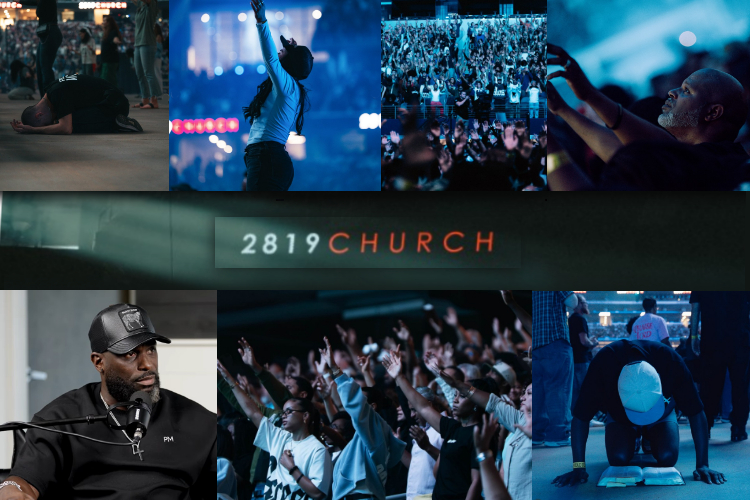
An 80,000-strong gathering in Texas signals a hunger for revival, as Pastor Philip Anthony Mitchell warns that Christian indifference could leave future generations without the faith.

15 October 2026
4.2 MINS
Many Australian Christians don’t know a single Aboriginal person. Robyn Murray argues that reconciliation begins with honest history, prayer and a shared life in Christ.

15 October 2026
7.2 MINS
A man’s death in a tiger enclosure sparks chilling online reactions, exposing a growing willingness to judge human worth by usefulness, behaviour and ideology.
15 October 2026
2.6 MINS
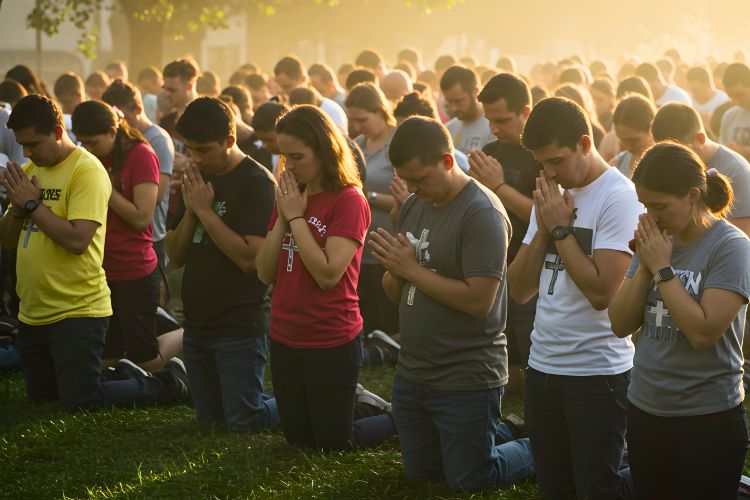
Before anything else, we must make prayer central. I urge the Church in Australia to awaken to, first of all, prayer.

14 October 2026
6.7 MINS
A national poll challenges claims that pro-life Australians are extremists, revealing broad support for abortion restrictions, protections for unborn babies and safeguards for vulnerable women.
14 October 2026
5.5 MINS
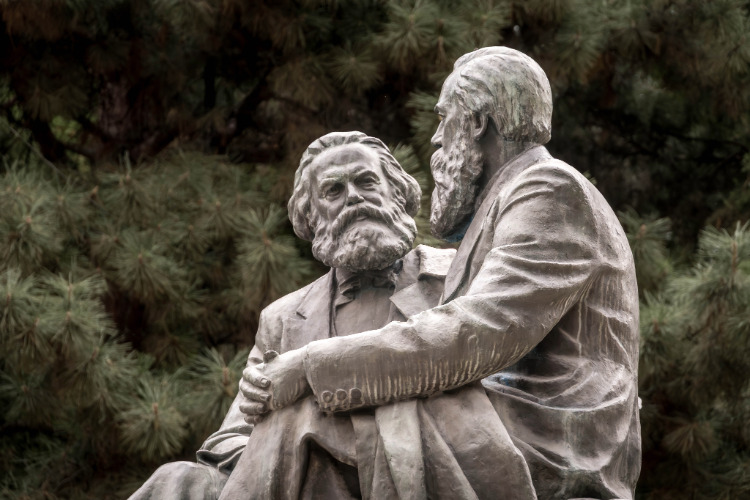
As Christianity fades from public life, Marxism or Communism offers a substitute faith built on oppression, liberation and political salvation — but at what cost?

14 October 2026
5.3 MINS
Marco Rubio’s Athens speech celebrates the Greek, Roman and Christian foundations of Western civilisation, warning that cultural self-loathing and radical ideologies threaten its future.



In my personal experience, and others’ I’ve also witnessed, the most traumatising, destructive and personally betraying choices have been the repeated decisions of others to deny my own and others’ original lived experiences of trauma and abuse = that has been far more difficult to heal from and forgive than the original abuse ever was.
Yes I can really relate to that Kate. A good saying to remember: What other people think of me is none of my business. Only what God thinks of me. If you are a child of the King [of Kings] then you are a princess. Hold your head up and walk with dignity. You are royalty! Bless you, Kate.
Teri, I have had the privileged of living into my seventh decade. That means I can ‘look back’ and see the impact my own sin had had on my life and also the impact of the the actions of others, that at the time were quite traumatic. What I am trying to say is that as I look back I am filled with ‘awe and gratitude’ that God has used me to touch the heart ‘of the one’. I am also aware that I enjoy ‘good health,’ significantly related to the fact that I have not been carrying the baggage of guilt and unforgiveness for decades.
Thanks for your insights, Jim. Yes indeed! ‘Baggage’ is damaging to both physical and mental health. Praise God that Jesus made a way for forgiveness to bring healing and restoration.