


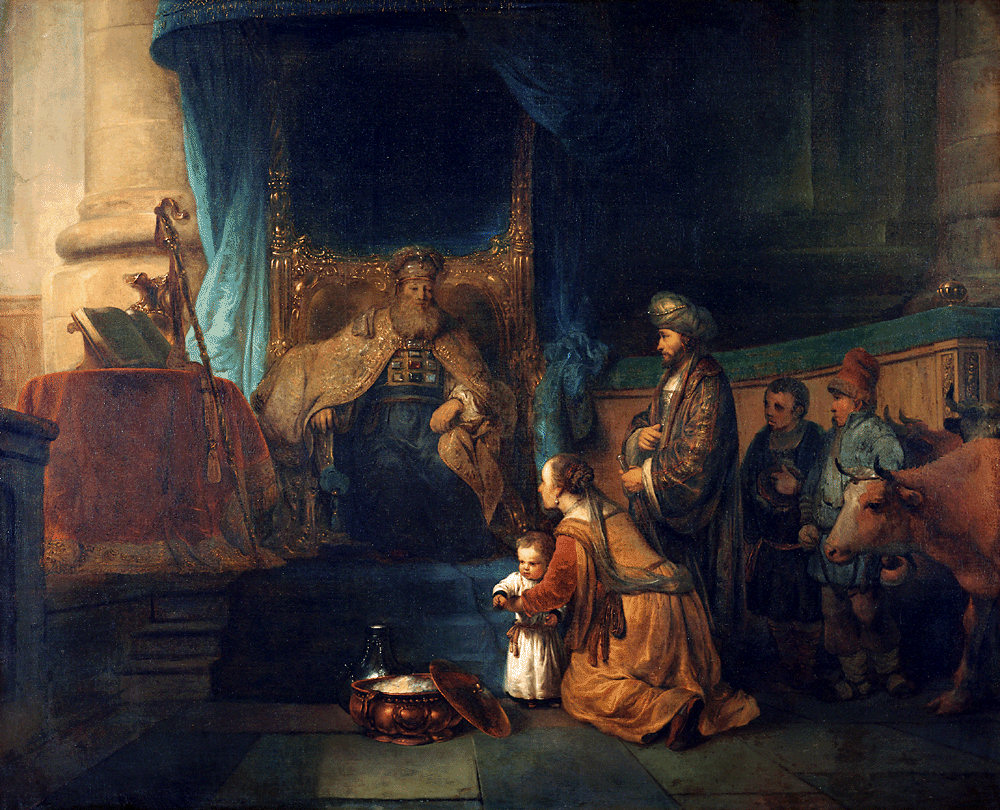
Good News: God ‘Remembers’ Us
No, God does not forget us or abandon us.
A phrase used in Scripture that speaks of how God knows all about us, cares for us, and interacts with us, involves the use of the word “remember”. Given that God is omniscient and knows all things, this is clearly a figure of speech since God does not forget anything, and so does not need to be reminded of things.
So the term has a decidedly human reference: we can tend to think that God ‘forgets’ all about us, and we wish He would ‘remember’ us. It is in the same vein that we might speak of God being ‘far’ from us, or being ‘hidden’ or being ‘silent’ and the like. The truth is, God is always fully aware of us and dealing with us. But from our end, it seems at times that He is nowhere to be found, and He is absent or aloof.
The Bible makes it quite clear that God has NOT forgotten us nor abandoned us. I have spoken about these matters in related articles, such as this one.
Samuel and the God Who Remembers
There are various places in Scripture where we read about these situations. One classic text is that of 1 Samuel 1. There, we read about the birth of Samuel, and the miraculous way that it came about. Consider three key quotes from this chapter.
On the day when Elkanah sacrificed, he would give portions to Peninnah his wife and to all her sons and daughters. But to Hannah he gave a double portion, because he loved her, though the Lord had closed her womb. (1 Samuel 1:4-5)
She was deeply distressed and prayed to the Lord and wept bitterly. And she vowed a vow and said, “O Lord of hosts, if you will indeed look on the affliction of your servant and remember me and not forget your servant, but will give to your servant a son, then I will give him to the Lord all the days of his life, and no razor shall touch his head.” (1 Samuel 1:10-11)
They rose early in the morning and worshipped before the Lord; then they went back to their house at Ramah. And Elkanah knew Hannah his wife, and the Lord remembered her. And in due time Hannah conceived and bore a son, and she called his name Samuel, for she said, “I have asked for him from the Lord.” (1 Samuel 1:19-20)
Wow, that is some amazing stuff, and I encourage you to read the chapter in full. So many things stand out here. One, we see it was God who had prevented Hannah from conceiving – at least at first. Two, she cried out to the Lord, asking Him to ‘remember’ her and not ‘forget’ her. Three, God did as she asked, and He did indeed ‘remember’ her – not by overcoming His own ‘forgetfulness,’ but by hearing her plea and taking action.
That should be of great encouragement to us all. Of course, this is not some name-it-and-claim-it passage if you happen to be infertile. What God did for Hannah was special, and served a special purpose in His overall plans. Yes, infertile couples can pray and ask God for help, but it is He who ultimately knows what is best and how we should proceed.
A few comments from others are helpful here. As to how God remembers and acts, John Woodhouse remarks:
Just as the Lord had “remembered” Noah in the days of the flood, Abraham when he destroyed Sodom, Rachel when she conceived Joseph, and His covenant with Abraham in the days of Moses (Genesis 8:1; 19:29; 30:22; Exodus 2:24; 6:5; cf. Numbers 10:9), so He “remembered” Hannah. Whenever God “remembered” His people, it led to His action on their behalf. We will not be mistaken if we expect that His remembering Hannah will involve His remembering His people Israel.
Recall how 1 Samuel follows immediately after the book of Judges, with all its woeful misery and chaos. Israel was in desperate need of a real leader, and Samuel would become that man. And for this turning point in Israel’s history, God would use a barren woman! Says Woodhouse:
First Samuel 1 points us to a most unexpected starting point for the answer that God is going to provide for the leadership crisis. Who would have looked twice at miserable, sobbing Hannah for the answer to Israel’s crisis? We expect to find answers from the powerful. Hannah was not powerful. Her family were “nobodies.” The point of her story, however, is that God cares.
Does God care? Yes, He cared about the leadership of his people Israel and gave Hannah a son. Yes, He cares about the leadership of the world and of us. Hannah’s son will be surpassed by Mary’s son. God’s care for us all finds its fullest expression in Jesus Christ. If you belong to Him you can learn to “cast all your anxieties on Him, because He cares for you” (1 Peter 5:7).
God Begins Where We End
I quite like how Dale Ralph Davis picks up this theme:
Hannah, therefore, shares in a fellowship of barrenness. And it is frequently in this fellowship that new chapters in Yahweh’s history with His people begin—begin with nothing. God’s tendency is to make our total inability His starting point. Our hopelessness and our helplessness are no barrier to His work.
Indeed, our utter incapacity is often the prop He delights to use for His next act. This matter goes beyond the particular situations of biblical barren women. We are facing one of the principles of Yahweh’s modus operandi. When His people are without strength, without resources, without hope, without human gimmicks—then He loves to stretch forth His hand from heaven. Once we see where God often begins, we will understand how we may be encouraged.
He goes on to speak about Hannah’s prayer:
This is no piddly little affair – this is a manifestation of the way Yahweh rules and will bring His kingdom (vv. 5b,8). Hannah’s relief is a sample of the way Yahweh works (vv. 4-8) and of the way He will work when He brings His kingdom in its fullness (vv. 9-10). The saving help Yahweh gave Hannah is a foretaste, a scale-model demonstration of how Yahweh will do it when He does it in grand style.
Each one of Christ’s flock should ingest this point into his or her thinking. Every time God lifts you out of the miry bog and sets your feet upon a rock is a sample of the coming of the kingdom of God, a down payment of the full deliverance, the macro-salvation that will be yours at last.
True, such tiny salvations are only samples or signs of the final salvation…
[Y]ou should not despise or demean these little salvations Yahweh works in your behalf, these little clues He gives, these clear but small evidences He leaves that He is king and that He has this strange way of raising up the poor from the dust and lifting the needy from the ash heap to make them sit in the heavenly realms with Jesus Christ. Ponder every episode of Yahweh’s saving help to you…
The Power of Prayer in God’s Sovereign Plan
Richard D. Phillips discusses the afflictions of Hannah, and what we can learn from them:
Rather than assuming some unholy, spiteful, or condemning purpose in God’s afflictions, believers need to remember that God is holy, so all His deeds are holy; God is good, so He intends our sorrows for good; and God is filled with mercy for the brokenhearted.
God does not seek to destroy us through our trials but to save us through our trials. As Hannah herself would later testify: “He raises up the poor from the dust; He lifts the needy from the ash heap” (1 Sam. 2:8) So if God is the One who closed the womb, we should take heart, since He can surely also open it.
In Hannah’s case, God was using her plight to orchestrate Israel’s deliverance from the dark era of the judges. This was a cause dear to Hannah’s heart, as we know from the song she later lifted up to God’s praise (1 Sam. 2:10).
We may never know how God has worked through our most bitter trials to bring others to salvation, to equip us with sensitivity in ministry to others, or even to launch a significant gospel advance. But we do know God, and we know from His Word that “for those who love God all things work together for good” (Rom. 8:28). So we can have confidence in God’s purposes in our lives.
He goes on to say this about the importance of prayer:
Not only does prayer change us, but prayer changes things. God is pleased to act in response to our prayers. Some people react to the knowledge of God’s sovereignty by thinking that prayer therefore does not matter, since God has decided everything in advance. Hannah did not reason this way, but understood that God’s sovereign will is achieved through the acts of men and women, especially our prayers.
John Woodhouse comments that her turning to the Lord “will turn out to change not only her life but the life of the nation, and indeed… the history of the world.” He adds, “Faith in God, therefore, leads us in our troubles to pray to the God who is sovereign over all things.”
All this is encouraging good news. The next time you find yourself on the ash heap, and you are questioning if God has forgotten you or has abandoned you, just bear in mind that He knows all about you and your situation, He hears your prayers, and He will act. He remembers us, and He acts accordingly.
___
Republished with thanks to CultureWatch. Image courtesy of Wikimedia Commons.
One Comment
Leave A Comment
Recent Articles:

27 October 2026
10.3 MINS
As Tasmania and Western Australia consider conversion therapy bans, a former LGBT+ ministry leader warns of threats to religious freedom, personal choice and Christian discipleship.

27 October 2026
4.9 MINS
Nine Christians have been killed in a terrorist attack on a Jordanian church, prompting fierce condemnation, demands for justice and renewed concerns about religious persecution.
27 October 2026
3.6 MINS
For 25 years, the Mount Moriah Trust has supported struggling Christians across the Holy Land, bringing practical assistance, encouragement and hope to believers facing hardship and persecution.
27 October 2026
3.1 MINS
As the disciples discovered through a huge haul of fish, we can trust Jesus for a net-breaking, boat-sinking catch of people.
26 October 2026
3.2 MINS
Following Paul's example in Ephesians 1, let us pray for the Father to open the eyes of our hearts so that we may grasp the hope of his calling, the riches of his glorious inheritance in the saints, and the greatness of his power towards us who believe.

25 October 2026
4 MINS
Prayer is active partnership with God, and he is awakening his body to prayer, not by might or by power, but by his Spirit.

24 October 2026
3.3 MINS
When we ask God, "What is in my hand?", and see our possessions, money and time as seed that God asks us to sow, life becomes simpler.



Thank you for this perspective on Hannah’s despairing prayer. It gives me hope in my own difficult situation – of change and the unknown – my near-future situation