


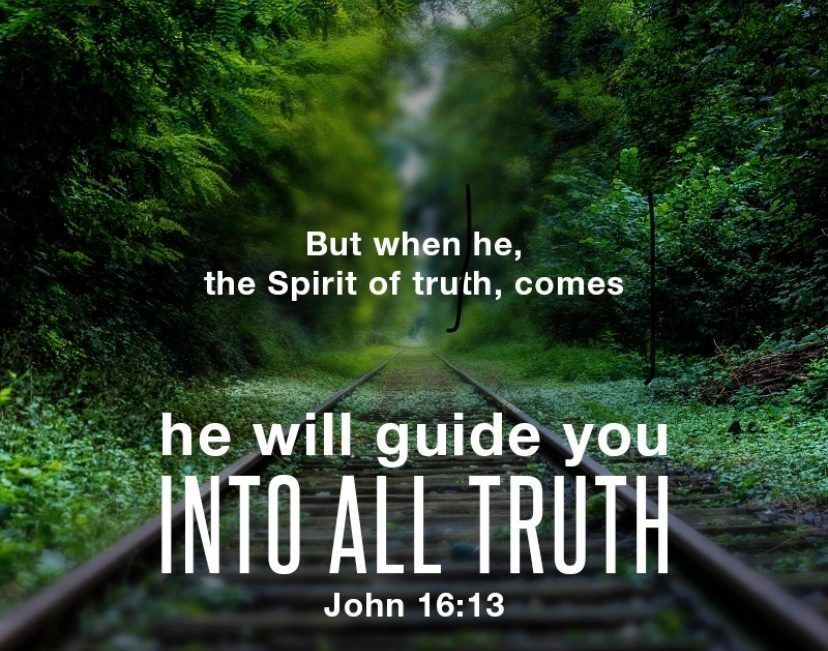
Difficult Bible Passages: He Will Guide You Into All Truth (John 16:13)
Just how are we guided into all truth?
This is another passage that may not seem all that difficult to understand, but it can be misused and abused. Let me give it to you in context. Jesus is telling His disciples that He will soon be going away, but He will not leave them as orphans. The Holy Spirit will be given them. John 16:12-14 says this:
“I still have many things to say to you, but you cannot bear them now. When the Spirit of truth comes, He will guide you into all the truth, for He will not speak on His own authority, but whatever He hears He will speak, and He will declare to you the things that are to come. He will glorify me, for He will take what is Mine and declare it to you.”
I want to focus on this promise of being guided into all truth. This is a wonderful promise indeed, but does it mean what some think it means, that we can have perfect and infallible understanding of all things when the Spirit comes? Hopefully, most Christians understand what this verse is NOT saying: it is not saying when we become a Christian and receive the Holy Spirit, we have total and foolproof knowledge of everything.
Gradual Growth
When we do come to Christ, we do not all of a sudden become a world-class nuclear physicist. Those who want that outcome will have to study long and hard — for many years. We do not all of a sudden know everything there is to know about the design, construction and playing of a harpsichord. That too will take years of learning and practice.
Maybe Christians think we will have perfect biblical understanding. But even here we know this is not the case. If it were, then there would be no need for teachers and preachers and teaching and preaching. If we just get zapped directly by God into complete understanding of all spiritual truth, then the need for teachers would be redundant.
We grow as Christians after we get saved, and that includes growing in our understanding and knowledge. In this fallen world, our knowledge will always be partial and imperfect. As the Apostle Paul says in 1 Corinthians 13:12: “For now we see through a glass, darkly” (KJV). Or as the NLT puts it, “Now we see things imperfectly.”
Because we are all fallen and finite, we of course cannot see everything perfectly. We all have imperfect vision, perception, understanding, insight and awareness. Becoming a Christian does not mean all of our shortcomings and imperfections instantly disappear. We still have all sorts of biases and prejudices and ways of looking at things which may be far from how things really are.
And that includes how we view and understand Scripture. While the Word of God is perfect, authoritative and infallible, we are not. Let me offer a quick analogy. Suppose you are given a brand-new, expensive and fancy private jet. You get in and seek to pilot it. You somehow manage to get it off the ground, but you soon crash it.
Now the plane itself was perfect — or at least pretty close to perfect. But you were not perfect as the pilot — nowhere near. So it was not the plane’s fault, but your fault that things went so very wrong. It is sort of like that with the Word of God. It is perfect, but we are simply fallen and finite readers and interpreters of it.
So at the very least, we need humility and a teachable spirit. We do not know everything about the Bible, nor do we know it all infallibly. Yes, the promise of the Spirit coming to guide us into truth is a wonderful promise. But as mentioned, if that meant we would have perfect, instant knowledge and understanding, then the need for teachers and the like would be a waste of time, and God made a mistake giving them to the body of Christ.
Knowing God
At this point, let me draw upon a few commentators on this passage. D. A. Carson put it this way:
“The notion of ‘guidance’ in all truth has nothing to do with privileged information pertaining to one’s choice of vocation or mate, but with understanding God as He has revealed Himself, and with obeying His revelation.”
Or as Colin Kruse comments:
“This is not to be interpreted absolutely as if the Counsellor will teach them all that can be known, but rather that He will interpret to them afterwards the truth about the death, resurrection and exaltation of Jesus. His role is to testify to Jesus… As Jesus did not speak independently of the Father, so the Counsellor will not speak independently of Jesus.”
And J. Ramsey Michaels says this:
Such a phrase, taken out of context, could refer to all the philosophical or scientific truth of the universe, but here Jesus focuses specifically on truth that He says in ‘Mine.’ Jesus can speak of His truth as ‘all truth’ because ‘all that belongs to the Father is Mine’ (v. 15; cf. 17:10). Everything the Spirit reveals comes from the Father and therefore from Jesus. The accent is not on what human beings can learn anyway by rational inquiry or by the use of their five senses, but on the ‘much more’ (v. 12) that Jesus would like to tell the disciples, but cannot, about their life and mission in the world. The teaching ministry of the Spirit builds on and develops the teaching ministry of Jesus Himself.
Lastly, James Montgomery Boice might be right to emphasise that this passage could be a specific word to the disciples, and it may well have to do with the bringing about of the New Testament. He writes:
It is not just into some general idea of truth that the Holy Spirit is said to be coming to guide the apostles, but rather into all “the truth,” that is, into a definite body of material centering on Christ. This, we recognize, is nothing other than the New Testament. So the promise is that the Holy Spirit would be the vehicle of a new revelation through those specifically commissioned to this ministry. The Revised Standard Version and the New English Bible render this verse correctly…
This is not a promise of inspiration that is made generally to all Christians in all periods of the church. … As you study the Bible, the Holy Spirit will continue to do the work He began in an authoritative way with the inspiration of the New Testament documents. The Holy Spirit, the true author of these books, will lead you to see the Lord Jesus Christ and bring you to the point of increasing obedience and service to Him.
Whether this is indeed mainly a reference to the writing of the New Testament is possible. But my main point stands regardless. The intention of John was not to say that with the Holy Spirit, all believers will have all correct and complete knowledge and never see through a glass darkly anymore.
We will still get things wrong, we will still be mistaken in our understanding and interpretation, and we will still need to remain humble as we rely on the teachers Christ has raised up for the body. Some 16 years ago, I penned a piece offering 20 reasons why study and theology are important. Here are two of them:
Six. If everything is so clear and easy to understand, why does Scripture say that we should study to show ourselves approved? (2 Tim. 2:15) Presumably if we do not study, we will not earn God’s approval, at least in this regard. And the importance of study is mentioned elsewhere. We are informed that the Bereans were more noble than the Thessalonians because they studied the Scriptures daily, to see if what Paul said was true (Acts 17:11).
Seven. No one has a direct pipeline to God via the Holy Spirit. We need each other. We are all members of one body and we rely on each other as Paul instructs us in 1 Cor. 14 and 15. None of us has all the truth. We can learn from others. Protestants in general, and Pentecostals in particular, need to overcome their rugged individualism, and see the importance of the Christian community. Yes we can directly commune with God and have direct access to the truths of Scripture. But God has designed us to live, grow and flourish in a body. We are incomplete without each other. And that is true of our understanding of Scripture as well.
In sum, there are two extremes that believers must avoid when it comes to the knowledge of God and His truth:
- Because we are all fallen and finite, none of us have all the truth, perfect understanding, nor infallible thinking. We see through a glass darkly. Knowing that should keep us from pride and presumption.
- Because we are guided by God’s word and His Spirit, we can have a high degree of certainty and confidence about Who God is and what He wants of us. Knowing that should keep us from despair and cynicism.
___
Originally published at CultureWatch.
One Comment
Leave A Comment
Recent Articles:
8 October 2026
3.6 MINS
John Anderson warns that Australia’s decline is rooted in spiritual and cultural disintegration, calling for a recovery of Christian foundations, social cohesion and national purpose.

8 October 2026
4.1 MINS
Aboriginal communities in Central Australia already know the gospel message. What they need now, Robyn Murray writes, is discipleship, encouragement and Christians willing to pray and participate.
8 October 2026
4.1 MINS
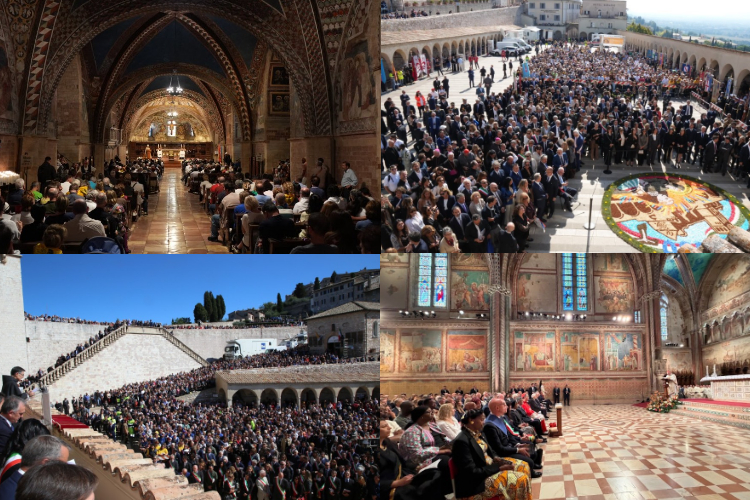
Italy honours St Francis of Assisi 800 years after his death, celebrating a saint whose devotion to Christ, radical simplicity and message of peace continue to shape generations.

8 October 2026
4 MINS
Christ’s authority and concern is not limited to the four walls of the church. They extend to the life of the nation, and we are called to take up our part in seeking its righteousness.

7 October 2026
1.5 MINS
Across the Middle East, North Africa and Anatolia, Christianity once shaped entire civilisations. Could Britain’s Christian heritage likewise become a memory rather than a reality?

7 October 2026
8.5 MINS
Gerald McDermott’s work challenges Christians to approach Israel through Scripture first, exploring God’s covenant faithfulness, Christian Zionism, Jewish identity and antisemitism.

7 October 2026
4.6 MINS
Medicine was created to heal and preserve life. Yet abortion, euthanasia and gender medicine increasingly redefine death and destruction as care, leaving the vulnerable dangerously exposed.



Still , discerning His voice from the madness of the crowd especially in times such as these requires real diligence doesn’t it.
So many seek to manipulate and control us while we ourselves may not want to understand those really challenging directions.
May God in His mercy light the path He has for each of us.