


What About the Lost Girls?
In 2020, I released my book Lost Boys: Bring Them Home, in which I attempted to outline the issues devastating our young men and call the church to engage in the spiritual battle for their souls.
I knew these issues were prevalent, but I couldn’t have predicted how this small book would strike a chord with so many people, particularly parents desperate for answers and longing to bring their sons back to God’s path.
But one question has come up repeatedly – what about the lost girls?
Despite the claims of popular culture, there are significant differences between men and women, and I’ve always felt that if we win our men, the girls will come too. But I’ve also wanted to address more of the specific issues pertaining to women in a separate book.
Women and girls today have been influenced by the profound shift away from a collective moral framework based on the Christian worldview. This shift gained momentum during the 1960s, thanks to elitist feminist academics who, in presuming to speak for all women, sought unlimited freedom without fully considering the consequences.
Today, we witness the outcomes of this “reformation,” which has left women in unchartered territory, akin to a neverland without a clear path back home. It prompts the fundamental question that is being asked today, “What is a woman?” This question, once self-evident in cultures worldwide, now lingers in uncertainty.
But there is a way home, and many have found it by looking back to find where we left the path of Truth.
This is what the LORD says: “Stand at the crossroads and look; ask for the ancient paths, ask where the good way is, and walk in it, and you will find rest for your souls…” (Jeremiah 6:16)
As I endeavoured to write this book for young women, particularly one offering Christian guidance to the next generation of women, I stumbled upon the work of Hannah More.
It was a discovery that changed the course of my book.
Inspiration
Hannah More (1745-1833) was a poet, best-selling author, acclaimed playwright, anti-slavery campaigner, writer of religious tracts and one of the most influential female philanthropists of the Age of Revolution.
She was a contemporary of figures like William Wilberforce, the English politician and Evangelical Christian who fought against the slave trade, and played a pivotal role helping him, with other like-minded Christians, in the abolitionist movement. However, her greatest passion lay in the education of girls and the transformation of British society’s morals and manners, among the wealthy, poor and illiterate.
She passionately believed that education, coupled with an equal emphasis on nurturing Christian virtues, was the key to personal transformation and societal reform.
I was struck by her eloquent articulation of the very themes I wished to explore. As I shared her writings with young women, I found them equally fascinated, and they encouraged me to translate her work, so they too could benefit from her wisdom.
And so the book I set out to write pivoted to become something better. A modern translation of More’s book Essays on Various Subjects, Principally Designed for Young Ladies, published in 1777.
In it, she opens with this advice: “As for you, I shall advise you in a few words: aspire only to those virtues that are peculiar to your sex; follow your natural modesty, and think it your greatest commendation not to be talked of one way or the other.” (Or, in other words, don’t draw excessive attention to yourself.) Even in today’s English translation of her work, we find a timeless message that continues to resonate.
What is it to follow one’s natural modesty? The innate quality of natural modesty seems to have slipped away in our 21st-century, post-moral, “post-virtue” society. Yet, women of all ages, it seems, are yearning for the return of old-fashioned manners, elegance, modesty, and grace that have faded over the years.
Renaissance
From the novels of Jane Austen – and their cinematic adaptations – to the proliferation of social media content focussed on elegance and etiquette, there’s a notable trend among young women to aspire to resurrect the femininity, grace and elegance that once defined our female ancestors and earned them societal honour and respect.
It’s an increasingly common experience now to hear women of all ages lament that they were born in the wrong era. If you share this sentiment, you’re certainly not alone.
Of course, I’m not advocating for women to put on their rose-coloured glasses, lace up their corsets and retreat to the sitting room.
But even though Hannah’s standards of female behaviour might seem outdated or even uncomfortable, Biblical virtue does not change, even in this technological era. The challenge is how to apply these principles in today’s world.
While compiling this book, I was profoundly inspired by the idea that through the practical guidance it offers, a woman can harness her inherent God-given feminine qualities to bring about positive change in her immediate environment, even if it’s confined to her family.
If countless families were to undergo such transformation, it could yield a beneficial influence on both the Christian faith and society as a whole, leading to the resurgence of feminine virtues that can be bequeathed to the generations that follow.
May there be a renaissance of femininity, guided by those who proclaim the name of Christ and walk in His path.
My finished book, The Nature of Truth and Beauty, is now shipping from our online store with a companion Prayer Book and Journal available soon.
___
Republished with thanks to Youth for Christ. Image courtesy of Adobe.
2 Comments
Leave A Comment
Recent Articles:
8 October 2026
3.6 MINS
John Anderson warns that Australia’s decline is rooted in spiritual and cultural disintegration, calling for a recovery of Christian foundations, social cohesion and national purpose.
8 October 2026
4.1 MINS
Aboriginal communities in Central Australia already know the gospel message. What they need now, Robyn Murray writes, is discipleship, encouragement and Christians willing to pray and participate.
8 October 2026
4.1 MINS
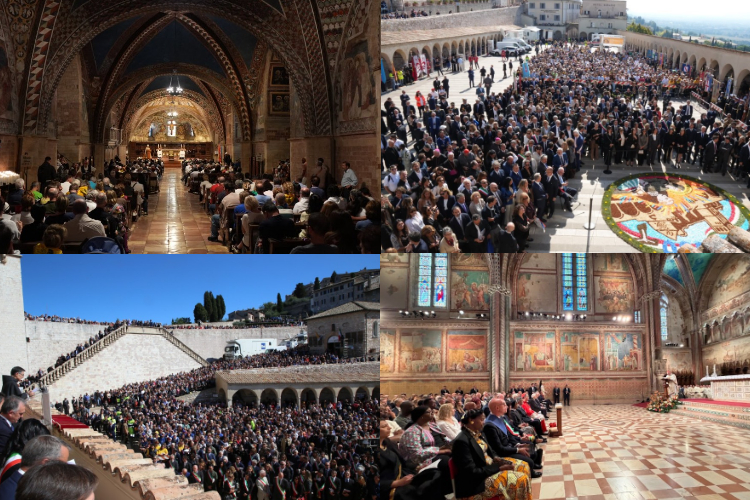
Italy honours St Francis of Assisi 800 years after his death, celebrating a saint whose devotion to Christ, radical simplicity and message of peace continue to shape generations.

8 October 2026
4 MINS
Christ’s authority and concern is not limited to the four walls of the church. They extend to the life of the nation, and we are called to take up our part in seeking its righteousness.
7 October 2026
1.5 MINS
Across the Middle East, North Africa and Anatolia, Christianity once shaped entire civilisations. Could Britain’s Christian heritage likewise become a memory rather than a reality?
7 October 2026
8.5 MINS
Gerald McDermott’s work challenges Christians to approach Israel through Scripture first, exploring God’s covenant faithfulness, Christian Zionism, Jewish identity and antisemitism.

7 October 2026
4.6 MINS
Medicine was created to heal and preserve life. Yet abortion, euthanasia and gender medicine increasingly redefine death and destruction as care, leaving the vulnerable dangerously exposed.



Apart from a small % of Hermaphrodites , the rest of us are male and female. The Sexual Revolution of the 1960s has done terrible harm to society, especially to young females who are encouraged to be promiscous and to despise motherhood. What a sad, perverted World we live in now where woman are slaves to work and the men in their lives so disrespect women , that they murder their partners at the rate of about one a week in Australia . This is how a civilisation destroys itself and is taken over by another. Time to respect each other and turn to God and old values.
I have had the privilege of reading this book, and it is both delightful and extremely challenging! Growing up in the 70s and 80s, I was certainly a product of the feminist revolution, which led to a period of confused, lost years when I didn’t know how to reconcile my desire for home and family with the expectations of my peers and the adult women in my life. However, I was blessed with a grandmother who was a wonderful homemaker, gardener, cook, and an incredibly hospitable lady. She was also a Christian, whose profound influence has made me the wife, mum and grandmother I am today.