


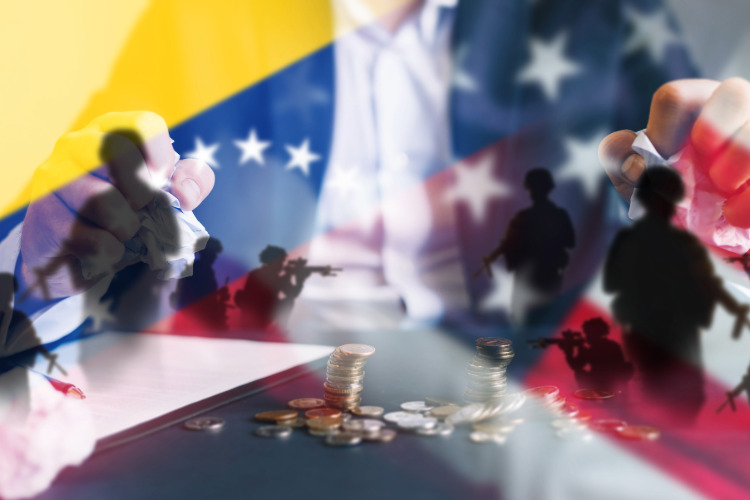
Trump Reinvigorates the Monroe Doctrine With the ‘Donroe Corollary’
The U.S. raid capturing Venezuela’s Maduro on January 3, 2026, revives the Monroe Doctrine, reshaping hemispheric power, disrupting narco-terror networks, and sending shockwaves to China, Russia, Iran, and Cuba.
The events on January 3, 2026, involving a U.S. raid and kidnapping of Venezuelan President Nicolas Maduro have not only caused a sensation around the world, but its impact on world affairs is volcanic. The eight million Venezuelan refugees scattered around the world are overjoyed.
Meanwhile, the usual leftist suspects in the United States, the UK and Australia are outraged, demanding to know on what legal basis the raid occurred, arguing that the incident contravened Article 2(4) of the United Nations Charter, that it is all about the oil, that the 19th-century Monroe Doctrine is resuscitated and more ad nauseam. Even the pontificating international lawyer Geoffrey Robinson suggests Trump’s actions mirrored Putin’s invasion of Ukraine and that Trump could be indicted by the International Criminal Court.
However, in the realpolitik of international relations, the world is anarchical; that is to say, there is not a supreme body to dispense order.
This article seeks to give a brief historical context to the reasoning behind the action; namely, the Monroe Doctrine.
The Monroe Doctrine
The Monroe Doctrine, as proclaimed by U.S. President James Monroe in 1823, was devised as a clear warning to European powers not to colonise, or interfere in political, economic or military affairs in the American (Western) hemisphere.
At that time, Monroe lacked the military strength to enforce the doctrine but, by 1846, the U.S. was strong enough to fight Mexico over its belligerence following the admission of Texas (1845) into the Union. At that war’s end (1848), Mexico ceded extensive territory, the areas we now call the states of New Mexico, Nevada, Utah, Arizona, California, Texas and western Colorado to the young Union.
In the following years, Spain fought many wars against independence movements on the American continent. In 1895, a Cuban independence movement fought the Spanish and, in 1898, the U.S. intervened (the Spanish-American War) and, within a few months, defeated and expelled the Spanish Empire from Cuba and the Philippines.
In 1904, President “Teddy” Roosevelt (1901-09) expanded the Monroe Doctrine with the ‘Roosevelt Corollary’, based on his foreign-policy catchphrase, “speak softly and carry a big stick”.
This meant in reality that the United States would determine by (military) coercion who would run the nations in Central and South America and the hemisphere.
Ironically, the precursor for the Roosevelt Corollary was the Venezuelan Crisis of 1902, when European naval forces from the UK, Germany and Italy blockaded the country over unpaid loans. When it became apparent to Roosevelt that Germany was seeking reparations in the form of a colony, he believed that “only power, and the willingness and readiness to use it” would uphold the Monroe Doctrine, and he sent 53 warships against the Europeans’ 23.
Roosevelt was not bluffing, and the crisis ended peacefully on December 17, hours before the U.S. ultimatum of hostilities expired. The crisis reinforced the principle of the Monroe Doctrine.
Since then, the U.S. has used its big stick within its hemisphere quite frequently: Honduras, Panama, Haiti (1915-35); the Dominican Republic (1916-24); Nicaragua (1912-25 and 1926-33); Bay of Pigs (1961): Cuban Missile Crisis (1962): Grenada (1983): Nicaragua (1984); Panama (1989); and more.
In October 2025, political scientist and author George Friedman wrote in Geopolitical Futures of the “deployment of U.S. naval forces in the Caribbean, off the coast of Venezuela, to interdict and sink ships belonging to drug cartels”. Friedman wrote: “The current fundamental policy of the United States is to disengage from Europe, not to mention the rest of the world, to the extent possible. This is based on the strategic principle that the Monroe Doctrine is the geopolitical foundation of the U.S., insulated as it is by two oceans.”
The control of the two oceans, the Atlantic and Pacific, is a guarantee that no one can invade the United States.
Towards the end of 2025, President Donald Trump foreshadowed that Venezuela’s President Maduro was not on his Christmas card list. Trump’s sanction to destroy drug cartel boats, semi-submersibles and their crews plying international Pacific, Atlantic and Caribbean waters, en route to the United States, showed that the U.S. was determined to halt the inflow of contraband and it acted as a warning to Maduro that his narco-state was in Trump’s sights. Maduro called his bluff.
As the Manhattan Institute’s Daniel di Martino stated on Triggernometry before Christmas, the Venezuelan military “is the cartel”.
Trump has recognised the serious threat to the U.S. of the China-Venezuela “all-weather strategic partnership” in trade, military equipment, massive loans, and cheap oil on preferential terms. China is the primary destination of Venezuelan sanctioned oil transhipped on shadow tanker fleets, estimated at 415,000 barrels per day to repay loans worth $US49.5 billion ($A73.3 billion).
Venezuela is China’s strategic foothold in South America and its dual purposed (military/civilian) infrastructure projects poses a potential threat to the US mainland; especially if intercontinental missile systems are introduced into the region.
Cuba and Its Amigos
The intervention will cause ripples in several regions. First in Cuba, which enjoys a favoured interdependence with Venezuela cemented years ago by a personal alliance between Fidel Castro and then-Venezuelan President Hugo Chavez.
Cheap oil was and still is swapped for services including doctors, health workers, teachers and unofficial military security forces, who in part “monitor” the population for dissent and conspiracies. The arrangement includes discounted oil to sustain the Cuban economy. However, the events of January 3 have seriously disrupted oil transfers to Cuba, which is already having an impact on its economy.
The intervention created immediate concerns for Russian President Vladimir Putin. Russia and Venezuela have an interconnected and cozy collaboration around oil and strategic objectives.
Venezuela is Russia’s foothold in South America.
Russia is a major arms supplier to Venezuela, and both countries undertake joint navy exercises in the Caribbean. According to the Council on Foreign Relations think tank, the U.S. intervention poses two unanswered issues for Russia: “Whether Trump aims to lower global oil prices and whether U.S. pressure on Russia’s ‘shadow fleet’, which handles Russian oil exports, will trigger a bigger change in policy towards Ukraine.”
U.S. Secretary of State Marco Rubio said that, further to the drug-running activities of the Maduro regime, the action of January 3 was about ending Iranian and Hezbollah activity inside Venezuela, involving a crime-terror pipeline of drugs, weapons, gold and money laundering. There was credible evidence that Hezbollah has training bases in the country.
According to The Jerusalem Post, Israel’s Diaspora Affairs Minister Amichai Chikli said that the capture of Maduro struck a blow to what he called the “global axis of evil” and sent a “clear message” to Iranian Supreme Leader Ayatollah Ali Khamenei about the consequences of supporting narcoterrorism and militant proxies such as Hezbollah.
Iranian Weapons Supply
Iran was supplying Maduro with combat drones plus technologies and production and maintenance facilities and embedded technical personnel, and exported its asymmetric warfare strategy to provoke conflict in the Western hemisphere. Strategically, there was a looming danger not only to the U.S. and surrounding South American nations but to the Panama Canal route.
Though Venezuela is not the source of contraband drugs it is the “bridge” for drugs originating from Colombia to pass into the U.S. It is also the bridge for illegal aliens and criminal gangs to enter the U.S. via its southern border.
Donald Trump used the expression “Donroe” to explain his actions; in other words, Trump, like Roosevelt in 1902, declared to Russia, China, Iran and Cuba that the “Trump Corollary” is “America First” foreign policy.
In the U.S. National Security Strategy of November 2025 (paragraph 2), Trump states:
“We (the United States) want to ensure that the Western Hemisphere remains reasonably stable and well governed enough to prevent and discourage mass migration to the United States; we want a hemisphere whose governments cooperate with us against narco-terrorists, cartels, and other transnational criminal organisations; we want a hemisphere that remains free of hostile foreign incursion or ownership of key assets, and that supports critical supply chains; and we want to ensure our continued access to key strategic locations. In other words, we will assert and enforce a ‘Trump Corollary’ to the Monroe Doctrine.”
In recent weeks, the question of Greenland has increasingly revolved around Trump’s strategic (Monroe Doctrine) assessment of its porous northern border coupled with dramatic increases in shipping activities in the Bering Sea. Add to that Russia and China’s growing interest in establishing outposts in the Arctic region via the new navigable “Polar Silk Road” sea lane.
January 3 was proof for all to see that Trump was not bluffing; the Monroe Doctrine is resurrected and has teeth.
Watch this space.
___
Republished with thanks to News Weekly. Image courtesy of Adobe.
Recent Articles:
6 October 2026
3.4 MINS
Christians cannot afford to let headlines and social media shape their view of Israel. Scripture provides a foundation for understanding Israel, God’s promises and our response.
6 October 2026
6.7 MINS
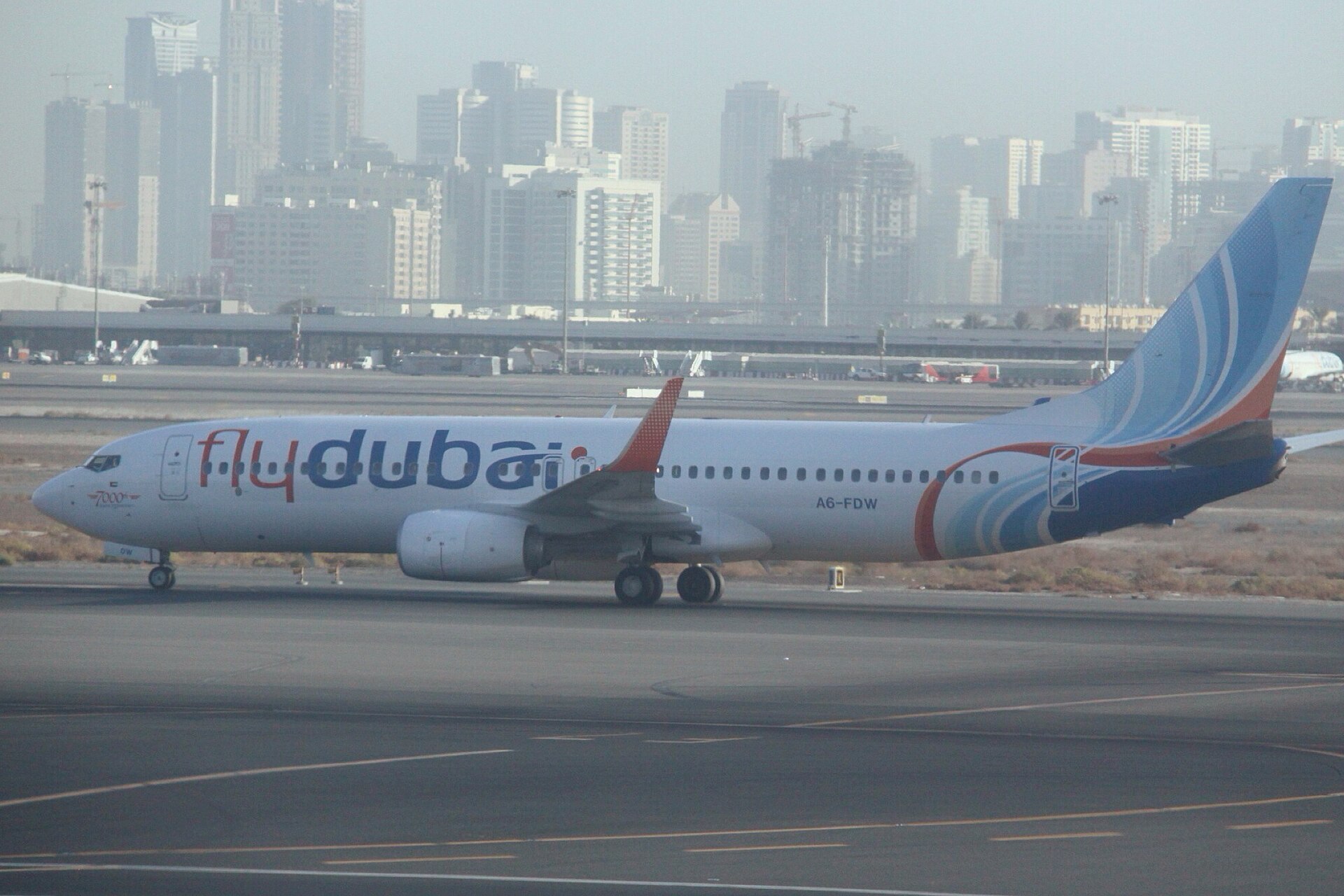
Fresh revelations about the foiled FlyDubai terror plot expose the attacker’s alleged extremist history, while a courageous pilot’s actions prevented an unthinkable catastrophe.
6 October 2026
6.2 MINS
Britain’s grooming gang scandal exposes a devastating failure to protect vulnerable children, raising urgent questions about political correctness, accountability, immigration and the loss of moral courage.

6 October 2026
3.8 MINS
A grandmother’s disputed death has put Canada’s euthanasia regime under fresh scrutiny, as the Medical Assistance in Dying (MAiD) program passes 100,000 deaths with a further expansion slated for 2027.
5 October 2026
4.9 MINS
Free Speech Union co-founder Reuben Kirkham warns Australia’s proposed Digital Duty of Care could expand censorship powers, undermine free expression and bypass recent legal protections.

5 October 2026
3.7 MINS
The Albanese Government promised cheaper coffee by banning card surcharges. Instead, the costs simply moved into higher prices — leaving Australians paying for a saving that never existed.
5 October 2026
6.8 MINS
A closer examination of Candace Owens’ evolving arguments asks whether conspiracy thinking can distort our ability to process evidence, and what Romans 1 teaches Christians.


