


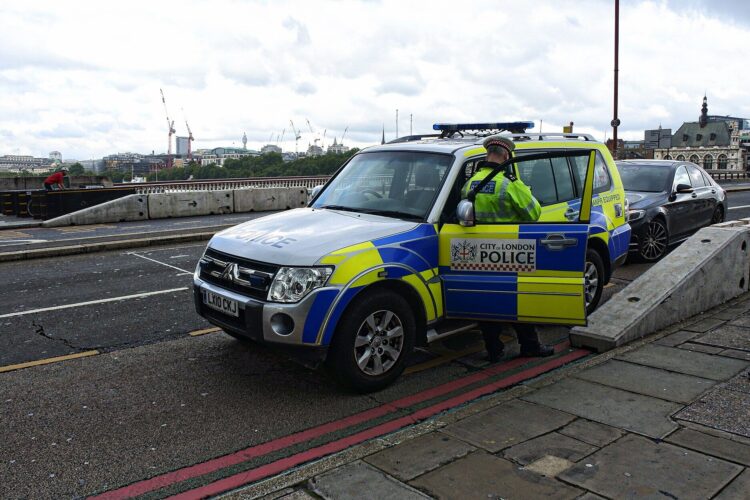
The Nowak Case and a Problem with Policing that Christians Know All Too Well
Over the past 48 hours, there has been a lot of social commentary regarding the murder of young Southampton student, Henry Nowak. This has become more than a criminal case. It has become a symbol of a growing public unease about the state of British policing.
For readers unfamiliar with the case, the basic facts are deeply disturbing. Teenager Henry Nowak was attacked and stabbed by a British Sikh man, Vickrum Digwa. Yet Digwa lied to the police, telling them Nowak attacked him and racially abused him. Digwa has since been convicted of murder.
Has Ideology Undermined Police Impartiality?
Following his conviction, the police body-worn camera footage has been released, and that’s what’s caused the outrage. The footage shows police officers placing handcuffs on the dying victim while treating the alleged attacker, Vickrum Digwa, with courtesy and respect.
Even as Nowak tells the police he’s been stabbed and he can’t breathe, officers continue to cuff him. The police have stated that officers were given false information at the scene and were operating amid confusion and uncertainty. That explanation deserves to be heard. But it is not enough. The footage is shocking. The public are not irrational for feeling troubled by what they have seen. Indeed, they are right to be concerned.
No reasonable person expects perfection from officers who must make split-second decisions in chaotic circumstances. Yet what many people saw was not merely a mistake. They saw an institution that appears increasingly paralysed by ideological anxieties and fearful of making the wrong cultural assumptions. Yes, the police were misled. Yes, the situation was confusing. Yes, those facts matter. But they do not entirely excuse what happened.
For years, many Britons have worried that sections of our police service have become captive to fashionable progressive thinking. The concern is not simply that individual officers hold particular political views. Everyone has political views. The concern is that those views have seeped into institutional culture, distorting judgement and undermining public confidence.
Christians know something about this. For decades, believers have witnessed examples of policing that appear strangely hesitant when confronted with certain groups and strangely assertive when confronting others.
Free Speech, Faith, and Unequal Enforcement
Consider the case of Christian evangelist Hatun Tash. A former Muslim and outspoken critic of Islam, she has repeatedly been subjected to threats, assaults, and intimidation at Speakers’ Corner in Hyde Park. She was attacked with a knife and suffered cuts to her hands and face.
Again and again, she has complained that the authorities failed to provide adequate protection. Her charge has been simple and sadly familiar: too many officers appeared more concerned about accusations of Islamophobia than about defending a citizen exercising her lawful freedoms.
Whether one agrees with every statement Hatun Tash has made is beside the point. No person should repeatedly face violent threats while the authorities appear reluctant to act decisively.
Nor is she alone. Across Britain, Christian street preachers have found themselves questioned, detained, arrested, or threatened with prosecution simply for proclaiming biblical truths in public spaces. Cases are regularly reported in which officers seem unfamiliar with the protections afforded to free speech and religious liberty.
Meanwhile, police forces eagerly advertise their commitment to fashionable causes. Patrol cars decorated with rainbow colours. Officers wearing rainbow lanyards. Endless diversity campaigns. Constant virtue-signalling. The public do not need activist police officers. They simply need police officers.
We need officers committed to enforcing the law fairly, impartially, and without fear or favour. But the loopy-left ideological drift within the police has done enormous damage to public confidence. It has created the perception, fairly or unfairly, that some groups are treated with greater sensitivity than others, and that some opinions are protected while others are scrutinised. That culture must change.
Yet Christians should also resist the temptation to paint with too broad a brush. There are still many brave, sensible, honourable officers serving this country with distinction. One memorable example came earlier this year when a Metropolitan Police officer stood firm against a hostile Muslim crowd seeking to silence a Christian evangelist.
While members of the crowd demanded action, that officer calmly defended the principle of free speech. In effect, she reminded the mob of a fundamental British liberty: if you do not like what someone is saying, you are free to walk away. That officer understood her duty. She did not seek applause. She did not signal virtue. She simply upheld the law. Such officers deserve our gratitude and support.
The problem is not that every officer has embraced ideological activism. The problem is that too many police leaders have allowed politics and identity theory to infiltrate institutions that should remain scrupulously neutral.
A Christian Case for Equal Justice Under the Law
The biblical principle is straightforward. God commands judges and rulers not to show partiality (Deuteronomy 16:19). Scripture repeatedly condemns favouritism and insists upon equal justice for all. James warns believers against judging people according to outward appearances (James 2:1-9). Justice is not justice if it depends upon skin colour, religion, social status, or political fashion.
That is why Christians should also reject the inflammatory rhetoric now emerging from some quarters. Nigel Farage‘s declaration that ‘white lives matter’ and comparisons between this case and George Floyd are unlikely to heal divisions or restore confidence.
The answer to perceived partiality is not a different form of partiality. The answer is genuine equality before the law. The Christian vision is neither progressive tribalism nor nationalist tribalism. It is impartial justice.
Most importantly, amid all the political arguments, we must not lose sight of the human tragedy at the centre of this story. A family has lost their son. Parents are grieving. Relatives are mourning. Friends are asking questions that may never be fully answered this side of eternity.
The family have expressed profound distress over the way the police initially handled their son’s murder. Their concerns are understandable. Many members of the public share them. Those concerns deserve a full and transparent response.
As Christians, our first instinct should be prayer. We should pray for the Nowak family. We should pray for justice to be done. We should pray for police officers carrying immense responsibilities in difficult circumstances. And we should pray for a nation that increasingly struggles to distinguish truth from ideology.
The Lord Jesus Christ never showed partiality. He dealt honestly with rich and poor, powerful and powerless, Jew and Gentile alike. His example remains the standard. British policing would do well to recover the same principle. Not political policing. Not ideological policing. Simply equal justice under the law.
___
Republished with thanks to The Evangelical Times. Image courtesy of Wikimedia Commons.
2 Comments
Leave A Comment
Recent Articles:

6 October 2026
10 MINS
This powerful testimony recounts a lifetime of hardship, danger, illness and near-death experiences — and the unwavering faith that carried one woman through it all.
6 October 2026
3.4 MINS
Christians cannot afford to let headlines and social media shape their view of Israel. Scripture provides a foundation for understanding Israel, God’s promises and our response.

6 October 2026
6.7 MINS
Fresh revelations about the foiled FlyDubai terror plot expose the attacker’s alleged extremist history, while a courageous pilot’s actions prevented an unthinkable catastrophe.
6 October 2026
6.2 MINS
Britain’s grooming gang scandal exposes a devastating failure to protect vulnerable children, raising urgent questions about political correctness, accountability, immigration and the loss of moral courage.

6 October 2026
3.8 MINS
A grandmother’s disputed death has put Canada’s euthanasia regime under fresh scrutiny, as the Medical Assistance in Dying (MAiD) program passes 100,000 deaths with a further expansion slated for 2027.
6 October 2026
3.3 MINS
We often talk about church renewal as though we need more people, more programmes, more energy and more resources. But Jesus seems to start somewhere much smaller. With two or three.
5 October 2026
4.9 MINS
Free Speech Union co-founder Reuben Kirkham warns Australia’s proposed Digital Duty of Care could expand censorship powers, undermine free expression and bypass recent legal protections.



Great expose of evil!!!!!
Why bother to report death threats to police made by Muslims? We cannot expect any protection or even be believed . We are all judged to be racist , ” Islamaphobics ” .