


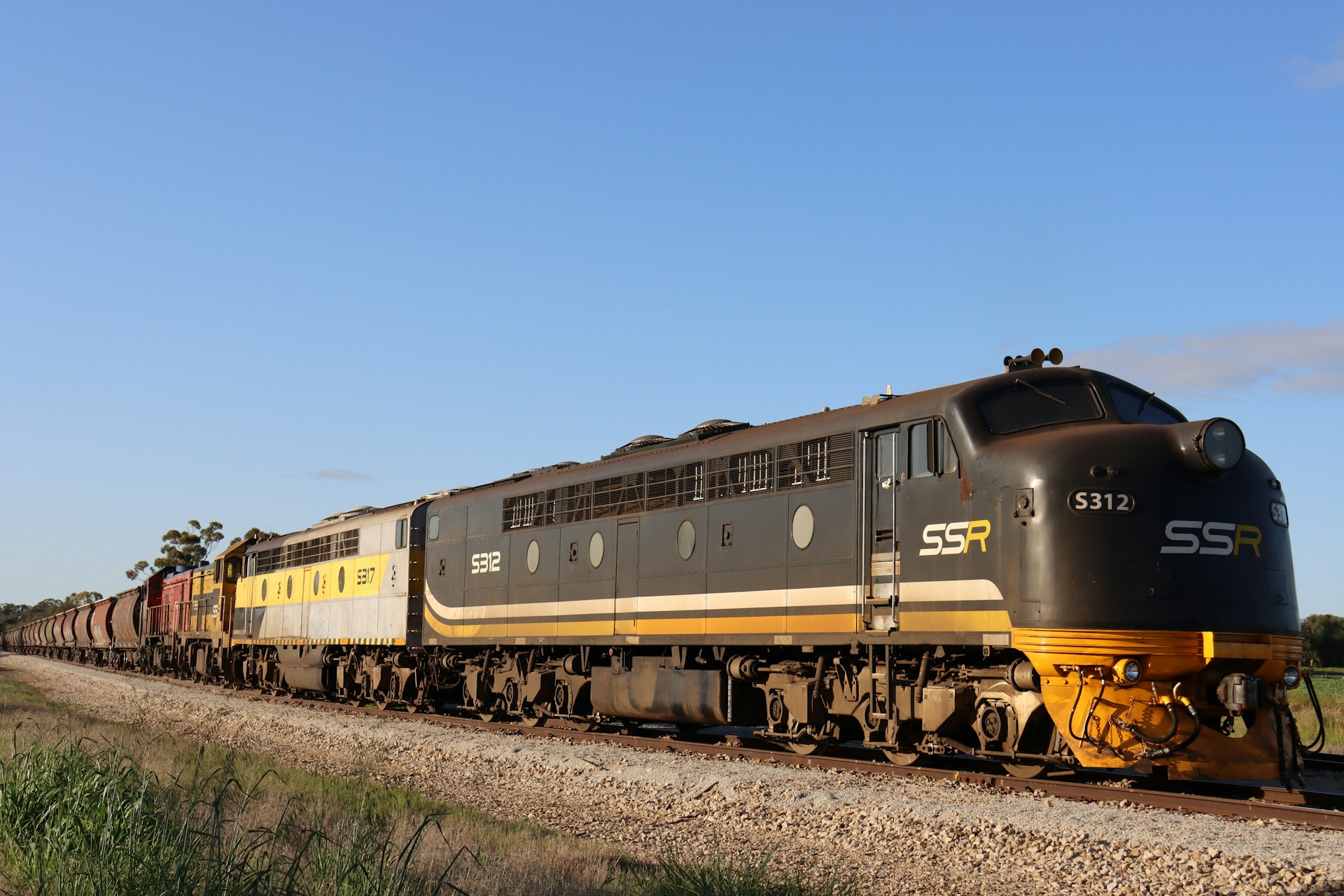
Inland Rail Runs Out of Steam in NSW’s Backyard
In what must be the greatest walkaway of a half-completed mega-building project since the Tower of Babel, the Albanese Government has scarpered from the Inland Rail project midway through construction. Minister for Infrastructure Catherine King delivered the fatal blow on 5 May.
A cynic might assume that Labor’s lack of will to deliver the project and its diversion of monies to other rail projects, such as the Victorian Government’s white elephant Suburban Rail Loop, is a sop to state Labor for the November election.
In response to an independent assessment of the project, “Verification and Assurance of Inland Rail Scope, Design, Delivery and Cost”, published by ACIL Allen in November last year, the Labor Government announced its decision in early May to abandon the partially completed 1,600-kilometre Brisbane-to-Melbourne rail corridor at Parkes.
The Review’s stated aim (page iv) was to “assess the processes and methodologies” of the entire project and “to determine whether they are fit-for-purpose and consistent with industry best practice”.
The 2025 ACIL Allen Review followed on from an earlier investigation, in 2023, “The Delivery of Inland Rail: An Independent Review”, by Kerry Schott AO. That Review stated that there were “significant deficiencies” around issues of monitoring, reporting, governance and management and that “there is insufficient certainty about the completion date and the final cost to have confidence in the current estimates” (page 5).
That bucketloads of money were squandered on land acquisitions, bonuses paid, and the failure to appoint a chief executive for two years is undisputable. Similarly undisputable are the failures in governance, unclear lines of responsibility, the establishment of Inland Rail as a separate entity with huge overheads and duplication of roles from Australian Rail Track Corporation (ARTC), and lack of specialist oversight.
Cost estimates increased from $16.4 billion in 2020 to $31.4 billion in 2022 (Table 6.3, p53). The latest projected cost was $45 billion.
The scrapping of the project is not only a disaster for communities along the route; it generates major ramifications for mining, agriculture, regional councils, logistic transport operations at intermodal hubs such as Toowoomba, plus for investors, and businesses. The Government’s promises of economic benefits from the project, advocated for years, dissolved overnight.
The project required extensive upgrades of existing track in Victoria and New South Wales (1,087 kilometres) to permit double-stack freight on the route. Some greenfield trackwork was required in Queensland and between Narromine and Narrabri in NSW (628 kilometres). But even the new rail alignment proved contentious and the consultative processes were bureaucratic.
The raison d’etre of the project was the creation of a dedicated, reliable, 24-hour train journey between Brisbane and Melbourne via Toowoomba and Parkes, enabling a critical cost/time competitive advantage to move freight from congested roads, especially the Newell Highway – which carries about 6,000 heavy trucks daily – onto rail.
Inland Rail would have allowed longer, heavier and faster trains to travel the Melbourne-Parkes-Brisbane route. Now that north-bound trains are to terminate at Parkes, all freight destined for Dubbo, Narrabri, and the Port of Brisbane will need to be offloaded onto trucks and shipped along the congested Newell Highway.
Many freight companies may reject the rail option terminating/commencing at Parkes, due to the additional costs of double or triple-handling of containers.
The new line was to have reduced the Brisbane-Sydney-Melbourne journey by at least ten hours, but with Parkes as the rail intermodal hub, where the line to Perth terminates, the old route may prove a faster and cheaper link.
An additional logistical efficiency was that the Inland Rail intersects the east-west Perth-Sydney line at Parkes, the intermodal where single-stack west-bound trains from Sydney are made up into double stacks, and east-bound double-stacked trains are broken into single-stack units.
The proposed upgrade to the south/east/west rail junction at Parkes is still to go ahead. This will allow double-stacked trains originating from Perth or Darwin to travel all the way to the Melbourne terminal without the need to offload containers at Parkes.
Currently, no double-stacked trains operate east of Adelaide and into Victoria; they must be broken down, in Adelaide, to single stack, meaning delays and additional costs. This is due to 4.2-metre height restrictions through the seven tunnels in the Adelaide hills and overpasses in Victoria. The Melbourne-Parkes-Port Augusta-Perth route, when opened, will bypass Adelaide, enabling double-stacked trains to traverse the entire route of almost 4,000 kilometres.
Double-stacking containers requires a clearance of at least 7.1 metres above the rail. Transit speeds are determined by the axle load of the train. Trains with axle loads of 21 tonnes will have a maximum speed of 115 kilometres per hour, while those with axle loads of 25 tonnes will be limited to 80 kph.
Optimistic estimates in 2020 expected that the entire inland north-south rail corridor would be operational by 2027; revised estimates (2023) suggested a completion date in the 2030s.
The Melbourne-Albury-Parkes route is well underway, with upgrades proceeding at numerous sites in Victoria and NSW. Community concerns exist around a possible Wagga rail bypass and the economic impact in Cootamundra.
Failing to Learn from Failures
By ending the project at Parkes – 960 kilometres short of Brisbane – Labor has unwittingly recreated the historical failure of the promised (1878) but never completed Darwin-Port Augusta narrow-gauge railway, which terminated at Alice Springs in 1929, leaving a 1,000-kilometre dirt track to the next railhead at Birdum, 500 kilometres south of Darwin.
Failure to complete the through connection created major logistical problems of “end of line” bottlenecks, especially during World War II. The mistake was repeated when the new standard-gauge line terminated at Alice Springs (1980) because of delays and procrastinations, before it was eventually connected to Darwin in 2004.
Ironically, a 188-kilometre Inland Rail alignment between Narrabri and North Star, 400 kilometres north of Parkes, was completed in 2023, at a cost of $693 million. This is now an orphaned, double-stack-ready section of track marooned in the middle of NSW.
The proposed northern section of the rail corridor through southern Queensland is proving problematic. There are unresolved differences in safety procedures between Queensland and NSW, accreditation delays and the added complexity of multiple segments of dual (standard and narrow) gauge rail on the same sleeper beds. The terrain around the Toowoomba Ranges is particularly difficult, and local community stakeholders have concerns over the alignment proposed over the Condamine floodplain, not to mention complications with access to the Port of Brisbane to unload wheat.
Infrastructure Minister King, in a flick pass, laid the blame for the failure at the feet of Barnaby Joyce. She said that Inland Rail was the “worst (infrastructure) project in the country”. As bad as it is, however, in saying that, she ignored two of the most destructive bottomless money pits: Snowy Hydro 2.0 and net zero fanatic Chris Bowen’s wind farms and solar panels.
In response to the Federal Government’s decision to fund the line no further than Parkes, Australasian Railway Association (ARA) chief executive Caroline Wilkie said the completion of the route remains vital: “When completed, Inland Rail will deliver a faster, more reliable and higher-capacity rail corridor between Melbourne and Brisbane, improving efficiency for freight operators and reducing pressure on congested road networks.”
Wilkie remained optimistic that the Government will “revisit the remaining sections of Inland Rail in the future to realise its vision to unlock economic opportunity along the full Melbourne-Brisbane route”.
We’ve Lost Our Bottle
Between 1912-17, during a world war, a committed federal government and Australians using horses, camels, picks and shovels constructed a 1,600-kilometre railway across the harsh outback from Port Augusta to Kalgoorlie. Yet, 110 years later, with all the modern technologies, machines and computers at its disposal, the Federal Government has squibbed on completing a railway of 1,600 kilometres.
The challenge for any future federal government, be it the Coalition, One Nation, or a non-Albanese Labor government, is to find the political courage to finish the job.
The 1947 film, Journey of a Nation highlights the chaos of gauge changes and bottlenecks on Australia’s railways during World War II. Any lessons learned from this seem to have been forgotten, but all the mistakes and chaos are soon to be repeated at Parkes, if the Inland Rail does not progress to the Port of Brisbane.
___
Republished with thanks to News Weekly. Image courtesy of Unsplash.
2 Comments
Leave A Comment
Recent Articles:

22 September 2026
3.8 MINS
Alex Antic’s grassroots victory gives South Australia’s Liberals a chance to rebuild from within — but federal intervention could turn renewal into rebellion.

22 September 2026
6.9 MINS
Ed Sheeran’s attempt to keep politics off his stadium tour unravelled when supporting acts turned concerts into political platforms, exposing tensions over music, activism and free speech.

21 September 2026
4.4 MINS
Forgiveness is a choice, not a feeling. That was the message Danny Abdullah brought to London's ARC conference, sharing how he and his wife chose to forgive the man who killed three of their children.
21 September 2026
2.4 MINS
It is truly concerning that this sort of incursion into free speech can even be suggested. Labor's Digital Duty of Care Bill is about controlling the narrative online, and must be defeated.
21 September 2026
3.2 MINS
Something special happens when men step out of the everyday and focus on being fully present. Dads4Kids recent Men’s Summit and the upcoming Courageous Online Fathering Course create space for presence.

18 September 2026
4.5 MINS
Up to 10,000 rallied in Sydney for a ban on sex-selective abortion. Twenty-four hours later, the NSW Legislative Council defeated John Ruddick's bill 21–16. The fight, says Dr Joanna Howe, is just beginning.
18 September 2026
3.5 MINS
Brothers Luke and Joel Smallbone have become one of the world's most loved Christian pop acts. As For King & Country, they have won four Grammys, 15 GMA Dove Awards and billions of song streams. And today they releasing their latest album.



Yes, but houses are more important!
There is also a long-standing committment from Canberra to seal the ‘longest shortcut’ across Australia from Winton in Qld to Laverton in WA. With luck, funds for that project won’t be cut off the same way.
But if Albo decided a fleet of pink drones dropping rainbow banners across the Harbour Bridge was more important, who’d be surprised?