


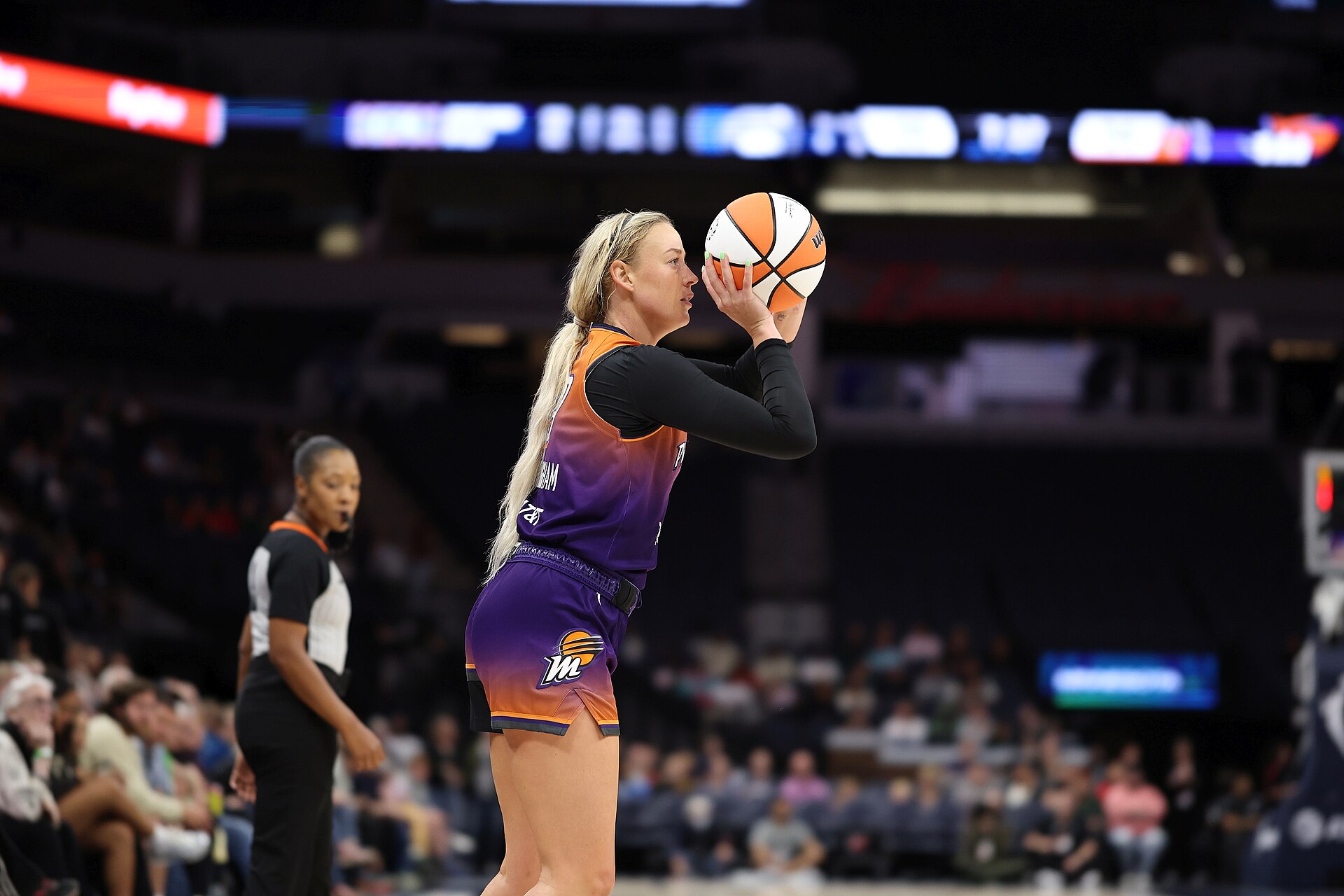
Sophie Cunningham, the WNBA, and the Battle Over Men in Women’s Sports
When Sophie Cunningham’s comments on transgender athletes in women’s sports went viral, a WNBA sideshow became something bigger: a clash between two rival stories about creation, identity, and redemption.
My daughter and I cheer for the Indiana Fever, which is a team that participates in the WNBA, a women’s basketball league in the United States. We try to catch most of their games on TV, despite living less than an hour or so south of Gainbridge Fieldhouse, where they play. Basketball holds a unique place in Indiana culture, and the Fever are part of our seasonal routine.
Between broadcasts of games and surrounding discussion, we get served a hearty daily helping of Fever news, such as game highlights, injuries, players and playing styles, personalities, controversies, and endless takes on everything Fever-related.
So Sophie Cunningham was hardly a stranger to us when she issued comments about transgender athletes that lit up social media and went viral nationally. I did not seek out to participate in another culture-war battle; it simply showed up in the sport my daughter and I love.
Cunningham said something that until quite recently would have sounded ridiculously self-evident: girls and women should not have to compete against biological males. She has been clear in follow-up interviews that one can hold this view without hating transgender people.
Pointing this out has become controversial. The argument she is making—to many people’s surprise—is that you can care about transgender-identifying people and want to maintain female athletic categories at the same time.
Transgender activists, sports leagues, and their ideological allies reacted to Cunningham’s comments as though she had violated a sacred orthodoxy. Her moral offence wasn’t simply disagreeing with the left on an issue related to sports. Calling for women’s athletic opportunities to remain reserved for women sounds like an overt sinful act inside a professional sports league that could not exist if male and female bodies were not meaningfully different.
The WNBA’s ideological gatekeepers were quick to treat Cunningham’s dissent as an act of heresy. Why? For Christians, the response to this alleged heresy takes us from basketball courts to conflicting worldviews on creation, the human person, and redemption.
Before Politics Comes Creation
An evangelical starting point must begin elsewhere. The Bible starts not with an independent human deciding what he or she will become but with God giving people an identity, purpose, and form to His creatures. “Male and female created them,” Genesis 1:27 tells us.
God made humanity in His image. Sexual difference, therefore, predates the Fall. Christianity cannot treat embodiment itself as simply another oppressive system devised by fallen humanity. Jesus Himself upholds the created order when He says in Matthew 19:4 that from the beginning God “made them male and female.” Whatever else gender dysphoria may mean pastorally, an evangelical definition of humanity must start there. We are not self-made; we are received as creatures before God.
This starting point also means that Christians should never meet transgender-identifying people from a place of contempt. Every person is made in God’s image, regardless of politics, sexuality, gender identity, health, intelligence, utility, or whether they agree with us. That transgender-identifying teenager has the exact same fundamental human dignity as the person complaining about gender ideology.
Christians should always stand against cruelty, mockery, bullying, or casually dehumanising people who are going through serious questions about their bodies and identities. But made in God’s image does not mean every conclusion we come to about ourselves is automatically true. Our value comes from God, not the successful construction or social approval of our chosen identities. This distinction means Christians can hold together compassion and truthfulness instead of treating them as opposites.
Finally, Christianity has a concept that much of today’s conversation is missing: the Fall. Creation was good, but it is no longer ordered as God initially intended. There is friction, pain, alienation, death. To suffer from gender dysphoria or serious dissonance about one’s body is not imaginary because Christians do not believe biological sex can be changed.
However, the presence of suffering does not mean the sufferer gets to define reality based on their interpretation of suffering. To be compassionate means taking someone’s pain seriously, but Scripture is compassionate towards those who suffer while also refusing to make suffering the ultimate standard by which we measure truth.
Two Stories of Redemption
This is also why the WNBA controversy matters beyond women’s sports. Western political ideologies have assumed the grammar of redemption long after they walked away from biblical theology. The Hebrew Scriptures gave shape to the Western religious imagination with their rhythms of creation, bondage, deliverance, judgment, restoration, and hope for the Messiah. Christianity, of course, makes redemption upon Jesus Christ.
Ideologies did not abandon narratives explaining what is wrong with humanity and how the world will be saved. In many cases, they displaced redemption from the work of God into politics, history, and revolutionary upheaval. Thinkers like Karl Löwith and Eric Voegelin contended that modern ideological enterprises often attempted to retain theological and eschatological categories even after discarding orthodox Christianity.
Progressive politics today often works with a parallel moral narrative. Culture gets read through paradigms of power. Groups get defined according to their place in those power structures. People need to become aware of these structures. The power structures must then be broken down. Marginalised identities must be uplifted. Equity becomes code for the desired future.
Now, not every effort to amend injustice falls under the suspicion of ideology. And Christians certainly need to identify and confront real discrimination. But when oppression is the framework for understanding all human misery and freedom from oppressive systems becomes the work of salvation, Christianity and progressivism offer competing stories of what’s wrong with humanity and what redemption looks like.
Christianity declares that humanity’s problem is sin, and salvation is found through Christ. Radical political soteriologies declare that human problems are located outside the individual in oppressive systems that inhibit true identity or equal distribution. That is not simply an alternative political agenda. Those are rival explanations of evil and salvation.
But strands of second-wave feminism quickly outgrew simple injustice-correcting. Important currents pressed toward liberation from seemingly oppressive structures themselves. The radical edge of feminism increasingly asked if womanhood itself; aspects of family, sexuality, and reproduction; and even traditional categories inherited from society were not structures from which women should be liberated.
Kate Millett’s Sexual Politics famously analysed male-female relationships through power structures. Shulamith Firestone’s The Dialectic of Sex consciously deployed Marx, Engels, Freud, and radical feminism. Firestone was notable because she considered women’s biological reproduction itself to be foundational for women’s historical inequality.
At this point, the divergence with Christianity becomes stark: where Genesis judges created reality as good, Firestone found fundamental components of reproductive difference oppressive and in need of liberation. The challenge was no longer sexist treatment of women. Nature itself was starting to seem like the enemy.
Simone de Beauvoir famously emphasised the societal process by which women are “made.” Judith Butler’s exposition of gender performativity problematised traditional associations between bodily sex and social gender. When identity could be divorced from bodily sex, and when received categories were interpreted increasingly as power structures, then the physical body could itself become oppressive. Women’s sports are now suffering from that contradiction.
The university served as one arena where these shifts became institutionalised. The university has always had multiple ideals. One of these ideals has talked about universities as institutions that seek the truth. More and more sectors of university life came to see scholarship as having a second task of debunking structures of domination and aiding in social reconstruction.
Haidt’s argument is that social justice has functioned as a second telos in parts of academia and that it can come into conflict with the traditional telos of seeking truth. Christian Smith makes a similar argument in his book The Sacred Project of American Sociology.
Smith argues that American sociology has often been imbued with an implicit moral vision based on themes of emancipation, equality, autonomy, self-directed identity, chosen beliefs and relationships, and freedom from oppressive institutions. Crucially for my argument, Smith refers to this vision as a “secular salvation story.”
It’s a conflict over whether reality is to be received from the Creator or redesigned to conform to our visions of freedom.
The WNBA’s Contradiction
Which brings us back to Sophie Cunningham. The WNBA exists because male and female bodies are different, and those differences matter to elite athletics. Sex-segregated sports presuppose meaningful average physiological and performance differences between adult men and women, even as the application of particular rules to transgender athletes after medical transition is hotly contested scientifically and politically.
Cunningham, therefore, begins with the simple argument that logically begins where women’s sports began: sex matters. But simply pointing that out ignores the WNBA’s status as an institution that acknowledges women as a meaningful category.
Minnesota Lynx head coach and president of basketball operations Cheryl Reeve wore a shirt declaring “Trans Kids Belong” and said that transgender kids deserve protection. God made transgender-identifying children in His image no less than anyone else, and their dignity is not earned by gender affirmation nor forfeited when a well-intentioned adult questions their understanding of themselves. But “Trans Kids Belong” does not answer Cunningham. Cunningham asks who is eligible for female athletic programs, Reeve answers that trans kids deserve dignity and humane treatment.
Both sides also fundamentally disagree over what it means to “protect trans kids.” If we say children need protection, Christians need to ask what we’re protecting them from. Does that not include decisions that inform how they understand and modify their body if those decisions are permanent and their body is still developing?
If gender-affirming treatment can include hormones and surgeries such as procedures that remove or alter healthy sexual characteristics, critics will have strong opinions about the use of that terminology when referring to minors.
Put more gently, just because parents say an irreversible intervention is what’s best for their child does not mean it is wise, protective, or in that child’s long-term interest. To protect children, therefore, must not mean we automatically assume medical affirmation is the most compassionate treatment.
For evangelicals, there’s also the issue of stewardship. We do not own our bodies. Our bodies are not a meaningless mass over which we sit as rulers with unlimited authority to reshape at will; they are part of the created goodness of our existence before God.
But stewardship is not predicated on affirming any and every interpretation a hurting child makes of his or her body. To love someone sometimes requires adults denying children decisions they’re not emotionally or physically mature enough to make. Creation’s goodness creates a default assumption that we are received as we are, not that our bodies must be destroyed to find our true self.
There is certainly room for debate over where that line should be drawn. But until we cross that line, claiming we’re protecting transgender-identifying children should mean at least considering the possibility that kids sometimes need help accepting their bodies rather than changing their bodies to accept their identity.
Stewart called some of the demonstrations and public response around the controversy attention-seeking antics trying to take advantage of the WNBA’s momentum, which is itself fair enough. People are allowed to have opinions, and we should absolutely provide space for discussions in safe settings.
Calling others’ actions attention-seeking does not erase the question they’re attempting to raise, however. If we base the league’s entire identity on the word women, at some point, the league needs an actual definition for that word.
Every coherent social category has borders. Women’s sports leagues exist in no small part because the assumption that men and women are interchangeable athletes would rob women of serious athletic opportunities in many disciplines. Rejecting men’s membership in the female category is not some morally suspect glitch that just happens to be appended to women’s sports leagues. It is constitutive of why we have a female category in the first place.
Once every categorical exclusion can be translated into the language of oppression and privilege, though, we cannot seriously continue to talk about preserving women as a protected category. The bitter irony shouldn’t be lost: an ideology of inclusion, in the long run, can imperil one of feminism’s greatest victories for women.
For that reason, the Cunningham controversy cannot ultimately be resolved by deciding whether Sophie Cunningham is brave or craven, groundbreaking or grubstakes, liberal or looming large in our imaginations. Whatever her politics, she is forcing the league to take a stand on an ontological question.
Is the word woman descriptive of an embodied reality or instead simply an identity that one claims for oneself? Neither “let everyone play” nor charges of bigotry deal with that issue. Women’s basketball cannot indefinitely preserve its category without having some notion of the material reality that category intends.
A Biblical Christian Anthropology of the Body
Psalm 139 reminds us that God created human beings bodily. This Psalm doesn’t portray the body as an accidental container housing the real self within. David thanks God because “you knitted me together in my mother’s womb” (Psalm 139:13).
At the same time, Psalm 139 does mean that we can define our bodies however we want, reducing them to raw material stamped with meaning by internal consciousness. Christian freedom is not the freedom to try on any identity we desire. It is freedom for God’s created beings to receive His gifts honestly and live faithfully as those creatures.
Christianity ultimately gives us freedom of a very different sort than self-affirmation or political liberation. The Gospel tells us that our fundamental problem is not that society won’t acknowledge who we want to be, but that we are alienated from our Maker through sin.
We’re redeemed by Jesus Christ, made right with God by His death and resurrection, and gradually trained by His Spirit to know ourselves as God knows us — according to truth. Christianity, therefore, rejects both body hatred and idolisation of the autonomous self. It redeems human beings as they were created by God.
This means love from evangelicals will usually be more costly, but also more hopeful, than mere affirmation. We can sit with someone experiencing deep gender distress. We can listen to them without ridicule. We can stand against violence or ridicule from others and tell that person their life is priceless.
But we can also say modern sexuality’s basic assumption—that love means confirming every choice someone makes about their identity—is false. To say the truth over someone’s protests is not loving them. And we don’t honour God when truth becomes a weapon against those struggling to accept His good creation.
What Sophie Cunningham Accidentally Exposed
The WNBA can’t legislate collision avoidance slogans into existence. Does equality of dignity demand interchangeability of male and female bodies? Scripture provides Christians with ample reason to conclude it does not. That is why this debate matters for far more than basketball.
Sophie Cunningham rightly pointed toward the body. Christianity points beyond the body to its Maker. Christians cannot ultimately defend male and female biology by itself (though that biology is certainly important); we defend it because creation has a Creator, and because Scripture tells us how to think about His creation. We defend the dignity of transgender-identifying individuals for precisely this reason: every person is made in His image.
But saying that does not allow us to declare triumph of the autonomous self over God’s good creation. Jesus Christ is our redemption from that brokenness, through Him creation was made, and through Him creation will one day be restored.
___
Image courtesy of Wikimedia Commons.
3 Comments
Leave A Comment
Recent Articles:
26 October 2026
2.5 MINS
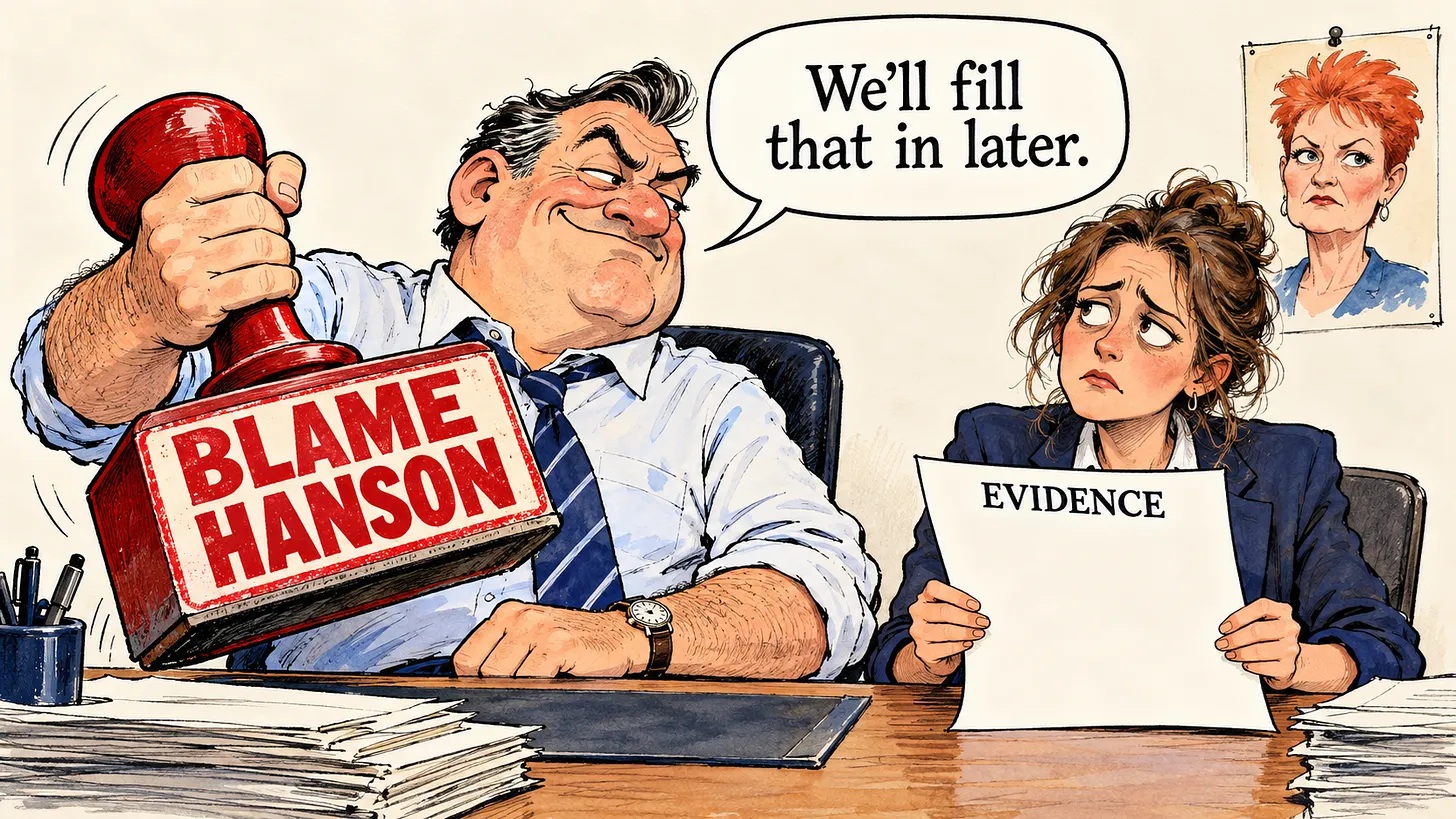
Nation First exposes the rush to weaponise the Haines attack against Pauline Hanson, conservative voices and men before investigators established a motive.

26 October 2026
5.1 MINS
Anthony Albanese calls for civility after the Helen Haines attack, but revelations of a political dirt file raise uncomfortable questions about his government’s own conduct.
26 October 2026
2.9 MINS
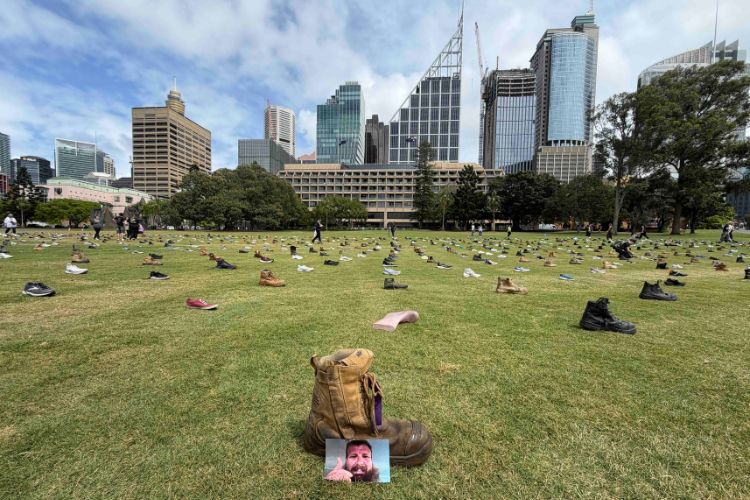
A powerful display of thousands of shoes highlights Australia’s escalating male suicide crisis, while Dads4Kids celebrates fatherhood, family connections and practical action to strengthen generations.
26 October 2026
3.2 MINS
Following Paul's example in Ephesians 1, let us pray for the Father to open the eyes of our hearts so that we may grasp the hope of his calling, the riches of his glorious inheritance in the saints, and the greatness of his power towards us who believe.

25 October 2026
4 MINS
Prayer is active partnership with God, and he is awakening his body to prayer, not by might or by power, but by his Spirit.

24 October 2026
3.3 MINS
When we ask God, "What is in my hand?", and see our possessions, money and time as seed that God asks us to sow, life becomes simpler.

23 October 2026
6.8 MINS
Hillsong UNITED’s Joel Houston reflects on fame, faith and the burden of ministry, questioning performative Christianity as he seeks a more authentic walk with God.



Really great article Tim!!!
Why is it the left twist simple truth to their evil ends?
Isaiah 5:20 Woe to those who call evil good, and good evil;
Who put darkness for light, and light for darkness;
Who put bitter for sweet, and sweet for bitter!
John 3:18 “He who believes in Him is not condemned; but he who does not believe is condemned already, because he has not believed in the name of the only begotten Son of God.
19 And this is the condemnation, that the light has come into the world, and men loved darkness rather than light, because their deeds were evil.
20 For everyone practicing evil hates the light and does not come to the light, lest his deeds should be exposed.
Great stuff once again Tim. Keep them coming.