


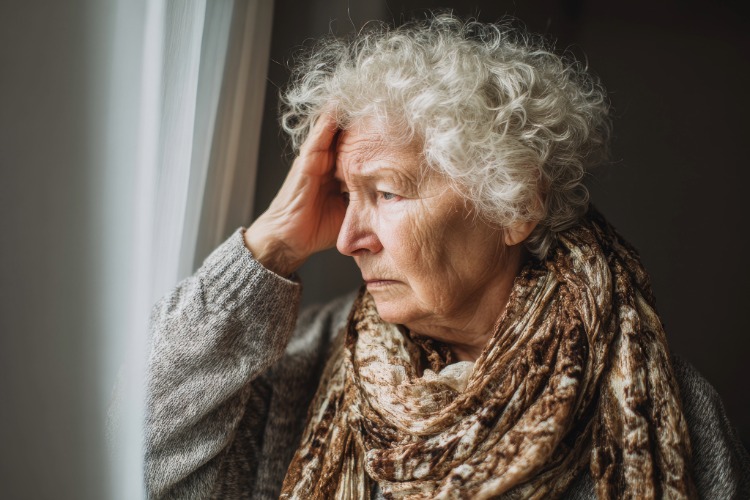
VAD and Telehealth: A Fatal Combination
The Federal Labor Government is proposing to expand assisted suicide via telehealth — a choice to die over a video call, without a doctor ever being in the room. That’s not compassion. That’s the state deciding your life isn’t worth the cost of a face-to-face visit.
“Today … I am offering you life or death, blessings or curse.” (Deuteronomy 30:19, NJB)
On August 27, 2026, the Northern Territory joined the rest of the country in legalising (so-called) voluntary assisted dying (VAD).
According to the pro-euthanasia website, Campaign For Dying in Dignity (which one might expect to get the numbers right), euthanasia is lawful in Canada, ten countries in Europe, four countries in Latin America and in Australia. It is also legal in 13 states in the United States.
There are 195 countries in the world. This means that the vast majority of countries – 179 of 195 – in the world continue to reject the practice. Why Australia should be one of the very few countries in the world to head down this path is a puzzle. Perhaps once abortion became fully decriminalised countrywide, the idea of medical practitioners intentionally causing death became less obviously absurd.
First Legalisation, then Expansion
One thing that happens everywhere euthanasia is introduced is that, as soon as it is in place, any safeguards to protect the vulnerable suddenly become re-categorised as “obstacles”.
The Commonwealth Criminal Code Act 1995, as interpreted in Carr v Attorney-General of the Commonwealth, currently effectively prohibits the use of carriage services for the provision of VAD. This prohibits the use of telehealth in relation to VAD.
This is the latest safeguard under attack and a bill to permit telehealth for VAD is likely to be debated in Federal Parliament in September – this may even have begun already as this article goes to press.
For someone to volunteer to die – either by poisoning themselves or having doctors kill them by poisoning them – and for the state to support this decision – is a big call. For such a decision to really warrant the description of being voluntary it would involve the consideration of many aspects including an accurate diagnosis of a life threatening illness, an accurate prognosis of life expectancy, assessing mental health to ensure that treatable depression is not causing the person’s death wish, and ruling out coercion (from relatives of others).
In a sensible world, before introducing VAD – let alone looking at permitting telehealth for VAD – in a developed country such as ours, the first step would be to ensure that everyone suffering from a terminal illness had access to first-rate medical care and high-quality aged-care and nursing facilities, palliative care, and pain management. Since the idea of VAD is to have a “good death”, it would also be important to ensure that whoever is prescribing or injecting the poisons is expert in accurately calibrating the precise dosages needed for that person so they drift off quickly and painlessly.
Making each of these assessments with proper due diligence would first involve ensuring that all of those services were in place along with the right number of experts and specialists in relevant illnesses, pain management and mental health and a very substantial investment in palliative care to provide them.
If not, people will opt for VAD because they are in pain – and not receiving appropriate pain relief. They will choose VAD because they are depressed or otherwise experiencing mental-health issues. They will choose VAD because their aged-care facility or nursing home is unpleasant or because they cannot access high-quality palliative care.
They will choose VAD because they have been misdiagnosed. They will choose VAD under pressure – subtle or direct – from friends or relatives looking at ensuring that their inheritance is not spent looking after their ill friend or relative.
Perhaps worse, the ill person will feel that it is somehow wrong of them to spend their money (or taxpayers’ money) on their own healthcare and that choosing to die is a laudable act of self-sacrifice for others. Of course – despite the supposed legislative safeguards – VAD has been rolled out across Australia without properly addressing any of these matters.
Decisions about whether to access VAD are, of course, life-or-death decisions. People of sound mind are generally discouraged from killing themselves.
Telehealth and Rural / Remote Areas
The disproportionate number of suicides in rural and remote Australia is of such concern that the Centre for Rural & Remote Mental Health at the University of Newcastle researched and published a lengthy paper, “Rural Suicide and its Prevention”, on the topic. It reported that the rate of suicide outside the Greater Capital Cities (where most Australians live) was over 50 per cent higher than within those city areas.
The most recent Victorian and NSW official statistics for VAD indicate that a proportionately higher number of regional residents access VAD. For example, 67.5 per cent of patients who had a first assessment for VAD in NSW in the period from July 1, 2024, to June 30, 2025, were regional residents. This is so even though only 38.8 per cent of the NSW population in that period were regional residents.
But apparently those rates are not high enough and telehealth is required to make VAD more accessible to remote and regional communities. A more urgent focus might be to improve access to mental-health services in the regions.
It is a scandal that only 10¢ in every dollar spent per capita on Medicare mental-health services is spent in Very Remote Areas. Is it not an even greater scandal to say to those considering VAD that the state thinks so little of your life that it will not even require a health practitioner to meet you in person to talk with you about your wish to end your life deliberately and prematurely?
A meaningful therapeutic relationship is key to VAD assessments and face-to-face communications are the best means to develop such relationships and to assess a person’s motivations. As Dr Brian Grim has recently observed in another context:
“We live in an age when we can connect with anyone, anywhere, instantly. Yet, as our tools for communication have multiplied, something essential has become easier to overlook: the power of being in the same room. … Faith, belief, and values are not abstract concepts. They shape how people build trust, make decisions, and define integrity. And while digital platforms help us exchange information, relationships – especially across belief systems – are built most powerfully face-to-face.”
Associate Professor Odette Spruijt, a Tasmanian palliative-care specialist, has spoken of the importance of face-to-face interactions when medical practitioners are assessing patients for VAD. “This is complex and requires knowledge of the person, their environment, their supports, their beliefs and those of their caregivers,” she says. She is not alone.
A recent Healthed poll of around 1,400 GPs found that 69 per cent are generally unsupportive of telehealth for VAD assessments and only 8 per cent were generally supportive of its use for such assessments.
Expanding Access via Telehealth
Expanding telehealth to VAD is not really about helping people. It is about saving money. Telehealth is cheaper to provide than face-to-face consultations and it is easier for the medical practitioners involved.
Of course, providing services across the expanses of our nation is not a new problem. A range of approaches are taken to the provision of healthcare services to facilitate access in Australia.
In NSW, for example, the Isolated Patients Travel and Accommodation Assistance Scheme (IPTAAS) provides financial assistance towards travel and accommodation costs when patients need to travel long distances for specialised medical treatment that is not available locally. Patients can apply to IPTAAS for VAD-related appointments.
Medical services in NSW are also provided by outreach services that aim to increase access to medical, allied health and nursing services for people living in remote, rural and regional areas. Health professionals – including the Royal Flying Doctor Service – travel into the regions to provide medical services.
In addition, there is a VAD coordinator in each of the state’s 15 Local Health Districts and NSW Health has employed several visiting medical officers who are available to travel to regional and remote areas, to deliver VAD to patients who have no other access to a VAD provider.
If the state wants to provide opportunities for people contemplating VAD to meet in person with health professions, it can do so. However, if telehealth is available for VAD, obviously the state’s enthusiasm for funding personal interactions will dwindle.
People will die by VAD without ever having a face-to-face conversation with those empowered to hasten their death. That is not compassion. That is cruelty.
The most compassionate avenue for end-of-life care for people whether they live in remote and regional Australia or elsewhere is the same. It is not telehealth VAD assessments. There is an urgent need for work to be done to address suicide risks in our nation and especially in rural Australia.
All Australians deserve access to high-quality medical care, high-quality palliative care, high-quality pain relief and high-quality nursing homes and aged-care facilities. Those who choose assisted dying because they do not have access to all of these facilities should not be falsely characterised as exercising free will or making a voluntary choice to die.
___
Republished with thanks to News Weekly. Image via Adobe.
Recent Articles:

17 September 2026
3.9 MINS
The NFL landed in Australia with a flyover, celebrities, and a 100,000-strong crowd. What caught the internet's attention was something the MCG hasn't seen much of lately: unashamed, public Christian faith.
17 September 2026
5.2 MINS
Surrogacy is often discussed through the hopes of adults seeking children. Meet the woman, born to a surrogate herself, who says the debate should begin instead with the experiences of surrogate mothers and children separated at birth.

17 September 2026
2.8 MINS
"A good mom if you strangle your kids — but lose custody for protecting your daughter from being castrated and mutilated by the gender lobby." That's Massachusetts today, where a Catholic couple lost their teenage girl for refusing to affirm her transgender identity.

17 September 2026
7.1 MINS
Five of the seven churches in Revelation were commanded to repent. The call hasn't changed. If we want revival, we must start where every revival has started — with repentance, prayer, and turning back to God.
16 September 2026
4.7 MINS
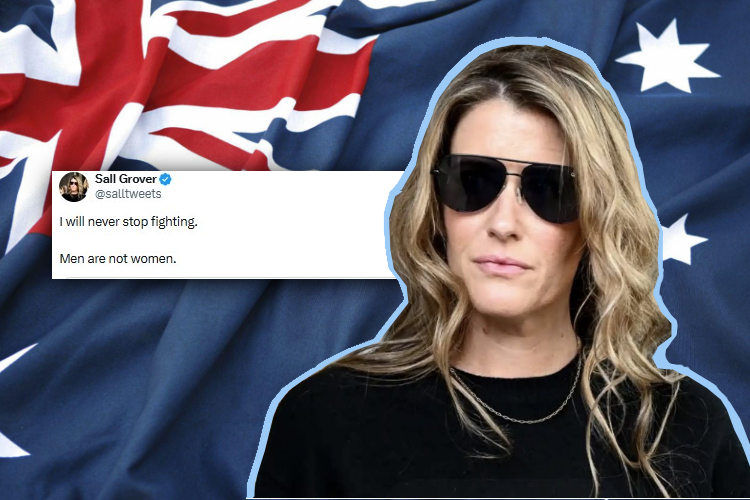
Sall Grover is leaving Australia, but not the fight. Following the High Court's refusal to hear her appeal in Giggle v. Tickle, Grover declared she will not call a man a woman — whatever the law says. She won't stop fighting until the law changes.

16 September 2026
3.8 MINS
Adelaide-based pop artist LILLI has been named Australian Emerging Artist of the Year at the 2026 People’s Choice Awards, capping a landmark year of chart success, her debut album Anthropology and songwriting work in Nashville. The South Australian Christian artist was one of three finalists represented by Adelaide independent label Australian Christian Records.
16 September 2026
6.7 MINS
When Dr Paul Tyson hand-delivered a letter opposing the Digital Duty of Care bill to his local MP's office, he expected a brief exchange. Instead, he left feeling patronised, unheard, and more alarmed than ever.


