Why Humour is a Superpower
I look forward to family get-togethers at Christmas, because there is always lots of laughter. Our family’s principal humourist has recently had his first child. As we were enjoying our Christmas family dinner, we were all talking in earnest about his baby son’s resemblance to both his parents. Of course, the discussion revolved around whether he was more like dad or more like mum.
Perhaps the 3-month-old baby could understand our conversation; he began to cry as though he wanted to prove a point. His dad cradled him in his arms. and looking down at his baby, calmly said, “When he is happy he looks more like his dad, and when he cries he looks more like his mum.” His wife burst out laughing, as we all did. This simple comment broke any tension about the subject and deflated our pompous pondering. In our laughter we found each other, and hope and harmony, all at the same time. That is what humour does!
The same son, even when he was three years old, had the amazing ability for deadpan humour. When I would ask him where the current lost toy was, he would always say the same thing: “It’s gone for a spacewalk, Dad.” Whether it was a lost truck or a monkey doll, the answer was always the same. “Gone for a spacewalk,” was always said in the most nonchalant, matter-of-fact tone. His answer was so convincing that for a moment you felt you had to ring the NASA space program to ask them to look for the monkey doll in space.
Back at the Christmas table, his wife could hardly stop laughing, and neither could I, or anyone else for that matter. It was one of those “gone for a spacewalk moments” that we all need so desperately as mothers and fathers.
It would seem this streak of cheeky humour runs in the family tree. Recently, one of my sons’ two-and-a-half year old boy filled my concrete birdbath with rocks, so much so that it broke. When his dad confronted him and asked, “Why did you put all those big rocks in the birdbath? You have broken the birdbath in half!” He replied nonchalantly, “The birdies did it!”
That has now become his rote answer to everything. Where is the lost Lego? “The birdies took it.” Why is your food spread across the dining room floor? “The birdies did it!” It is hard not to laugh if you are a human being, and it seems as if the laughter makes us dads more human too. This humour thing is definitely genetic!
Last year, Jennifer Aaker and Naomi Bagdonas released their new book, Humour, Seriously: Why Humour is a Superpower at Work and in Life. A review of the book by Anna Moore from The Guardian, titled “You’ve got to laugh: why a sense of humour helps in dark times”, shows why laughter and our humanity are so connected.
‘Aaker and Bagdonas have spent five years studying the power of humour: watching hours of standup; interviewing comedians; training in the world’s best comedy institutions and teaching it at Stanford University…
“Some people believe this is too serious a time to laugh,” says Bagdonas, speaking via Zoom from her home in California. “But this is when we need humour more than ever. With this global pandemic, the shift to remote working, loneliness and depression rising precipitously, many of us have never felt so disconnected. When we laugh with someone — whether through a screen or 2m apart — we get this cocktail of hormones that strengthens our emotional bonds in a way that wouldn’t otherwise be possible. Studies show it makes us more resilient, creative and resourceful.”
Bagdonas and Aaker came to this subject via very different routes. Bagdonas is a business consultant by day and a standup by night. She was raised by parents who wove humour into the fabric of family life. She recalls, aged eight, a Christmas when her father had been sick for many months, unable to go downstairs where they usually kept the tree. “Obviously, not having a Christmas tree was the least of our worries, but when you’re young, the first year without one is memorable,” she says. On Christmas morning, she found her dad wearing a tree skirt, both he and his IV pole decorated with ornaments, tinsel and lights — an unforgettable magical moment in the hardest of times.
Aaker, a behavioural psychologist, is not a natural comic. (When she asked her children who was the funniest person in the family, she ranked last, after the dog.) She became interested in humour’s potential after working on a bone-marrow donation drive with her Stanford students. Through this, she met Amit Gupta, a young man with leukaemia, in need of a transplant but unable to find a match. From this dark corner, Gupta set forth with humour, hosting bone-marrow events where guests were invited to BYOSA (Bring Your Own South Asian) and “swab parties” in NYC bars. He found his match.
“Humour drew others and mobilised them,” says Aaker. “People believe, implicitly or not, that humour has no place in serious times, that it might mean you’re not taken seriously. For Amit, humour was authentically him — it was how he always approached life.”…
Humour, Seriously presents a huge body of research to illustrate why and how humour works. Laughter triggers the “happy hormones” and suppresses cortisol, the stress hormone. It increases blood flow, and is a muscle relaxant. One 15-year Norwegian study of more than 50,000 people found that those with a strong sense of humour lived longer than those who scored lower. Another study of recently bereaved people showed that those able to laugh when recalling their loved ones reported less anger and less distress.
Despite this, warn Aaker and Bagdonas, we’re falling over a humour cliff. Their own survey of 1.4 million people in 166 countries found that rates of laughter plunge at the age of 23 — just as we “grow up”. Other research backs this up. It has been found that a four-year-old laughs 300 times a day; a 40-year-old 300 times every 10 weeks. Aaker and Bagdonas say this is due to a number of factors. There’s the belief that adulthood and the work place is “serious business”. There’s the fear of a joke failing — and also, as we become adults, the “born with it” myth. You’re either funny or you’re not.
Their book shows that there are many ways to introduce levity, to live on the precipice of a smile and be open to humour without having to crack jokes.’
Lovework
Whether you have a genetic streak for humour or not, you certainly have to look for the laughter-inducing moments as a parent and treasure them. If nothing else, it might preserve your sanity. Besides, you will live longer if you do.
If you don’t believe me, read an article I wrote called ‘Ten Reasons to Keep Laughing.” The science and benefits of laughter are indisputable. Humour really is a superpower!
Yours for a Happy New Year,
Warwick Marsh
Recent Articles:

18 September 2026
3.5 MINS
Brothers Luke and Joel Smallbone have become one of the world's most loved Christian pop acts. As For King & Country, they have won four Grammys, 15 GMA Dove Awards and billions of song streams. And today they releasing their latest album.
17 September 2026
5.2 MINS
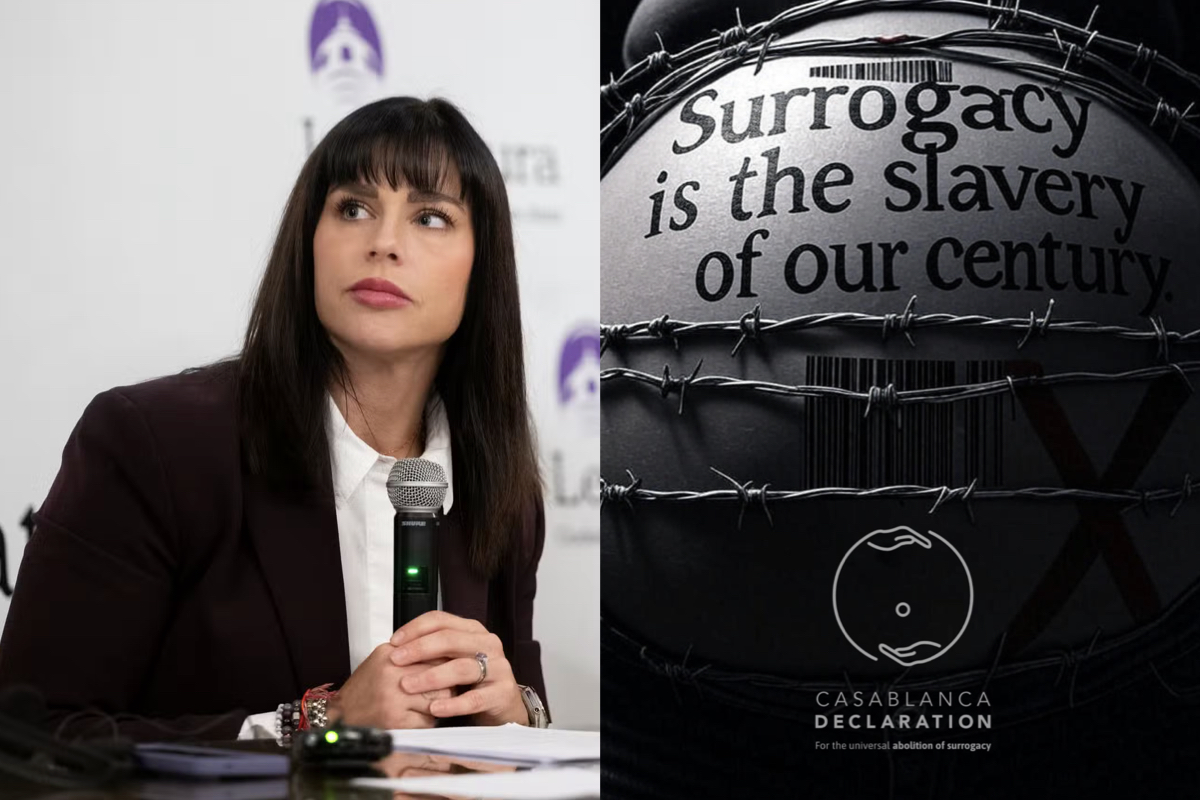
Surrogacy is often discussed through the hopes of adults seeking children. Meet the woman, born to a surrogate herself, who says the debate should begin instead with the experiences of surrogate mothers and children separated at birth.

17 September 2026
2.8 MINS
"A good mom if you strangle your kids — but lose custody for protecting your daughter from being castrated and mutilated by the gender lobby." That's Massachusetts today, where a Catholic couple lost their teenage girl for refusing to affirm her transgender identity.

16 September 2026
6.7 MINS
When Dr Paul Tyson hand-delivered a letter opposing the Digital Duty of Care bill to his local MP's office, he expected a brief exchange. Instead, he left feeling patronised, unheard, and more alarmed than ever.

15 September 2026
13.4 MINS
Nation First analyses how Albanese’s Digital Duty of Care could expand the definition of online harm, pressure Big Tech to censor lawful speech and supercharge the powers of eSafety.
14 September 2026
4.5 MINS
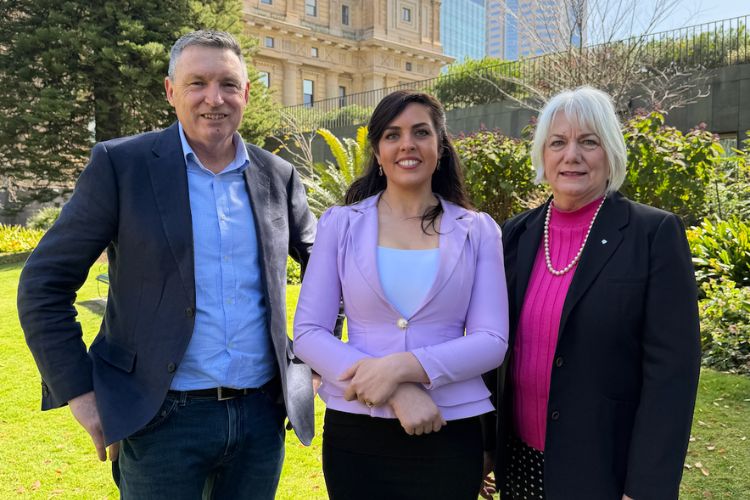
Moira Deeming says the public hasn't heard the full story of what happened to her inside the Victorian Liberal Party — and now, after joining Family First, she's ready to tell it.

14 September 2026
4.9 MINS
The Albanese Government Digital Duty of Care Bill could give an unelected commissioner the power to suppress free speech online — and Senator Alex Antic is leading the fight to stop it.