


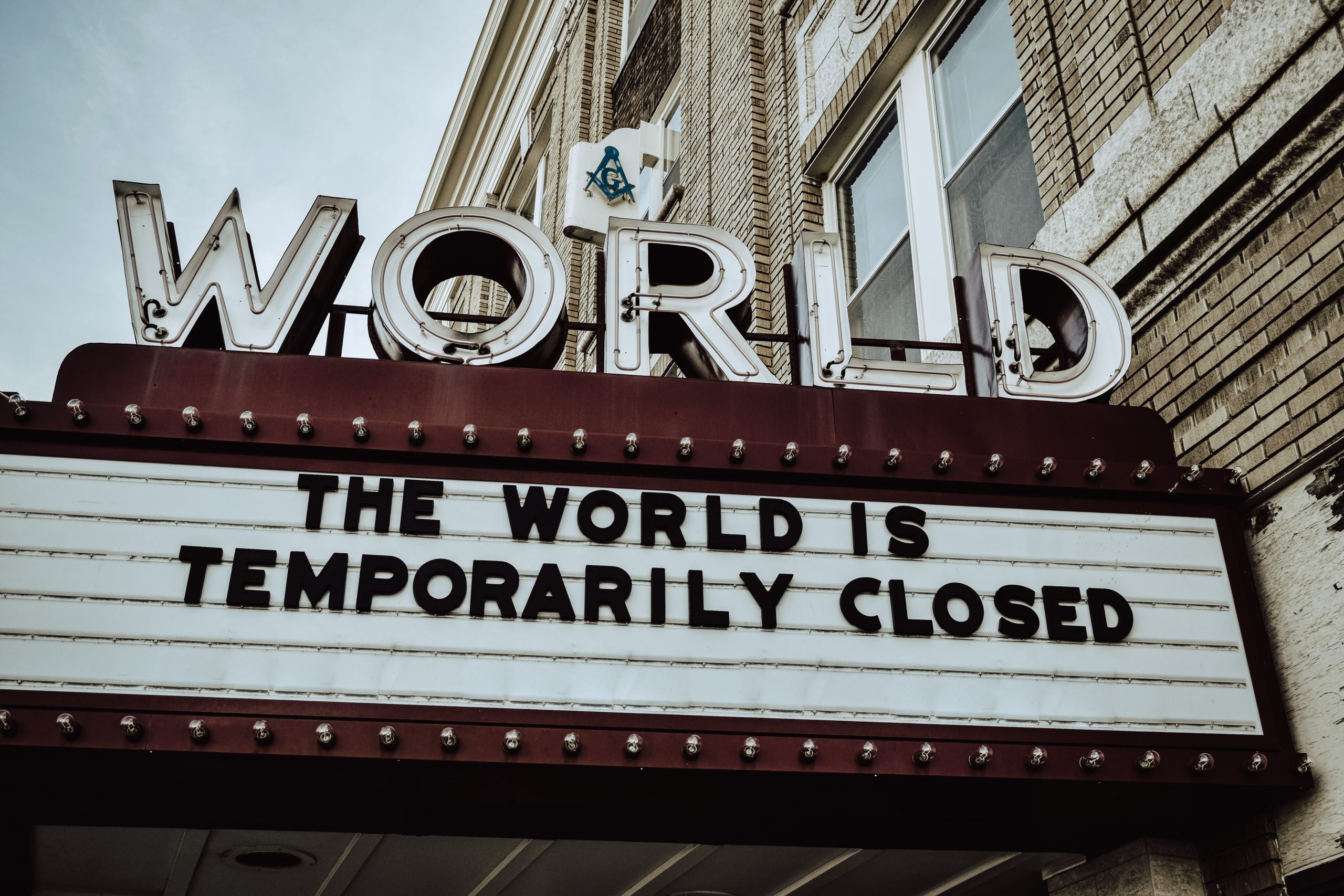
Don’t Waste a Crisis
In the Australian, Bernard Salt wrote of the absence of religion in many lives, and that in times of pandemic,
“It’s almost as if humanity needs a god to take the blame for matters beyond our control. But in modern, godless Australia we simply refuse to accept that calamity is random. Someone must be held accountable for our misfortune. And that is where I suspect the narrative will soon shift… It was all so much easier when God could shoulder the blame, forgive our sins and promise a better life. Navigating the current crisis could prompt people to rethink their godlessness. It could create heroes of those who show strength and selflessness, and trigger the downfall of others, especially in the political class. Somehow I think we will see all of these outcomes in the coming months.”
The Christian faith is not a fair-weather faith. It still functions in fair weather, but when the economy and the welfare system are humming along, God and the communion of faith seem less relevant. A crisis squeezes us more tightly than usual and what’s in us will come out eventually. Some people are very self-assured. They are confident that they will rise to the occasion and triumph over adversity. Most of us are not so sure of what will come out of us if we are squeezed hard by financial instability, the demands of social isolation, or God-forbid that we or a loved one succumbed to the virus.
We only discover what people are made of — others and ourselves, under pressure. Frankly this crisis is not what we would choose, but it has chosen us. Some of us will be sensibly heroic. Others will be more anxious and reserved. We may be surprised at ourselves and what we really care about.
One advantage of crisis is that it exposes the true nature of things and people. If there are things that need to be fixed, crisis will demand it. There is much less obfuscation. We see this in our parliaments. In crisis people have to work together, conflict is a luxury we can’t afford. This is true of the human heart. In times of plenty, we may pretend to be someone better than we are. In hard times, we must fix what’s broken or perish. There is much to be gained spiritually in a crisis. In a crisis, the social issues and conflicts that usually occupy the public space, the parliaments and the private space of home and family seem to go to ground. Everyone is too busy staying alive.
We have seen the general public and leaders reacting to those who are not considering others, not observing social distancing or the common good. Crisis permits calling out anti-social behaviour. In good times, self-serving attitudes are almost a virtue of politics and economics. In a crisis, we learn quite how interdependent we all are and that individualism has its limits.
Some social researchers identify the sense of social responsibility currently required of us all as a residual Christian value. It is as if society still recognizes that selflessness is the right thing to do, even though they may not identify it as an effect of faith or conscience. Crisis has a very powerful effect on cultural values and behaviour. The political dictum “Don’t waste a crisis” holds true for us individually and together. As Bernard Salt suggested, who will become the heroes of this critical time? Who will set a new gold standard for collective citizenship? Already health workers are being praised (and prayed for). Some of our political leaders are providing very significant leadership. Some in the media are keeping the public discourse accountable.
Let’s bring this question home to the family and community level, as churches and Christians re-position themselves to be ‘the un-gathered church.’ In the home and in the church, sensible heroism always starts in our prayers, but does not end there. As we pray for those charged with difficult national decisions, for health workers, and others services brought into the fray, for the elderly and the vulnerable, for the homeless, for the indigenous communities, for struggling businesses, for those losing work and income, for families and households struggling with diminished income, for those living alone, for those finding the lack of social support very unsettling, for every other human being that crosses our path, “Lord, help us to see them through Your eyes.”
Prayer is not an exercise in itself, for making us better people, even though it will do that. It is coming close to God through Christ. It is listening and waiting before speaking out our anxious thoughts. Our prayer depends entirely upon what we know of God. Prayer is what people do when they know it’s time to get beyond the habit of religion. And we may have more time on our hands for a little while. Prayer will certainly change those of us who pray, but its main purpose is to change the world in which we live. As Jesus prayed: “Your kingdom come on earth as it is in Heaven.”
My prayer for you as you read this (and for myself) is that when we are through this we will look at our families, friends and neighbours with a deeper appreciation of God’s goodness to us all; that we will not lose the willingness to work together for the common good, that we will not surrender so quickly to self-interest, and that we will find ways to live respectfully with those who are not like us. Most importantly, that we will have come to know God and choose to maintain the closeness.
___
Originally published at FamilyVoice Australia.
[Photo by Edwin Hooper on Unsplash]Recent Articles:
25 October 2026
4 MINS
Prayer is active partnership with God, and he is awakening his body to prayer, not by might or by power, but by his Spirit.
24 October 2026
3.3 MINS
When we ask God, "What is in my hand?", and see our possessions, money and time as seed that God asks us to sow, life becomes simpler.
23 October 2026
6.8 MINS
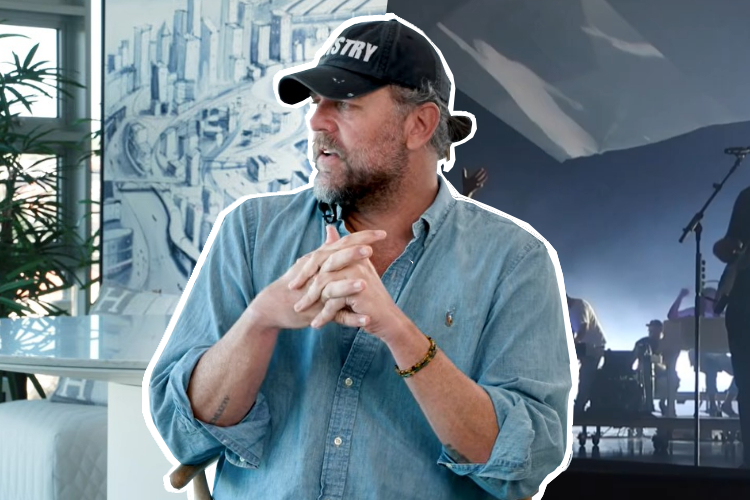
Hillsong UNITED’s Joel Houston reflects on fame, faith and the burden of ministry, questioning performative Christianity as he seeks a more authentic walk with God.
23 October 2026
13.1 MINS
Tasmania’s proposed conversion practices legislation raises serious questions about religious freedom, pastoral care and whether Christians can freely pray with those seeking to live according to their faith.
23 October 2026
7.7 MINS
Melbourne Catholic Archbishop Peter Comensoli has spoken out clearly against the deadly promises by both major parties in Victoria ahead of the election, drawing a comparison between abortion and capital punishment.
23 October 2026
3.1 MINS
The one who is worthy of it all is awakening his Church to be captivated by him, so that we will honour one another and share his gospel with humility and courage.
22 October 2026
2.9 MINS
Victoria Labor’s promise to fund free abortions has drawn a forceful response from Presbyterian leaders, raising profound questions about unborn life, government priorities and Australia’s moral direction.


