



Educating Ignorance: The Demise of Higher Learning in the West
Higher learning is not what it used to be in America. Read about the events that took place to undermine America’s institutions in the 20th Century, the current state of play, and what this means for America’s future.
The best-kept secret in America today is the steep drop in the quality of college since the Left seized power in higher education. Every year, various magazines publish a list of rankings for American undergraduate institutions.
Forbes, for instance, assures parents that “Every school with a Forbes grade meets a high standard.” U.S. News and World Report tells its readers that they consider a wide variety of factors in measuring a college’s effectiveness.
While American colleges were once great institutions of learning, those who know higher education today recognise that “high standards” of quality are casualties in the war against traditionalism and American values.
Where religion and love of country and family were once revered, radical Leftist ideology now prevails. Traditional values have been replaced by moral relativism, anti-establishment teachings, and the breakdown of the family.
Schooling and the Wellbeing of the Nation
The radicalisation of colleges did not happen overnight. What we have now is a product of past indifference and disinclination to do anything to reverse the spread of Leftward trends.
John Howard’s book America’s Best Colleges! Really? considers how the traditional purpose of education has been eradicated and replaced by radical ideologies of the Left. Howard outlines a brief history of how our Founders desired our public education system to reinforce religion and morality in order for our self-reliant experiment to survive and thrive. In contrast, he points out how the Left has imbedded its teachings in America’s educational system and perverted the Founders’ original intent to undermine the country’s foundation.
Howard quotes ancient philosophers about the purpose and foundations of education. One of these is Aristotle, who said: “Of all the things I have mentioned, that which contributes most to the permanence of constitutions is the adaption of education to the form of government.”
Howard then states that “schooling is the foremost determinant of the well-being of a nation,” with the exceptions of religion and family. Howard cites Diogenes Laërtius, who said, “The foundation of every state is the education of its youth.”
The Co-Opting of Higher Learning Institutions
In one of the book’s most compelling stories, John Howard recounts a revealing meeting with government officials concerning educational objectives:
In 1963, a group of college presidents – I was among them – visited several members of Congress and officials from the Office of Education with a proposal to substitute tax credits for gifts to colleges in place of Federal grants.
When we explained the plan to Dr Francis Keppel, the U.S. Commissioner of Education, he said, “We couldn’t allow that! It would prevent us from accomplishing our social objectives!” He intended to convert the educational institutions into agencies for achieving social objectives determined by the Federal government.
Commissioner Keppel had just proven that the worst fears of what would happen to education if it were federalised, had already been fulfilled.
So the federal government’s “social objectives” were paramount in the nation’s educational institutions. Indeed, the history of radicalisation isn’t something that appeared out of nowhere. To anyone paying attention at the time, it was a steady pounding of extremist rhetoric and action in every aspect of the classroom.
The Spread of Racial Activism in the 20th Century
Howard explains that during the 20th Century, certain extremists saw fertile ground on college and university campuses where they were able to infiltrate and produce a sea change in how Americans viewed their country, families, morality, and religion. Among these were Carl Rogers, Bill Ayers, Bruce Franklin, Herbert Marcuse, Charles Hurst Jr., Michael Klonsky and Angela Davis.
In addition, radical activism spread rapidly – college students increasingly identified with Che Guevara, Castro, Mao Tse Tung, Lenin, and Trotsky. Howard noted that “The Underground Press, virtually unknown to the public, exerted a wide and powerful influence on the youth of the 1960s and 1970s.” Indeed, radical publications grew from a handful in 1964 to over 400 in 1969 and more than 800 in 40 states in 1971.
Howard contends that morality is “the essential and irreplaceable foundation in a free society.” He then documents how Edmund Burke, President John Adams, President James Madison, and President John Quincy Adams declared political liberty couldn’t exist without morality.
Howard believes that the “acculturation of the young for life in Christendom is carried on by religion, by the families, by educational institutions, by literature, and other cultural influences.” They then have to be reinforced by the culture around them constantly.
Replacing Religion With Moral Relativism
Revolutionaries inevitably begin with an assault on religion. The Wall Street Journal reported on July 5, 2002, that three-quarters of all college seniors believe in moral relativity. An October 2012 Pew Research poll showed, “One-fifth of the U.S. public – and a third of adults under 30 – are religiously unaffiliated today, the highest percentages ever in Pew Research Center polling.”
Because anti-American radicals have succeeded in undermining religion, standards of civil behaviour have deteriorated, and our free society isn’t so free anymore.
Colleges and universities – even such high-prestige institutions as Princeton, Yale, and Harvard – accept moral relativism as the intellectual standard. This widely prevalent attitude was exemplified very early on by Dr Lewis Mayhew in his address as the new president of the American Association of Higher Education in 1969:
“Colleges are not churches, clinics or even parents. Whether or not a student burns a draft card, participates in a civil rights march, engages in pre-marital sexual activity, becomes pregnant, attends church, sleeps all day or drinks all night, is not really the concern of an educational institution.”
Can Higher Learning Return to Its Former Glory?
Political correctness, rejection of in loco parentis, and moral relativity are the new standards on campuses in public and even private institutions, and the ramifications are staggering. Crime, drug use, cheating, money fraud, and a seemingly endless variety of licentious conduct are all accepted.
This moral breakdown is producing no outrage from parents or the public. As long as parents demand nothing more from those who teach their children and those to whom they give their hard-earned money, nothing will change, except more erosion of values and more harm to young people.
Howard would like to see education restored to a place where it is seen as “helping the learners to come of age as a people, to conceive a good idea of themselves and to learn that the expression of the human spirit is most truly made in terms of wonder and delight. If education can move toward that ideal, it becomes its own abiding cause for optimism.” Man is “a thinking and feeling being,” a “social being,” and a “spiritual being.”
Because of this premise, he asserts that our nation’s colleges should “seek to improve and refine the educational process” and design programs that “will be valid and vital for each generation of students.”
If higher education institutions would do that, there is hope for the future. And, perhaps, America’s great institutions of the past will return to their former glory.
Originally published at American Thinker. Image by Vasily Koloda at Unsplash.
Recent Articles:

16 October 2026
4 MINS
Katie Zacharia’s first days as White House Press Secretary have sparked fierce media criticism, but her remarkable testimony of surviving an abortion attempt tells a deeper story.

16 October 2026
3.4 MINS
Australia’s proposed digital duty of care laws promise greater online safety and increased user control by switching off algorithms, but critics warn they could give ministers sweeping powers to restrict lawful content and threaten free speech.
A Million Women Movement Marks Second Anniversary: “Look What the Lord Has Done! Ishtar Has Fallen!”
16 October 2026
2.8 MINS
Two years after A Million Women gathered in Washington for ten hours of prayer and fasting, organisers point to victories they believe reflect God’s answers to intercession.

16 October 2026
2.6 MINS
Euthanasia accounted for 4% of all deaths in Belgium in 2025, with growing numbers involving people who were not terminally ill, dementia patients and psychiatric conditions.
16 October 2026
5.2 MINS
Christa Pike’s botched execution has sparked outrage across America, but critics argue that the same concern for human dignity is denied to abortion survivors.
16 October 2026
3.3 MINS
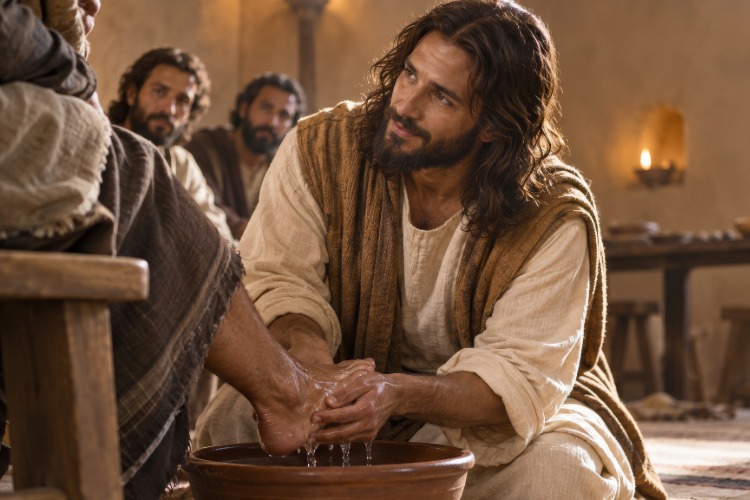
Jesus is calling us to love one another “just as I have loved you”. And if the Church does awaken to that agape (love), the world will see a great and powerful witness to Christ and his kingdom.
15 October 2026
3.6 MINS
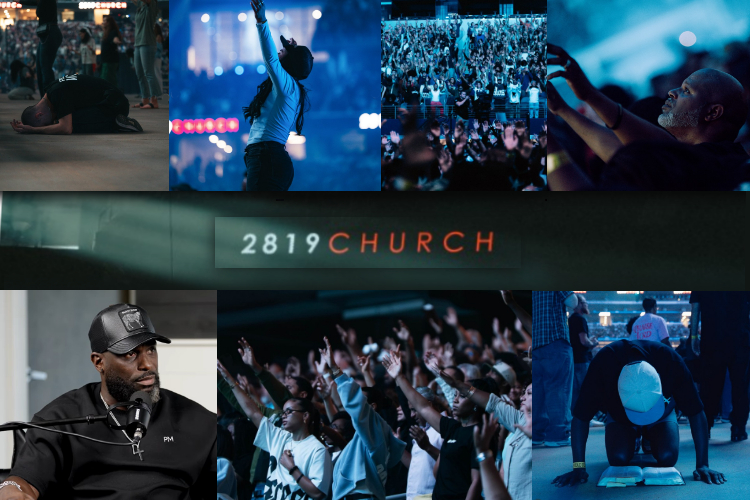
An 80,000-strong gathering in Texas signals a hunger for revival, as Pastor Philip Anthony Mitchell warns that Christian indifference could leave future generations without the faith.


