



Net Zero Disaster in Sri Lanka
Are Sri Lankans about to become the world’s first net zero refugees? And could we one day follow suit?
Sri Lanka is in chaos thanks to politicians who decided to remake the economy overnight in order to satisfy their fanciful, green lusts.
Last year the Sri Lankan government, led by 73-year-old Gotabaya Rajapaksa, decided to ban all chemical fertilisers in a bid to go completely organic.
Less than 12 months later, the country has gone completely to the dogs and Rajapaksa has gone quickly to the Maldives, chased away by starving citizens who stormed his presidential palace.
Sri Lanka had been doing well, rebuilding itself after decades of civil war. Before 2021 its per capita gross national income was greater than neighbours such as Indonesia and Vietnam.
But then President Rajapaksa fell under the spell of Western green elites with their Chicken Little warnings of a climate crisis and their seductive whispers of “net zero”.
Daft Policy
In April 2021, without warning, Rajapaksa ordered the nation’s two million farmers to immediately stop using fertilisers and pesticides.
The ban was instigated by the government, under the influence of the World Economic Forum’s push toward net zero carbon emissions.
They were going organic! Hail Greta Thunberg!

The decision made Rajapaska a darling of the international community, and his people the most impoverished of the subcontinent.
More than 90 per cent of Sri Lanka’s farmers had used chemical fertilisers before they were banned. None of them received any training in organic crop cultivation.
Crop failure was immediate.
Destruction
Within six months, rice production had fallen 20 per cent. Sri Lanka went from exporting rice to importing $450m worth of rice just to feed its own people.
The damage to the tea industry was worse.
Before 2021, tea production generated $1.3 billion in annual exports, paying for 71 per cent of the nation’s food imports. In the four months between November 2021 and February this year, tea exports crashed 18 per cent — reaching their lowest level in more than 20 years.
Prices skyrocketed 50 per cent.
The government ran out of money to import fuel, food and medicines.
Last month, private citizens were banned from buying fuel. Public transport ground to a halt. Schools were closed. The few farmers still able to cultivate food were, without fuel, left at a standstill. There were fears of mass starvation.
With crops failing, industries collapsing and people starving, the population rioted, overrunning the president’s palace as he jumped on a plane to the Maldives.
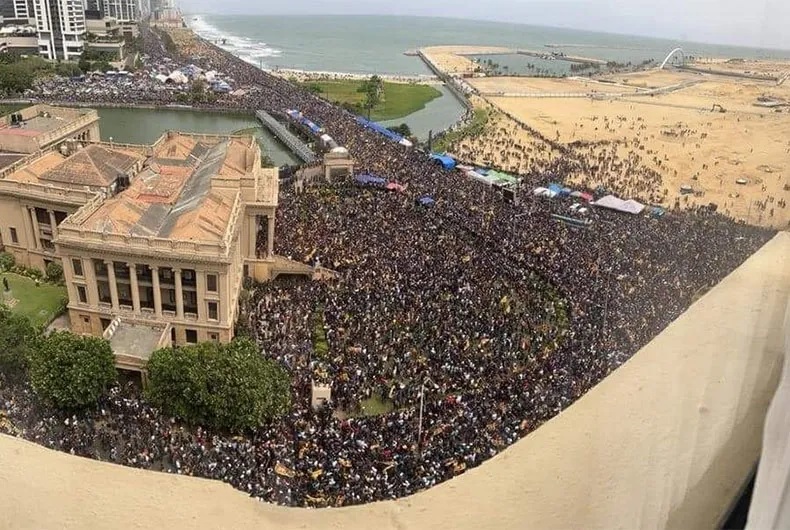
Sri Lanka is a textbook example of what happens when governments run by ideologues pursue climate change policies that have no basis in scientific fact.
The same thing is happening in Europe and even New Zealand, along with forced culling of livestock in some countries to reduce methane. Farmers have been protesting all over the world, but with precious little media coverage.
Worries at Home
Meanwhile in Australia, we voted for a government with similar objectives!
Worryingly, Australia is now led by a prime minister in possession of only average intelligence who is surrounded by a cabinet of weak, woke ministers mostly out of their depth in their respective portfolios.
Many politicians — and not all are on the Left — simply don’t have enough experience of anything other than politics.
They do not have the hands-on practical experience or pragmatism of managing anything that includes serious loss or personal downsides if you get it wrong.
In addition, they do not seem to have the whit or strength of character to admit they are wrong until disaster hits; and even then they will try and bluff it out.
Worse, they seem more worried about their international reputation than about their responsibilities to those they claim to represent.
Combine those three traits — a lack of real-world experience, an inability to admit failure and a desperate desire to please people in Davos rather than in Darwin and to win praise from elites in Brussels rather than from mums and dads in Brisbane — and it’s not hard to imagine that Australia could one day suffer the exact same fate as Sri Lanka.
Ideology and hubris make for a dangerous mix — when autocratic politicians in thrall to the wizards of make-believe who populate the UN and the World Economic Forum come to believe their job is to change the world from the top down, rather than to embrace the well-proven concepts of evolutionary change driven by democratic free markets and consumer choice.
We will suffer the same fate if we continue on the naive net zero path written by people who have no idea how food is grown, minerals are mined, energy is made or economies work.
___
Originally published at The James Macpherson Report.
Subscribe to his Substack here for daily witty commentary.
Photo by Darina Belonogova.
One Comment
Leave A Comment
Recent Articles:
23 October 2026
3.1 MINS
As Western societies grow more hostile, could abandoning Christianity’s moral foundations be contributing to the rise of ideological extremism, political intolerance and violence?
23 October 2026
5.1 MINS
France’s escalating riots expose the dangers of political extremism, antisemitism and radical alliances, offering America a stark warning about the future of Western democracy.

22 October 2026
2.9 MINS
An Israeli political candidate claiming a remarkable biblical identity has sparked questions about false messiahs, the Antichrist and how Christians should interpret prophecy.
21 October 2026
3.5 MINS
The alleged attack on Helen Haines demands condemnation, but rising threats against politicians also raise questions about public trust, political intimidation and selective outrage.

21 October 2026
3.9 MINS
Evangeline Lilly walked away from Hollywood to pursue a deeper purpose. Today, her Christian faith, humanitarian calling and passion for human creativity shape her next chapter.
21 October 2026
7.9 MINS
A collection of sobering reflections on Western civilisation’s decline, the loss of Christian foundations and the dangers of cultural complacency, ending with a message of enduring Christian hope.
20 October 2026
7.7 MINS
France and Europe are burning — is it too late to save them from the barbarians?



Thank you James.
We ordinary Australians also have a great deal to answer for in our compliant silence.
May God bless you and your family.