


How Douglas MacArthur Transformed Japan with Christian Values
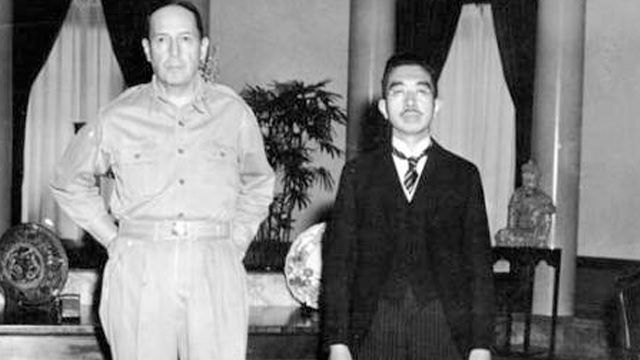
What General MacArthur managed to do in Japan after the war was nothing short of remarkable.
What do you do if you are given the task of turning a feudalistic and militaristic culture that has just been defeated in war into a democratic, stable and peaceful nation? And how do you do it with the support of the people? That was the responsibility given to General Douglas MacArthur following Japan’s surrender at the end of World War II.
Can an occupying force turn around a nation in a few short years and recast it into a welcome member of the international community? And can the changes be welcomed by most of the people? Very rarely in human history has an occupying army transformed a nation for the good and without resentment. Yet that is what MacArthur did in Japan.
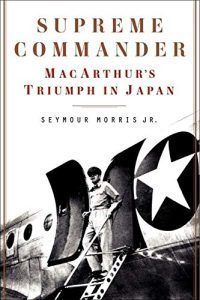
Plenty of biographies exist on the general (think of the standard 800-page work American Caesar by William Manchester for example), and a number of books exist on post-war Japan under American occupation. But one volume stands out here. I refer to Supreme Commander: MacArthur’s Triumph in Japan by Seymour Morris, Jr. (Harper, 2014).
Restoring a Civilisation
What a huge task MacArthur had. This was a militaristic society that had engaged in some of the worst wartime atrocities ever (recall the Rape of Nanking, the Rape of Manila, their pursuit of biological warfare, and so on), and here was an American general tasked with bringing about the peace and helping to transform a nation.
The 350-page tome by Morris does a great job of informing us of the obstacles, problems and hurdles to be overcome, and how MacArthur achieved what few others had ever done: successfully turning a belligerently-run nation into a free and prosperous democracy.
I want to focus on one particular aspect here. The state religion, Shintoism, was part of the problem: How would MacArthur tackle this? In Chapter 11 (pages 115-124) of the book, we learn about what transpired. Morris reminds us that Shintoism “extolled Japan’s feudal past and proclaimed the emperor to be the sum of all verities.”. He continues:
Proceeding with care — any regulation of religion was a potential minefield, and this was the national religion — it took SCAP [Supreme Commander for the Allied Powers] two months to finalize its policies. In mid-December [1945] it issued the Shinto directive, pronouncing the establishment of religious freedom…
In their edicts on religion, MacArthur and his team were very careful not to impugn the emperor’s position and dignity. Yet it was the emperor’s very position as an august being that had caused many Japanese militarists to accept the belief that war and any service to the state were fully justified. For the Japanese soldier, what higher calling than to fight for the emperor and to die in his service, even to the point of becoming a kamikaze?
The end result of all this was that the emperor renounced his divinity. This was just one massive change among many. Says Morris:
A flurry of directives, already under way and with many more to come, would reach into every nook and cranny of Japanese life. The abolition of the military police, the purge of the militarists, the elimination of restrictions on labor, the creation of a new constitution, the enfranchisement of women and the reform of the education system, and the breakup of monopolistic family trusts would usher in a more modern and democratic state. Of all these changes, none was more revolutionary than the separation of church and state. From there on, there would be no more of Japan’s religion of conquest.
Christmas Cheer
I found this paragraph quite interesting. Let me quote it in full:
The Japanese people had an interesting reason to wonder about SCAP’s religious policies in December 1945 and the turn of the New Year. It was hardly a festive time for a country still reeling from the war and people freezing in the cold, yet every occupation office building was adorned with bright Christmas lights.
Two enormous Christmas trees flanked the entrance of Dai Ichi Building. MacArthur adopted the position that such decorations were to communicate the festivity of the occasion, and not the religious significance of the Feast of the Nativity.
The supreme commander was not a churchman, but he most definitely was religious: In his public utterances he consistently thanked God for divine guidance. In November 1945 he had welcomed four Protestant leaders with great enthusiasm: “Japan is a spiritual vacuum,” he told them. “If you do not fill it with Christianity, it will be filled with Communism. Send me 1,000 missionaries!” He also asked for 10,000 Bibles.
His staff members told him this was going too far: What would the Buddhists and Shintoists think? He should speak of “religious principles” rather than “Christian principles.” Taking their advice, he eventually backed off, if only reluctantly. It wasn’t until his New Year’s Day message of 1948 that he managed to speak of religion only in the abstract. He never made public references to Christianity again.
I find his desire to bring in 1,000 missionaries and 10,000 Bibles to be quite interesting, and one can only wonder how things might have progressed in Japan if he was not talked out of this by his staff. The impact of just one person on a nation can be quite significant indeed.
Freedom
As to this policy of church-state separation, Morris goes on to inform us of its outcome:
Shinto as the state religion of Japan had ceased to exist. Shinto as practiced through the shrines could remain. All physical symbols of state Shinto were removed from public buildings, and public money could no longer be used to support the shrines.
The Japanese people were freed from any state-sanctioned compulsion to believe in Shinto. Public education and all official propaganda were freed of Shinto teaching, and school textbooks were purged of Shinto-inspired nationalism.
Of course, so much more can be mentioned about this man and his work, and many more quotes from the book could be offered. And it needs to be pointed out that like all mere mortals, MacArthur was a real mix. He had many faults, including a quite large ego, but he was also capable of real greatness, brilliance, hard work and concern for others. He certainly had a great concern for the Japanese people.
And that showed up in his short time there. Morris concludes his book with these words:
America’s successful exercise in the occupation of a country was over, the greatest feat by America’s greatest general. For Japan, back on its feet, it was time to move on.
And the same for Southeast Asia, then beginning to develop. Following Japan’s lead, South Korea, Hong Kong, Thailand, Malaysia, and Singapore would turn into some of the most dynamic economies in the world, stopping Communism in its tracks and saving a billion-plus people from the poverty and brutality of a North Korean regime. Douglas MacArthur, in two thousand days, had done his work well. To the extent that he saved Japan, he also saved an entire region.
When MacArthur left in 1951 Japan was certainly a different country, well on the way to joining the rest of the free, prosperous and democratic world. How he managed to turn around the nation of Japan will be one of his greatest legacies. We will likely not see many more leaders such as this, nor many more successful and beneficial occupations of another nation.
Postscript
Although unrelated to the above, one other thing that stood out for me in this book was what Morris said about MacArthur and his reading. Since I love books, I am always interested to learn about others and their reading habits — or lack thereof. So one last quote from Morris:
He worked seven days a week. … He left his desk clean every night; when he could not, he took his work home with him to finish after dinner. He never drank coffee. His consumption of alcohol was limited. … Retiring to the master bedroom, he would read, usually history.
He was a voracious — and fast — reader, capable of reading three books a day, which he proudly added to his small but growing collection. (Almost all of his original library of five thousand books had been destroyed when the Japanese sought out his home in Manila and set it on fire.)
Wow. With all that he achieved in those five years, he could still manage to read up to three books a day. And I thought I was a fairly good reader!
___
Originally published at CultureWatch.
2 Comments
Leave A Comment
Recent Articles:
8 October 2026
3.6 MINS
John Anderson warns that Australia’s decline is rooted in spiritual and cultural disintegration, calling for a recovery of Christian foundations, social cohesion and national purpose.

8 October 2026
4.1 MINS
Aboriginal communities in Central Australia already know the gospel message. What they need now, Robyn Murray writes, is discipleship, encouragement and Christians willing to pray and participate.
8 October 2026
4.1 MINS
Italy honours St Francis of Assisi 800 years after his death, celebrating a saint whose devotion to Christ, radical simplicity and message of peace continue to shape generations.

8 October 2026
4 MINS
Christ’s authority and concern is not limited to the four walls of the church. They extend to the life of the nation, and we are called to take up our part in seeking its righteousness.
7 October 2026
1.5 MINS
Across the Middle East, North Africa and Anatolia, Christianity once shaped entire civilisations. Could Britain’s Christian heritage likewise become a memory rather than a reality?

7 October 2026
6 MINS
What can Tucker Carlson’s interview with Jacob Rees-Mogg teach us about political disagreement? Their clash over war, Russia and national defence highlights the importance of listening carefully and understanding an opponent’s position before attempting to refute it.
7 October 2026
8.5 MINS
Gerald McDermott’s work challenges Christians to approach Israel through Scripture first, exploring God’s covenant faithfulness, Christian Zionism, Jewish identity and antisemitism.



Perhaps my most hard won and painful battle of the past 3 years —- has been understanding that none of the people I admire are ever less than human . StillI suppose it has allowed me to be more forgiving of myself and my self hatred ran deep into the marrow of my bones. It allows me to be with others. It allows me to always listen to the Word where writes it our plain n simple, many times. When that doesn’t work He gives me amazing parables !
Bless you Kaylene.