


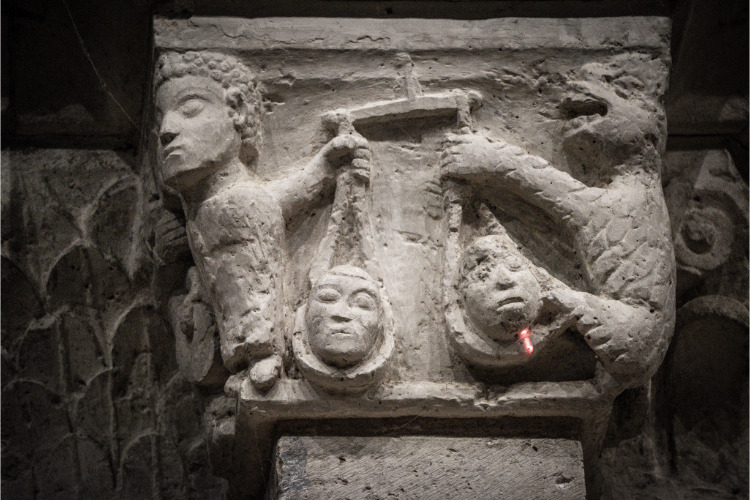
Dhimmitude and the Captive Church
This is a passage from my book, The Third Choice, in which I discussed the plight of churches under Islam, the distortion of their testimony, and the impact this distortion has on perceptions of Christians in the West. This is connected to my recent post, The Captured Testimony of Kairos II.
Justus Reid Weiner, in his investigation of the deteriorating human rights situation of Christians living under the Palestinian Authority, pointed out that there is a widespread distrust of religious leaders among Palestinian Christians, who ‘obfuscate the situation as it affects their constituents’. One Christian man said, ‘Our leaders are liars: They tell the newspapers that everything is OK. But when Christians go to the market, they’re afraid to wear crosses.’
Fear and Intimidation Fuel a Culture of Denial
Weiner identifies the two main reasons for the denial:
Fear and intimidation – one Palestinian woman said ‘We are afraid. They have knives [and] guns and can do whatever they want. They can kill you simply … [for] speaking bad about them.’Identification with the abuser – one Christian cleric ‘compared the behavior of Christian dhimmis to that of battered wives and children, who continue to defend and even identify with their tormentor even as the abuse persists.’
What Weiner describes is a vicious cycle, where dhimmis, eager to placate the Muslims and afraid if they do not, identify strongly with Palestinian nationalist aspirations (including anti-Israeli rhetoric). This ‘leads them to deny the persecution of their community’. As an example, Father Labib Kobtl, from the Latin Patriarch in Jerusalem, urged others to:
… refuse … the propaganda that wants to prove that there were any studied or willed persecution from our Muslim brothers and sisters of the Christians. We consider it as a mere propaganda against Islam, a cold war against our Muslim brothers that only benefits the Zionists of Israel.
Displays of devotion to the Umma such as this may appear to purchase some degree of temporary immunity from Muslim extremists, but they reinforce the cloak of silence over the sufferings of the Christian community, and contribute to the worsening human rights situation.
When Christian Leaders Defend Their Persecutors
In 2008, the Egyptian Muslim writer Ahmad al-Aswani lamented the escalating attacks on Copts in his nation, which have been egged on by Islamic leaders. Al-Aswani held Christian clergy partly responsible for denying that Islamic sentiment was behind the abuse. He writes that after attacks:
Of course, the usual Coptic notables deny any suspicion of sectarianism, and affirm national unity, and the sheikh and the priest embrace.
… one saddening thing is that some prominent Copts voluntarily deny any suspicion that sectarianism is fueling recent events [even] before the truth becomes known. I do not know whether they are aware that their words both increase the suffering and will fail to end this series [of incidents]. [Instead,] why don’t they use their media presence to defend their people, the Copts, and to urge the enactment of laws to prohibit what is happening, and to purge the educational system and media of the explosive mines of sedition, discrimination, and incitement? …
What is happening is an attempt to terrorize Egypt’s Copts, and to force them either to emigrate from the homeland once and for all, or to convert to Islam to protect themselves and their families [from harm] and to protect their property from the confiscation mentioned by many Islamic publications.
It causes me regret, and as an Egyptian it makes my heart bleed, to see this farce endlessly repeated … lives and property are taken with impunity, and clearly with the authorities’ collusion — with no fear of effective response, and with the confidence of all that, as always, the matter will end with beard-kissing and forgetting.
The Iraqi scholar Kanan Makiya has made the point that ‘The ironical fact is that [Edward Said’s Orientalism] was given the attention it received in the “almost totally ethnocentric” West largely because its author was a Palestinian.’
It is a difficult and painful reality that Middle Eastern ‘dhimmi clergy’ play a key strategic role in preventing the international community from understanding the suffering of Christians living under Islam, and its foundations in the dhimma. By embracing a culture of denial, dhimmi Christian leaders use their positions of leadership to promote the cause of the Islamists to the West. In the case of the Palestinian church:
… although certain Christian religious leaders such as Bishop El-Assal [former Anglican Bishop of Jerusalem, responsible for Palestine, Israel, Jordan, Lebanon and Syria] enjoyed close connections with Arafat over the years, these mutually supportive relationships bear no resemblance to the difficult, often dangerous, circumstances in which common Palestinian Christians live.
These leaders are given special access to the media and used this opportunity to gain sympathy and political support from Christian countries for Arafat and his policies.The silence of the dhimmis continues to have a profound impact upon the attitude of the rest of the world to Islam and its history.
When spokespeople of a dhimmi background — like Edward Said or Bishop El-Assal — take up Islam’s causes as their own, they are heeded in the West. The West assumes that local sources, from ‘on-the-ground’ Christians, will have better insight and be more credible than any objective analysis from outside.
This is debilitating to the West, because for a Western Christian to take up the cause of the persecuted church, they must expose the denial and deception which is at the heart of dhimmitude, and this includes challenging the account being given by ‘dhimmi’ Christian spokespeople. Many do not like to do this, not only because it seems rude and confrontational, but also because the West has taught itself to feel guilty. So Western Christians remain silent, too.
But as Weiner grimly observes, the dhimmi leaders’ strategy of buying immunity through service to the Umma “may prove self-destructive in the long run”.
___
Republished with thanks to Mark Durie. Image courtesy of Adobe.
Recent Articles:
30 October 2026
4.5 MINS
A Tasmanian Christian reflects on 42 years of faith, warning that proposed conversion practices laws could threaten prayer, parenting and religious freedom, while reaffirming his hope in Christ.
30 October 2026
3.5 MINS
Awakening begins when we remember the love that awakened our hearts in the first place.

29 October 2026
2.7 MINS
If passed, the Digital Duty of Care Bill 2026 will almost certainly lead to censorship of Bible-based convictions about marriage, abortion, gender, Islam and more. Here's why it should be rejected and how to make a submission by 30 October.

29 October 2026
3.4 MINS
Professor of Law Dr Joanna Howe is taking her employer to the Federal Court after an alleged 11-month in-house investigation into her public pro-life advocacy.
29 October 2026
4.6 MINS
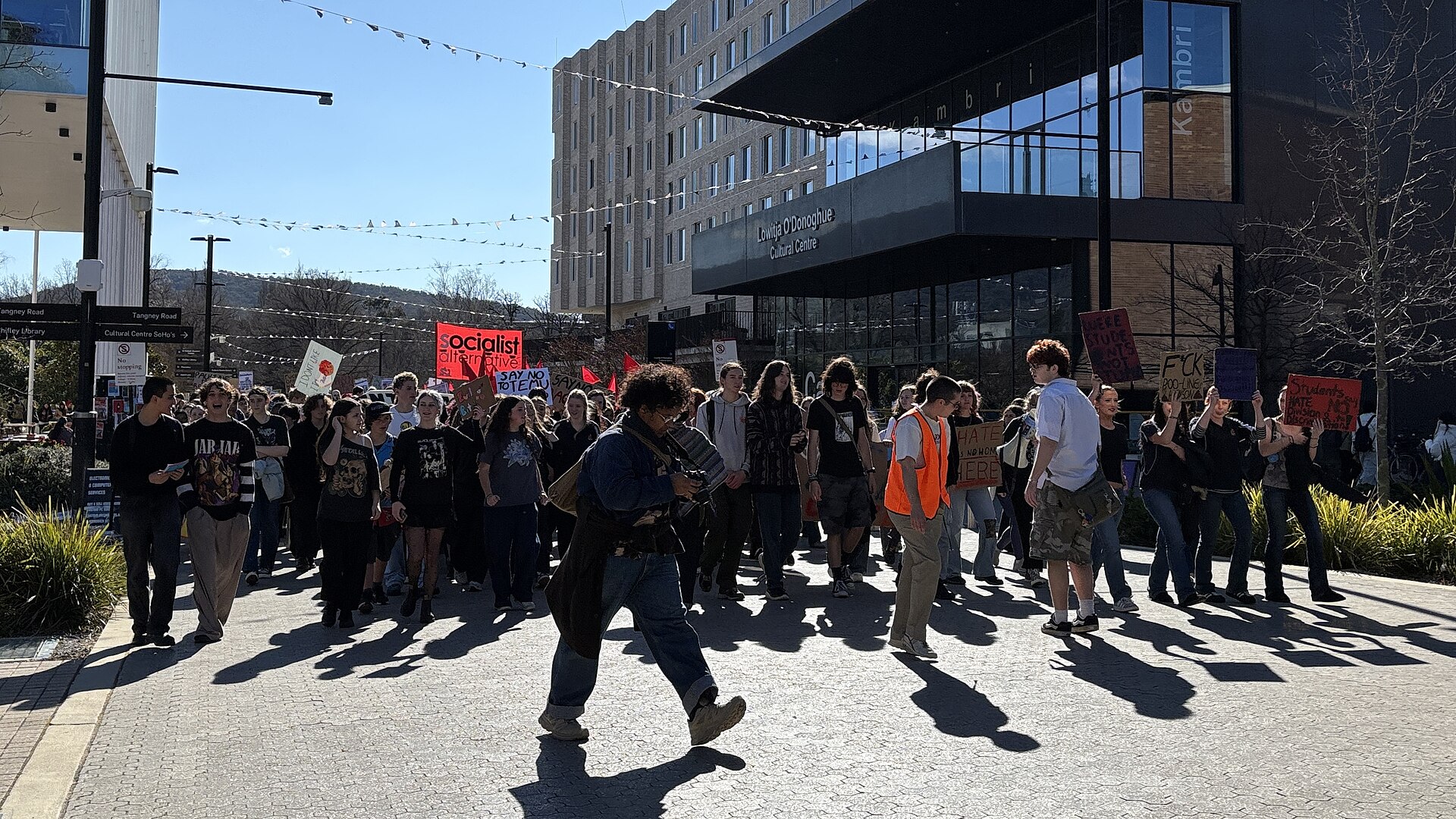
Personal liberty cannot flourish without good manners and respect for others. Drawing on J.S. Mill and historic reformers, this piece explores freedom, peaceful protest and the common good.
29 October 2026
3.6 MINS
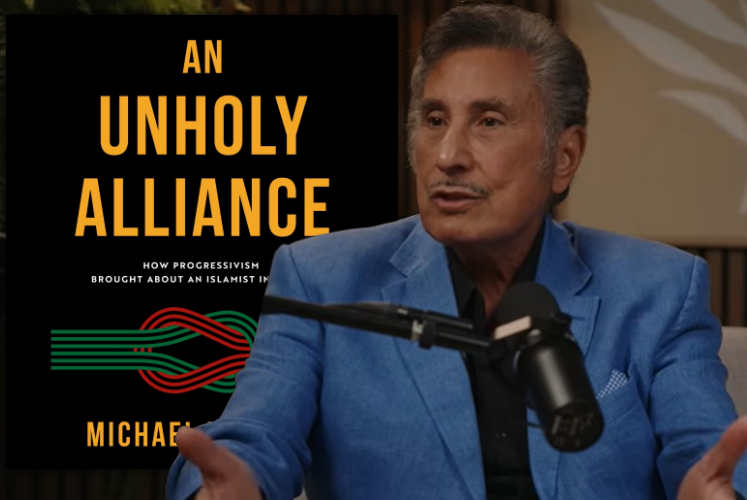
Dr Michael Youssef warns that radical progressivism and political Islam have formed a dangerous alliance against Western Judeo-Christian values, urging Christians to stand firm in truth.
29 October 2026
3.7 MINS
Are you in a battle, trying to fight in your own strength? Is the Lord asking you to trust in his sovereign rule and to ‘drop your weapon’?


