



Seeking the Peace of the City
What does it mean to seek the welfare of the city?
The other day I discussed Jeremiah 29:7. The famous passage says this: “But seek the welfare of the city where I have sent you into exile, and pray to the Lord on its behalf, for in its welfare you will find your welfare.” The context of this, of course, is the Babylonian captivity.
In 597 B.C., the Babylonians destroyed Jerusalem and the temple, killing many, and taking many into captivity. Jeremiah had said there would be a 70-year period of exile. It seems that Jeremiah was left behind, but he kept in touch with the exiles, and that verse contains part of his instructions to the people now living as strangers in a strange land. My earlier article is found here.
As I said there, what God through Jeremiah told the exiles to do (build homes, form families, etc) was for them only – not for all peoples in all places in all times. Yet as I also tried to make clear, Christians today can certainly get some general principles and application from a passage like this.
Christians in the West are also sort of living as exiles, undergoing our own Babylonian captivity. So how are we to respond to this? Philip Graham Ryken, in his 2001 expository commentary on the book of Jeremiah, has a great chapter on this passage. I quoted a snippet of it in my previous piece. Here I want to look more at what he had to say as he comments on this very passage.
A Tale of Two Cities
He discusses what it means to be a believer today in a bustling city. He reminds us of Augustine’s great work, The City of God. The important church father (354-430) viewed Babylon as a very real symbol of evil and ungodliness. He said that history was one long conflict between that city – the city of Man – and the city of God. Says Ryken: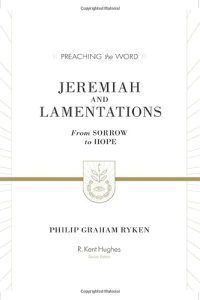
To read Jeremiah 29 with the two cities in mind is to recognize that God’s people were prisoners in the city of Satan. They were refugees in Babylon, which represents everything hateful and odious to God.
Most postmodern cities are like Babylon. They are Cities of Man, ruled by Satan, and Satan is doing all he possibly can, all in line with his condemnation, to turn them into suburbs of hell. One can see it in the abandoned buildings, the graffiti, the tired faces of the prostitutes, the racial altercations, the slow shuffle of the poor, and the great buildings built for human pride. Satan has been very busy.
He continues:
What should God’s people do when their postcode places them in Satan’s precincts? When God’s people were captives in Babylon, they might have expected God to tell them to run away. Or revolt. What he did instead was tell them to make themselves at home. The gist of Jeremiah’s prophecy was that God was going to build his city in the middle of Satan’s city.
Mission Field
So Jeremiah tells them to settle down there and let it become home – at least for a while. There would be no speedy return to Jerusalem. Says Ryken, “God practically sounded like the ad man for Babylonian Realty.” He goes on:
Imagine the reaction when Jeremiah’s prophecy was read in the Jewish ghetto in Babylon. There God’s people were, languishing in captivity, bemoaning their fate, complaining about the crime rate and the wretched Babylonian city school system. But God gave them the hard sell. “You’re going to love this place,” he said. “Wonderful place to raise a family! Exciting opportunities for small business! Great location, right in the heart of the Fertile Crescent!” One senses God’s passion for urban planning. Yet he was talking about the city of Babylon, of all places. His surprising plan for the redemption of the city meant building the City of God smack-dab in the middle of the City of Man.
No doubt when the captives discussed their sojourn in Babylon they used words like “abandoned” or “banished” or “condemned” to describe what God had done to them. But that is not how God saw things. He viewed the Exile as a mission. Literally, what he said was, “Seek the peace and prosperity of the city to which I have sent you.” Nebuchadnezzar did not take them to Babylon. God sent them there. The exiles were not captives – they were missionaries.
Ryken then speaks about modern urban missions:
The Lord does not just call people to jobs and to spouses—he also calls them to churches and to cities. I sometimes challenge people to ask the Lord if he is calling them to make a lifetime commitment to Tenth Presbyterian Church. If he is, then I challenge them to ask if God is also calling them to live in the city. When it comes to urban ministry, “being there” makes all the difference. An outsider can seldom know the needs of the community well enough to know how best to respond to them. Rarely, if ever, can an outsider effectively lead the community in finding solutions to its own problems. The kind of leadership that empowers people comes from insiders.
Becoming an urban insider was no more popular in Jeremiah’s time than it is in the twenty-first century. The exiles thought their exile would end any minute, so they still had their bags packed to go back to Jerusalem. They were working part-time jobs. They were renting rather than buying. They were not committed to the city.
He then discusses what it means to seek the peace (the shalom) of the city:
God hereby commands Christians to do anything and everything to further the public good. Seeking the peace of the city means being a good neighbor. It means shoveling the sidewalk. It means cleaning the street. It means planting a tree. It means feeding the poor. It means volunteering at the local school. It means greeting people at the store. It means driving safely and helping people with car trouble. It means shutting down immoral businesses. It means embracing people from every ethnic background with the love of Christ.
Still, a church could do all those things and fail to bring shalom to the city. By themselves, random acts of kindness cannot bring enduring peace. The only basis for real and lasting shalom is the work of Christ on the cross. The city cannot be at peace until the city knows Jesus Christ, and him crucified. In its sin, the whole city is at war with God. It deserves the wrath and curse of God. But Jesus Christ came to make peace between God and humanity. The Bible says that “we have peace with God through our Lord Jesus Christ” (Romans 5:1). Anyone who believes in the Lord Jesus Christ has peace with God.
Whatever shalom the Hebrews offered to Babylon, Christians are able to offer a much greater peace to the postmodern city. What we offer is eternal peace with God through the work of Christ on the cross. That peace is the basis for everything else we do in the city. It is what makes us neighborly, compassionate, and charitable. When the city finds peace with God, all will be well with the city.
He finishes by telling us how we might pray for our cities, and then says this about how they do this at the church he pastors:
Three times a year Christians gather in Center City Philadelphia to take a Prayer Walk in the neighborhood near Tenth Presbyterian Church. We walk the streets of the city asking the Holy Spirit to guide our prayers. We stop at apartment buildings and pray for the salvation of those who live in them. We stop at schools and pray for the teachers. We stop at businesses to pray for their owners. We stop at churches to pray for their ministers. We stop at the street corners and pray for the prostitutes. And we stop at the homes of Christians and pray for their ministry in the city. Prayer should not be kept within the four walls of the church or the home. Get out into the streets to pray for the shalom of your neighborhood. The prosperity of the city comes through prayer.
Let me offer a personal story here. Back when Peter and Jenny Stokes were running the Christian action group Salt Shakers here in Melbourne, we often would rent out a bus, fill it with believers, and pray for the city. Peter used to be a bus driver, so we would go into the city, stop at various places (brothels, casinos, Parliament, etc.), and have everyone get out and spend some time in prayer and spiritual warfare.
Or we would head up into the surrounding hills and do intercession and spiritual battle over witches’ covens, New Age shops, schools, and other places. That is all a part of what it means to pray for the welfare of a city. So there is a real need today to want to seek the peace of the city, just as Jeremiah had sought.
Sure, most folk, if given the chance, would much likely prefer to live a quiet and peaceful life out in the countryside, rather than endure the hustle and bustle of a big, noisy, crime-ridden city. But most of the world’s population is now urban, and we need to reach people where they are at.
The city as mission field has been a big concern of missiologists in past decades. Titles like The Urban Christian and A Theology as Big as the City by Ray Bakke, and Discipling the City edited by Roger Greenway, were important earlier books on this theme. These were key authors when I was an urban missionary in Amsterdam in the early 1980s.
As mentioned, what Jeremiah instructed the people of God to do back then is not an ironclad template for us today. Our metaphorical time in exile may well go on for more than 70 years, for example. But the principle of seeking the welfare of the city, of being salt and light, still remains, be it in Sydney or Chicago or Mexico City or Tokyo.
___
Originally published at CultureWatch. Photo by Jimmy Teoh.
Recent Articles:
11 October 2026
2.6 MINS
Jesus offers us intimate friendship, which produces great joy as we walk closely with him.
10 October 2026
4.1 MINS
When Jesus rebuked the Laodicean church, this was not a sign of his lack of love, but proof of it and how greatly he longs to reward and bless us. He is knocking — will we answer?
9 October 2026
1.3 MINS
Season 6 of The Chosen is releasing next month, and until 15 November, your church has the opportunity to host a free pre-release screening of Episode 1. Here's how.

9 October 2026
2.9 MINS
Angus Buchan’s remarkable journey from farmer to evangelist is brought to life in a new documentary now streaming, revealing the faith, family and challenges behind his public ministry.

9 October 2026
3.3 MINS
New South Wales healthcare workers who object to abortion and voluntary assisted dying face growing pressure, raising serious questions about conscience rights, employment and moral injury.

9 October 2026
2.9 MINS
God is intensely relational, and he puts us into a community of believers so we can use our gifts in service of Christ's body.
8 October 2026
3.6 MINS
John Anderson warns that Australia’s decline is rooted in spiritual and cultural disintegration, calling for a recovery of Christian foundations, social cohesion and national purpose.


