



An Australian Human Rights Commission Wants ‘Assisted Dying’ for Children and People with Dementia
When euthanasia was legalised for the terminally ill, it was inevitable that it would be expanded to include children and people with dementia. The slippery slope is not a fallacy: it’s a prophecy.
Although the Australian Capital Territory (ACT) is on track to creating the nation’s most progressive “voluntary assisted dying” (VAD) legislation, its human rights commission is already complaining that it is too restrictive.
With a population of only half a million, the ACT has an outsize influence on the national debate, as it is the seat of Canberra, the national capital. A bill legalising VAD has been introduced into the ACT legislature and will probably be passed later this year. It “improves” upon laws in other Australian states: there is no timeframe until death, nurse practitioners can assess eligibility, healthcare workers are permitted to discuss the possibility of VAD; and nursing homes cannot obstruct patients’ desire to die.
However, this is not good enough for ACT bureaucrats in the Territory’s Human Rights Commission (HRC). Even before the law is passed the human rights commissioner, the children’s commissioner, and the disabilities commissioner want to amend it to give access to children and to people who have succumbed to dementia.
In its current draft the law restricts VAD to people over 18. This is discriminatory, says the HRC: “It is the Commission’s view that this extends to decisions for a child or young person to voluntarily end their life with dignity in the same circumstances as adults.” What age might these children be? In Belgium and the Netherlands, doctors are permitted to euthanise children from birth to 18 and the parents’ consent is not necessarily required. A well-known American bioethicist has argued that “the mere withholding of parental consent should not prevent physicians from ending … suffering with a lethal injection.”
What Canberrans may end up with after future amendments is a system in which doctors decide whether sick children should live or die, with or without their consent or even their parents’ consent.
Ending the Misery of the Patient or the Relatives?
Isn’t something terribly wrong when human rights are deployed to justify a supposed right to die – especially for children? As an Australian court ruled recently, VAD is just another way of committing suicide. How can a society which prides itself on protecting the most vulnerable allow, even encourage, children to kill themselves?
Still worse is the HRC’s desire to give people who fear dying of dementia the ability to write advance directives. These would allow them to be euthanised when they are no longer compos mentis. It argues that “dementia causes intolerable suffering as well as being a leading cause of death in Australia, such that restricting VAD to people with decision-making capacity would exclude a large proportion of people near the end of their lives and require them to continue intolerably suffering without the additional end of life choice of VAD.”
However, it’s more likely to be about ending the misery of relatives than the misery of the patient. A former Chief Scientist of Australia, Ian Chubb, recently told a parliamentary inquiry into the legislation that he was tormented by the undignified final years that his beloved wife spent living with dementia.
It’s understandable that relatives feel disconsolate when faced with a loved one who can no longer recognize them — and all the other sad consequences of dementia. However, it is bizarre for experts in human rights to argue that killing them promotes individual autonomy.
Euthanasia for People with Disabilities Opposed By UN
The HRC invokes the authority of the United Nations to support its position. It refers to a 2018 opinion from the UN Human Rights Commission on the “right to life”. However, more recently, in 2020, the UN special rapporteur for people with disabilities, Catalina Devandas-Aguilar was scathing about euthanasia in her official report. Since she is a disabled woman with spinal bifida, she speaks with the authority of experience, not ideology:
From a disability rights perspective, there is a grave concern that legalizing euthanasia and assisted suicide could put at risk the lives of persons with disabilities. If assisted dying is made available for all persons with a health condition or impairment, regardless of whether they are terminally ill or not, a social assumption might follow that it is better to be dead than to live with a disability…
Generally, when life-ending interventions are normalized outside the end stage of terminal illness, persons with disabilities and older people may increasingly feel the need to end their lives … particularly persons with psychosocial disabilities and dementia.
The HRC submission fails to mention disability in connection with dementia, despite the fact that one of its authors is the disability commissioner.
Furthermore, Devandas-Aguilar points out that offering – or even pushing – VAD shows a grave lack of respect for diversity. Good health is only one dimension of the human condition. People are gifted with inherent dignity and do not lose it because they are physically or psychologically handicapped. She writes:
… persons with disabilities are ends in themselves and not means to the ends of others, challenging societal responses that treat them as objects to be pitied, protected or cured, or value their lives only from a utilitarian standpoint.
The ACT’s bill has not even been passed and the government is already preparing amendments to allow more people to die. This is not policy-making; it is fanaticism.
___
Republished with thanks to Mercator. Image courtesy of Pexels.
2 Comments
Leave A Comment
Recent Articles:

27 October 2026
1.5 MINS
Labor’s Digital Duty of Care Bill threatens free speech, empowers covert online surveillance, and imposes potentially burdensome regulations on Australian businesses.

27 October 2026
10.3 MINS
As Tasmania and Western Australia consider conversion therapy bans, a former LGBT+ ministry leader warns of threats to religious freedom, personal choice and Christian discipleship.

27 October 2026
1.3 MINS
Moira Deeming’s re-election campaign has energised Family First supporters, raising $90,000 as the party prepares for a crucial Victorian election and a potential breakthrough.
27 October 2026
3.1 MINS
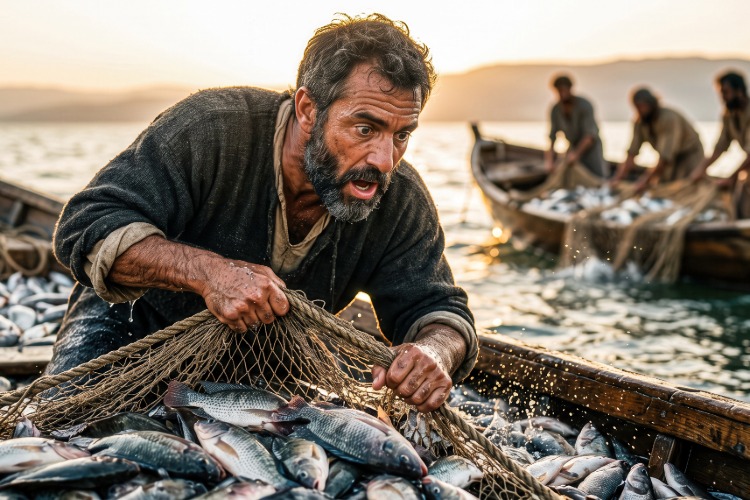
As the disciples discovered through a huge haul of fish, we can trust Jesus for a net-breaking, boat-sinking catch of people.
26 October 2026
4.5 MINS
OECD chief Mathias Cormann warns Australia is losing its competitive edge, as excessive regulation, housing pressures, immigration challenges and declining public trust threaten national prosperity.
26 October 2026
2.5 MINS
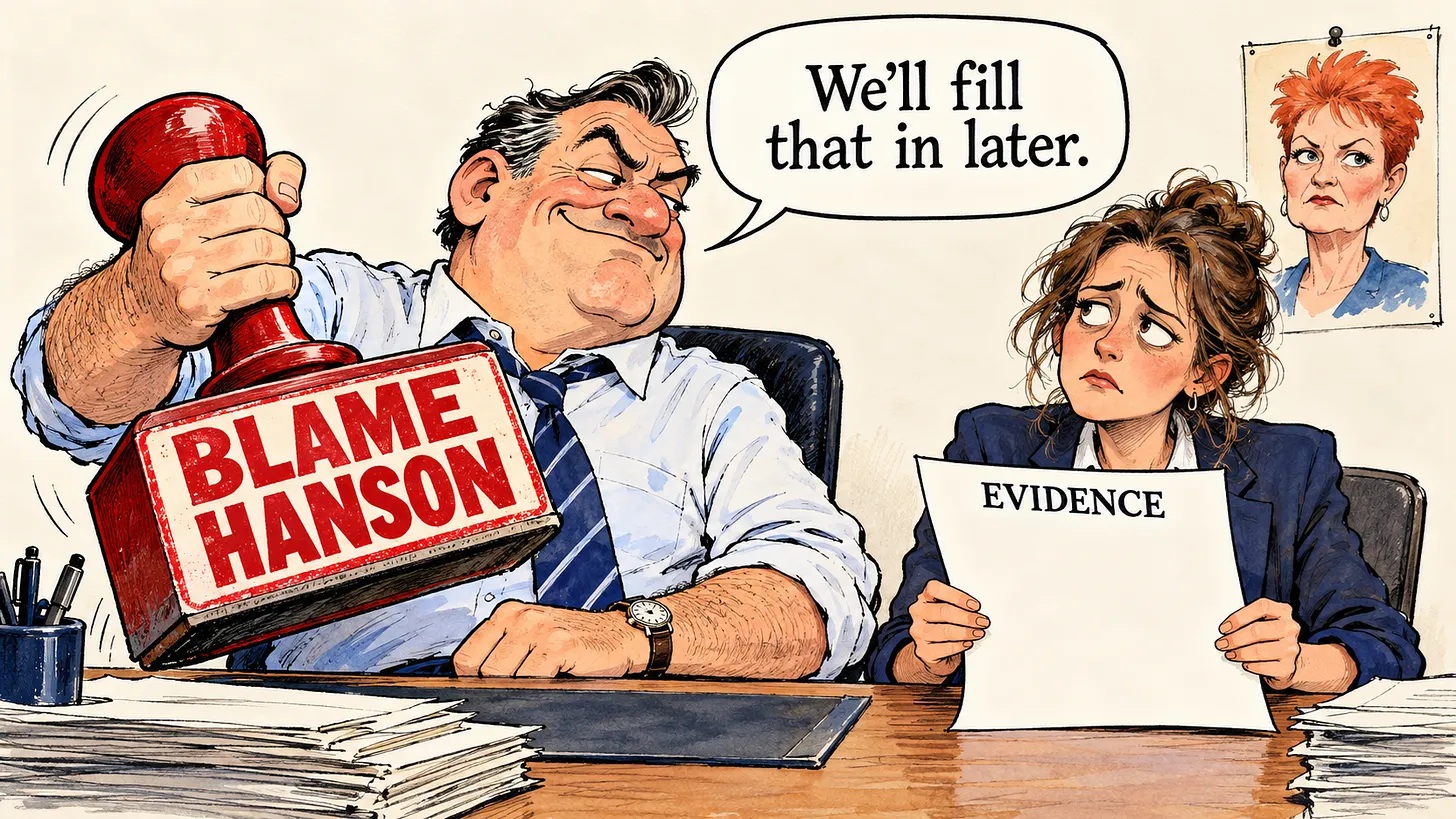
Nation First exposes the rush to weaponise the Haines attack against Pauline Hanson, conservative voices and men before investigators established a motive.
26 October 2026
5.1 MINS
Anthony Albanese calls for civility after the Helen Haines attack, but revelations of a political dirt file raise uncomfortable questions about his government’s own conduct.



I wonder if the Human Rights Commission is able to define/explain conclusively what death actually is ?
Can they also explain what happens AFTER death, so people can prepare adequately for death itself, and even for a possible afterlife ?
Differing groups have widely differing views on this; many (including me) believe there is real perfect life after death, and that this physical life is actually a place to prepare for that “afterlife”, which is everlasting.
So this life must be treated with great respect and wisdom; and since the next life is everlasting, one should not deliberately rush into death (ending this life), and so compromise the opportunity to prepare adequately for that next life.
Please press the HRC to define ALL their terms thoroughly and clearly so that no one is left guessing at what they might mean in their “voluntary assisted dying” bill.
Suicide, whether voluntary or assisted or both, is still the deliberate taking of a life, which is commonly called (and rightly so) ‘murder’.