



Book Review: “Creating the Qur’an: A Historical-Critical Study”
In Creating the Qur’an, Shoemaker, professor of religious studies and Christian studies at the University of Oregon, offers a closely argued account of how the Qur’an came into existence. It is a tour de force.
Railing against the “shackling” of many contemporary scholars to the traditional Islamic origin story of the Qur’an and drawing new insights from a wide variety of disciplines, including religious studies, linguistics, and anthropology, Shoemaker concludes that the text of the Qur’an only became fixed during the rule of Abd al-Malik some seventy years after the death of Muhammad. “The Qur’an,” he concludes, “was in many respects non-existent before the end of the seventh century.”
Rejecting the commonly held view that the Qur’an’s text was standardised much earlier, by order of Caliph Uthman, Shoemaker concludes, based on Islam’s “chaotic tangle of inconsistent traditions,” that this account is not credible.
Inadequate Roots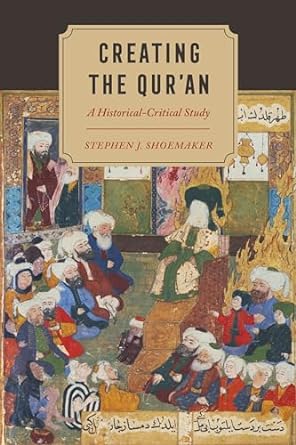
Shoemaker reviews the conditions at Mecca and Medina in the early seventh century and posits that these small, out-of-the-way settlements were “simply not capable of producing or even comprehending such a rich and sophisticated collection of late ancient religious traditions.”
Furthermore, he draws on findings from literacy and orality studies to conclude that Mecca and Medina did not have the literacy required to fix the Qur’an’s text. It is, he argues, a myth that people in pre-literate societies can commit long oral texts to memory without changing them.
Shoemaker’s preferred explanation for the origin of the Qur’an is that remembrances of Muhammad’s original teachings, first delivered in Mecca and Medina, were passed on orally over more than half a century by his followers.
Later Fabrication
Along the way, they were inevitably altered by normal processes of oral performance and recomposition. It was in regions far from Mecca and Medina that these oral traditions absorbed their many references to late antique religious traditions, before being fixed in written form under Abd al-Malik.
(A tantalising alternative scenario, dismissed by Shoemaker as “too radical,” but entertained by some revisionist scholars, is that the original Qur’anic community was located nowhere near Mecca or Medina.)
Shoemaker’s firm conclusion is that the Qur’an is “a fundamentally composite and composed text”, a much-altered remnant of Muhammad’s original preaching.
Creating the Qur’an is the most comprehensive critical historical account of the Qur’an’s origin to date. It is a milestone in a decades-long struggle to bring the Qur’an out from behind the veil of Islamic orthodoxy into the full light of contemporary scholarship.
___
Originally published in the Middle East Quarterly Volume 30(4). Republished from Mark Durie’s Substack. Photo by Pok Rie.
2 Comments
Leave A Comment
Recent Articles:
19 October 2026
6.7 MINS
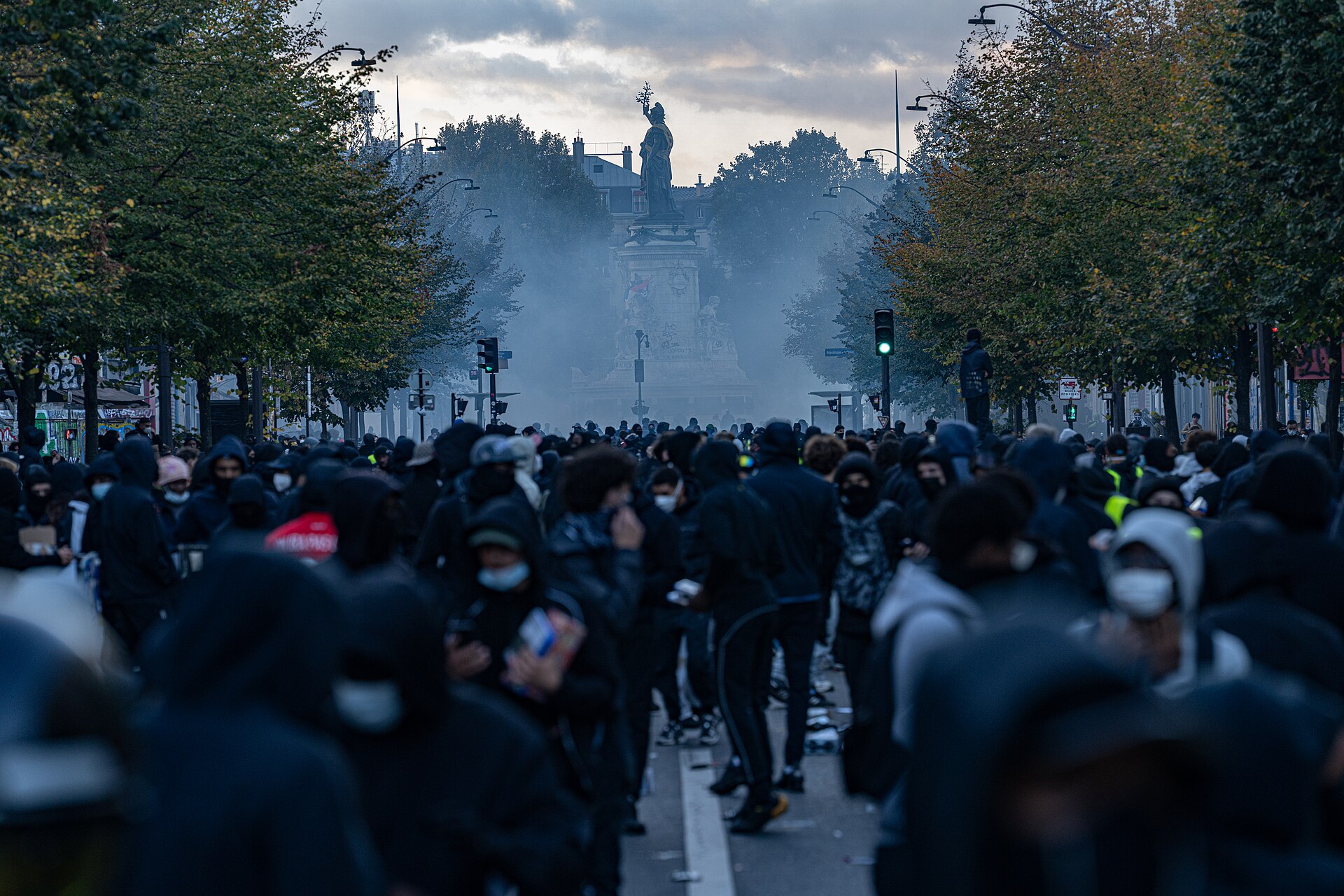
Europe’s escalating unrest raises urgent questions about immigration, national identity, secularism and the decline of Christian influence, prompting calls for repentance, prayer and renewed leadership.

19 October 2026
2.7 MINS
The UK Greens’ vote to define Zionism as racism has exposed deep divisions within the party, raising questions about its future leadership and political direction.

16 October 2026
4 MINS
Katie Zacharia’s first days as White House Press Secretary have sparked fierce media criticism, but her remarkable testimony of surviving an abortion attempt tells a deeper story.

16 October 2026
3.4 MINS
Australia’s proposed digital duty of care laws promise greater online safety and increased user control by switching off algorithms, but critics warn they could give ministers sweeping powers to restrict lawful content and threaten free speech.
A Million Women Movement Marks Second Anniversary: “Look What the Lord Has Done! Ishtar Has Fallen!”
16 October 2026
2.8 MINS
Two years after A Million Women gathered in Washington for ten hours of prayer and fasting, organisers point to victories they believe reflect God’s answers to intercession.

16 October 2026
2.6 MINS
Euthanasia accounted for 4% of all deaths in Belgium in 2025, with growing numbers involving people who were not terminally ill, dementia patients and psychiatric conditions.

16 October 2026
5.2 MINS
Christa Pike’s botched execution has sparked outrage across America, but critics argue that the same concern for human dignity is denied to abortion survivors.



Further to your story, a great two part YouTube video from Jack Hibbs’ church in the USA, Jay Smith exposed the shaky ground of this religion. He has been doing this for around 30 years. Pfander Films is Jay’s website.
‘Dismantling Islam’ is fantastic! Jay’s research goes deep.
For anyone interested in this subject and perhaps isn’t going to buy the book, it could well be a great resource.
Thanks Mark.
First I’d like to note that the standard academic trope about people not being able to remember long oral traditions word perfect is foolishness, made under the assumption that academics are so much smarter than ordinary people, and that those in pre-literate societies were even more stupid.
Also, I agree to check out Jay’s material from PFander films.