


Reflections on the Disaster in Nepal
A devastating disaster in the Himalayas reminds us of life’s fragility, God’s sovereignty, the call to compassion, and the urgency of living faithfully in light of eternity.
A rare natural disaster struck remote regions of Nepal and China last Wednesday, and casualty counts continue to climb. The death toll is sobering. The strange nature of the incident is even more so.
In this sobering moment, Scripture gives Christians uniquely wise counsel on how to respond to tragedies. “It is better to go to the house of mourning than to go to the house of feasting, for this is the end of all mankind, and the living will lay it to heart” (Ecclesiastes 7:2). So let us visit the house of mourning in the next few paragraphs.
A Tragedy in the Himalayas
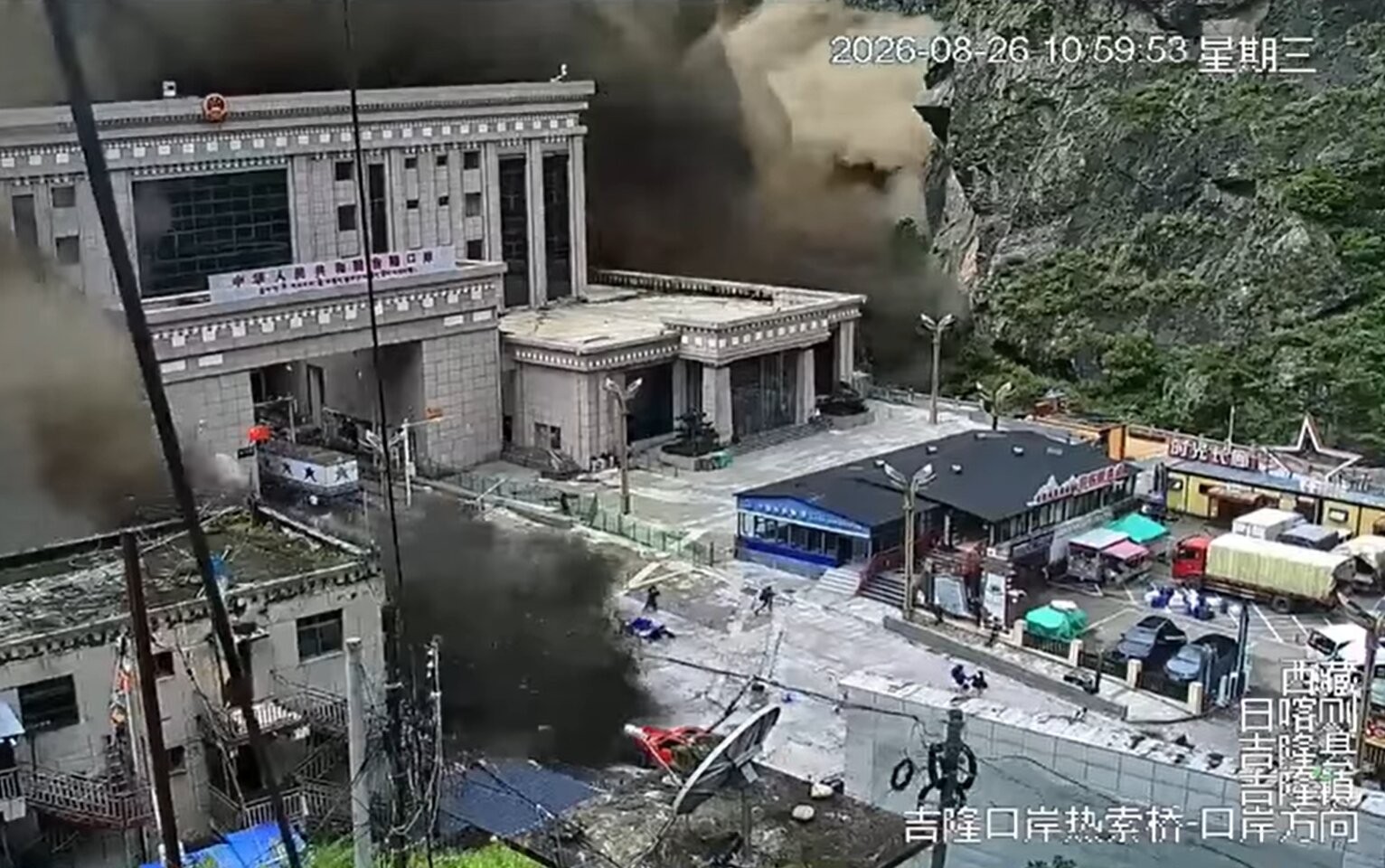
At around 8:37 a.m. local time on Wednesday, seismic sensors registered a 4.4-magnitude earthquake in the remote mountains of Nepal. But there was no earthquake, scientists soon learned. Instead, vast quantities of ice and debris had broken off from a glacier, falling some 4,000 feet into the ravine below. The US Geological Survey (USGS) now registers the event as a 5.2-magnitude landslide.
The ice and debris then hurtled down the valley at a frightening speed, burying or sweeping away practically everything in its path — which remained narrow due to the rugged terrain. Scientists at the Kathmandu-based International Centre for Integrated Mountain Development later said the water level of the Trishuli River rose 27 feet in half an hour. The tidal wave carried bodies as far as 150 miles away.
As of Monday, Nepalese authorities had recovered 903 bodies, while nearly 4,250 people were still missing. Chinese authorities count 16 dead and 550 missing. While Nepal certainly bears the largest number of casualties, hundreds of foreign tourists were named among the missing, including at least 90 Americans and 35 Australians.
Rescue operations have not completely ceased. In particular, Nepalese authorities are trying to dig their way to hydropower workers trapped inside mountain tunnels, which were buried in dozens of feet of mud. But many people have certainly died, and many more bodies are likely to be recovered.
Weep With Those Who Weep
Mass casualty events provide the greatest opportunity to put into effect the second half of Paul’s exhortation, “Rejoice with those who rejoice, weep with those who weep” (Romans 12:15). Christians can lament the widespread loss of life. Christians can have compassion on grieving families. Christians can cry out, “How long, O Lord,” as we recognise how “the whole creation has been groaning together in the pains of childbirth until now” (Romans 8:22).
Mass casualty events are also an occasion to remember that God is still in control. Natural disasters such as earthquakes, tsunamis, hurricanes, and tornadoes have long been dubbed “acts of God”, for so they are.
“Where were you when I laid the foundation of the earth?” God challenged Job (Job 38:4). “Have you commanded the morning since your days began? … Have you entered into the springs of the sea? … “Have you entered the storehouses of the snow, or have you seen the storehouses of the hail, which I have reserved for the time of trouble? … Can you lift up your voice to the clouds, that a flood of waters may cover you? Can you send forth lightnings?” (Job 38:12, 16, 22-23, 34-35).
God is sovereign over natural disasters. Oftentimes, He ordains them for reasons known only to Himself. Unbelief may tempt us to anger at God. How could He cause such suffering and death? This response overlooks the fact that humanity is responsible for the suffering and death in the world.
Trusting God’s Sovereignty
Faith, by contrast, takes comfort in God’s governance because it believes in His good character. If there are to be natural disasters, how much better is it to know they come from the hand of a loving God, who brings everything about for His good purposes, than to imagine that these disasters are meaningless, purposeless chance!
Therefore, let us respond like Job, when his 10 children died together in one house that was struck flat by a “great wind” (Job 1:19). “The Lord gave, and the Lord has taken away; blessed be the name of the Lord.” (Job 1:21)
Finally, mass casualty events should provoke Christians to urgency, especially because they are strange and unexpected. The breath of life is so easily snuffed out of our frail human frames that there are practically an endless number of ways to die.
Before last Wednesday, glacial flash flooding was likely not a cause of death on the top of many people’s minds — certainly not for the 6,000 people who are now dead or missing in the Himalayan Mountains. But life can end suddenly: a car crash, heart attack, lightning strike, bee sting, bacterial infection, downed power line — the list could go on.
The Urgency of Eternity
The point is not to petrify but to edify. If death is always possible, then we ought to live in light of what comes after. Jesus himself used tragic deaths as an object lesson to point people to repentance. “Or those eighteen on whom the tower in Siloam fell and killed them: do you think that they were worse offenders than all the others who lived in Jerusalem?” he asked. “No, I tell you; but unless you repent, you will all likewise perish.” (Luke 13:4-5)
According to God’s revealed word, there are only two possible outcomes after death. Those who believe in Jesus Christ for salvation will inherit eternal life. Those who do not believe in Him will be condemned to hell for their sins. As John wrote, “Whoever believes in the Son has eternal life; whoever does not obey the Son shall not see life, but the wrath of God remains on him” (John 3:36).
Most fundamentally, Christians are called to be “witnesses” (Acts 1:8) to this truth. And that involves bringing the message of the gospel to those who have not heard. A natural disaster does not discriminate based on religion; it sweeps away Christian and pagan alike. But many of those caught in the Nepalese floodwaters (such as the local Hindu and Buddhist populations) will perish eternally because they did not believe in Jesus Christ.
This is an unpopular teaching in the culture today (even among some “Christian” Senate candidates), but it is what God has revealed in His word, and Christians dare not call God a liar. The doctrine of hell is unpopular because it is considered unloving. But, in reality, the most loving course of action for someone facing mortal (or rather, immortal) peril is to warn them of the danger while there is still time to repent.
That time is now. The frailty of life and the suddenness of death have motivated Christians to great labours in evangelism, and it should motivate Christians today, especially when such a strange natural disaster intrudes upon the rhythms of ordinary life. This is the wisdom we learn in the house of mourning, which all the living should lay to heart.
___
Republished with thanks to The Washington Stand. Image courtesy of Wikimedia Commons.
One Comment
Leave A Comment
Recent Articles:
15 October 2026
3.6 MINS
An 80,000-strong gathering in Texas signals a hunger for revival, as Pastor Philip Anthony Mitchell warns that Christian indifference could leave future generations without the faith.

15 October 2026
4.2 MINS
Many Australian Christians don’t know a single Aboriginal person. Robyn Murray argues that reconciliation begins with honest history, prayer and a shared life in Christ.

15 October 2026
6.1 MINS
Historian Frank Furedi warns that the West is waging a war against its own past, censoring books, rewriting history and severing future generations from their heritage.

15 October 2026
7.2 MINS
A man’s death in a tiger enclosure sparks chilling online reactions, exposing a growing willingness to judge human worth by usefulness, behaviour and ideology.

15 October 2026
3.9 MINS
Canada plans to legalise euthanasia through advance requests, raising concerns about consent, dementia patients’ rights and whether earlier decisions should determine the circumstances of death.
15 October 2026
2.6 MINS
Before anything else, we must make prayer central. I urge the Church in Australia to awaken to, first of all, prayer.

14 October 2026
6.7 MINS
A national poll challenges claims that pro-life Australians are extremists, revealing broad support for abortion restrictions, protections for unborn babies and safeguards for vulnerable women.



Thank you, Joshua, for sharing such a deep Christ like perspective. The verse you shared is so appropriate: “It is better to go to the house of mourning than to go to the house of feasting, for this is the end of all mankind, and the living will lay it to heart” (Ecclesiastes 7:2)
Another part and exhortation that you wrote stands out is this reminder: ‘Christians are called to be “witnesses” (Acts 1:8) to this truth. And that involves bringing the message of the gospel to those who have not heard. A natural disaster does not discriminate based on religion; it sweeps away Christian and pagan alike.’
I have prayed (as we all have) that God reaches the ones left alive, trapped in tunnels or remote areas, and that those who are left alive, call upon Him in the day of trouble.
The disaster reminded me of the Thailand tsunami that rocked the whole world and Thailand area over 20 years ago….A sense of urgency arose to pray for all people everywhere to be saved as soon as possible (spiritually) as we don’t know when these disasters will come again…It could be any time. We do know warnings are given in the Bible telling us that as the days draw nearer to Christ’s coming, there will be more disasters.
Like Noah, we too have to warn others, but also show compassion and pray for all those who are facing such terrible grief. We hope and pray though that they learn of the sacrifice of Christ on the cross in our place and the gift of eternal life . We pray for all the rescuers too, and the emergency teams, doctors and loved ones who have been searching and hoping for news, or have lost family.
It remains heart breaking but we know there is the promise of life hereafter in heaven with God our loving Father and Creator for those who turn to God and find Christ is the way to know truth and forgiveness.
May many find the truth of the Bible and Christ’s offer of eternity with Him and those who believe, during this tragedy in Nepal