


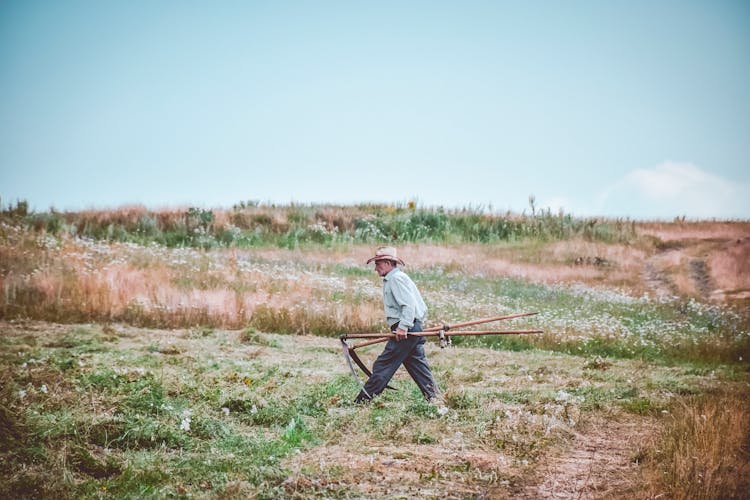
Federal Government to Force Farmers to Pay for Biosecurity
Australian farmers are up in arms over planned legislation by the Albanese Government to force farmers to pay for the Government’s biosecurity arrangements, along with importers and the Government itself.
The supposed rationale for the initiative is that farmers should pay because they are beneficiaries of measures taken to protect Australian agriculture from imported pests and diseases.
The Government claims that the new measures will raise $50 million a year from farmers, with the total cost of the new Biosecurity Protection Levy raising $250 million a year, or $1 billion over the next four years.
The Government claims that farmers are being asked to contribute just 6 per cent of the cost of the scheme, but in fact, its own figures show that farmers are to contribute 20 per cent. Additionally, as the Government admits, farmers are already contributing to Australia’s biosecurity system.
The federal Agriculture Department wrote that “many primary producers already invest in biosecurity through on-farm biosecurity activities”.
It added: “Producers also support Australia’s biosecurity system through investment in research and development, membership fees for Animal Health Australia and Plant Health Australia, and contributions to emergency responses under deed arrangements.”
Inexperienced
Minister for Agriculture Murray Watt knows nothing about agriculture. Before becoming an MP, he was chief of staff to Queensland Labor Premier Anna Bligh, and to have this job his priority was loyalty to his boss and to the Queensland ALP.
He is completely dependent on information from the top bureaucrats in the Canberra-based Department of Agriculture – who also know little or nothing about agriculture.
Farmers’ organisations, however, have pointed out that the new tax is both unfair and discriminatory.
The National Farmers Federation, usually a toothless tiger and which has supported the Albanese Government on issues like the Voice referendum and immigration, has come out strongly against the new tax.
NFF President David Jochinke said that, despite Government claims that it has consulted stakeholders, it had ignored the strong representations of farmer organisations.
He said the Government had the numbers to force its legislation through the House of Representatives, but the Senate is another matter.
“We call on Senators to see common sense and hit pause on this legislation so they can listen carefully to the criticism this flawed policy has drawn,” Mr Jochinke said.
“It’s not just Australia’s 85,000 farmers who have raised alarm bells, it’s also the Productivity Commission, the Australian National University, the Office of Impact Analysis and even importers.
“While we never wanted this legislation to get this far, the best case scenario is for it to be sent to Senate Committee for appropriate scrutiny.
“This will provide the time and analysis to properly consider farmers’ concerns.
“We remind Senators, Australian farmers already spend millions of dollars each year in existing levies that already incorporate biosecurity spending as well as through managing the pests and diseases on-farm brought to our shores by importers and travellers.
“By paying another tax towards biosecurity services, they are effectively subsidising foreign competitors who import food products into Australia. Along with it being at odds with standard policy design and tax practice, this levy simply isn’t fair.”
Unaccountable
The NFF’s statement is extremely mild, given the repeated failures of Australia’s biosecurity system, which has allowed entry into Australia of serious threats to Australian agriculture, including the Varroa mite, which is devastating the honey industry, fire ant infestations, the fire blight outbreaks some years ago, which affected the apple industry, citrus canker, and a succession of exotic diseases that have affected livestock.
There has never been any independent examination of the failures of bodies like Biosecurity Australia, which is entrusted with keeping exotic diseases out of the country.
Additionally, the penalties given to overseas travellers who carry prohibited products into Australia are laughable. These deficiencies are on regular display on television programs like Network 7’s Border Security Australia.
If the Government was even half serious about stopping diseases that are endemic overseas from getting into Australia, it would impose very heavy fines on those who flout Australian law.
This money could well be used to fund Australia’s biosecurity system, instead of farmers, who are already price takers at the mercy of the large supermarkets, grain processors and government agencies.
The trivial fines imposed on people who breach Australia’s quarantine laws shows that the Federal Government is more worried about the adverse publicity of high fines and the potential impact on the tourism industry than it is in the welfare of Australian farmers.
If the Government wanted to raise $50 million a year in a painless way, it could impose a small levy on all people entering Australia. The latest Bureau of Statistics data shows that in 2023, nearly ten million Australians returned from overseas, and a further seven million visitors entered this country. A levy of just $3 per person would raise the required sum.
___
Republished with thanks to News Weekly. Image courtesy of Vardan Harutyunyan.
One Comment
Leave A Comment
Recent Articles:

27 October 2026
1.5 MINS
Labor’s Digital Duty of Care Bill threatens free speech, empowers covert online surveillance, and imposes potentially burdensome regulations on Australian businesses.

27 October 2026
10.3 MINS
As Tasmania and Western Australia consider conversion therapy bans, a former LGBT+ ministry leader warns of threats to religious freedom, personal choice and Christian discipleship.

27 October 2026
4.9 MINS
Nine Christians have been killed in a terrorist attack on a Jordanian church, prompting fierce condemnation, demands for justice and renewed concerns about religious persecution.

27 October 2026
1.3 MINS
Moira Deeming’s re-election campaign has energised Family First supporters, raising $90,000 as the party prepares for a crucial Victorian election and a potential breakthrough.
27 October 2026
3.1 MINS
As the disciples discovered through a huge haul of fish, we can trust Jesus for a net-breaking, boat-sinking catch of people.
26 October 2026
4.5 MINS
OECD chief Mathias Cormann warns Australia is losing its competitive edge, as excessive regulation, housing pressures, immigration challenges and declining public trust threaten national prosperity.
26 October 2026
2.5 MINS
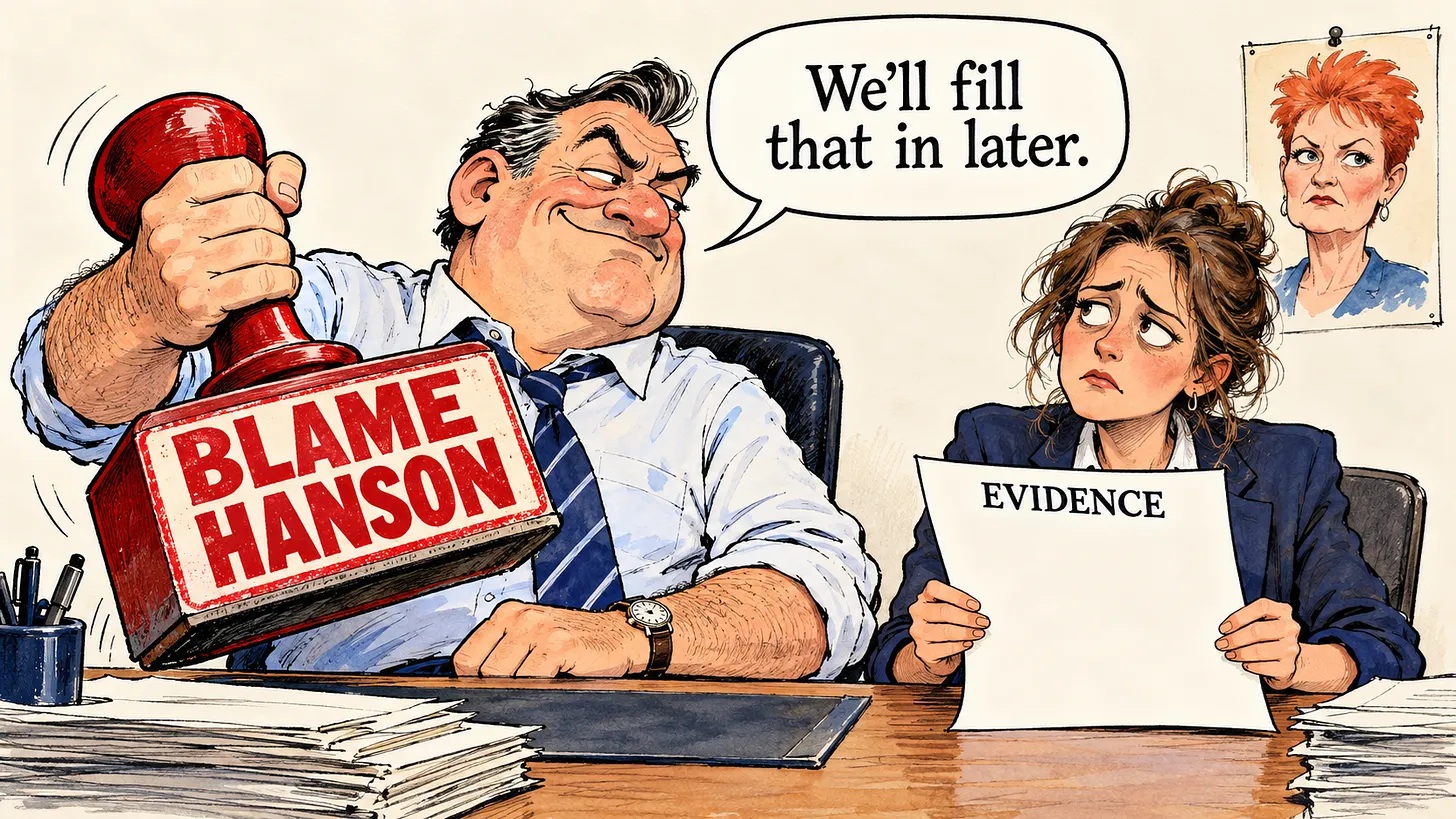
Nation First exposes the rush to weaponise the Haines attack against Pauline Hanson, conservative voices and men before investigators established a motive.



We need our farmers. They have enough battles with Floods, Bushfires, and overseas imports. Let’s not impose this on them as well.