


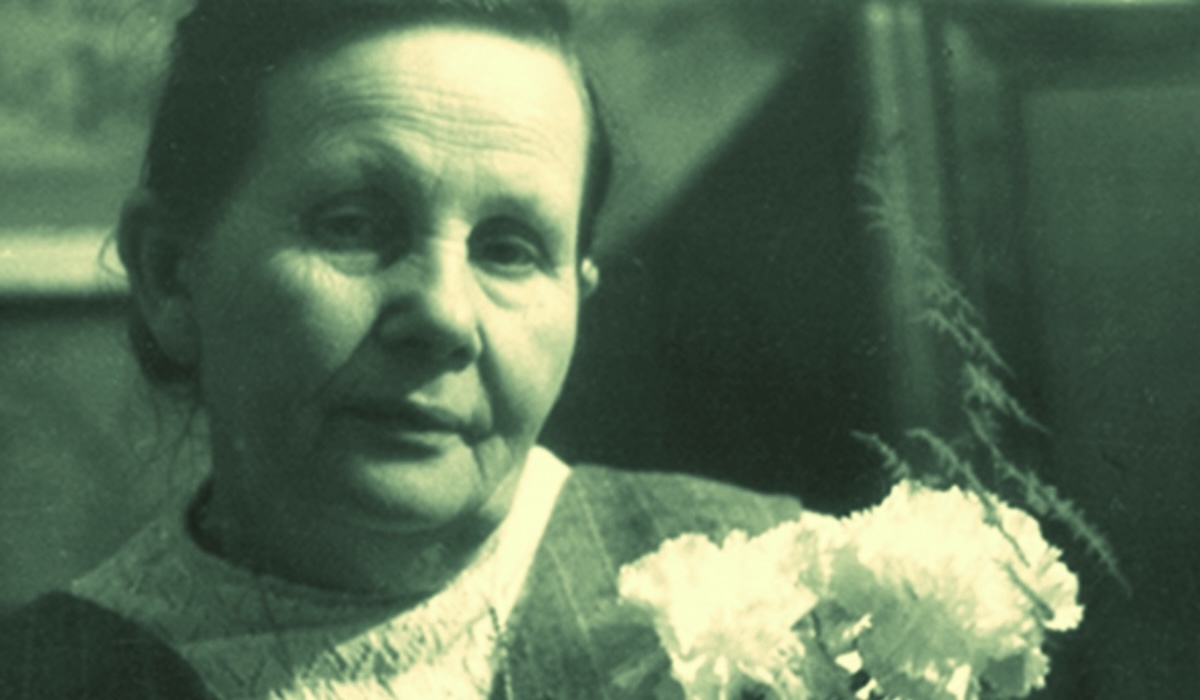
The Polish Midwife Who Delivered 3000 Babies at Auschwitz
Stanisława Leszczyńska’s heroic legacy at Auschwitz is a testament to faith, courage and humanity in the face of unimaginable horrors.
Fifty years ago died one of the most remarkable women of the 20th century. You have probably never heard of Stanisława Leszczyńska. Few people have. Yet she was a model of heroism and humanity who should be acclaimed around the globe.
Stanisława was a Polish midwife who worked for two years in the maternity ward at Auschwitz. Yes, there was such a place. Most pregnant women who arrived at the death camp were sent straight to their death. But not all of them were and some women became pregnant in the camp. As a result, thousands of babies were born in a place that has become a byword for cruelty.
The maternity ward was a small part of the blocks for women prisoners. It consisted of about 30 bunks near a brick stove which served as a bed for childbirth. There might have been three or four women in each bunk. Conditions were indescribably foul. Most women had dysentery; rats as big as cats swarmed in the unheated sheds, devouring corpses. Every day 10 or 20 women died. There was almost no fresh water.
In this place of torment Stanisława Leszczyńska delivered 3,000 babies.
As she recalled later on, “Contrary to all expectations and in spite of the extremely inauspicious conditions, all the babies born in the concentration camp were born alive and looked healthy at birth. Nature defied hatred and extermination and stubbornly fought for her rights, drawing on an unknown reserve of vitality.”
Stanisława was born in the city of Łódź in 1896. She married a printer, Bronisław Leszczyński, during World War I and they eventually had four children. She qualified as a midwife in 1922. She was deeply religious — which may help to explain her resilience and courage in the death camp. According to a profile in Church Life Journal, “After graduating with honours, Stanisława knelt in a church and consecrated her work as a midwife to the Blessed Mother, vowing that if ever she lost a baby she would give up midwifery.”
When the Germans invaded Poland, the Leszczyński family became involved in the Polish resistance. Bronisław died in the Warsaw uprising; Stanisława and her children helped Jews in the Łódź ghetto by delivering food and false documents but in 1943 they were caught by the Gestapo. Two of her sons were sent to a slave labour camp; she and her daughter Sylwia were sent to Auschwitz. The numbers tattooed on their forearms were 41335 and 41336.
At the camp she volunteered to work as a midwife, assisted by Sylwia.
Stanisława’s Accounts About Auschwitz
She described the conditions in the “maternity ward” with clinical detachment in a brief speech she made in 1957. They are too hellish to relate here. But something remarkable happened. She wrote:
In spite of the appalling filth, the teeming vermin and the rats, in spite of the infectious diseases, the lack of water and other dreadful, indescribable things, something that was most extraordinary went on there.
One day the Lagerarzt (the camp doctor) told me to present a report on the postpartum infections and mortality rate for the mothers and newborns. I told him that I hadn’t had a single death of a mother or neonate. He looked at me in disbelief and said that even the best German university hospitals could not boast of such a success rate. In his eyes I could see anger and hatred. Perhaps the extremely debilitated bodies of my patients were too poor a culture medium for bacteria to thrive on.
However, of the 3,000 babies that Stanisława delivered, only a handful lived. A thousand died of starvation or disease. About 1,500 were drowned by two women orderlies, Schwester (“sister”) Klara, a midwife who had been jailed for infanticide, and Schwester Pfani, a prostitute. A few hundred babies with blue eyes were sent away to be adopted by German mothers. About 30 survived in the care of their mothers.
In the midst of this squalor and horror, Stanisława was an Angel of Life. She discretely tattooed babies who were to be “germanised” so that someday they might be able to find their real parents. “Many a mother was consoled by the thought that one day she would find her lost child,” she said. With the permission of the mothers, she baptised Christian babies. She led the women in prayer. She filled the block with her singing to calm women in pain or fear.
At Auschwitz she also met the Angel of Death, the notorious Dr Josef Mengele. She and her daughter were subjects of his lethal experiments, although they survived. He also ordered her to kill the newborns. He screamed at her: “An order is an order!” She refused.
At Auschwitz Until the End
When the war was drawing to a close, Stanisława declined to leave Auschwitz until the Red Cross arrived. She delivered her last baby as the camp burned around her, set alight by the fleeing guards.
After the war, she returned to midwifery. All of her four children had survived; three became doctors and one a lawyer and composer. She retired in 1958. Twenty-five years after the liberation of Auschwitz she was reunited with some of the children she had saved. She said that it was one of the happiest days of her life.
For most of her life she seldom spoke about her experiences because she did not want her people to hate Germans. “Don’t judge, don’t judge, because you don’t know what made them behave like this,” she said.
On March 11, 1974, Stanisława died of intestinal cancer. In Poland, thankfully, she is well known. Several hospitals and organizations are named after her. The Catholic Church has proposed her as a candidate for canonisation.
But elsewhere, her luminous example has been neglected. Why is the unspeakably evil Josef Mengele known around the world while the ineffable goodness of Stanisława Leszczyńska has remained hidden? To paraphrase a famous quip, evil travels halfway around the world while goodness is putting its boots on.
I thought about this conundrum in connection with Kamala Harris’s visit to an abortion clinic in Minnesota a few weeks ago. The American Vice-President was there to support Planned Parenthood’s work of killing babies. The event was covered by the New York Times, the BBC … all the media. I wonder if the Veep would accept an invitation to speak at an event honouring Stanisława Leszczyńska on her 50th anniversary. What could Kamala possibly say?
___
Republished with thanks to Mercator.
7 Comments
Leave A Comment
Recent Articles:
8 October 2026
3.6 MINS
John Anderson warns that Australia’s decline is rooted in spiritual and cultural disintegration, calling for a recovery of Christian foundations, social cohesion and national purpose.
8 October 2026
4.1 MINS
Aboriginal communities in Central Australia already know the gospel message. What they need now, Robyn Murray writes, is discipleship, encouragement and Christians willing to pray and participate.
8 October 2026
4.1 MINS
Italy honours St Francis of Assisi 800 years after his death, celebrating a saint whose devotion to Christ, radical simplicity and message of peace continue to shape generations.
8 October 2026
4 MINS
Christ’s authority and concern is not limited to the four walls of the church. They extend to the life of the nation, and we are called to take up our part in seeking its righteousness.
7 October 2026
3.6 MINS
Victoria’s 18th March for the Babies will bring families together to peacefully affirm the value of every human life and call for a cultural change towards life.
7 October 2026
1.5 MINS
Across the Middle East, North Africa and Anatolia, Christianity once shaped entire civilisations. Could Britain’s Christian heritage likewise become a memory rather than a reality?

7 October 2026
6 MINS
What can Tucker Carlson’s interview with Jacob Rees-Mogg teach us about political disagreement? Their clash over war, Russia and national defence highlights the importance of listening carefully and understanding an opponent’s position before attempting to refute it.



My wife has been telling me about this brilliant article for over a week. Haunting but extremely powerful. Soli Deo Gloria!!!!!
Absolutely amazing. Her work should have been recognised globally.
What an inspirational lady,who is an amazing example of how we should respond despite how bad the world seems. May we follow in her steps as we meet challenging times and live out our faith despite what those around us are doing 🙏🏻thanks for sharing this story
This story would make for an extroardinary and incredibly moving movie. What an amazing woman.
Maybe someone will make a movie of this amazing woman.
Thank you Michael for sharing this story of heroism about Stanisława Leszczyńska’s life. Her love and compassion knew no end…Even her forgiveness of the German guards teaches ‘judge not lest you be judged’. her faithfulness to the end and her courageous saving of up to 30 babies will forever be a testimony to her love of others and of God.
thanks for this article 3 weeks ago while resting i saw the movie about her story it was on you tube called “out of the ashes ” sensitively done in my view but will touch you spirit and soul like few movies
I will watch again when able