



10 Keys for Writing Great Articles in the Digital Age
Every writer is vying for attention online. As The Daily Declaration has grown from a start-up blog to Australia’s largest Christian news site, we’ve learnt a thing or two about writing great articles. Here are our top ten takeaways.
In the five short years since our launch, The Daily Declaration has quickly grown to become Australia’s largest Christian news site. We have now published over five million words, enjoy millions of search engine impressions annually, and are approaching one million views per year.
For these successes, we owe a great deal to our amazing team of contributors, who are constantly writing great articles that are read and shared widely. As an editorial team, we have also learned a thing or two about what works and what doesn’t.
Crafting and publishing outstanding content is essential in our fast-moving digital age. According to Statista, 5.4 billion of the world’s inhabitants are now internet users — that’s 67 per cent of the global population.
Moreover, working-age internet users spend an average of 6.5 hours a day online, with much of their time taken up reading news articles and other written content. In other words, the market is hot. Writing great articles, as opposed to mediocre ones, is more important than ever.
Though The Daily Declaration is an explicitly Christian site with a goal of providing a voice for Christian values in the public square, the keys we have discovered for writing great articles and hammering them into shape apply universally.
Consider ten keys for writing great articles in the digital age.
1. Write to the News Cycle
Whether or not you are writing a news piece, consider including a news hook. In your opening lines, refer to a news or other cultural hot topic that is likely to already be front-of-mind for your readers.
Timing is everything. If your news hook is a week old, people’s interest in it will already have waned. By comparison, if the event in view happened yesterday, your piece will likely generate far more clicks.
This doesn’t mean that every article you write must have a 24-hour turnaround. If you are not working to a strict deadline, write the article first, then wait until a relevant news item presents itself that you can include in your lede as a finishing touch. (See below for more on your lede).
2. Make Every Word in Your Title Matter
They say that first impressions last, and that’s certainly true of your title. The minute someone sees your title, they have already made up their mind whether or not they want to read more — and your opportunity to change their mind has passed by.
Begin by listing the keywords that communicate the main ideas in your article (you might like to use a word cloud generator to help). Then start stringing these words together into smooth, sensible phrases, being sure to place the most important words first. Omit any unnecessary words, and aim for no punctuation if possible.
Keep your title short. This helps the reader grasp your meaning almost instantly. As a rule of thumb, try not to exceed 12 words or 80 characters. In truth, some of the best article titles are only a few words long.
As with your news hook, your title might best be crafted at the end after all the other hard work is done. Don’t sit staring at a blank screen. If no title comes to mind initially, write “Title” and come back to it later.
3. Be Clear About Your Thesis
Your thesis is the most important part of your article. What is a thesis? It is the main argument or the “big idea” you are hoping to get across. It is crucial that you know what your thesis is, and that your readers know it too.
Spend a few minutes crafting one or two sentences that communicate the heart of what you want to say. Make sure it is easy to understand, and free of metaphors and other word pictures. It might help to imagine you are writing a social media post or a short email.
The result of this exercise will be your thesis. Be sure to include it somewhere near the top of your article. The best place is often directly after the lede.
4. Entice Readers With a Compelling Lede
The lede is the opening sentences or paragraphs of an article. It is normally distinct from the thesis. The purpose of a lede is to capture the reader’s attention and persuade them to keep reading. (A news hook can form part of a successful lede).
Start with a compelling anecdote, a surprising fact, or a thought-provoking question to grab the reader’s attention. Use descriptive language and evoke an emotional response to make the lede memorable and convince readers to stick with you to the end.
5. Keep Your Structure Simple
Your title, your lede (with or without a news hook) and your thesis are all in place. What comes next?
The answer will depend entirely on the writer. But if you find yourself scratching for ideas, opt for a trusty list of dot points. Make sure the dot points relate directly to your thesis — for example, a list of reasons that your thesis is correct.
Whatever structure you go with, aim for a logical flow, and be sure to end with a strong conclusion that summarises your article.
6. Adopt an Uplifting Tone
There is no shortage of negative content out there on the internet. As a writer, you have the power to change that.
Aim to inspire and uplift your readers, highlighting positive stories and perspectives whenever possible. Avoid using a dogmatic or condescending tone, or overly partisan rhetoric.
Ask thoughtful questions that challenge your readers’ biases, providing links to up-to-date information and reputable online sources. Avoid taking leaps in logic, or expressing mere opinion without clear reasoning.
Anticipate obvious and relevant objections to your arguments. Avoid misrepresenting the ideas of those you are critiquing or attacking others personally.
Where relevant, include personal anecdotes, and give readers practical takeaways they can apply to their lives. Avoid being overly cold, impersonal or theoretical.
Provide informative content that makes complex ideas simple and intelligible. Avoid convoluted sentences, awkward transitions and sloppy grammar.
Use accessible language and write in a conversational tone. Avoid sophisticated verbiage or academic-speak on the one hand, and unprofessional or overly colloquial language on the other.
7. Write Short Sentences
Writing long sentences might feel smart, but it vastly reduces comprehension for your reader.
According to research by the American Press Institute, readers understood 100 per cent of information in sentences that were 8 words or less. They understood 90 per cent of sentences that were 14 words long. But they understood just 10 per cent when sentences were 43 words or longer.
Don’t confuse your readers. Imagine you are talking to someone in a loud venue. You need to use short sentences and straightforward language if you want to keep their attention. Strip away all unnecessary words — adjectives especially. Aim for just one verb per sentence. Always try breaking long sentences into shorter ones.
8. Vary Your Sentence Lengths
The late writing instructor Gary Provost wrote a wonderful passage to illustrate the importance of writing sentences of varying lengths:
This sentence has five words. Here are five more words. Five-word sentences are fine. But several together become monotonous. Listen to what is happening. The writing is getting boring. The sound of it drones. It’s like a stuck record. The ear demands some variety. Now listen. I vary the sentence length, and I create music. Music. The writing sings. It has a pleasant rhythm, a lilt, a harmony. I use short sentences. And I use sentences of medium length. And sometimes, when I am certain the reader is rested, I will engage him with a sentence of considerable length, a sentence that burns with energy and builds with all the impetus of a crescendo, the roll of the drums, the crash of the cymbals — sounds that say listen to this, it is important. So write with a combination of short, medium, and long sentences. Create a sound that pleases the reader’s ear. Don’t just write words. Write music.
9. Compose Short Paragraphs
If you want to scare away your audience immediately, give them a long wall of text with no white space to break up the monotony.
In the digital age, short paragraphs are non-negotiable. They look and feel easier to read. Short paragraphs enable readers to digest content in manageable chunks, which aids in maintaining their focus.
In print form, long paragraphs are often acceptable, but different rules apply online. Aim for paragraphs of between two and four lines. Occasionally go below or above that range, but stay within it most of the time and you will keep your audience engaged.
10. End With a Compelling Kicker
A kicker is the last sentence of an article. It should be memorable, punchy, and give readers a sense of satisfaction that they stuck with you to the end. Even better, it will give them one last reason to think your piece is worth sharing.
In ‘The Washington Post guide to writing an opinion article’, the paper’s staff explain that “sometimes circling back to the beginning does the trick” when it comes to crafting a compelling kicker. They add:
One thing you should not do is introduce a new thought you do not develop that leaves the reader thinking: Why didn’t they write that column? Another bad idea: ending with a quote that tells readers what someone else was thinking — but not what you think.
If you think it is not good enough, you are not done. Take a walk. Think of the pithiest (or, if appropriate, cheekiest) thing you can say about the piece. Then make that the kicker.
A Final Word on Writing Great Articles
Follow these ten keys for writing great articles in the digital age, and you will see your writing improve in leaps and bounds.
Remember that the airwaves are crowded. Everyone is vying for attention online. Putting a little extra thought into your article could spell the difference between a nothingburger and a wildly popular post that changes the SEO game for your entire website.
As many writers will attest, one viral article can alter the course of your career. Who knows — it might even change the world.
___
Image courtesy of Pexels.
4 Comments
Leave A Comment
Recent Articles:

18 October 2026
2.7 MINS
Every season of life belongs to Christ, and we don't retire from discipleship as we grow older. In fact, our older years hold unique gifts for the younger generations.

17 October 2026
3.4 MINS
Seeking the face of God means surrender, laying aside our agenda and wants. Revival begins when we want God himself more than we want the outcome.
16 October 2026
4 MINS
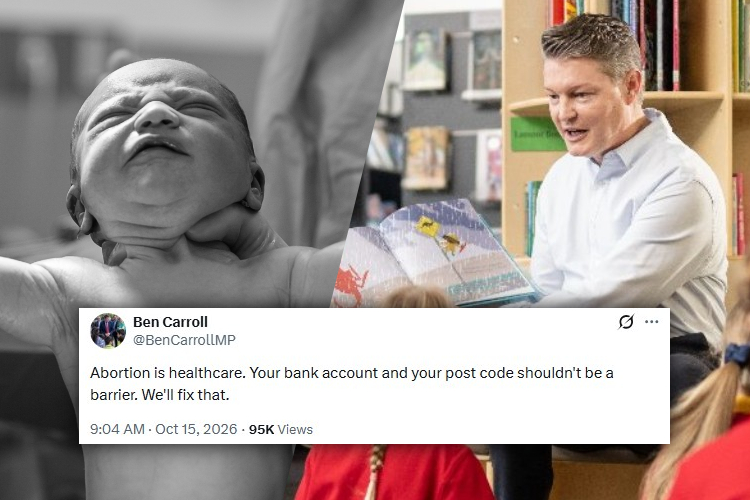
A desperate Victorian Labor Party is peddling taxpayer-funded abortions as free “healthcare”. In a shameless attempt to stay in power, they're willing to do anything — including killing the unborn and forcing taxpayers to pay for it.

16 October 2026
4 MINS
Katie Zacharia’s first days as White House Press Secretary have sparked fierce media criticism, but her remarkable testimony of surviving an abortion attempt tells a deeper story.

16 October 2026
3.4 MINS
Australia’s proposed digital duty of care laws promise greater online safety and increased user control by switching off algorithms, but critics warn they could give ministers sweeping powers to restrict lawful content and threaten free speech.
A Million Women Movement Marks Second Anniversary: “Look What the Lord Has Done! Ishtar Has Fallen!”
16 October 2026
2.8 MINS
Two years after A Million Women gathered in Washington for ten hours of prayer and fasting, organisers point to victories they believe reflect God’s answers to intercession.

16 October 2026
2.6 MINS
Euthanasia accounted for 4% of all deaths in Belgium in 2025, with growing numbers involving people who were not terminally ill, dementia patients and psychiatric conditions.



Fantastic advice from a now very seasoned writer who is a wordsmith extraordinaire!!!
Thanks Kurt for a great explanation on how to write on letters I think it will be very helpful. Has it?
Sound counsel. The list has my vote.
Great advice! I’m going to try it out. 😀 Watch this space!