


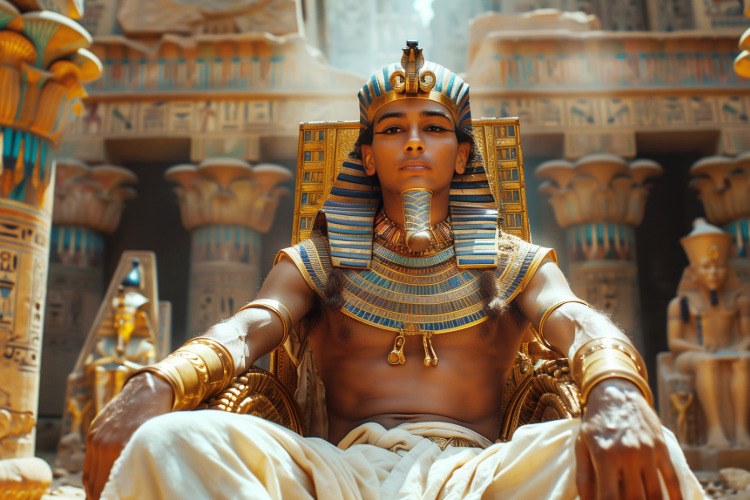
Pharaoh’s Hard Heart: How Freedom is Won, and How Freedom is Lost
The Lord said to Moses, “When you return to Egypt, see that you perform before Pharaoh all the wonders I have given you the power to do. But I will harden his heart so that he will not let the people go.” ~ Exodus 4:21
The Bible is full of problems. The key to wisdom is to hammer away at the problem until it opens up to you.
The problem in this verse I read this morning is obvious.
If God hardened Pharaoh’s heart, where was Pharaoh’s freedom?
Either the Egyptian king had the freedom to let Israel go, or he did not.
If Pharaoh had a choice, then Pharaoh hardened his own heart.
But if God hardened Pharaoh’s heart — as the text says — then what choice did Pharaoh have? And how could God punish Pharaoh for something Pharaoh was unable to control?
Punishment
When you continue to read the book of Exodus as it details the ten plagues God sent upon Egypt, it is interesting to note that after each of the first five plagues, it says that Pharaoh hardened his own heart.
It is only from the sixth plague onwards that Pharaoh’s hard heart is attributed to God.
Rabbi Jonathan Sacks suggests that the hardening of Pharaoh’s heart in the last five plagues was a form of punishment for Pharaoh hardening his own heart after each of the first five plagues.
When Pharaoh continually refused to repent, God eventually withheld repentance from him altogether.
This is such a profound thing to observe.
At first, the evil impulse is as thin as a spider’s web. But, in the end, it is as thick as hawser.
Or, to put it another way: evil arrives as a migrant, stays as a guest and becomes a master.
Enslaved
Evil has two sides to it. The first side of evil is what it does to the outside world. Pharaoh refused to let the slaves go.
But the second side to evil is what it does to the evildoer. In repeatedly refusing to free the slaves, Pharaoh became evil’s slave.
Eventually, despite the fact that Egypt was being completely ruined all around him, Pharaoh simply could not relent.
Pharaoh is a tragic figure. His obsession might have had rational beginnings, but it took hold of him to the point that he not only ruined the people around him, he ruined himself.
It’s important to realise that freedom can be won and freedom can be lost. And the process is gradual.
Unless the will to do what is right is exercised, it eventually atrophies and dies. At that point the will to do right is completely gone. And a person will literally self-destruct in violation of all reason and sense.
Pharaoh was born free, but became a slave by his repeated refusal to do right.
Moses, on the other hand, was born a slave but became free through repeated obedience to the voice of God.
The greatest challenge in life is to daily allow God’s will to challenge our own. It’s the path to freedom, and it is the cure for hardness of heart.
___
Republished with thanks to The James Macpherson Report.
Subscribe to his Substack here for daily witty commentary.
Image courtesy of Adobe.
5 Comments
Leave A Comment
Recent Articles:
17 October 2026
3.4 MINS
Seeking the face of God means surrender, laying aside our agenda and wants. Revival begins when we want God himself more than we want the outcome.

16 October 2026
3.4 MINS
Australia’s proposed digital duty of care laws promise greater online safety and increased user control by switching off algorithms, but critics warn they could give ministers sweeping powers to restrict lawful content and threaten free speech.
16 October 2026
3.3 MINS
Jesus is calling us to love one another “just as I have loved you”. And if the Church does awaken to that agape (love), the world will see a great and powerful witness to Christ and his kingdom.
15 October 2026
3.6 MINS
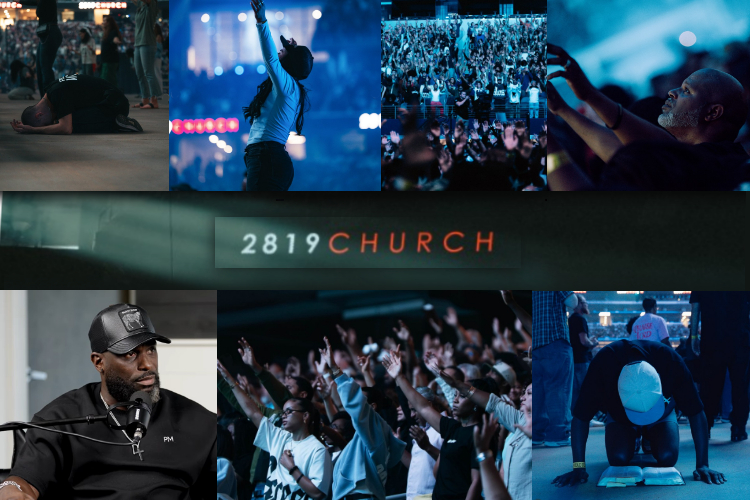
An 80,000-strong gathering in Texas signals a hunger for revival, as Pastor Philip Anthony Mitchell warns that Christian indifference could leave future generations without the faith.

15 October 2026
4.2 MINS
Many Australian Christians don’t know a single Aboriginal person. Robyn Murray argues that reconciliation begins with honest history, prayer and a shared life in Christ.

15 October 2026
7.2 MINS
A man’s death in a tiger enclosure sparks chilling online reactions, exposing a growing willingness to judge human worth by usefulness, behaviour and ideology.
15 October 2026
2.6 MINS
Before anything else, we must make prayer central. I urge the Church in Australia to awaken to, first of all, prayer.



Top article. Thank you.
At last I have seen someone else iterating this exegesis!
Brilliant commentary!
My first reaction – WOW!
Brilliant! Brilliant! Brilliant!
A lesson to us all . Thanks , James .