


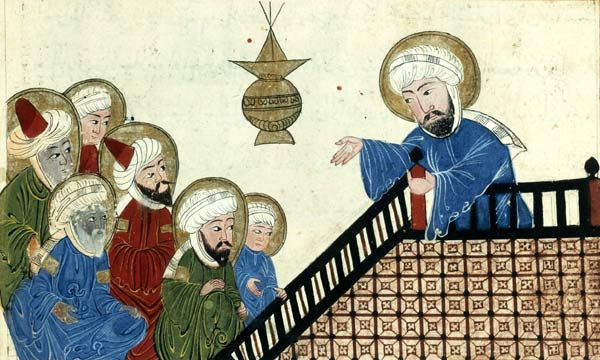
The Question the West Is Too Afraid to Ask About Islam
Thomas Aquinas questioned Muhammad’s credentials to speak for God. His question remains uncomfortably relevant.
What evidence entitles a man to claim that God speaks through him?
That’s not an unreasonable question. I would argue it’s an indispensable one — especially in 2026.
As Islam seeks to spread its tentacles across Europe and beyond, Westerners are reluctant to critique it.
Instead, the modern instinct is to treat every religious tradition as equally mysterious, equally profound, and equally beyond criticism.
But Italian philosopher and theologian Thomas Aquinas had no such inhibitions.
Writing 600 years after Muhammad claimed to have received God’s final and ultimate revelation for mankind, Thomas Aquinas dared to ask what credentials the Arab had to speak for God.
Conquest Is Not a Credential
Aquinas’s first question concerned divine authentication.
Christianity, as Aquinas understood it, was not simply a collection of moral teachings attributed to a charismatic founder.
The claims of Jesus were accompanied by miracles and supernatural signs, understood as evidence that His message originated with God.
Aquinas, therefore, asked a rather awkward question: where were the comparable signs establishing Muhammad’s prophetic authority?
His answer was devastatingly blunt.
Muhammad advanced his cause through force.
Aquinas’s observation that military strength is hardly a divine credential is difficult to dismiss.
Robbers have weapons. Tyrants have armies. Conquerors have empires.
That hardly makes them messengers of God!
Desire, Discipline, and the Two Faiths
Aquinas was equally pointed about morality.
Aquinas argued that Muhammad’s teaching accommodated bodily desire and offered promises of sensual pleasure.
Christianity, by contrast, demands the disciplining of appetite and the elevation of the spiritual life above the gratification of the flesh.
Aquinas, therefore, saw a revealing difference in the two systems: Christianity asks man to master his desires; Islam gives those desires considerably more room to manoeuvre — a point well made by French author Michel Houellobecq in his excellent novel Submission.
Houellobecq, who had to go into hiding after his book was published, imagined that French men might easily convert to Islam after discovering how generously it catered to their desires.
It’s worth putting on your Christmas reading list.
But back to Aquinas.
Truth, Fable, and the Courage to Question
His third insight concerned truth.
Aquinas did not claim that Muhammad taught nothing true. His criticism was subtler: he argued that truths were mixed with fables and serious falsehoods in order to create what we now call Islam.
That mixture matters because divine revelation ought to possess an authority and coherence that does not depend upon convenient additions from human imagination.
Finally, Aquinas questioned the circumstances surrounding Muhammad’s earliest followers and the subsequent expansion of Islam.
He contrasted Christianity’s dependence upon preaching, miracles and spiritual conviction with a movement that, as history records, employed military force to secure submission.
In my opinion, Aquinas was very much on point in his critique of Islam.
He refused to confuse popularity with truth, conquest with revelation, or desire with virtue.
And perhaps that is the lesson we most need to recover in 2026. A society that is frightened to question religious claims is not tolerant; it is intellectually timid.
Respect for individuals does not require surrendering our capacity to examine ideas, doctrines and claims to divine authority.
Aquinas understood something that we seem increasingly determined to forget: truth does not become true because millions believe it, because a movement expands, or because criticism makes us uncomfortable.
Religious claims, precisely because they purport to speak with the authority of God, deserve scrutiny rather than exemption from it.
We should be capable of critiquing Islam without hatred toward Muslims or contempt for their dignity.
But intellectual charity does not mean intellectual surrender.
A free society must be able to distinguish between respecting a person and accepting his theology.
And Muslims should be able to handle criticism of Islam without resorting to threats or violence.
The veracity — or otherwise — of Islam is not a medieval question. It’s an urgent question for those of us living in 2026.
But I fear, a question the West is much too afraid to ask.
___
Republished with thanks to The James Macpherson Report. Image courtesy of Wikimedia Commons.
6 Comments
Leave A Comment
Recent Articles:

27 October 2026
25.3 MINS
Labor’s Digital Duty of Care Bill threatens free speech, empowers covert online surveillance, and imposes potentially burdensome regulations on Australian businesses.
27 October 2026
10.3 MINS
As Tasmania and Western Australia consider conversion therapy bans, a former LGBT+ ministry leader warns of threats to religious freedom, personal choice and Christian discipleship.
27 October 2026
4.9 MINS
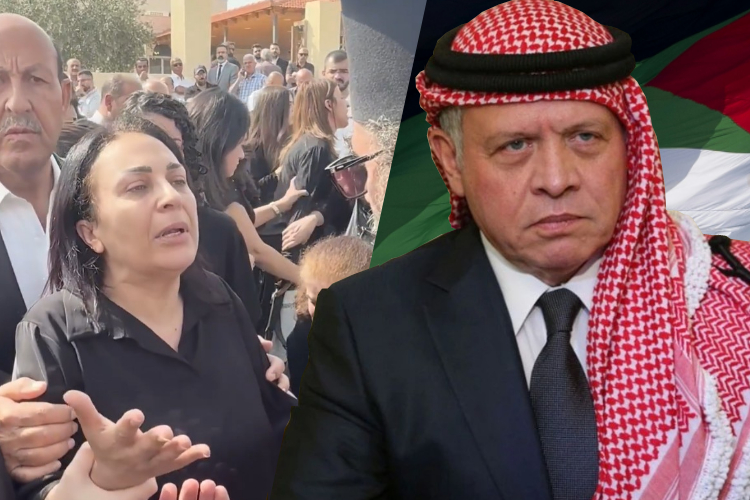
Nine Christians have been killed in a terrorist attack on a Jordanian church, prompting fierce condemnation, demands for justice and renewed concerns about religious persecution.
27 October 2026
3.6 MINS
For 25 years, the Mount Moriah Trust has supported struggling Christians across the Holy Land, bringing practical assistance, encouragement and hope to believers facing hardship and persecution.
27 October 2026
1.3 MINS
Moira Deeming’s re-election campaign has energised Family First supporters, raising $90,000 as the party prepares for a crucial Victorian election and a potential breakthrough.
27 October 2026
3.1 MINS
As the disciples discovered through a huge haul of fish, we can trust Jesus for a net-breaking, boat-sinking catch of people.
26 October 2026
4.5 MINS
OECD chief Mathias Cormann warns Australia is losing its competitive edge, as excessive regulation, housing pressures, immigration challenges and declining public trust threaten national prosperity.



Thanks James. Islam is the biggest threat to us by a million miles.
They’re Not Even Hiding It Anymore -> https://www.youtube.com/watch?v=pcNdsQM84Qo
The only difference between Islam and Radical Islam is the word “Radical”.
The book is the same.
The Prophet is the same.
The teachings are the same.
The Hadiths are the same.
You are only dealing with a difference in vocabulary.
When I start seeing “mainstream” Muslims condemn the radical ones, maybe I’ll change my mind…
but we are not seeing it at all.
Also… Remember these examples of how Islamic expansion was stopped… It’s a BIG clue as to what is needed.
Battle of Vienna (1683 CE):
The Ottoman Empire laid siege to Vienna, Austria. A combined European relief force, led by Polish King Jan III Sobieski, crushed the Ottoman ranks. This defeat initiated the slow but steady decline of the Ottoman Empire in Europe.
Battle of Covadonga (722 AD, Spain):
A small Christian force led by King Pelagius ambushed a Muslim army in the mountains of northern Spain. This defeat stopped Islamic control over the region. It also began the Christian Reconquista.
Battle at Târgovi?te (1462 AD, Wallachia):
Vlad the Impaler led a surprise night raid on the camp of Ottoman Sultan Mehmed II. This brutal raid panicked the Ottoman army, forcing them to retreat from Wallachia.
Battle of Toulouse (721):
Duke Aquitaine crushed the Umayyad forces besieging Toulouse, temporarily halting their northward advance into France.
Battle of Lepanto (1571):
The Holy League naval fleet destroyed the main Ottoman fleet in the Mediterranean, ending Ottoman maritime dominance.
Siege of Constantinople (717–718):
Byzantine and Bulgarian forces, aided by a new weapon called “Greek fire”, crushed a massive Umayyad siege force. This victory preserved the Byzantine Empire and stopped the early spread of Islam into Eastern Europe.
The Barbary Wars (1801–1815):
The United States fought two wars against the Barbary States (Tripoli, Algiers, and Tunis). These North African states were nominally part of the Ottoman Empire and engaged in state-sponsored piracy. U.S. naval blockades and successful land marches forced the Barbary rulers to stop attacking American merchant ships, curbing their power.
sadly there are far too many Christians hiding their heads in the sand rather than sharpening their sword (reading the Word)
Robbers have weapons. Tyrants have armies. Jesus Christ offers love, personal sacrifice and Christian service.
Beautiful article James. and great comments Kym.
Maybe someone could write a small booklet, that’s easily readable, short enough and with graphics to support text and to entice and assist readers who see more in the visual.
This could have such a powerful effect. And the truth may then be clearer to many in Islam too.
And, of course, opposition from those not ready to open their eyes or ears to the truth.
Just a thought.
Friends,
Regarding “divine authentication”, there is one other crucial fact not mentioned in this post, and that is the empty tomb of Jesus. He rose from the dead, which vindicated and validated His claims and teachings. Muhammad’s tomb is still occupied.