



Welcome to Country: Enough with the Division
There are narrow circumstances where Welcome to Country might have a place, but its proliferation in recent years has alienated a lot of Australians from Indigenous culture.
When it comes to choosing unity over division in our nation, it’s important to start at the ground level.
It’s small choices that will build reconciliation, not big grand gestures by activists.
It’s choosing the unity of our country over separatism and it’s rejecting the small acts of division that keep us apart.
Take the Welcome to Country.
There are narrow circumstances where it might have a place, but its proliferation in recent years has alienated a lot of Australians from Indigenous culture.
When a government official acknowledges traditional Aboriginal land owners at the start of a speech in a different country, I think things might be getting away from us a little!
More importantly, though, is the commercialisation of Welcomes to Country.
I spoke recently to Sky News about the fact that there are people out there whose income is entirely Welcome to Country fees.
People Are Sick of Welcome to Country
And that commercialisation isn’t just sparking backlash in wider Australia, Indigenous communities are also sick of it.
The Juru people of the Burdekin in north Queensland recently voted to ban Welcome to Country ceremonies on their lands because of the commercialisation.
They particularly note that it’s government agencies and officials who have sowed division by using “preferred suppliers” who are not actually from the area for Welcome to Country ceremonies at their events.
That’s the kind of colonisation that doesn’t seem to get a run in the pages of The Guardian!
There’s no question people are sick of it and are looking for a different way forward.
On Australia’s Flag
Opposition Leader Peter Dutton indicated one small choice we can make for unity, which is to restore our national flag to its rightful place.
Too often Aboriginal and Torres Strait Islander flags are prominent at official events and the Australian flag is off to the side.
Or if you’re Adam Bandt and the Greens you refuse to have the Australian flag at all at your press conferences.
That’s divisive and destructive to any effort for real reconciliation.
The Aboriginal and Torres Strait Island flags have a place, but they are not our national flags.
They are flags for particular ethnicities, not our whole nation.
As Peter Dutton told Sky News:
We are a country united under one flag and if we’re asking people to identify with different flags, no other country does that, and we are dividing our country unnecessarily.
Spot on.
It’s a small thing, but if we are ever going to move beyond separatism it requires us acknowledging we are all Australian under one flag.
And putting it back in its rightful place is a great start.
___
Image courtesy of Wikimedia Commons.
7 Comments
Leave A Comment
Recent Articles:
24 October 2026
3.3 MINS
When we ask God, "What is in my hand?", and see our possessions, money and time as seed that God asks us to sow, life becomes simpler.
23 October 2026
6.8 MINS
Hillsong UNITED’s Joel Houston reflects on fame, faith and the burden of ministry, questioning performative Christianity as he seeks a more authentic walk with God.
23 October 2026
13.1 MINS
Tasmania’s proposed conversion practices legislation raises serious questions about religious freedom, pastoral care and whether Christians can freely pray with those seeking to live according to their faith.
23 October 2026
7.7 MINS
Melbourne Catholic Archbishop Peter Comensoli has spoken out clearly against the deadly promises by both major parties in Victoria ahead of the election, drawing a comparison between abortion and capital punishment.
23 October 2026
3.1 MINS
As Western societies grow more hostile, could abandoning Christianity’s moral foundations be contributing to the rise of ideological extremism, political intolerance and violence?
23 October 2026
5.1 MINS
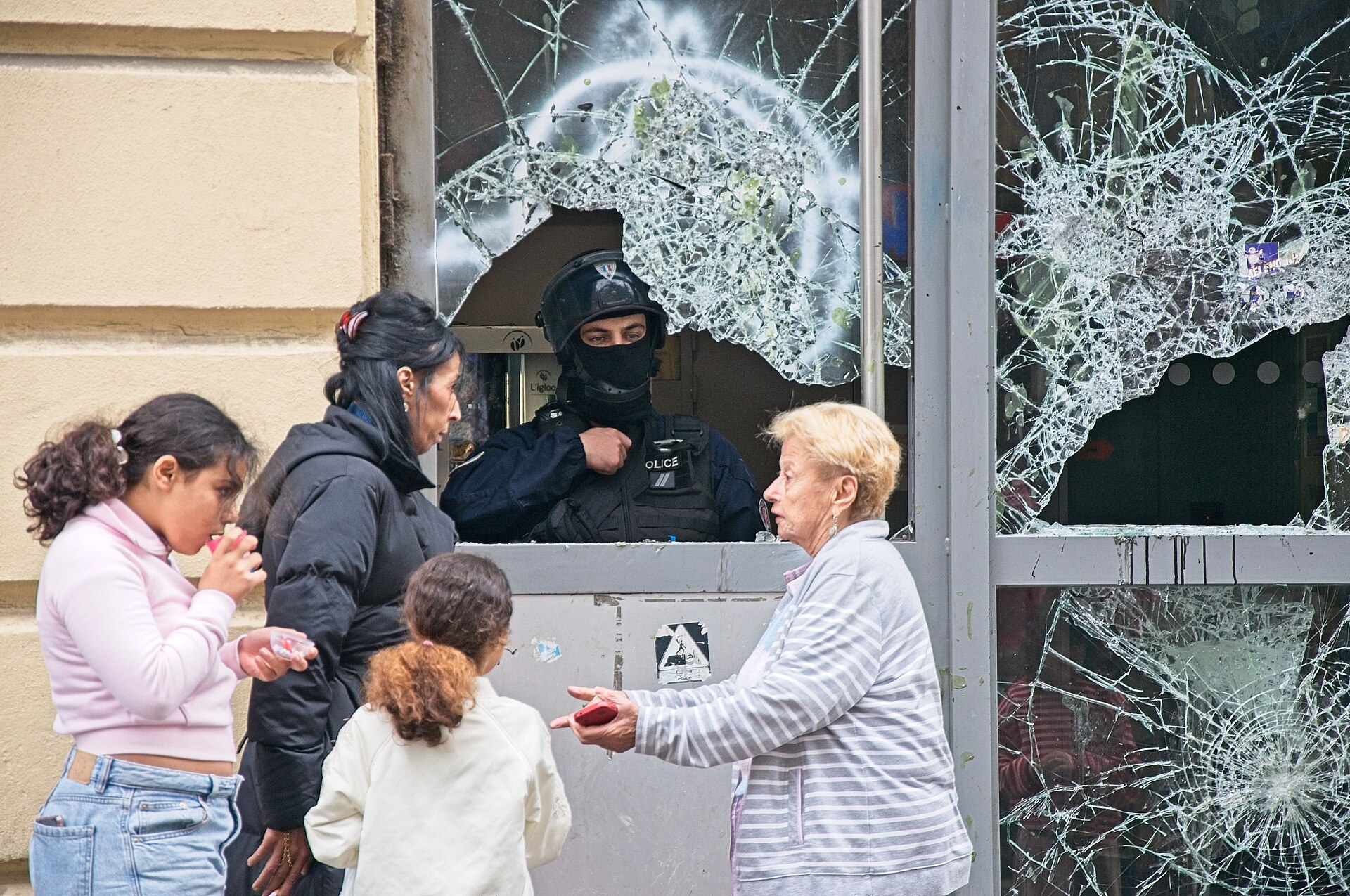
France’s escalating riots expose the dangers of political extremism, antisemitism and radical alliances, offering America a stark warning about the future of Western democracy.
23 October 2026
3.1 MINS
The one who is worthy of it all is awakening his Church to be captivated by him, so that we will honour one another and share his gospel with humility and courage.



I agree
Thank you for your clarity and courage Jacinta – you are a real blessing to this nation!
Thank you Senator Jacinta for researching this topic and finding out how Indigenous people now feel about ‘Welcome to Country’. It has come to light over time that this ceremony is a superficial way to try give esteem to indigenous people and customs and its been rolled out as a type of magic solution to heal all rifts and misunderstandings. But in reality its relationship building and working together that heals.
Also the fact smoking ceremonies have become very expensive is tragic as the pricing can entice people to perform for the wrong reasons. ($300 to $1.500). It seems often little is achieves , as people are now ‘over’ seeing a performance, it uses tax payers money in a way that is not working to heal relationships, and most people feel there must be a better way to show esteem to Indigenous/First nation people… One example would be to have an indigenous elder or representative come on stage and simple say ‘welcome’ or ‘Bless you.’ That is one way to have an acknowledgement of indigenous people and it involves a relationship.
Ironically, Australia has had a great emphasis on climate change and keeping the atmosphere pure, yet a ‘smoking’ ceremony means carbon dioxide poison is spread through the air. But there is a failure to recognize that its not good for those with asthma and it’s not good for the environment. e.g. ‘Smoking ceremonies in Australia can be harmful to the air around them if the wood smoke is inhaled, as wood smoke can trigger asthma.’ (Ref: Reconciliation Australia) (On the good side however, mostly smoking ceremonies use emu bush, peppermint and eucaplytus and most people can inhale it but some will have a reaction to these herbs)
Thirdly, Traditionally, a ‘Smoking ceremonies are conducted in a deceased person’s space to aid their spirit in moving on from the material world and purify or cleanse a location. The ceremony takes precedence over all other events and may involve smoking a deceased person’s house, room or car to allow their spirit to return to country.’ It would seem that the traditions of the past are best kept within the Aboriginal culture where they have meaning to those who may have lost a loved one. The ceremony then had great meaning to that audience but it may well lose all meaning by being ‘displaced’ and being made part of mainstream culture.
I think it’s brave of the indigenous elders in Qld to speak up and clarify how they feel. May others think this issue through and do what seems right for their culture and meanwhile find other constructive ways to have two cultures or many cultures living side by side with respect of each others customs.
Thank you Senator Jacinta for researching this topic and finding out how Indigenous people now feel about ‘Welcome to Country’. It has come to light over time that this ceremony is a superficial way to try give esteem to indigenous people and customs and its been rolled out as a type of ‘quick fix’ solution to heal all rifts and misunderstandings. But in reality it is relationship building and working together that heals.
Also the fact smoking ceremonies have become very expensive is tragic as the pricing can entice people to perform for the wrong reasons. ($300 to $1.500). It is good the Burdekin people in Qld have said they don’ longer want commercial smoking ceremonies. It seems often little is achieves , as people are now ‘over’ seeing a performance, it uses tax payers money in a way that is not working to heal relationships, and most people feel there must be a better way to show esteem to Indigenous/First nation people…Instead of a smoking ceremony it would be to have a local indigenous elder or representative come on stage and simple say ‘welcome’ or ‘Good morning’. That is one way to have an acknowledgement of indigenous people and it involves a relationship is being built with elders without involving money.
Ironically, Australia has had a great emphasis on climate change and keeping the atmosphere pure, yet a ‘smoking’ ceremony means carbon dioxide is spread through the air. But there is a failure to recognize that it’s not good for those with asthma and it’s not good for the environment. e.g. ‘Smoking ceremonies in Australia can be harmful to the air around them if the wood smoke is inhaled, as wood smoke can trigger asthma.’ (Ref: Reconciliation Australia) (On the good side however, mostly smoking ceremonies use emu bush, peppermint and eucaplytus and most people can inhale it but some will have a reaction to these herbs)
Thirdly, Traditionally, a ‘Smoking ceremonies are conducted in a deceased person’s space to aid their spirit in moving on from the material world and purify or cleanse a location. The ceremony takes precedence over all other events and may involve smoking a deceased person’s house, room or car to allow their spirit to return to country.’ It is a sacred event which has been used for thousands of years within indigenous culture. It would seem that the traditions of the past are best kept within the Aboriginal culture where they have meaning to those who may have lost a loved one. The ceremony then has great meaning to that audience but it may well lose all meaning by being ‘displaced’ and made part of mainstream culture.
I think it’s brave of the Burdekin indigenous elders in Qld to speak up and clarify how they feel. May others think this issue through and do what seems right for their culture and meanwhile find other constructive ways to have two cultures or many cultures living side by side with respect of each other’s customs.
Originally Australia was based on Christian and Judeo values and the s constitution was written to protect those values. In view of that ,background and also in view of many indigenous people becoming Christians over the last 250+ years, the smoking ceremonies need to be reviewed by The Federal Govt who introduced them but it seems the Govt failed to understand the history and context of the sacred indigenous traditions of the past.
Well, said, Jacinta.
One Nation under One flag.
Welcome to Country has certainly outworn its welcome!
One Aboriginal person eg Jacinta, doesn’t necessarily represent the views of all Aboriginal people living in this Country.
All members of CD need to understand this, so you are open minded to all Aboriginal peoples views on Welcome to Country and the flag debate.
The Australian flag does not represent the first people’s of this Country, so I don’t agree this flag represents me or my people.
The flag represents the United kingdom (Europe) the federal government, states and territories.
It doesn’t represent the 250 Aboriginal language groups in the Country, that’s why Aboriginal people feel proud to fly the Aboriginal flag and the Torres Strait Islanders fly their flag too.
The division is coming from what the Australian government and majority of Australia population whether Christian or not is choosing to leave out, or not recognising the truth of the matter.
Changes need to happen from both for there to be true reconciliation.