



Critics Misunderstand Trump’s Cabinet Picks
Every president has appointed personal friends, business colleagues, party allies and family members to these positions, so we should expect Donald Trump to do the same. It is the American way.
Widespread criticism of President-elect Donald Trump’s new cabinet team, suggesting that some are unqualified or incompetent, reflects a basic misunderstanding of the way that the government of the United States functions, and the checks and balances built into that system, through both convention and the U.S. Constitution.
Under the U.S. Constitution, there are three arms of government: the Executive, the Congress and its two houses, and the Judiciary. The president is head of the Executive arm of government, and has extremely wide powers compared with most other heads of state.
The president has the right to nominate members of cabinet, and the unfettered right to appoint a large number of other government officials.
The president nominates his cabinet, but almost all of its 26 members must be confirmed by the U.S. Senate, clearly ensuring oversight of some of the most senior positions in the new administration.
Under the Constitution, the Senate must approve the president’s nomination of senior government officials, members of the U.S. Supreme Court and ambassadors. More junior officials may be appointed by the president, the judiciary or heads of departments, and are not subject to congressional oversight.
There are no conditions specified for appointment, but in general the Senate will look at the qualifications, experience and suitability of presidential nominees. From time to time, the Senate rejects nominees, or nominees withdraw before a vote is taken.
Nominees
Every president has appointed personal friends, business colleagues, party allies and family members to these positions, so we should expect Donald Trump to do the same. It is the American way.
Among Trump’s nominees who have been widely criticised are those for head of the Department of Health and Human Services (Robert F. Kennedy Jr), the FBI (Kash Patel), National Institutes of Health (Dr Jay Bhattacharaya), Medicare (Dr Mehmet Oz), and the Food and Drug Administration (Dr Marty Makary).
Every one of these people has publicly espoused controversial positions taken by Donald Trump in the run-up to the U.S. elections, and Trump was overwhelmingly elected by the American people to implement his program, winning 312 Electoral College votes to 226 for the Harris/Walz team, backed by incumbent President Joe Biden.
Perhaps unwittingly, American critics of the Trump appointments are rejecting the outcome of the U.S. presidential election. It is unreasonable for them to expect Trump to implement Biden’s policies.
Donald Trump’s nominations reflect the views that were endorsed by the electorate on Tuesday November 5.
There is another issue here.
One of the underlying issues in Trump’s election victory was the rising level of disenchantment with governments, as it is throughout the Western world.
The belief that, regardless of who wins elections, the same political/bureaucratic class runs the country is not just a product of political fantasists or Yes, Minister. It is a deep-seated belief that threatens to undermine the democratic ideals on which Western societies are built.
Democratic Society
It is critically important that, when a government is elected, whatever its complexion, it is given a real opportunity to implement its program. Otherwise the electoral process is a sham. This is particularly important when one disagrees with an election outcome.
Within democracies, there are numerous centres of authority apart from governments. This was recognised long ago, when the media was described as the “Fourth Estate”. Others include social media, political parties, pressure groups, the financial system, large corporations, trade unions, and professional organisations.
A functioning democracy depends on the interplay of a complex matrix, in which governments are just one element, albeit a very important one.
Trump’s first term in office was marked by significant achievements – despite his political inexperience – in his judicial appointments to the Supreme Court, countering the climate hysteria of the green-left, countering China’s unfair trading policies, dealing with the illegal immigration crisis, and challenging dictators such as Russia’s President Vladimir Putin, China’s Xi Jinping, North Korea’s Kim Jong-un and Iran’s Ayatollah Khamenei. He also helped the world respond to the covid19 pandemic, funding Operation Warp Speed to rapidly develop and roll out covid19 vaccines.
In his second term in office, he is better equipped to navigate both the old crises, and new ones that have emerged since 2021. He will benefit by the fact that Republicans have a working majority in both houses of Congress, making the implementation of his program far more possible.
___
Republished with thanks to News Weekly. Image courtesy of Wikimedia Commons.
One Comment
Leave A Comment
Recent Articles:
24 November 2026
2 MINS
A national Christian declaration against antisemitism is being launched in the wake of the Bondi massacre, calling believers to prayer, unity and practical action.

24 November 2026
4.1 MINS
US lawmakers and the State Department are pressing Egypt to free Christian convert Said Abdelrazek, while the Albanese government faces mounting criticism for its silence.

24 November 2026
3.4 MINS
Victoria’s controversial Treaty faces growing opposition, with One Nation and the Liberals pledging to scrap it, arguing voters have already rejected race-based political representation.

24 November 2026
3.9 MINS
St Paul’s teaching on principalities and powers challenges Christians to look beyond human explanations for society’s moral decline and recognise the importance of spiritual warfare and prayer.
23 November 2026
3.1 MINS
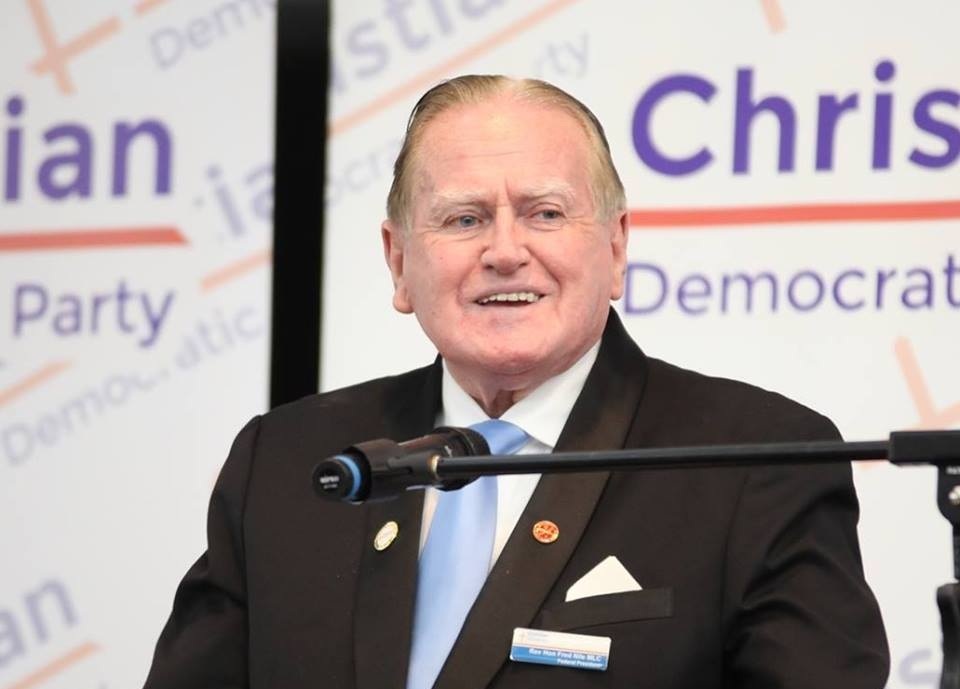
Rev Fred Nile was a fearless Christian voice in Australian politics, a tireless defender of biblical values and a controversial figure whose legacy deserves both honour and reflection.
23 November 2026
4.2 MINS
Australia’s expanding hate speech laws and online controls are raising serious questions about free expression, democratic freedoms and the future of multiculturalism in Australian society.
23 November 2026
5.3 MINS
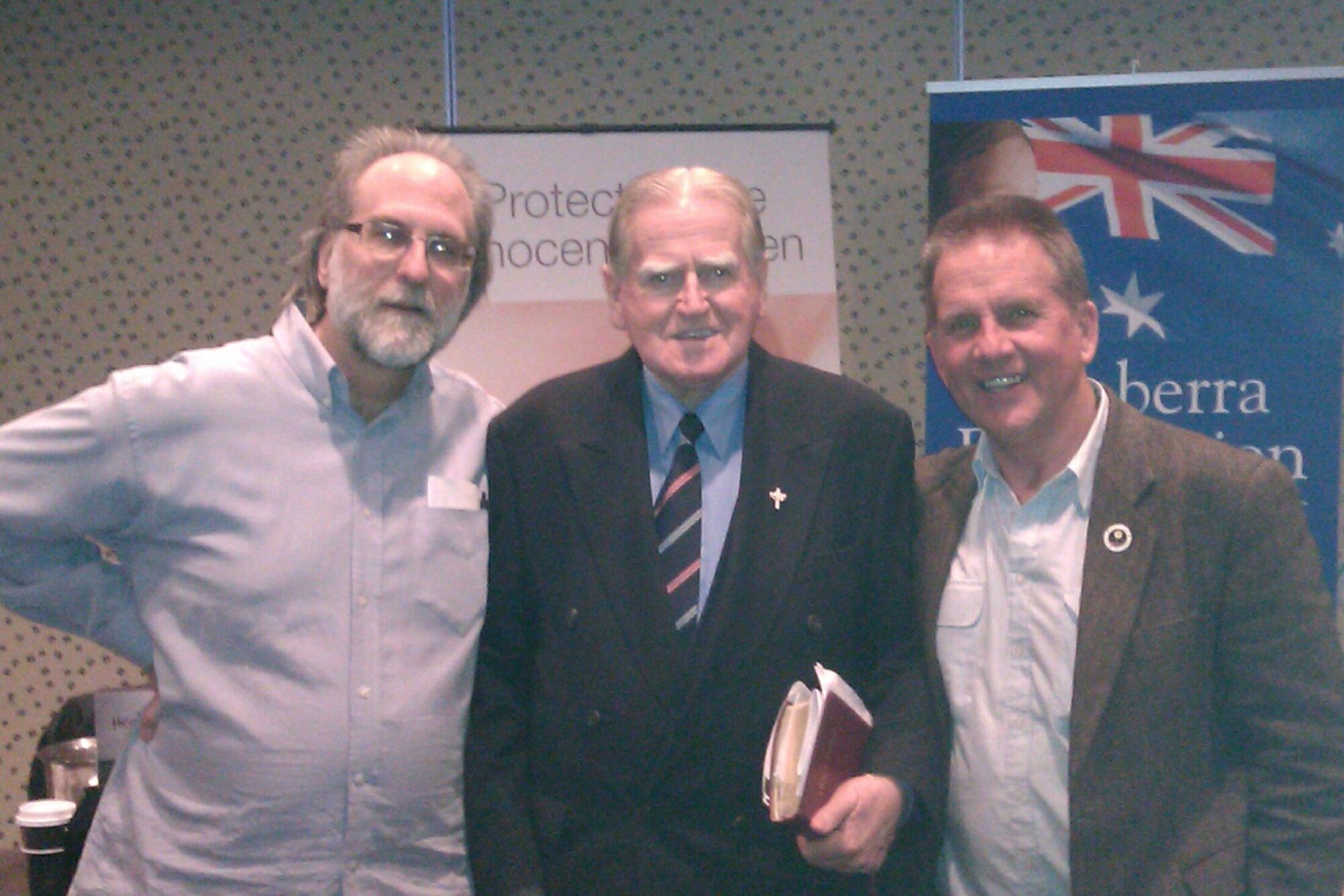
The Reverend Fred Nile devoted more than four decades to Christian public service, standing firmly for his convictions and leaving a lasting legacy of faith and courage.




Interesting to see what happens in USA under Trump. Hope it has good repercussions for us, ie we learn some lessons on how to eliminate Woke and have a Christian Revival,