


The Bridge and the Creed: How a Secular Gospel Now Frames Gaza and Israel
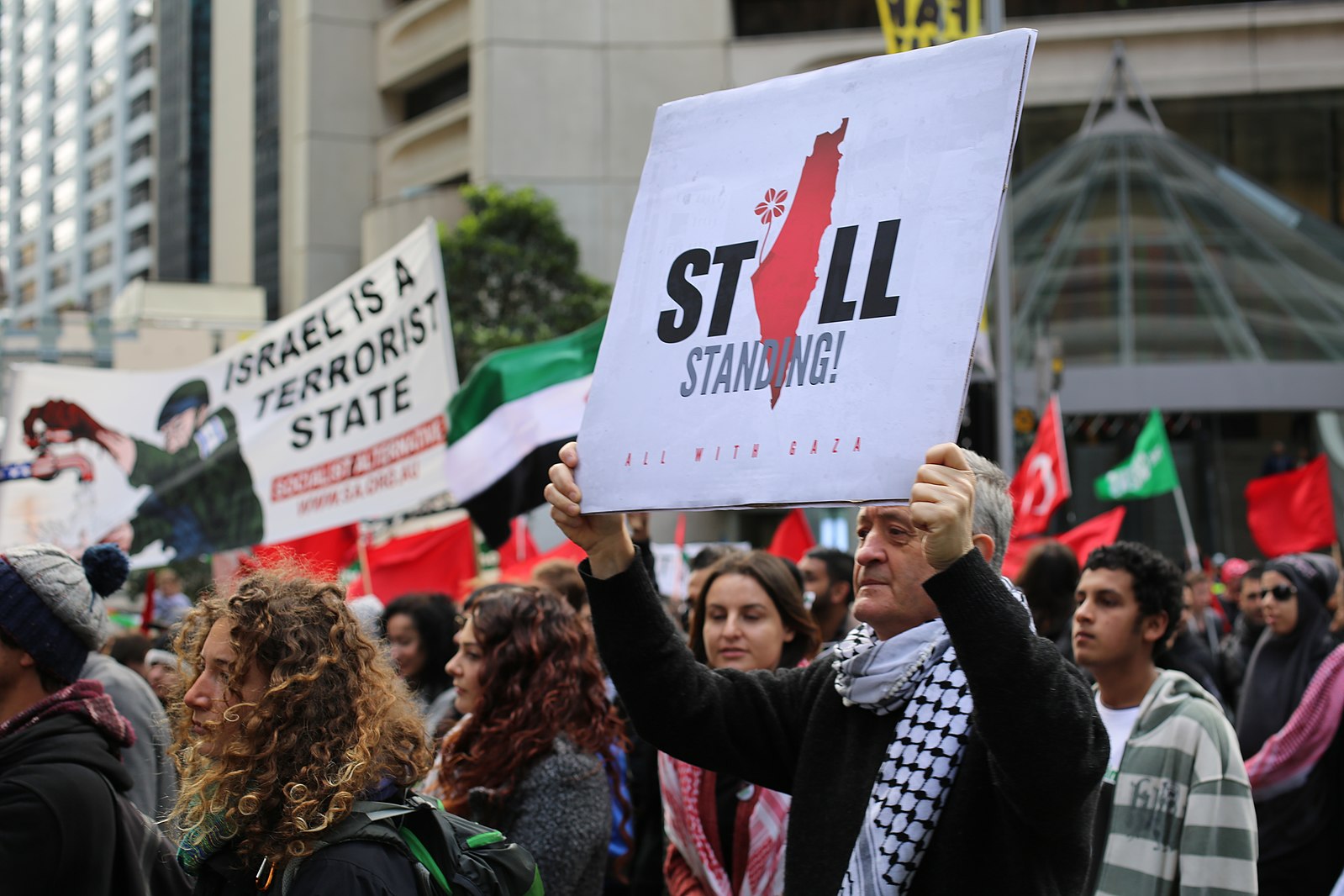
I watched the rain-slick footage from Sydney online and felt that odd mix of awe and unease that comes when a civic icon turns into a pulpit. The Harbour Bridge, usually a shorthand for Australian unity, became, for an afternoon, a sanctuary of drums, flags, and moral insistence.
On 2 August 2025, Justice Belinda Rigg of the New South Wales Supreme Court declined to issue a prohibition order sought by police, allowing the march to proceed (ABC News, 2025a). On 3 August 2025, New South Wales Police initially estimated about 90,000 people crossed the bridge despite heavy rain, later calling the situation perilous and redirecting the route to avoid crowd crush risk (Hsu & Gralow, 2025, RNZ News, 2025). Whatever one’s politics, the scene looked and sounded like liturgy, a people gathered, a story proclaimed, a redemption promised.
In my last article, I unpacked Islam’s theological and cultural dynamics. This time, I turn to progressivism, not merely as a political movement, but as a belief system with its own creeds, rituals, and moral absolutes. Its adherents may reject the supernatural, yet often display the fervour, orthodoxy, and boundary marking of a religion. A quick caveat: when I use terms like liturgy, catechism, or sacrament here, I am speaking descriptively, not sneering. I am trying to name the moral architecture at work.
Filling a Void
I am a Christian who studies religion. So words like sacred and profane echo in public life more than we admit. Émile Durkheim taught that every community sets apart the inviolable; touch it and you will learn the boundaries of belonging (Durkheim, 1995). Christian Smith’s book diagnoses an unspoken sacred project within American sociology; I am extending that analytic lens to progressive activism in public life, where a similar telos shapes judgments of complicity and paths to collective liberation (Smith, 2014). For category balance, note Talal Asad on how modern power constructs religion, Robert Bellah on civil religion, and social movement work by David Snow and Robert Benford, and by Jeffrey Alexander (Asad, 1993, Bellah, 1967, Snow & Benford, 1988, Alexander, 2006).
For readers who lament the fading of Christian cultural influence, it helps to see what has taken its place. What now functions as a religion in public life tells a story of the world as a contest between oppression and liberation, names complicity as the root wrong, calls for confession through public acknowledgments and allyship, marks belonging with visible signs of solidarity, and promises a future where unjust structures are dismantled.
It offers meaning, moral status, and community; it supplies rites like marches, sit-ins, encampments, statements, and boycotts, and it recognises saints in the form of suffering witnesses and celebrated advocates. Its clergy are activists, academics, and NGO leaders; its canon is reports, curricula, and open letters; and its purity laws live in speech rules, especially anti-normalisation.
Salvation is imagined as social deliverance achieved by policy, pressure, and institutional power, not grace from beyond. The highest good is often expressive individualism joined to collective liberation, and dissent is easily treated as desecration rather than disagreement. You can dispute this creed, yet still see why it draws converts, it explains the world, it locates guilt, it offers a path of penance, and it lets ordinary people join a cause that feels righteous (Durkheim, 1995, Smith, 2014).
Once you listen for that beat, the Gaza-Israel debate in Australia snaps into focus. Since late 2023, student protests have borrowed the United States encampment script, tents, teach-ins, divestment drives, then localised it. At the University of Sydney, a nearly two-month encampment ended after a 17 June move on order and an official peaceful end notice on 24 June 2024. At the University of Melbourne, encampments ended on 22 May 2024 following commitments to disclose ties to weapons manufacturers. The Chronicle of Higher Education documented similar cycles in the United States: encampments, emergency policies, and leaders juggling safety, pedagogy, and clashing moral grammars (ABC News, 2024a, 2024b, University of Sydney, 2024, Cutler, Hunt, & Taylor, 2024).
Here is the gist as I see it, using Smith’s frame.
The sacred things. The oppressed functions as a set-apart moral category; in this conflict, Palestinians are centred as emblematic victims. Testimony of suffering, memorials, casualty dashboards, viral video, becomes near-inviolable witness. Solidarity rites, encampments, keffiyehs, call and response slogans, divestment votes, cue belonging. To question those rites or their sequencing often reads as profanation, not just disagreement. That is not an accusation; it is a description of how moral power works. Durkheim would nod at the boundary policing, Smith would call it a misrecognised sacred (Durkheim, 1995, Smith, 2014).
The creed. In classic theological terms, progressivism’s hamartiology locates sin in structures. Complicity functions as original sin, silence equals violence as catechism. This diagnosis drives a soteriology of collective liberation, decolonisation, sanctions, legal strategies in international forums, and sustained institutional pressure. Personal conversion takes the form of public allyship marked by visible adoption of the movement’s moral grammar.
Its ecclesiology elevates academics, NGOs, and activist networks whose reports and orthodoxy statements function like canon law. Its ethics are enacted through ritualised works, protests, statements, boycotts. And its purity codes take shape in speech rules, especially the prohibition on normalisation. In practice, anti-normalisation can mean refusing shared panels, co-sponsored events, or joint statements with Israelis, policies coherent on their own terms but corrosive to plural civic life. PACBI and the BDS movement outline these norms in their guidelines and recent statements (BDS Movement, 2022, 2024, PACBI, 2014, updated).
The end it offers. Official BDS materials articulate three demands: end occupation and colonialism, full equality for Palestinian citizens of Israel, and the right of return, without naming a one-state or two-state end state. My claim is about the practical horizon, anti-normalisation plus pressure target strategies often operate as if Jewish national self-determination were illegitimate. That is an interpretation to be argued, not a quotation to be asserted (BDS Movement, 2024, PACBI, 2014, updated).
Why name any of this? Because once you recognise the religious shape of a secular project, a few strengths and dangers stand out.
The strengths are obvious: moral urgency, communal meaning, courage to act for the vulnerable. Movements that sacralise the oppressed can pull the indifferent into the street and move sclerotic institutions a few inches toward justice. You could feel that energy on the bridge, children on shoulders, elders in raincoats, a shared conviction that history must bend. On campus, some encampments extracted real transparency concessions without police clashes (ABC News, 2024b).
The dangers are the mirror of those strengths. Three pathologies tend to appear.
- Selective empathy. Palestinian suffering is centred as sacrament; Jewish vulnerability gets filtered through privilege and oppressor lenses. Antisemitism can sometimes be recast as anti-oppression critique, and Jewish communal fear, hostages, rockets, the repetition of twentieth-century nightmares, gets down-weighted as rhetoric.
- Epistemic hierarchy. Lived testimony and ideologically aligned reports crowd out conflicting data; nuance can feel like betrayal. That corrodes scholarship and makes plural universities hard to sustain (Cutler, Hunt, & Taylor, 2024).
- Totalising politics. If the creed is sacred, compromise is sin. Normalisation becomes a slur, dialogue is suspect unless it accelerates liberation. Recent PACBI statements illustrate how these boundaries are policed in practice (BDS Movement, 2022, PACBI, 2014, updated).
There is a deeper inconsistency, too, and it cuts to anthropology. The sacred project exalts personal autonomy, the right to self-define one’s identity and life path, and often demands public affirmation of those identities. Yet many actors in the coalition deny collective autonomy to the Jewish people as a people. If autonomy is sacred, we should not carve out one people as the principled exception. This critique targets the practical horizon created by anti-normalisation plus maximalist readings of the right of return, not a straw man platform (BDS Movement, 2024, PACBI, 2014, updated).
The coalition of progressivism and Muslim activists is real but fractious. Tensions over LGBTQ+ rights, speech norms, and gender roles surface quickly, and coalitions often manage the friction through separate marches, negotiated speaker lists, or carefully delimited co-sponsorships, arrangements that keep the alliance intact while limiting its breadth.
Seeking Justice
So what do we do, those of us who want justice to advance without replacing one orthodoxy with another?
First, apply one standard. Scripture grounds justice in an unchanging law, not in shifting loyalties. No targeting civilians. No hostage taking. No antisemitism. No recasting violence as resistance. That is not both sides ism, it is John 7:24’s call to judge with righteous judgment, and, in secular terms, the civic norm of equal protection and consistent rules for noncombatants.
Second, defend two truths at once. Defend Palestinian rights, dignity, mobility, and meaningful political agency, and defend Jewish security and self-rule. Any long peace will require both. If you cannot say both sentences, the conversation stops before it starts.
Third, protect free speech and institutional neutrality. The bridge was opened by judicial ruling; police then managed a huge, peaceful crowd while adjusting on the fly to prevent a crush. That ambivalence, make space, guard safety, is exactly what plural institutions must navigate. Publish principled, even-handed time, place, manner rules, then enforce them evenly (ABC News, 2025a, Hsu & Gralow, 2025).
Finally, tell the truth about what we are doing. Much of today’s activism is public religion, without God, but with sacraments, creeds, and saints. Naming that need not inflame; it can lower the temperature by inviting us to scrutinise claims with the seriousness religion deserves. Durkheim helps us see how communities create their sacred. Smith helps us see why naming it matters. Asad and Bellah keep our categories honest. Snow and Benford and Alexander explain how movements frame grievances and stage moral drama. If Sydney’s bridge has become a stage, the question is not how to stop people from preaching, but whether our public square can host more than one sermon at a time.
I want a civic life sturdy enough to welcome the marchers and still make space for dissenters who will not chant. I want a campus culture where students can test arguments without fearing excommunication. And I want a liberation ethic that stubbornly includes both peoples of that land. If we can manage that, the next time a bridge becomes a sanctuary, it might also be a bridge to a shared future.
___
References
- ABC News. (2024, June 17). Students for Palestine encampment begins pack down after University of Sydney move-on order.
- ABC News. (2024, May 22). Pro-Palestinian protesters end Melbourne university encampment after key concession.
- ABC News. (2025a, August 2). Pro-Palestinian march across Sydney Harbour Bridge allowed to go ahead, judge refuses police bid for prohibition order.
- ABC News. (2025b, August 3). Pro-Palestinian protesters cross Sydney Harbour Bridge, rally in central Melbourne to highlight humanitarian situation in Gaza.
- Alexander, J. C. (2006). The civil sphere. Oxford University Press.
- Asad, T. (1993). Genealogies of religion. Johns Hopkins University Press.
- Bellah, R. N. (1967). Civil religion in America. Daedalus, 96, 1, 21.
- BDS Movement. (2022). The BDS movement’s anti-normalisation guidelines explained.
- BDS Movement. (2024). Guide to BDS boycott and pressure, Corporate priority targeting.
- Cutler, S., Hunt, F., & Taylor, A. (2024, May 1). How colleges have responded to student encampments. The Chronicle of Higher Education.
- Durkheim, É. (1995). The elementary forms of religious life, K. E. Fields, Trans. Free Press. Original work published 1912.
- Hsu, C., & Gralow, J. (2025, August 3). Tens of thousands join pro-Palestinian march over Sydney Harbour Bridge. Reuters.
- PACBI. (2014, updated). PACBI guidelines for the international academic and cultural boycott of Israel. BDS Movement.
- RNZ News. (2025, August 4). Police describe Sydney bridge march conditions as perilous, route adjusted to manage safety.
- Smith, C. (2014). The sacred project of American sociology. Oxford University Press.
- Snow, D. A., & Benford, R. D. (1988). Ideology, frame resonance, and participant mobilisation. International Social Movement Research, 1, 197, 217.
- University of Sydney. (2024, June 24). Peaceful end of protest encampment.
___
Image courtesy of Wikimedia Commons.
2 Comments
Leave A Comment
Recent Articles:

27 October 2026
1.5 MINS
Labor’s Digital Duty of Care Bill threatens free speech, empowers covert online surveillance, and imposes potentially burdensome regulations on Australian businesses.
27 October 2026
10.3 MINS
As Tasmania and Western Australia consider conversion therapy bans, a former LGBT+ ministry leader warns of threats to religious freedom, personal choice and Christian discipleship.
27 October 2026
4.9 MINS
Nine Christians have been killed in a terrorist attack on a Jordanian church, prompting fierce condemnation, demands for justice and renewed concerns about religious persecution.
27 October 2026
3.6 MINS
For 25 years, the Mount Moriah Trust has supported struggling Christians across the Holy Land, bringing practical assistance, encouragement and hope to believers facing hardship and persecution.
27 October 2026
1.3 MINS
Moira Deeming’s re-election campaign has energised Family First supporters, raising $90,000 as the party prepares for a crucial Victorian election and a potential breakthrough.
27 October 2026
3.1 MINS
As the disciples discovered through a huge haul of fish, we can trust Jesus for a net-breaking, boat-sinking catch of people.
26 October 2026
4.5 MINS
OECD chief Mathias Cormann warns Australia is losing its competitive edge, as excessive regulation, housing pressures, immigration challenges and declining public trust threaten national prosperity.



Dr Orr
Thank you!
‘So what do we do, those of us who want justice to advance without replacing one orthodoxy with another?
First, apply one standard.
Second, defend two truths at once.
Third, protect free speech and institutional neutrality.
If Sydney’s bridge has become a stage, the question is not how to stop people from preaching, but whether our public square can host more than one sermon at a time.
I want a civic life sturdy enough to welcome the marchers and still make space for dissenters who will not chant. I want a campus culture where students can test arguments without fearing excommunication. And I want a liberation ethic that stubbornly includes both peoples of that land. If we can manage that, the next time a bridge becomes a sanctuary, it might also be a bridge to a shared future.’
The language used in this piece is elitist. Many Aussies would struggle with what is being said and how it relates to their world view.
I refer to the words of Yahweh. Daniel 11 and 12 clearly lay down the rise and fall of Kingdoms important to Israel’s history.
Babylon is mostly done so it is a focus on the Medes and Persians, Greek and Roman Kingdoms before the establishment of the eternal kingdom of Yahweh.
We are in the time of the Roman Empire. There are 2 legs of this Empire. The king of the south represents Radical Islam and its affiliates. The king of the north represents the Roman papacy and its affiliates. Opposing religious groups with large constituencies. Right now we see the king of the South attacking the king of the north. At a time unspecified the king of the North will attack the king of the South like a whirlwind. The Antichrist will become visible and all of these players will be destroyed in the Kingdom of Yahweh.
Israel and born again believers including the millions of Muslims and Jews recently surrendering to the Lordship of Christ, are caught in the middle of these battles.
The world is witnessing the great falling away by so-called Christian believers who are misled by apostate teaching. The Replacement theology exhibited by “christians” is a giveaway – so many people who claim the Lordship of a Jewish man side against Israel when the word clearly says in Yeshua we are grafted into Israel. These people are deceived and unless the indwelling spirit reveals the truth, they will not be found in His kingdom. Who belongs to Christ? Those who have surrendered their lives to Christ and who keep His commandments. It does not mention any group. The onus is on the believer to discern those who are keeping His commandments and walking in love. This is not a group exercise. It requires the individual to know God.
One of Yah’s commandments is not to follow a multitude. No group think. It is personal and relies on the indwelling spirit and the Bible.
Because of the UN AGENDA 2030 the denying of Biblical roots in nations is being pushed. The Agenda is the blueprint for the building of the necessary infrastructure for one world governance. The values base of this Agenda is Humanism which mocks any need for God. 194 nations have bought into this Agenda.
I have walked in Yeshua more than 50 years. I know He will act by His Spirit not reliant on Human action. The Bible tells us He will act quickly to fulfill His plans.
Christ said the road to heaven is narrow and FEW are on it. The most prudent warning is for those who are reliant on doctrine, sectarian positions, sitting in churches who bless what God says is evil, is to examine yourselves in Christ. Barna researchers claim 5% of people in churches are born again!!! The truth is that many many remnant believers are outside the boundaries of Christian denominations. Not dissimilar to Christ knocking on the door of the Laodicean Church to get in.