


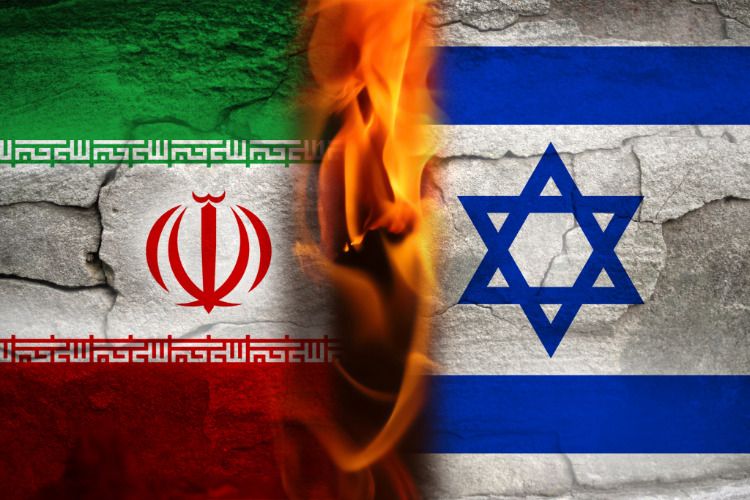
Theocratic Absolutism in Iran: How Apocalyptic Theology Fuels Political Power
The Islamic Republic of Iran stands apart in the contemporary Muslim world for the extent to which it fuses theological doctrine with political authority.
While many Islamic societies maintain varying degrees of separation between religious leadership and state governance, Iran’s post-1979 order is constructed on the principle that divine authority and temporal power are inseparable.
At the centre of this system is Wilayat al-Faqih (Guardianship of the Jurist), a doctrine that elevates a single cleric to supreme authority over both the spiritual and political realms in the absence of the Mahdi.
Far from being a universally accepted feature of Shi’a theology, Wilayat al-Faqih represents a revolutionary innovation championed by Ayatollah Ruhollah Khomeini, codified in the constitution, and defended through a blend of religious symbolism, political control, and eschatological vision.
I argue that Iran’s model of theocratic absolutism derives its resilience not only from institutional power structures but also from the infusion of apocalyptic theology, anti-Israel eschatology, and a militarised martyrdom tradition, creating a political order in which dissent is framed as heresy, and domestic and foreign policy are sanctified as part of a divine mission.
Foundations of Theocratic Rule: Wilayat al-Faqih and Clerical Supremacy
The relationship between theology and political authority in the Islamic Republic of Iran is neither incidental nor peripheral; it is foundational. While many Islamic societies maintain varying degrees of separation between religious leadership and state governance, postrevolutionary Iran represents a deliberate fusion of the two into a unified system of rule.
At the heart of this system lies Wilayat al-Faqih (Guardianship of the Jurist), the doctrine that functions as both the theological justification and the constitutional basis for clerical supremacy (Arjomand, 2009). This concept, developed and championed by Ayatollah Ruhollah Khomeini, extends beyond the idea that religious scholars should advise political leaders, as it asserts that a single qualified jurist should hold supreme authority over both the temporal and spiritual realms in the absence of the Mahdi.
While Shia theology reserves the attribute of infallibility for the Prophet and the Imams, in practice the political system treats the Supreme Leader’s rulings as if they carry a similar binding authority, grounded in religious legitimacy. This functional infallibility elevates political dissent to the status of a challenge to the religious order itself.
In effect, the centralisation of power has not merely created a strong executive branch; it has sacralised authoritarianism. The result is a state structure in which opposing the political order is framed as resisting the guardianship entrusted to the jurist, a dynamic that poses grave dangers for pluralism, dissent, and basic human rights (Nasr, 2006).
Wilayat al-Faqih and the Machinery of Control
The shift from clerical quietism to active governance under Ayatollah Khomeini is well-documented (Khomeini, 1979/1981). Historically, many Shia scholars maintained that during the Mahdi’s occultation, clerics should guide the community primarily through religious teaching and jurisprudence rather than direct political rule. Khomeini broke decisively from this tradition, arguing that the jurist’s guardianship was not only permissible but essential for preserving Islam in society.
Once enshrined in the 1979 Constitution of the Islamic Republic, Wilayat al-Faqih granted the Supreme Leader sweeping powers, including control over the armed forces, the judiciary, the state media, and the Guardian Council, which vets all political candidates (Milani, 2011).
However, this interpretation is not universally accepted among Shia scholars worldwide. Prominent Najaf-based clerics, such as Grand Ayatollah Ali al-Sistani, reject its political implementation, emphasising a more restrained role for the clergy. This highlights that Wilayat al-Faqih is a specifically Iranian revolutionary innovation rather than an inherent or universally endorsed Shia doctrine.
In Iran, however, the legitimising force of this doctrine means that challenges to state policy are framed not simply as political disagreements but as opposition to a religiously mandated system, insulating the leadership from accountability and reinforcing a culture of obedience.
Apocalyptic Thinking as Foreign Policy
One of the most striking features of the Iranian regime’s ideological framework is its integration of apocalyptic themes into contemporary politics. While eschatology is a component of many religious traditions, its politicisation can have destabilising consequences.
In certain Shia circles, the return of the Mahdi is not merely awaited but actively anticipated through global upheaval. Some clerics have suggested, drawing on selective readings of hadith, that conflict, chaos, and moral decay are precursors to the Mahdi’s reappearance (Takeyh, 2009). This belief, while not universally held among Shia scholars, resonates with elements of Iran’s foreign policy, particularly its confrontational stance toward the West and its strategic investment in proxy conflicts across the Middle East.
The late Ayatollah Mesbah-Yazdi, a key ideologue for hardliners, once argued that preparing the ground for the Mahdi involved resisting Western cultural and political influence at all costs (Boroujerdi & Rahimi, 2018). In practice, this apocalyptic orientation means that enduring sanctions, economic hardship, or even military confrontation can be reframed as spiritually meaningful sacrifices.
The perception that political struggle is part of a divine timeline allows the regime to transform otherwise unsustainable policies into acts of religious devotion, making compromise appear not only politically unwise but theologically impossible.
Israel as a Cosmic Enemy
The Islamic Republic’s hostility toward Israel operates on a level that transcends conventional geopolitical rivalry. In Iranian revolutionary rhetoric, Jerusalem is often cast as a pivotal arena in the drama of the end times, a place the Mahdi will ultimately liberate from perceived forces of injustice.
While certain Shia traditions do reference Jerusalem in eschatological contexts, much of the specific narrative linking the Mahdi’s return to the city’s “liberation” is more prominent in post-1979 revolutionary literature than in classical Shia hadith collections. This politicised interpretation has been deliberately cultivated to fuse anti-Zionism with a cosmic, redemptive mission, turning opposition to Israel into a theological necessity rather than a negotiable political stance.
Annual Quds Day events, established by Khomeini in 1979, institutionalise this framing, mobilising public sentiment through religious symbolism and state-sponsored protest (Takeyh, 2009). In such a narrative, Israel is not merely a state in dispute over borders—it becomes the embodiment of end-times corruption, and its elimination is cast as a step toward divine justice.
This vision really resonates within Iran’s revolutionary ideology; it is not a universally accepted reading within the broader Shia world, where interpretations of the Mahdi’s role in relation to Jerusalem vary considerably.
Martyrdom and the Militarisation of Faith
The Shia tradition of martyrdom, rooted in the seventh-century Battle of Karbala and the death of Imam Husayn, has long served as a wellspring of spiritual inspiration, moral resolve, and communal identity. Historically, the commemoration of Husayn’s sacrifice during Ashura emphasised resistance to tyranny and the defence of justice, often through moral steadfastness rather than political violence.
In the Islamic Republic, however, this heritage has been reinterpreted through a revolutionary lens to valorise armed struggle and self-sacrifice in pursuit of the state’s strategic objectives (Dabashi, 2011). The regime’s portrayal of Qassem Soleimani after his death in a U.S. drone strike illustrates this transformation. State media and iconography frequently depicted him bathed in celestial light, sword in hand, as a saintly warrior in the Mahdi’s cause. Revolutionary rhetoric sometimes frames martyrs like Soleimani as ongoing spiritual protectors of the nation, metaphorically extending the Shia doctrine of intercession beyond the Imams to include fallen soldiers.
In formal Shia theology, however, intercession is a more nuanced and theologically bounded concept, traditionally reserved for the Prophet and the Imams. By blurring this distinction, the state sacralises contemporary military service, fusing the Karbala paradigm with modern conflict to sanctify violence, stigmatise dissent, and mobilise the populace for perpetual struggle.
The Danger of Sacred Justification
The greatest danger of the Islamic Republic’s fusion of theology and political authority is not only that it represses dissent and centralises power, but that it cloaks these actions in the language of divine mandate.
In revolutionary rhetoric, leaders often portray themselves as serving the will of the hidden Imam, but in official doctrine, they govern in the Mahdi’s absence under his theoretical authority rather than as his direct appointees. This distinction, however, does little to blunt the political effect: the system presents the Supreme Leader’s rule as divinely sanctioned and therefore beyond the reach of ordinary accountability.
Such framing distorts Shia theology by politicising eschatology and narrowing the space for legitimate disagreement, making internal reform exceedingly difficult. In this environment, to challenge the leader’s authority is to risk being cast as an opponent of the religious order itself, and external criticism can be dismissed as part of a cosmic conspiracy against Islam.
The Iranian model, with its blend of revolutionary ideology and sacralised governance, offers a template that other Islamist movements may seek to emulate, raising the prospect of similar authoritarian systems elsewhere. By grounding temporal power in a messianic narrative, the regime sustains policies that cost lives, destabilise regions, and suppress truth, all while claiming to act in service of an ultimate divine purpose.
Conclusion: The Enduring Power of Iran’s Political Theology
Iran’s political system, forged in the crucible of revolution, rests on the deliberate intertwining of theology and governance. By embedding Wilayat al-Faqih into the constitutional framework, the Islamic Republic transformed a contested theological concept into the foundation for clerical supremacy.
Apocalyptic expectations of the Mahdi’s return, the elevation of Israel to a cosmic enemy, and the sanctification of martyrdom have further entrenched this system, allowing leaders to frame political objectives as spiritual imperatives. This fusion of sacred mandate and state power narrows the space for dissent, discourages compromise, and justifies policies that perpetuate both domestic repression and regional instability.
Understanding the theological underpinnings of Iran’s political order is therefore essential—not merely for assessing its internal dynamics, but for anticipating how this model might inspire or shape other Islamist movements. By cloaking temporal authority in eschatological purpose, the Islamic Republic sustains a political theology that resists reform and reframes geopolitical conflict as a step toward divine fulfilment.
___
References
- Arjomand, S. A. (2009). After Khomeini: Iran under his successors. Oxford University Press.
- Boroujerdi, M., & Rahimi, F. (2018). Postrevolutionary Iran: A political handbook. Syracuse University Press.
- Dabashi, H. (2011). Shi’ism: A religion of protest. Harvard University Press.
- Khomeini, R. (1981). Islamic government: Governance of the jurist (V. Algar, Trans.). Manor Books. (Original work published 1979)
- Milani, A. (2011). The Shah. Palgrave Macmillan.
- Nasr, V. (2006). The Shia revival: How conflicts within Islam will shape the future. W. W. Norton.
- Pipes, D. (2010). The Rushdie affair: The novel, the ayatollah, and the West. Transaction Publishers.
- Takeyh, R. (2009). Guardians of the revolution: Iran and the world in the age of the Ayatollahs. Oxford University Press.
___
Image courtesy of Adobe.
One Comment
Leave A Comment
Recent Articles:

27 October 2026
1.5 MINS
Labor’s Digital Duty of Care Bill threatens free speech, empowers covert online surveillance, and imposes potentially burdensome regulations on Australian businesses.

27 October 2026
10.3 MINS
As Tasmania and Western Australia consider conversion therapy bans, a former LGBT+ ministry leader warns of threats to religious freedom, personal choice and Christian discipleship.
27 October 2026
4.9 MINS
Nine Christians have been killed in a terrorist attack on a Jordanian church, prompting fierce condemnation, demands for justice and renewed concerns about religious persecution.
27 October 2026
3.6 MINS
For 25 years, the Mount Moriah Trust has supported struggling Christians across the Holy Land, bringing practical assistance, encouragement and hope to believers facing hardship and persecution.

27 October 2026
1.3 MINS
Moira Deeming’s re-election campaign has energised Family First supporters, raising $90,000 as the party prepares for a crucial Victorian election and a potential breakthrough.
26 October 2026
4.5 MINS
OECD chief Mathias Cormann warns Australia is losing its competitive edge, as excessive regulation, housing pressures, immigration challenges and declining public trust threaten national prosperity.

26 October 2026
2.5 MINS
Nation First exposes the rush to weaponise the Haines attack against Pauline Hanson, conservative voices and men before investigators established a motive.



Brilliant Dr Orr. A fearful reality, but eclipsed by God’s sovereignty and Jesus Christ’s imminent return.