



7 Biblical Insights on Immigration
“At the first Christmas, Jesus was a refugee to Egypt, so we should welcome the stranger too.” This is one of many Bible-based arguments used in support of open-borders immigration. But what else does Scripture say about this hot topic?
With Christmas approaching and the topic of immigration on many Australians’ minds, Jesus’ flight to Egypt following His birth will likely reappear in the national debate.
Before it does, it’s worth taking a closer look at what the Bible has to say about immigration.
Loving our neighbours and welcoming the sojourner are, of course, important commands in Scripture. But if these are the only biblical principles we apply to immigration, we’re guaranteed to come away with a lopsided view.
Likewise, it’s true that immigration has helped shape Australia’s national character over the years — and that immigration presents the Australian church with an open door for the gospel. But again, if only these points frame the conversation, no amount of immigration could ever be enough.
Like any public policy debate, immigration has trade-offs — it requires a careful weighing of pros and cons. The fact that so many Australians are now talking about it suggests the current cost-benefit balance is missing the mark.
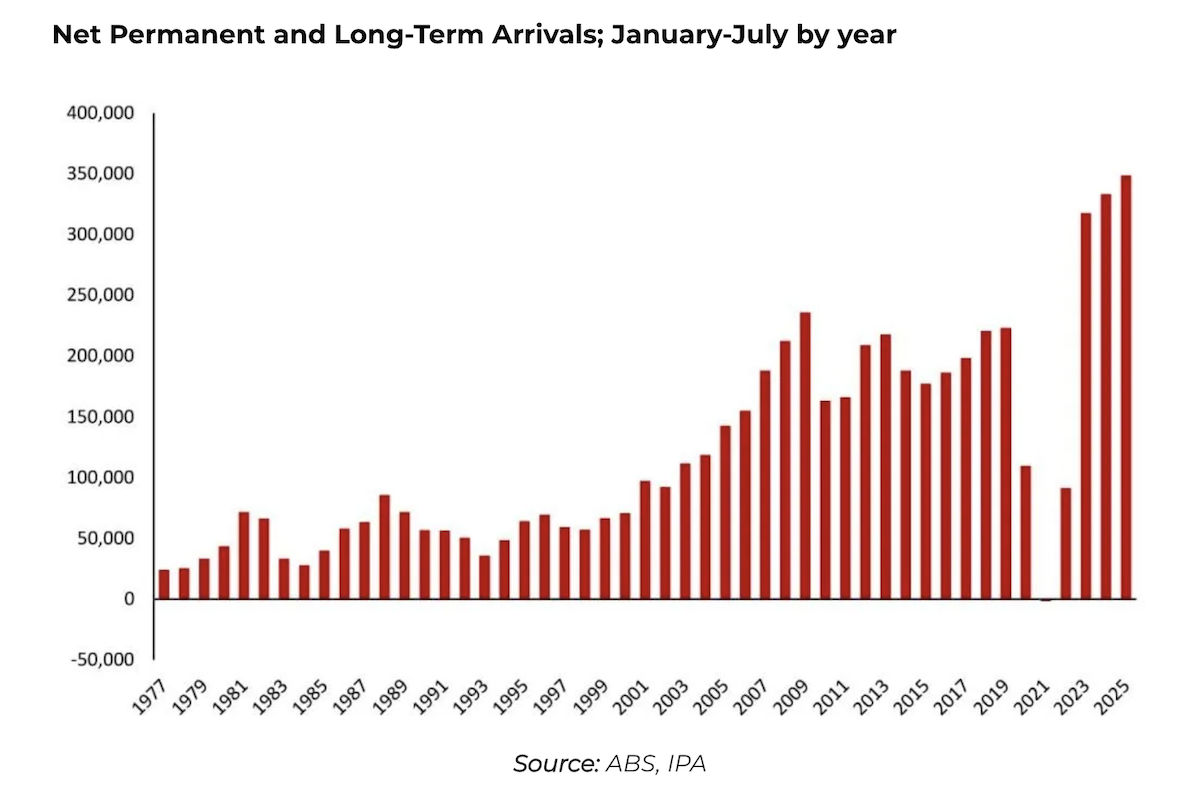
We might make a similar observation about how the Australian church has applied the Bible to immigration — namely, celebrating only the possibilities while sidestepping the very real spiritual and social consequences.
So, let’s reset the balance, and take a closer look at Scripture. Consider these seven key biblical insights on immigration.
1. Jesus’ Flight to Egypt Doesn’t Justify Open Borders
Shortly after the first Christmas, Mary and Joseph took Jesus to Egypt to keep Him safe from King Herod’s plot to exterminate all male newborns in the region (Matthew 2:13–18).
On the surface, this event has notable similarities to modern immigration programs. However, the parallels break down the closer you look.
For one, Egypt and Judea were both provinces of the Roman Empire — meaning that Jesus never crossed into a foreign jurisdiction, and His family certainly didn’t violate any immigration laws.
In modern terms, Jesus wasn’t a refugee arriving from another continent, like an African fleeing to Australia. More accurately, His family’s flight was akin to a trip from Brisbane to Bundaberg, Albany to Adelaide, or Geelong to Gippsland.
Another difference is that the Holy Family’s flight was temporary. They stayed until the danger had passed and then returned home. Again, using parallels from today, theirs was much closer to a short-term protective program than immigration in the modern sense.
Moreover, Joseph, Mary and Jesus didn’t require visas or other paperwork, didn’t obtain new citizenships, didn’t rely on state welfare, didn’t relocate for economic betterment, didn’t invite relatives on family-reunification visa programs, and didn’t gain the right to vote or influence the political life of Egypt.
In short, the Holy Family’s flight to Egypt was an important historical event, but it has almost nothing to say about Australia’s immigration policies.
2. Hospitality Has Responsible Limits
The Old Testament contains many commands about being kind to sojourners, which reflect God’s love for all humanity regardless of ethnic or national boundaries. These commands include:
- Exodus 22:21: “You shall not wrong a sojourner or oppress him…”
- Leviticus 19:33–34: “When a stranger sojourns with you in your land, you shall not do him wrong. You shall treat the stranger who sojourns with you as the native among you, and you shall love him as yourself…”
- Deuteronomy 10:18–19: “He executes justice for the fatherless and the widow, and loves the sojourner, giving him food and clothing. Love the sojourner, therefore…”
The Hebrew word for sojourners — which is also variously translated as “strangers”, “foreigners”, “foreign residents” or “aliens”, depending on the Bible version — is gēr.
Gēr refers to people who live in a land that is not their native country. Typically, they were non-Israelites residing within Israel’s borders. Normally, their presence was temporary and did not involve citizenship (though there are examples of gēr who settled permanently and effectively gained citizenship, such as Rahab and Ruth, whom we’ll discuss shortly).
Importantly, when Scripture commands kindness towards the sojourner, it uses the language of hospitality (cf. Genesis 18:1–8, Genesis 19:1–3, Job 31:32, Hebrews 13:2). Israelites were to invite sojourners into their homes, feed them, meet their needs, and ensure their safety.
However, God did not command them to infinitely expand their household to adopt every sojourner who passed through. Nor did He command Israel to abandon its national boundaries or absorb all and sundry from surrounding nations — quite the contrary, as we will see.
In short, showing kindness and hospitality to sojourners has many practical applications for Christians — such as being open-hearted towards those who’ve already moved to Australia — but it simply does not decree open borders or compel today’s permanent mass immigration programs.
3. The Sojourner Commands Include a Warning
Ironically, the sojourner passages cited above, which are often used to advocate for unlimited immigration, contain a forgotten warning: “for you were sojourners in the land of Egypt”.
The reason God told the Israelites to treat sojourners kindly was, by contrast, that they had been treated so poorly in Egypt, where Pharaoh held them captive as slaves and refused to let them go.
It is notable that modern immigration systems are often justified on the basis that they supply cheap labour and help prop up an economy that would struggle without them. Migrants are enticed by economic promise, and while some go on to great success, many struggle under the very system that brought them here — a system that depresses wages, leverages vulnerable labour, and makes the basics of life like housing unaffordable.
In the end, then, Christians are caught using Bible verses to justify a system that effectively entraps and exploits foreigners, recreating the very exploitation those verses condemn.
4. Nations and Their Borders Are God-Ordained
Nationalism has become a dirty word of late. However, the only functional alternative to nationalism — and the one we’re being quietly conditioned to support — is globalism.
Globalism comes with a raft of spiritual dangers — whether the weakening of family and community ties, the replacement of Christian values with secular ones, spiritual and moral relativism, and the concentration of power in an elite few.
It’s also worth mentioning that the Bible’s only references to globalism — apart from Christ’s glorious return, of course — depict it in terms of pride, rebellion, deception and foreboding tyranny (see Genesis 11:1–9, Daniel 2:31-45, Daniel 7:1-28, Psalm 2:1-3, 2 Thessalonians 2:1-12, Revelation 13:1-18, Revelation 17:1-18).
If Scripture implicitly warns against globalism, it implicitly affirms the legitimacy of nations and national identity:
- Deuteronomy 32:8: “When the Most High gave the nations their inheritance, when he divided all mankind, he set up boundaries for the peoples…”
- Proverbs 22:28: “Do not move an ancient boundary stone set up by your ancestors.”
- Acts 17:26: “From one man he made all the nations, that they should inhabit the whole earth; and he marked out their appointed times in history and the boundaries of their lands.”
Jesus’ Great Commission likewise presupposes the ongoing existence of discernible national identities, as do the heavenly scenes in Revelation that describe redeemed people “from every tribe and language and people and nation”.
If nations and their boundaries are ordered by God, and God is the one who appoints the governing authorities of nations (Daniel 2:21, Romans 13:1-2), then it follows that nations possess the God-given authority to regulate who may enter, under what conditions, and with what obligations.
In a constitutional democracy like Australia, it is the people who rule through their elected representatives — and those representatives are obliged to legislate the will of the people. For what it’s worth, recent polling suggests they are not.
Either way, the biblical pattern is clear: the existence of nations is God-ordained, and He not only permits but expects nations to preserve law and civic order, govern who enters and under what conditions, and safeguard their own integrity.
5. Assimilation is Essential for National Stability
In the Old Testament, when foreigners like Rahab or Ruth settled permanently in Israel, they were expected to adopt their hosts’ customs, beliefs and way of life. As Ruth so beautifully put it, “Where you go I will go, and where you stay I will stay. Your people will be my people and your God my God.” (Ruth 1:16).
Less poetically, and more practically, this meant following the same laws as the native Israelites, keeping the Passover, being circumcised (for males), avoiding forbidden sexual practices, and observing Israel’s strict dietary laws, which included abstaining from blood (Exodus 12:48–49, Leviticus 17:8–10, Leviticus 18:26, Numbers 15:15–16).
There are notable exceptions to the rule above — instances when foreigners lived in Israel without adopting Israel’s covenant laws, worship and cultural practices — but they were disastrous.
Conflict, instability, spiritual subversion and national decay were the inevitable result whenever unassimilated groups were tolerated within Israel’s borders. For example:
- God repeatedly commanded the Israelites to drive out the Canaanite nations since their presence threatened Israel’s faithfulness to Him (Joshua 6–12; Judges 1:1–36).
- Instead, Israelites intermarried with surrounding peoples, adopting pagan worship and practices, which provoked God’s anger and led to cycles of oppression (Numbers 25:1–3, Judges 3:5–7).
- Solomon’s foreign wives turned his heart from God, enticing him to build high places to foreign gods (1 Kings 11:1–8).
- Assyria conquered and resettled Israel, bringing foreign people into the land, resulting in syncretism and diluted covenant worship (2 Kings 17:7–41).
- Exiles returning from Babylon intermarried with local groups, causing religious compromise, which Ezra and Nehemiah both had to confront (Ezra 9–10, Nehemiah 9).
In summary, the principle governing immigration in the Old Testament was that immigrants to Israel had to renounce their former identities and allegiances. There was simply no notion of parallel cultures operating inside the same nation without disastrous results.
Mass immigration and multiculturalism, as practiced in modern Australia, are not just foreign to the biblical pattern, but in direct conflict with it. What Scripture depicts is small-scale, assimilating immigration.
6. Love and Moral Duty Begin at Home
Ordo amoris — Latin for “order of loves” — is a framework developed by St Augustine, built upon by Thomas Aquinas, and widely affirmed in both the Catholic and Protestant traditions, which reminds us that our loves must be rightly ordered.
Simply, we are to love God above all, and then love others according to their proper place — extending outward from family to neighbours, community and nation. Ordo amoris synthesises the biblical pattern of love and moral duty found in passages like:
- Deuteronomy 15:11: “I command you to be openhanded toward your fellow Israelites who are poor and needy in your land.”
- Romans 12:13: “Share with the Lord’s people who are in need. Practice hospitality.”
- 1 Timothy 5:8: “Anyone who does not provide for their relatives, and especially for their own household, has denied the faith and is worse than an unbeliever.”
- Galatians 6:10: “Therefore, as we have opportunity, let us do good to all people, especially to those who belong to the family of believers.”
Love and moral responsibility start at home, in other words. People should care for their own families first, and communities should meet the needs of their own poor before extending the same care outward. Put negatively, it is unloving and irresponsible to provide for people outside your immediate orbit if those closest to you are in need.
What applies to individuals and communities surely extends to nations: a nation’s leaders should look to the wellbeing and stability of their own people before providing for outsiders. Showing goodness to all is a virtue, but it becomes a vice when done at the expense of those to whom our first responsibilities are due.
Applied to immigration, this means that if immigration rates are making housing unaffordable, creating homelessness, and overwhelming services and infrastructure paid for by the very people who are missing out, ordo amoris has been subverted, and it’s time to reverse course.
In such a case, slashing immigration is the most loving and responsible choice, since it is grounded in the moral order God has established.
7. Governments Must Protect Their People From Harm
Building on previous points, the Bible describes civil rulers as guardians who bear the sword to restrain evil and secure the wellbeing of the people God has placed under their care (Romans 13:1–4, 1 Peter 2:13–14).
When a nation’s governing authorities allow rates of immigration that expose citizens to crime, erode shared civic values, exacerbate shortages, raise unemployment, weaken community cohesion, create social disorder and undermine national security, they are violating their God-given duty.
And in a democracy like Australia, citizens are responsible for holding their leaders to account when they contradict the very purpose for which God granted their authority.
Should the Bible Inform Australia’s Immigration Program?
To those still reading who previously thought the Bible supported mass immigration, thank you for hanging in there.
Now, you’re likely wondering: Kurt, are you really saying the Bible should inform Australia’s immigration policies?
Or more specifically: Should migrants to Australia really be required to renounce all former loyalties to their country of origin, fully observe Australia’s national holidays and civic rituals, speak English in public settings, abstain from customs that are taboo in Australia, and accept Australia’s Christian-derived social values?
A good case could certainly be made for these requirements, yes. But to assume that’s my purpose here is to miss the point.
I set out to critique the selective use of Scripture to justify open-borders immigration. I’m not the one asserting we should use the Bible to inform Australia’s immigration policies — I’m merely arguing that if we do, we should do it consistently.
Either the whole counsel of God’s Word is relevant to this topic, or none of it is. If we pick and choose Bible verses based on our own preferences, then it’s not God we’re putting in the place of authority on this topic, but ourselves.
It’s also worth pointing out a double standard often at play in debates like this. Some will probably accuse me of committing a Christian nationalism for applying the Bible to the topic of immigration. Yet those I am critiquing, who use the Bible’s sojourner passages and “love your neighbour” command to support mass immigration, escape the same charge. Why?
Why is applying the Bible to public policy called “social justice” when a progressive Christian does it, and “Christian nationalism” when a conservative Christian does it?
Enough of the double standards. If the Bible shouldn’t be allowed speak to modern immigration programs, then let’s debate immigration without invoking Scripture.
However, if the Bible remains relevant to this topic, then let’s advocate for immigration policies that honour God, maintain our nation’s sovereignty and stability, and extend hospitality without compromising the wellbeing of Australians.
___
Credit to Dave Pellowe for his recent interview with Matthew Littlefield that helped inform this article. Image courtesy of Unsplash.
20 Comments
Leave A Comment
Recent Articles:

24 October 2026
3.3 MINS
When we ask God, "What is in my hand?", and see our possessions, money and time as seed that God asks us to sow, life becomes simpler.

23 October 2026
6.8 MINS
Hillsong UNITED’s Joel Houston reflects on fame, faith and the burden of ministry, questioning performative Christianity as he seeks a more authentic walk with God.

23 October 2026
13.1 MINS
Tasmania’s proposed conversion practices legislation raises serious questions about religious freedom, pastoral care and whether Christians can freely pray with those seeking to live according to their faith.

23 October 2026
7.7 MINS
Melbourne Catholic Archbishop Peter Comensoli has spoken out clearly against the deadly promises by both major parties in Victoria ahead of the election, drawing a comparison between abortion and capital punishment.

23 October 2026
3.1 MINS
As Western societies grow more hostile, could abandoning Christianity’s moral foundations be contributing to the rise of ideological extremism, political intolerance and violence?

23 October 2026
5.1 MINS
France’s escalating riots expose the dangers of political extremism, antisemitism and radical alliances, offering America a stark warning about the future of Western democracy.

23 October 2026
3.1 MINS
The one who is worthy of it all is awakening his Church to be captivated by him, so that we will honour one another and share his gospel with humility and courage.



there is a central tenet to the church that cannot be argued away, even if it is inconvenient, uncomfortable or dangerous
it is required of us as chrisians
Not sure what you mean here, Andy. Care to expand?
Thanks Kurt! Very well written article
Thanks Stephen.
Very good Biblical commentary indeed that comprehensively addresses a ‘hot’ topic’ in our present situation. Thanks for a most informative essay.
Thanks James!
Assimilation would seem to be the appropriate steps to take. So any Australian thinking of moving to any country should be prepared to accept the mores of that country- thus should people wanting to move to Australia. Leave your garbage at your place of birth. Dai Le mp is a good example.
I agree — the standards should be the same in both directions. And yes, there are many great exemplars of this who are model Australian immigrants.
Thanks Kurt – well researched, well written and Biblical as always!
Thanks Bev :)
Extremely thoughtful and needed biblical article. On immigration it is either the whole Bible or none at all. Really the Bible has profound warnings unbridled immigration.
Amen!
Great article, very soundly biblical.
Thanks Jon.
In 2014 when ISIS was killing many in the Middle East I remember writing to the Minister requesting Australia take believers as refugees. Islamists believe in jihad – violence against infidels. Jihad is not optional according to the Quran. Islamists who follow Sharia law believe every drop of Jewish blood must be shed before the last imam comes. Britain started accepting islamists in the 1970s and 1980s and the whole world can see the rampant Islamic violence.
Westerners are not welcome in Islamic nations. Yet the Australian government continues to open its doors to Islamists who practice jihad. This is a failure to kept Aussies sage.
There’s a lot of injustice in Australia’s current immigration settings, I believe. We should be applying much more scrutiny to Islamist regions of the world and absolutely prioritising Christians (nominal or otherwise), given the rates at which they face persecution globally.
Great article with great use of Scripture & sound arguments. Thanks for this work.
Question please: As a non-Australian who’s serving as a missionary overseas, I wonder what your views are around Christian refugees please? The organisation I serve with has some ministry to Christians who’ve fled their 1st country because of persecution, they often languish for years in UNHCR hubs like Bangkok & KL (where they suffer again) & they face numerous barriers to re-settlement, primarily because there is IMO a strong bias against Christians in the UN/UNHCR & because nations like Australia, UK, NZ etc also tend to take in non-Christin refugees for their annuak
kurt, if a person suffers or dies for want, giving them what they need it is the right thing to do
red text will inform the need to give and share
find me red text that denies my argument
find me jesus saying the things you said
Andy,
Kurt has provided a summary of what’s been written in God’s Word about immigration from both a pro and con position.
Do you believe that the entire Bible is the inspired word of God or just the “red text”?
Excellent as usual Kurt. We should be prioritising Christians to come to Australia. They are the most persecuted group in the world. It goes in with the point about assimilation. And is beautifully summed up in Ruth’s declaration “Where you go I will go, and where you stay I will stay. Your people will be my people and your God my God.” We can be multi-ethnic but not multicultural. Basically we can take people from anywhere as long as they have shared values and the values that built this nation are Judeo-Christian. I know Christians in Uganda, The DRC, India, Philippines, Pakistan, Bulgaria and Egypt they could all come to our country and assimilate.