


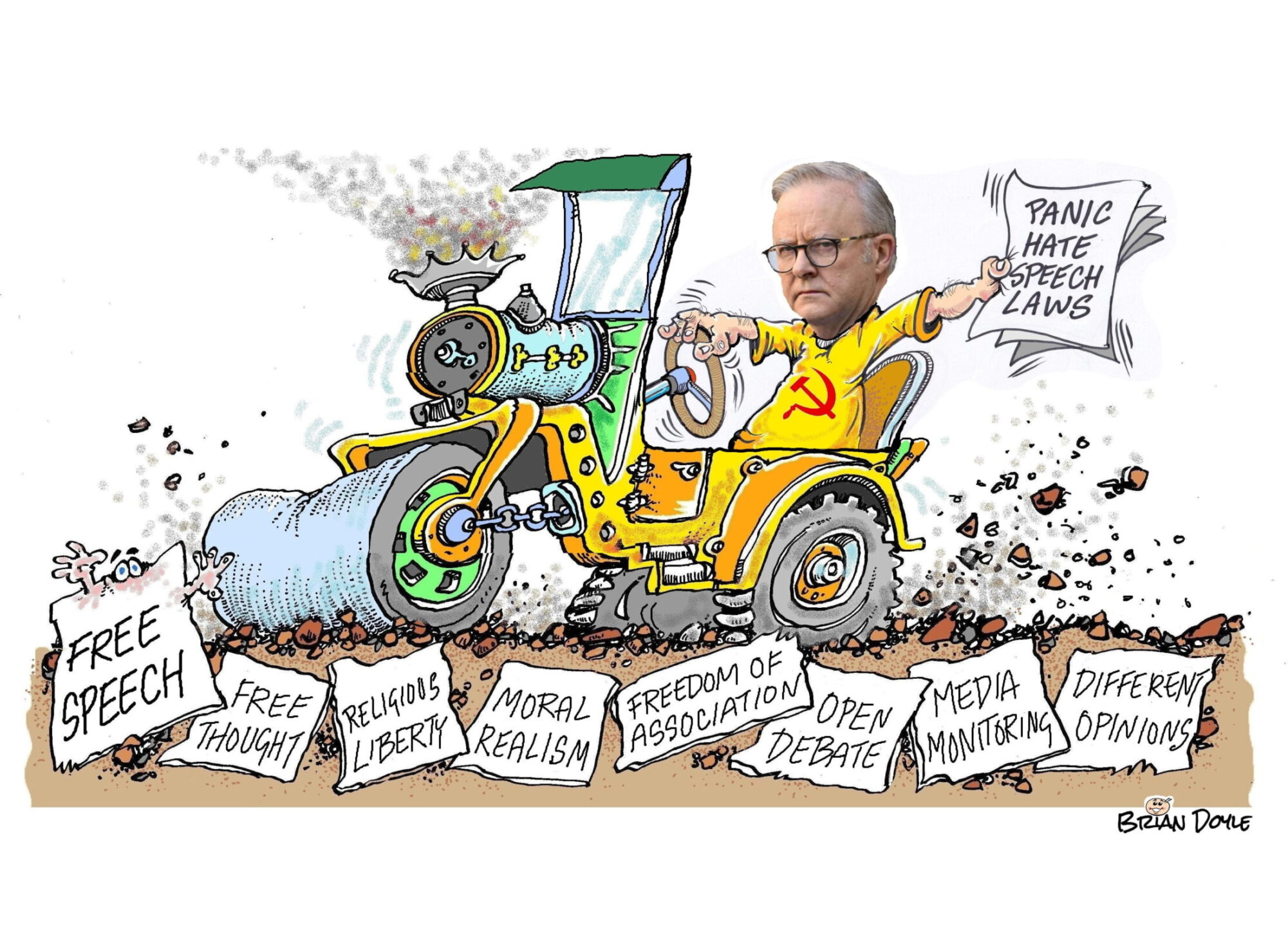
Free Speech, Faith and the Danger of Legislating Virtue
As Australia confronts antisemitism, overreaching state responses risk eroding free speech, religious liberty, and association—freedoms historically forged together and essential to minority protection.
Australia is right to be alarmed by the resurgence of antisemitism. Jewish Australians are facing harassment, intimidation, vandalism and threats that strike at the heart of a pluralist society. Government action is necessary. But the form that action takes matters as much as its intent.
Parts of the Australian Government’s proposed response to antisemitism risk narrowing not only freedom of speech, but also freedom of religion and association—three liberties that historically stand or fall together. This is not a theoretical concern. History shows that when governments move from punishing violent conduct to managing belief, speech and “acceptable narratives”, minorities are rarely made safer in the long run.
Christianity’s Forgotten Role in Free Speech
Free speech is often portrayed as an Enlightenment invention forged in opposition to Christianity. In reality, many of the moral foundations of expressive freedom emerged within Christian reflection on conscience, truth and the limits of state power.
Early Christianity was a persecuted minority. It learned quickly what it meant for authorities to regulate belief. From this experience emerged a foundational Christian insight: faith coerced is faith corrupted.
The early Christian writer Tertullian argued that belief must be voluntary because it concerns the soul, not public order. Centuries later, Thomas Aquinas made a crucial distinction between sin and crime, warning that not every moral wrong should be punished by law. Overreach, he argued, breeds disorder, not virtue.
This was not libertinism. It was moral realism: an acknowledgment that governments lack the wisdom and purity to police conscience without abusing power.
That insight became politically explosive during the Reformation. When religious unity collapsed across Europe, attempts to enforce belief through law produced catastrophe. Out of this wreckage emerged a hard lesson: peace requires toleration, not enforced agreement.
Milton, Locke, and the Christian Case for Open Disagreement
John Milton’s Areopagitica (1644), often cited as a secular free-speech manifesto, is saturated with Christian theology. Milton argued that truth does not need protection from error. It is strengthened by contest. Suppressing falsehood, he warned, weakens truth itself.
This was not naïveté; it was theological confidence. To fear open debate was, in Milton’s view, to distrust truth—and ultimately, to distrust God.
Later, John Locke developed the argument that would shape modern liberal democracies. In A Letter Concerning Toleration (1689), Locke insisted that the state has no competence in matters of salvation. Churches, he argued, are voluntary associations. Faith cannot be compelled, belief cannot be legislated into sincerity.
From this Christian reasoning emerged three interlocking freedoms:
- freedom of expression,
- freedom of religion,
- and freedom of association.
They protect the same human reality: the right to hold, express, and live by beliefs without state approval.
When Speech Regulation Expands, Religion is Never Far Behind
This historical pattern matters now because modern anti-hate-speech regimes increasingly blur the line between harmful conduct and unacceptable belief.
Australia’s antisemitism response includes elements that go beyond punishing violence or intimidation. It moves toward managing discourse through:
- official definitions tied to compliance,
- monitoring of media “narratives,”
- institutional report cards and funding leverage,
- and expanded powers over “hate groups” and associations.
Each of these measures may appear reasonable in isolation. Together, they risk creating a system where lawful speech becomes risky speech—and risky speech becomes punishable through administrative means rather than courts.
That is where freedom of religion and association enter the picture.
Religious traditions make truth claims. They draw moral boundaries. They teach that some ways of life are wrong. These teachings are often uncomfortable and sometimes offensive. Liberal societies historically tolerated this because offence was not treated as harm.
But when subjective offence is elevated into a regulatory category—when speech is judged not by its connection to violence, but by its ideological content—religious expression becomes vulnerable.
A sermon can be reclassified as “hate.”
A doctrine can be reframed as “exclusion.”
A faith community can be labelled a problem association.
This is not hypothetical. Overseas, hate-speech laws have already been used to investigate pastors, religious schools and faith-based charities for expressing orthodox beliefs.
Association Under Suspicion
Freedom of association is the quiet casualty of speech regulation. If governments acquire the power to designate “hate groups” based on ideology rather than violence, then belonging itself becomes suspect.
Historically, religious minorities know this terrain well. Dissenting Christian groups were once treated as extremists simply for refusing official doctrine. Jews have faced the same fate for centuries.
The logic is always similar: the state defines a belief as socially dangerous, then treats association with that belief as evidence of moral or civic unfitness.
Once that logic is accepted, voluntary communities exist at the pleasure of political authorities, not as a matter of right.
The Christian Warning About Power
Christian political thought has never assumed that rulers are benevolent angels. On the contrary, it begins with a sober view of human nature. Power, even when exercised for good ends, tends to expand.
The 20th-century Christian ethicist Reinhold Niebuhr warned that moral crusades become most dangerous when they are convinced of their own righteousness. Good intentions do not immunise institutions against abuse.
This is why Christianity historically argued for limiting coercive authority, not moral indifference. The state should punish violence, protect persons, and preserve peace—but stop short of policing belief.
Antisemitism Must Be Fought—Without Shrinking Freedom
None of this diminishes the reality of antisemitism or the urgency of addressing it. Violence must be confronted forcefully. Jewish Australians deserve full and equal participation in public life without fear.
But history suggests a clear boundary: punish actions, not opinions.
Target conduct, not ideology. Protect people, not narratives.
When governments move beyond that boundary—when they begin monitoring speech, enforcing official definitions through funding or discipline, or regulating association based on belief—they build machinery that rarely stays confined to its original purpose.
Minorities are often the first to need protection. They are also the first to suffer when free speech, religious liberty and association are weakened.
The Paradox of Protection
There is a tragic paradox at the heart of modern speech regulation: measures designed to protect minorities often undermine the very freedoms that allow minorities to survive.
Christian history, Jewish history, and liberal history all tell the same story. Societies that tolerate disagreement—even painful disagreement—are more stable than those that attempt to enforce moral consensus through law.
Australia should confront antisemitism with clarity and courage. But it should also remember a lesson learned the hard way across centuries: the state is a blunt instrument for moral reform.
Free speech, religious freedom and freedom of association are not indulgences. They are safeguards—against fear, against overreach and against the temptation to legislate virtue.
If we weaken them in moments of anxiety, we may discover too late that we have traded durable protection for temporary reassurance.
___
Image courtesy of Adobe.
4 Comments
Leave A Comment
Recent Articles:

20 October 2026
4 MINS
Olympic champion Stephanie Rice has faced a wave of online ridicule after revealing she resigned from her dream job following what she believes was God’s direction.

20 October 2026
7.7 MINS
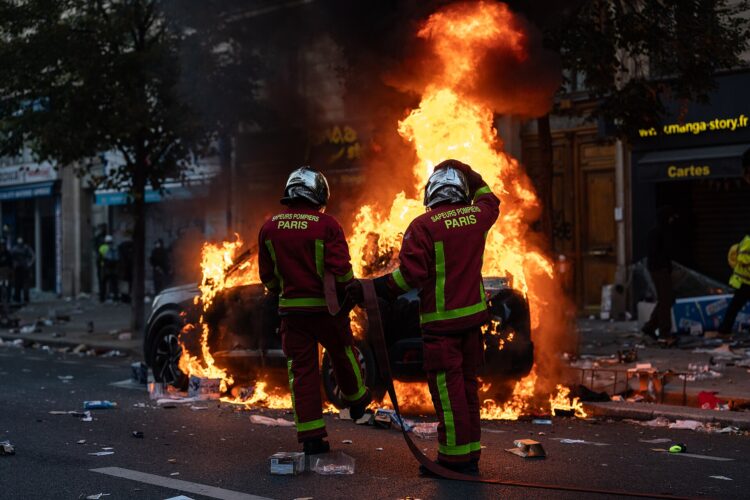
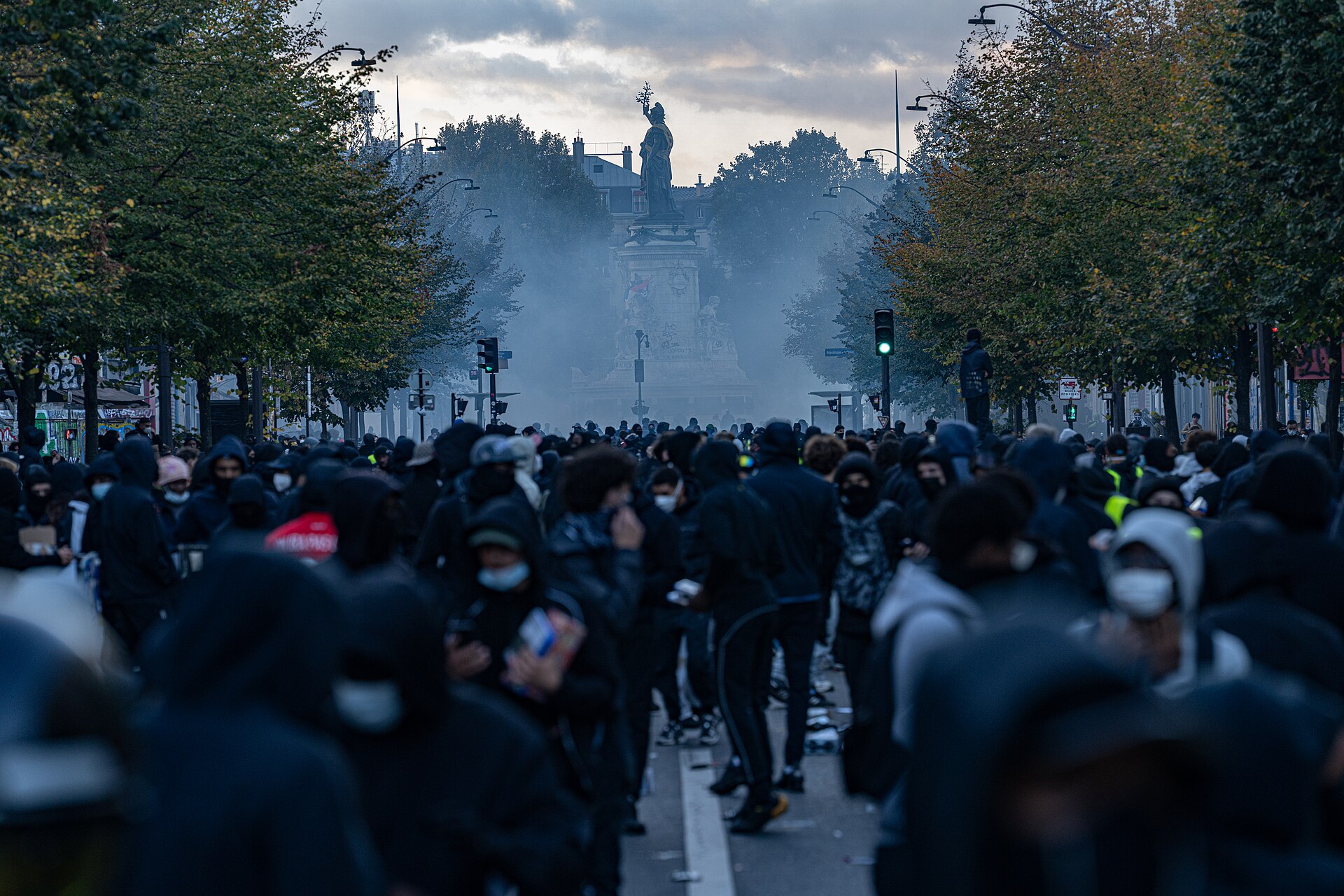
France and Europe are burning — is it too late to save them from the barbarians?
20 October 2026
4.6 MINS
As rioters burn cars and historical buildings, celebrating the destruction of France’s inheritance, the West confronts an uncomfortable question: what happens when a civilisation loses the will to defend itself?
20 October 2026
4.9 MINS
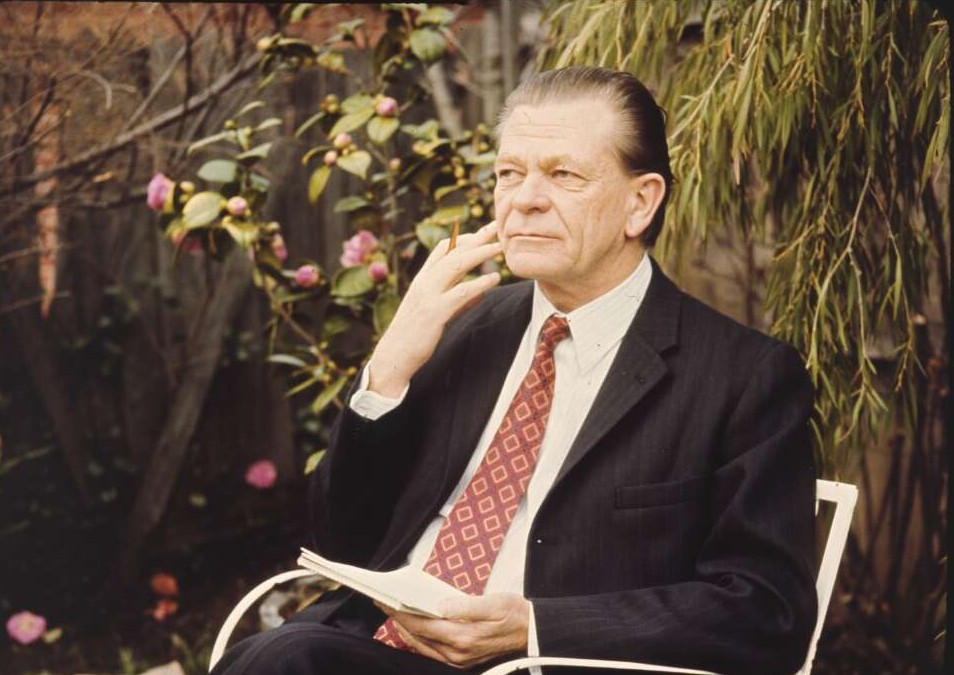
James McAuley’s legacy reaches far beyond Australia’s Catholic hymnals. Poet, convert and cultural warrior, he defended beauty, truth and faith in an age of changing values.

20 October 2026
4.9 MINS
A federal investigation has exposed how America’s biggest banks shut out conservative and Christian clients, relying on subjective reputation risks and controversial ideological watchdogs.
20 October 2026
3 MINS
Scripture teaches us to pray the "prayer of faith", because without faith it is impossible to please God.
19 October 2026
6.7 MINS
Europe’s escalating unrest raises urgent questions about immigration, national identity, secularism and the decline of Christian influence, prompting calls for repentance, prayer and renewed leadership.



We are facing the most perilous time in our history. This Bill must be rejected in its entirety. Marxism at its most evil. Naively, we thought that when The Berlin Wall and the USSR disintegrated, that we would live in a blessed state of World Peace, but Satan ,The Great Deceiver, never gives up just like in Milton’s epic poem “Paradise Lost ” and in the Bible. In my opinion, Albanese ceased to be a Catholic many years ago when he ceased to attend weekly Sunday Mass , etc, and joined the Communist Party which is the enemy of Christianity.
I believe the wheels will fall off Albo’s bulldozer, as we see through this attack on free speech.
Also: Violence must be confronted forcefully. Jewish Australians deserve full and equal participation in public life without fear.
When representatives of every single faith in Australia (except one) join forces and oppose the bill in an open letter to the PM then surely he has to take notice.
Trouble is he has a very powerful lobby group that he is beholden to. The same lobby group that has pushed this bill on him. The same lobby group that wants him to rush it through.
This is the same lobby group that forced the SA Premier to force the Adelaide Festival to cancel the invitation of a speaker.
But in the case of the Adelaide festival, people fought back. And the people won!
Same again. It’s the same lobby group that is pushing this legislation.
If it passes, none of us will be able to quote John 8:44 without the threat of being thrown in jail. Indeed, the whole of the Gospel of John will probably eventually be banned as antisemitic.
And then what next? The whole New Testament. Because let’s face it, being Christian is in itself a denial of Judaism.
So while we’ve embraced Zionism over the past two years and wrapped ourselves in Jewish flags and worn star of David t shirts and blown shofars, all we have done is given them the ability to pressure Parliament to implement laws to effectively eliminate anti-Semitism.
Which is their ultimate goal. They want to make Christianity illegal.
Col you are way off, wow thats a big leap, thanks CD for the article, as we pray for the Lord of all the earth to uproot the evil and call for righteousness and peace. May we never forget our Judeo Christian Heritage from where all freedom comes.