


Drug Seizures Are Not a Success Story But Rather a Measure of Relative Failure
Australia’s illicit drug epidemic is expanding unchecked, with billion-dollar consumption costs and rising deaths, while police management and politicians continue to obscure the true scale of the crisis.
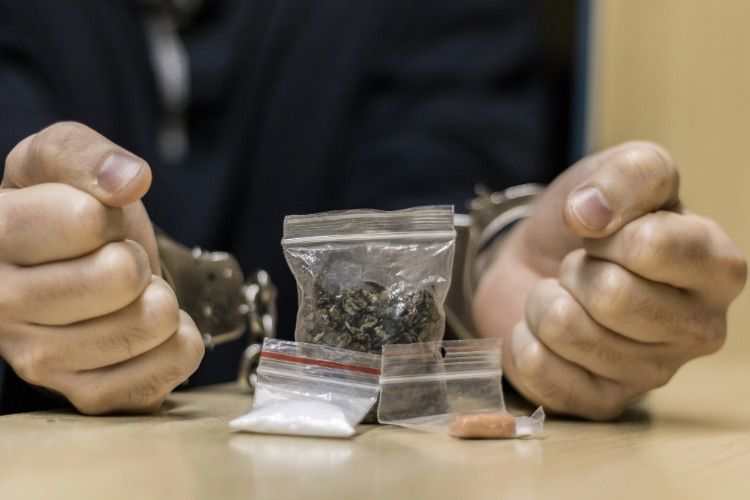
While Police Commissioners around Australia continue to self-congratulate over the occasional successful drug bust and cash and firearm seizures, the truth about the state of Australia’s illicit drug epidemic is anything but a success story. Yet, police management, governments and those in authority continually deny the inescapable facts that paint a very bleak picture.
Up till now, since the inception of wastewater testing by the Australian Criminal Intelligence Commission (ACIC) in 2016, National Wastewater Drug Monitoring Program (NWDMP) reports have been published three times a year, every year since, with the exception of 2018, when only two reports were published. These reports give a timely and accurate insight into the state and rate of illicit drug consumption across Australia. These rates have continually risen in amounts that effectively outstrip the aggregate weight of law enforcement seizures, in some jurisdictions by as much as five to one.
At the time of writing, ACIC had published just one NWDMP report (August 2025) for the entirety of 2025. The Australian Institute of Criminology ceased its Drug Use Monitoring Australia (DUMA) program, citing the introduction of wastewater testing, Now, however, it seems that wastewater testing consumption rate updates from ACIC are becoming irregular. The writer asked ACIC the questions why and when: the “why” went unanswered and the “when” is yet to be determined.
In the absence of a recent wastewater report, attention is turned to another published ACIC report to get an idea of the depth of illicit drug consumption impacts on Australians for 2023-24.
The ACIC Statistical Report 55 tells us that the direct consequential cost of serious and organised crime in Australia for 2023-24 is up to $82.3 billion, with the illicit drug crime portion costing about $19 billion. According to ASIC, in 2023-24, the total estimated cost of consumption reported for methamphetamine was $8,970 million, for cocaine it was $2,220 million, for MDMA (ecstasy) $147.9 million, and for heroin $284.2 million.
At the end of another year of prolific drug-trafficking into Australia, we saw a very large interception of cocaine and meth by police in Western Australia. The haul included 45 kilograms of cocaine and seven kilos of meth, with a street value of $15 million, along with $385,000 cash.
Make no mistake, this seizure was undoubtedly the result of outstanding police work, and the police media release typically lauded the seizure as a disruption to drug traffickers. As The West Australian reported: “These seizures represent a major disruption to organised crime networks, and reinforces our message to anyone who engages in illicit organised criminal activity: You can expect to be caught.”
No Disruption of Service
There is no doubt that this result is the consequence of fantastic on-the-ground police work, but it absolutely does not represent a disruption to crime networks – nor will it deliver an expectation to drug dealers that they will be caught.
Such erroneous claims by police management are repeatedly trotted out without challenge by an incurious media – though admittedly, critical questions are not at the forefront of anyone’s thinking in the face of great police work.
When the cost of meth and cocaine consumption by Australians is up over $10 billion, this latest drug haul represents a microscopic portion of just 0.15 per cent. Organised criminals are most definitely not shaking in their boots and will consider the loss of $15 million worth of drugs an insignificant blip on their multibillion-dollar business balance sheet.
Organised crime gangs know full well that, despite their creative importation ingenuity and clandestine methodologies, law enforcement will always have some successes in intercepting drugs. A loss such as this is anticipated and is treated as a business write-off.
The Drug Lords of the drug distribution world are largely based overseas. They are outside Australia’s criminal jurisdiction, and arrests are usually confined to well-paid, local distribution mules. Well-organised Mr Bigs in their own West Australian backyard they may be, along with some strategic international blow-ins, but small fry in the greater scheme of things.
The only thing that these large drug hauls indisputably demonstrate is that there is a huge and lucrative illicit drug market in Australia, and it is expanding all the time.
According to the Australian Federal Police (AFP), the Australian illegal drug market is a lucrative and attractive target for serious transnational organised crime groups. And according to one ABC Four Corners investigation, Australians use more cocaine per capita than any other country in the world; and Australia is the most expensive country in the world to purchase cocaine.
The harm to Australian communities is incalculable. On average, 50 people are admitted to Australian hospitals daily from methamphetamine, opioid (for example, heroin) or cocaine use alone. Every week, on average, 16 Australians die from heroin, amphetamine, or cocaine overdose.
In 2023, acute psychoactive substance use was recorded as a factor in 16.7 per cent of suicides, and acute psychoactive substance use directly contributed to a further 12.3 per cent of suicide deaths (Australian Bureau of Statistics, 2024). Various sources estimate that 63 Australians die from suicide each week. Do the math!
Reduce Availability
It is well documented that the key to reducing consumption of illicit drugs is to reduce availability – it is not rocket science.
A well-informed person will disregard confected commentary from senior police management that increased health support for addicts will fix the consumption problem. Talk about shutting the gate after the horse has bolted! People seeking health intervention for illicit drug addictions is after the event. And, although growing mental-health services are necessary, it is because of the long-term, continued failure of senior police management and politicians to reduce illicit drug availability and tackle the upstream causal factors.
It is also well documented that police management, to some extent, keep politicians in the dark due to a lack of a genuine illicit-drug reporting regime.
Reduced drug report totals equate to reduced police action rather than to reduced criminal activity, as some police commissioners will spin it. Also, high clearance (or sanction) rates are dishonestly compared with other crime types as if to show high achievement, but nothing could be further from the truth.
There is a way that police management could improve the current disingenuous reporting system, and they could do it tomorrow. And that is to capture and report on data obtained when attending everyday policing tasks on the frontline.
Police in Western Australia attend hundreds of thousands of tasks every year across the state.
Anecdotally, frontline police will tell you that almost every task they attend involving a disturbance, domestic violence, assault, damage and so on, features illicit drug use.
Standard routine questions are asked and information gathered at the scene of every police task attendance; so, by simply recording whether illicit drug use is involved or suspected at any given job, important data would be captured and provide tangible information for reporting purposes. Ultimately, this data would enhance understanding of the extent of drug use in the community.
The reality is that illicit drugs are everywhere, but there is limited solid data to back up that claim.
With the data captured via the procedure recommended above, the fog on what is draining police resources towards everyday tasking would lift, enabling and putting pressure on police management to refocus and redirect resources accordingly. Meeting prominent KPIs around grades of service would improve if the volume of task numbers was reduced. Such an outcome would require a refocus on causal factors (illicit drug availability and consumption) and dealing with them.
But senior police management would balk at this suggestion because they seem determined not to want to know. Drug work is resource-intensive, and police management are reluctant to divert precious resources anywhere but to the frontline tasking rockface – typically cutting their nose off to spite their face.
It would also introduce a means for accountability. It is far easier to keep everyone in the dark than face questions and criticism about this ongoing failure and come up with solutions to tackle the illicit-drug problem. Particularly when at present no one is asking the right questions.
Until state police commissioners and politicians come clean about the illicit-drug problem and implement strategies that actually work in bringing down availability, the lucrative Australian illicit-drug market will continue to expand, consumption will increase, and havoc and tragedy will continue their destructive path across Australian families and communities.
___
Republished with thanks to News Weekly. Image courtesy of Adobe.
One Comment
Leave A Comment
Recent Articles:

11 October 2026
2.6 MINS
Jesus offers us intimate friendship, which produces great joy as we walk closely with him.

10 October 2026
4.1 MINS
When Jesus rebuked the Laodicean church, this was not a sign of his lack of love, but proof of it and how greatly he longs to reward and bless us. He is knocking — will we answer?
9 October 2026
5 MINS
During a recent dialogue between high profile legal experts, a top Australian constitutional law expert was asked if Australia should have a Bill of Rights. His answer may surprise you.

9 October 2026
1.3 MINS
Season 6 of The Chosen is releasing next month, and until 15 November, your church has the opportunity to host a free pre-release screening of Episode 1. Here's how.

9 October 2026
1.8 MINS
Pen Power Australia has been busy confronting antisemitism and double standards, lodging letters, pursuing accountability and celebrating several important wins along the way.

9 October 2026
3.3 MINS
New South Wales healthcare workers who object to abortion and voluntary assisted dying face growing pressure, raising serious questions about conscience rights, employment and moral injury.

9 October 2026
2.9 MINS
God is intensely relational, and he puts us into a community of believers so we can use our gifts in service of Christ's body.



I am very cynical of Govt. which indirectly profits enormously from the Drug Trade which is what builds part of the skyline of eg Sydney and Melbourne, funds the mansions, luxury yachts and cars, etc. Cut the Drug Trade and the economy suffers. If Govt were serious it would have cracked down hard many years ago on the CFMEU, the corrupt Govt. employees in Customs, etc, against The Finks Motor-cycle gang, and certain individuals of Lebanese origin in Lakemba . Govt. Policy has been soft– big publicity about a Drug Bust,get the little guy, make an example of him , but, don’t touch the protected Mr Bigs who may be JPs, on Council or in Rotary ? It’s a society without Morals whose God is Money. Expect more Violence , Rapes and Murders, the often Shoot-Outs in public in broad daylight. Police are leaving in droves, tired of being injured and watching courts letting Crims back on the streets. Interesting, how the Govt. has tightened Gun Laws , but, there are more guns now held by Crims and more public executions linked to the Drug Trade than ever ! Australia in 2026 is a very, very sick, corrupt society in which innocent people are killed for no reason going shopping, etc. Much of it is caused by the importation of the wrong people whose ideology teaches the exact opposite to the Ten Commandments . The average young person hasn’t a clue what the Ten Commandments are , and many as Dr Joanna Howe learnt when she recently interviewed them in the street, have no compassion as they responded that they approved of killing babies born alive . What a society I live in !MONSTERS ! In the words of “The Our Father ” ……..and keep us from Evil “.