



US Supreme Court Rules Race Cannot Drive Electoral Boundary Decisions
The US Supreme Court has dealt a significant blow to race-based congressional redistricting, with sweeping implications for electoral maps across more than a dozen states.
In a highly consequential decision handed down Wednesday that could affect the makeup of Congress, the US Supreme Court ruled that Section 2 of the Voting Rights Act cannot be used to draw congressional district boundaries that overly rely on racial makeup.
The case of Louisiana v. Callais, which was heard over two rounds of arguments in March and October of last year, considered whether congressional district maps that were drawn in Louisiana that included racially segregated district lines, allegedly in compliance with Section 2 of the Voting Rights Act (VRA), violated the Equal Protection Clause of the 14th Amendment.
Writing for the majority in a 6-3 ruling, Justice Samuel Alito stated that “because the Voting Rights Act did not require Louisiana to create an additional majority-minority district, no compelling interest justified the State’s use of race in creating SB8”, the name of the state’s new district map.
Race as a Factor — But Not the Factor
Alito further declared, “That map is an unconstitutional gerrymander, and its use would violate the plaintiffs’ constitutional rights.” As noted by National Review, the ruling narrows the scope of Section 2, which was written and passed during the height of the civil rights movement in 1965 when segregation was still widely practised in the South.
“Under the ruling, race can still be considered when drawing congressional maps to ensure no illegal discrimination is taking place, but race cannot be used as the determinative factor in drawing districts.”
During oral arguments in the case, Justice Brett Kavanaugh and other conservative justices appeared to be supportive of the idea that when Congress passed the VRA in 1965, they likely intended there to be a “sunset period” for Section 2 once racial minorities gained fair voting representation. Chief Justice John Roberts further observed that the Louisiana district in question was unfairly drawn like a “snake”, which stretched over 200 miles (320 kilometres).
In the eventual majority opinion, Alito emphasised that “Allowing race to play any part in government decision-making represents a departure from the constitutional rule that applies in almost every other context. Compliance with Section 2 thus could not justify the state’s use of race-based redistricting here.”
A Nation in the Midst of Redistricting
The ruling comes amid a redistricting battle that is currently playing out in multiple states across the country. In Virginia, a voter referendum narrowly passed last week that would have undermined the congressional representation of almost half of the state’s population, but the outcome of the referendum remains uncertain after a Virginia Supreme Court ruling on Tuesday.
In Florida, the state legislature passed a measure on Wednesday redrawing district lines that could create four additional Republican-leaning districts. Other states where redistricting efforts are underway include Alabama, California, Georgia, Missouri, New York, North Carolina, Ohio, Texas, Utah, and Wisconsin.
‘At Least a Dozen Districts Can Now Be Redrawn’
Election experts like Matt Carpenter, who serves as director of FRC Action, say that Wednesday’s Supreme Court decision was rightly decided based on the current reality of voting within racial groups and protecting constitutional rights.
“Section 2 of the Voting Rights Act was enacted to address racial discrimination in elections at a time when racial discrimination was rampant,” he told The Washington Stand.
“Today, disparities between the voter registration and turnout of racial groups are almost nonexistent, and, instead, Section 2 of the Voting Rights Act has been used to compel states to draw maps on the basis of race — something SCOTUS (the Supreme Court) rightfully saw as against the Equal Protection guarantees of the 14th Amendment.”
“The implications of this ruling are significant; there are at least a dozen House districts that can now be redrawn in states like Alabama, Florida, Georgia, Louisiana, and Mississippi,” Carpenter added. “I think it’s safe to say, with just six months to go until Election Day, we will see more states enter the mid-decade redistricting* fight after today’s ruling.”
___
* the redrawing of electoral boundaries between the ten-yearly Census cycles.
Republished with thanks to The Washington Stand.
Recent Articles:
21 October 2026
3.5 MINS
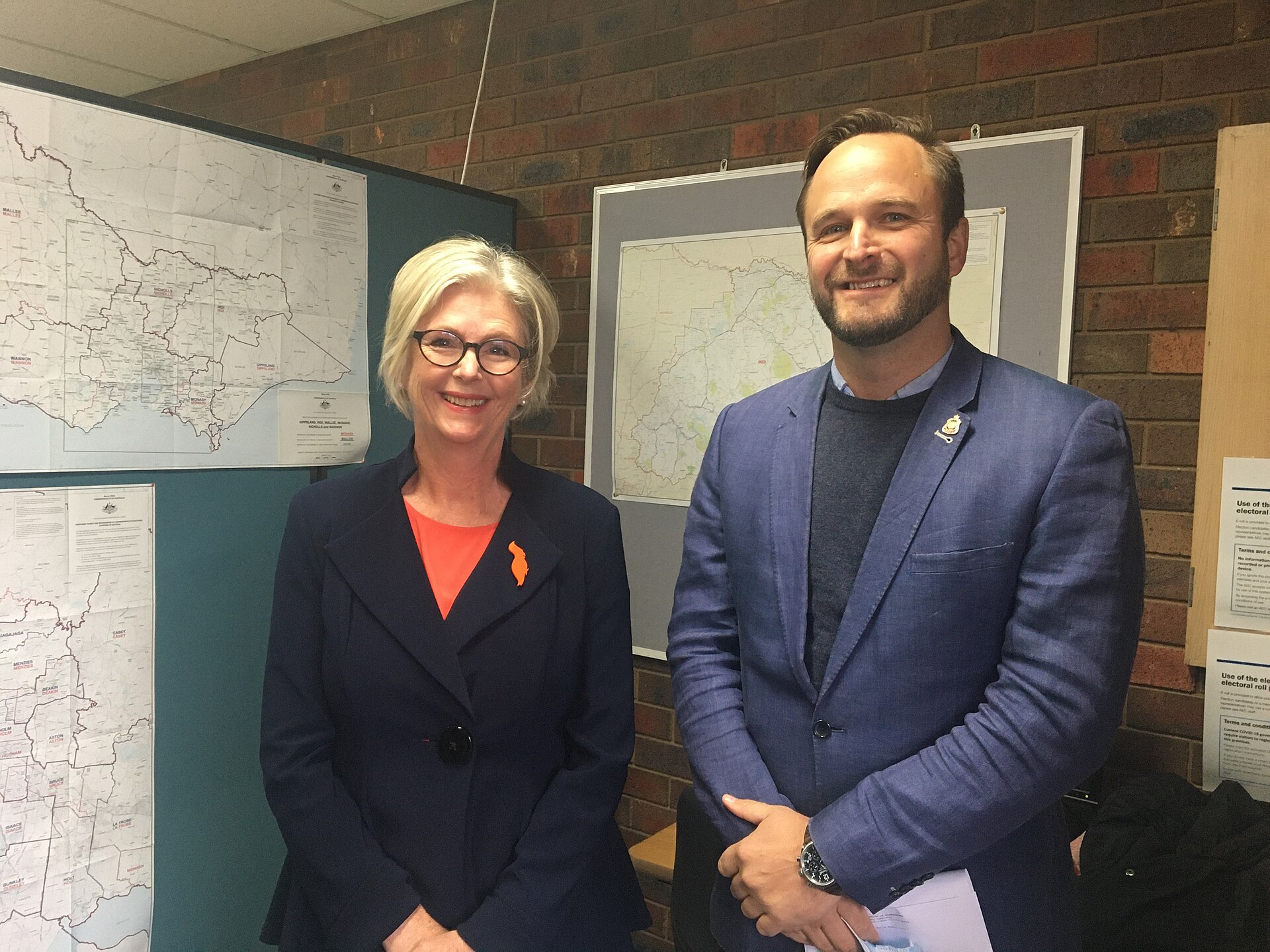
The alleged attack on Helen Haines demands condemnation, but rising threats against politicians also raise questions about public trust, political intimidation and selective outrage.

21 October 2026
3.9 MINS
Evangeline Lilly walked away from Hollywood to pursue a deeper purpose. Today, her Christian faith, humanitarian calling and passion for human creativity shape her next chapter.

21 October 2026
3.5 MINS
Ben Carroll has called for an end to hateful political rhetoric, but his treatment of Pauline Hanson raises questions about how consistently he applies that standard.

21 October 2026
7.9 MINS
A collection of sobering reflections on Western civilisation’s decline, the loss of Christian foundations and the dangers of cultural complacency, ending with a message of enduring Christian hope.

20 October 2026
7.7 MINS
France and Europe are burning — is it too late to save them from the barbarians?

20 October 2026
4.6 MINS
As rioters burn cars and historical buildings, celebrating the destruction of France’s inheritance, the West confronts an uncomfortable question: what happens when a civilisation loses the will to defend itself?

20 October 2026
4.9 MINS
A federal investigation has exposed how America’s biggest banks shut out conservative and Christian clients, relying on subjective reputation risks and controversial ideological watchdogs.


