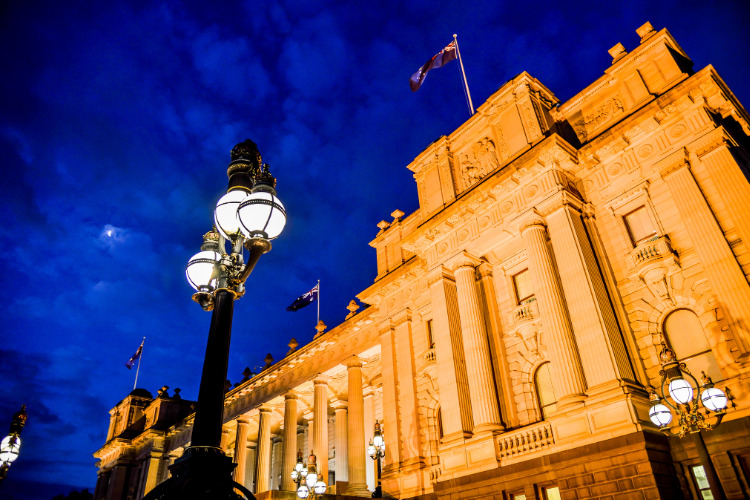
Vital Vote in Victoria: A Guide to the Victorian Election
The 28 November Victorian election is looming as a critical moment for the state. The Labor Party under Ben Carroll is trying to shake off the odour of corruption and irresponsible big spending that has adhered to the Party since Daniel Andrews was in charge.
Regardless of its corrosive social agenda – including Safe Schools, abortion to birth, anti-conversion therapy law – the election is going to be fought more over unprecedented infrastructure corruption, law and order, cost of living, soaring rents and house prices, potholed roads and damaging rural policies.
If Labor manages to survive, Victoria will be faced with a government that will be held hostage to the Greens and micro-parties. Victoria’s economy is likely to stagnate, while the Greens will accelerate a radical agenda.
So, how to vote? To assist you, we outline some of the areas in which Labor has pursued its socialist economic agenda and a radical social agenda over most of the past quarter-century.
Election Overview
by Patrick J. Byrne
When all the polls wrongly predicted a federal Labor win in 1980, a brilliantly ironic cartoon depicted a tall, smirking, victorious Liberal Leader, Malcolm Fraser, holding his own polling clipboard while looking down on a little voter and asking: “Which poll do you prefer?”
Political polling always has its limits. The rise of One Nation makes predicting the outcome of the Victorian election on November 28 even more difficult than usual.
While Labor is widely on the nose on many fronts, it should be remembered that in the 88-seat lower house (Legislative Assembly) the Coalition has only 28 seats, while Labor has a whopping 56 seats and the Greens four.
Given that another Labor government could govern (reluctantly) with the Greens, an alliance of the Liberal/Nationals Coalition with One Nation would need to win 45 seats, that is, an additional 17 seats from Labor and the Greens, to form government.
Polling since September put the parties’ primary vote at:
- Labor: 22.5 to 25 per cent.
- Liberal/Nationals Coalition: 28 to 33 per cent.
- One Nation: 22 to 25 per cent.
- The Greens: 12.5 to 14 per cent.
- Independents: 4 to 7 per cent.
One Nation is the disruptor third party.
Morgan Polling surveyed 7,708 voters in September, then listed the most likely to the least likely seats that One Nation could win. Of the first 20 most likely seats, nine are Nationals, six are Labor and five are Liberal.
A later Morgan SMS survey of 3,610 voters across just four key seats found that One Nation could win Hastings from Labor, Morwell from the Nationals and Pakenham from Labor. The Coalition could take Bass from Labor.
So, One Nation could take seats from both the Coalition and Labor.
Preferences will be key to many results, and will be new territory with One Nation. Its preference flows are untested and uncertain. Coalition votes bleeding to One Nation will likely direct their second preferences back to the Liberals or Nationals. Will Labor voters bleeding to One Nation direct their preferences back to Labor or elsewhere?
It will be a seat-by-seat battle.
The Victorian upper house (Legislative Council) has 40 members – five from each of the eight regions. Currently, it is composed of: Labor Party 15; Liberal Party 11; National Party two. The crossbench (12 seats) is made up of the Greens four; Legalise Cannabis Victoria two; Independents two; Animal Justice Party one; Libertarian Party one; Pauline Hanson’s One Nation one; Shooters, Fishers and Farmers Party one.
Again, One Nation is likely to be the disruptor. With a region’s quota of 16.7 per cent for each elected MLC, and Morgan polling estimating One Nation’s country vote at 26 per cent and Melbourne vote at 20.5 per cent, the party is set to increase its numbers in the Legislative Council significantly from the current one member.
Since the Kennett Liberal government was defeated in 1999, the Coalition has had only one four-year term in government in the past 27 years.
Watch out for a close election, even a hung parliament.
A Prosperous State Crippled
by Peter Westmore
The outcome of the Victorian election will depend on the state’s brutal crime wave with almost daily arson attacks, on the State Labor Government’s extravagantly expensive and corrupt Big Build, the housing crisis exacerbated by five interest rate rises this year, and the surging cost of living.
But how the Labor Party destroyed the economic foundation of the state, by destroying its brown-coal and natural-gas industries, deserves to be more widely understood.
Successful economies around the world are based on plentiful and low-cost energy. In Victoria, the growth of the state’s power industry is intimately linked to brown coal, which is found in large deposits across eastern Victoria.
From the 1920s, Victoria’s electricity was supplied from power stations scattered throughout the Latrobe Valley, run by the government-owned State Electricity Commission. In the 1950s, huge gas reservoirs were discovered in Bass Strait, providing low-cost gas for the southern states of Australia.
The combination of low-cost electricity and gas provided the foundations for Australia’s large motor vehicle industry, its petro-chemical industry, and heavy engineering. In essence the state’s prosperity depended on them.
The Liberal Party, which ran Victoria for about 20 years after the Labor Split in the mid-1950s, strongly favoured the expansion of both brown coal and natural gas. The Socialist Left, which took control of the ALP after the Labor Split, became increasingly hostile to fossil fuels with the rise of the environmental movement in the 1980s and 1990s.
When Labor came into government in Victoria in 1982, the publicly owned Gas and Fuel Corporation and State Electricity Commission were an important source of government revenue, so there was no incentive to challenge them. However, the subsequent Kennett Liberal government privatised both utilities, as well as the brown-coal fields in the Latrobe Valley in eastern Victoria.
When Labor came back into government, the Socialist Left-controlled party policy became increasingly hostile to the privately owned gas and electricity industries, due to their reliance on fossil fuels which were by then seen as contributing to climate change.
Over subsequent years, Labor banned oil and gas exploration inside Victoria (allegedly on environmental grounds), imposed new taxes on coal (making power generation more expensive), and announced that existing power generation from coal would be phased out, to be replaced by renewable energy.
The effect of all these changes was to push up the cost of electricity and gas, threatening the viability of secondary industries, including motor vehicle manufacturing, chemicals and plastics, paper manufacturing, and many others.
When later elected to government, the Liberals did nothing to reverse Labor’s policy. In fact, they strongly supported the “free trade” agreements that exposed Australian industries to international competition from low-cost, subsidised manufacturers, particularly China.
The combination of rising local energy costs and cheap imports sounded the death knell of local industry, which contracted from about 15 per cent of gross domestic product to around 5 per cent today.
The Labor Party’s policies, which have forced the closure of coal-fired power stations and driven up the cost of both electricity and gas, are a major cause of the economic woes that have turned Victoria into an economic basket case.
As leading economist Saul Eslake said recently: “Over the last 20 years – predating the Andrews government but exaggerated by the Andrews and Allan governments – Victoria has slipped from being one of Australia’s richest states to being the second or third poorest state depending on the measurement used.”
Social Policies
by Patrick J. Byrne
From the Safe Schools program, euthanasia, a conversion practices ban, to abortion clinic buffer zones and legalising abortion to birth, Victorian Labor has prosecuted the most radical social agenda in Australia.
Now Labor is expanding that agenda with a promise to spend $30 million over four years to eliminate out-of-pocket costs for abortions.
As it has done many times before, once again Labor has wedged the Liberals.
Within hours of Labor announcing its policy, Liberal Leader Jess Wilson announced that a Coalition government would largely match Labor’s policy. This would include GP and specialist consultations, scans, tests or medication, which can quickly add up to more than $1,000.
Meanwhile, One Nation has challenged both Labor and the Coalition with a policy to help pregnant women by:
- Removing out-of-pocket residual costs for pregnant women in the public system.
- Providing a $2,000 contribution towards private maternity care.
Public maternity care is already largely free under Medicare for hospital and clinic services, but pregnant women in public hospitals face significant residual costs for medical appointments, tests and scans (certain ultrasounds, pathology tests, and non-invasive prenatal testing) and related services.
One Nation has committed to covering all residual costs.
Private maternity care from obstetricians and hospitals alleviate pressure on Victoria’s public maternity system, which can involve considerable out-of-pocket costs. One Nation is offering a one-off $2,000 contribution towards their out-of-pocket expenses.
This prompts an obvious question: will Labor and the Coalition match One Nation’s policy?
CFMEU Criminal Activities
by David James
The recent decision by Victorian Premier Ben Carroll to have a royal commission to investigate allegations of the criminal infiltration of unions and building sites was not just a case of shutting the gate after the horse has bolted. It is more like shutting the gate after the horse has left the solar system.
Conveniently, the judge to head up the inquiry, Christopher Kourakis, a former SA Supreme Court chief justice, will report back to the government no later than August 20 next year, long after the state election is over.
Geoffrey Watson SC, who was commissioned by the CFMEU’s administrator, Mark Irving KC, to investigate what happened in the $100 billion Big Build, claimed in his report, Rotting From the Top, that the Victorian branch of the CFMEU cost taxpayers up to $15 billion. He alleged it “was no longer a trade union, it was a crime syndicate”.
To put that $15 billion figure into context, it is 7.6 to 9.3 per cent of the states’ total net debt (depending on how the debt is calculated). It is the equivalent of 79 per cent of the 2026-27 budget for education and 46 per cent of the 2026-27 total allocation for health. That is an extraordinary price to pay for corruption and criminality.
As of late October, there are now 75 allegations, up from 56 in May, with some complaints referring to multiple projects but counting as one allegation in the state’s total.
It is true that the former leader of the CFMEU, John Setka, who was identified as the chief culprit, has gone. But only the most optimistic would think that this means the problems have gone away.
Watson’s report detailed numerous case studies of violence, stand-over tactics and extortion on Victorian building sites. Threats of violence were commonplace, used either to drive the Australian Workers Union (AWU) out, collect debts, or for extortion. Contractors were threatened with industrial disruption unless money was paid.
The report identified links with figures in organised crime who operated as debt collectors, including: Amad “Jay” Malkoun, described as a “lifelong criminal, a heroin trafficker, and a former national president of the Comancheros”; and Mick Gatto, the alleged boss of the Carlton Crew drug gang during Melbourne’s gangland wars. Some building sites, Watson claimed, were effectively converted into drug distribution centres.
A royal commission cannot punish anyone or find individuals legally guilty. It is an executive investigative body, not a court of law. It will be nowhere near sufficient to do anything about a problem so deeply entrenched.
Infrastructure Crisis
by Luke McCormack
As Victorians approach the November 28 election, the question is not simply who should govern, but whether the next government can restore integrity, accountability and financial discipline to Victoria’s public administration.
After more than a decade of Labor governments, Victoria faces a deeply troubling combination of mounting public debt, infrastructure cost overruns and serious allegations of corruption surrounding its Big Build construction program.
Economist Stephen Anthony, director of Macroeconomics Advisory, recently highlighted the scale of Victoria’s predicament, citing estimates that CFMEU-related corruption and inflated construction costs may have cost taxpayers up to $15 billion.
Meanwhile, Victoria’s controversial Suburban Rail Loop (SRL), officially costed at up to $34.5 billion for its first stage, could cost substantially more. Anthony estimates between $75 billion and $100 billion.
The Victorian Auditor-General has also exposed serious shortcomings in the project’s financial transparency and warned that SRL East is unlikely to meet its published budget or timetable.
Victoria’s debt is projected to approach $200 billion by 2030.
These failures demand more than election promises or changes of political leadership. They demand fundamental reform.
Five priorities for Victoria’s next government
1. Restore independent infrastructure planning.
Every major project must undergo transparent, independent cost-benefit analysis before public money is committed. Premier Ben Carroll’s proposal to abolish Infrastructure Victoria, the state’s independent infrastructure advisory body, should be abandoned. Victoria needs stronger independent scrutiny, not less.
2. Expose corruption and restore accountability.
The royal commission into construction-sector corruption must be allowed to thoroughly investigate government contracts, procurement processes, union involvement and ministerial knowledge. Its recommendations must be implemented without political interference.
3. Reassess the Suburban Rail Loop.
Before further major funding commitments, the complete SRL business case, updated costings and independent financial modelling should be released publicly. No project should be considered too politically important to reconsider, modify or cancel if the evidence demands it.
4. Restore financial discipline.
Government debt cannot grow indefinitely without consequences. Victoria needs credible debt-reduction targets, transparent infrastructure budgets and rigorous spending priorities. Every dollar wasted is a dollar unavailable for essential services or future generations.
5. Put families and communities first.
Infrastructure spending must respond to genuine community needs. Congested suburban roads, overwhelmed hospitals, housing affordability, regional infrastructure and reliable public transport deserve priority over politically attractive megaprojects.
A government that serves the public interest
Victoria does not need an end to infrastructure investment. It needs an end to poorly scrutinised spending, questionable political relationships and the assumption that bigger projects necessarily mean better government.
Whoever forms government after November 28 must demonstrate that public money serves the common good, not entrenched political or commercial interests.
Victorians deserve honest government, accountable institutions and infrastructure that genuinely improves their lives.
Housing
by Nicole Yap
Victorian voters – particularly Millennials and Gen Zs – will be keeping housing policies in mind as they go to the polls on November 28. After all, many young Australians are forced to shift or sacrifice life plans because of how increasingly unaffordable and unattainable housing has become.
While the state government may not have a direct influence on the property market, it holds key policy levers to make housing more affordable.
Land tax: In 2024, Labor cut the land tax threshold from $300,000 to $50,000 to manage state debt, which led many investors to sell their properties, ultimately reducing rental supply and hiking up rental prices. Labor now wants to lift the threshold back to $300,000 over six years.
The Liberals would do the same over five years, and One Nation has also committed to winding back Labor’s land-tax increases on rental properties and small-property owners. The Greens are proposing an “ultra-wealth” tax of 5.3 per cent for investors who own more than $5 million worth of residential investment properties.
Stamp duty: Currently under Labor, first home buyers are exempted from paying stamp duty on homes up to $600,000, with concessions for properties up to $750,000. The Liberals propose a stamp-duty exemption for first home buyers on properties up to $1 million, while the Greens would abolish stamp duty for all owner-occupiers for homes up to $1.1 million. One Nation would raise the foreign purchaser duty on residential property to prevent Victorians from being outbid by foreign buyers.
Supply and zoning: Labor’s plan is to deliver 800,000 new homes – or around 80,000 homes a year – between 2024 and 2034, focusing on high-density development in activity centres.
The Liberals want to clear Labor’s backlog of 27 Precinct Structure Plans to fast-track building homes in designated growth areas; expand the capital city zone to allow more development; and support community-led structure plans and sustainable growth in regional Victoria.
One Nation’s proposals include releasing under-used government land for housing and imposing time limits for planning and building approvals. The Greens want to stop the demolition of public housing and double the number of public homes being built.
Some Points on Potholes
by Michael Murray
A road engineer, speaking about road pavements and the engineering, made the point that normal road traffic from cars is next to zero impact on the condition of the road.
Following the major floods and severe storms of late 2022, politicians started blaming the rains for the pothole problem, though engineers knew that the problems had been created over a long period before those floods. This was because road pavement surfaces had been designed for semi-trailers before the 1970s, weighing 32 tonnes. Then the weight of these vehicles was successively lifted to 36 tonnes, then 38 tonnes and, in the early 1990s, to 42.5 tonnes.
Also, in the early 1980s, tyre pressures were much lower, as were axles loads, and a maximum speed of 80 kilometres per hour was in force.
Since then, successive governments have allowed B-double and B-triple trucks and in 2020 allowed road trains with loadings of 85 tonnes and more operating at 100kph. This has had the following results on the road pavement:
- Repetitive Heavy Load: Trucks carry immense weight across multiple axles, creating high repetitive stress that cracks the thin asphalt and bitumen seals common on many Victorian regional and rural roads.
- Hydrostatic Water Pressure: When rain seeps into tiny cracks in the pavement, the heavy weight of a passing truck compresses the trapped water. This intense hydraulic pressure literally “blows up” the road base from the inside, forcing chunks of asphalt to break away.
- Rutting and Surface Deformation: Heavy truck tyres squeeze and deform soft or aging asphalt, creating ruts that collect water and accelerate structural failure during wet weather.
- Compounded Weather Impact: Extreme weather events, such as Victoria’s severe floods, saturate the lower sub-bases of roads. When heavy freight traffic returns to these saturated, unstable foundations, the surface collapses rapidly into potholes.
The rain and the floods are not to blame; government policy is.
The problems can be fixed by:
- Removing road trains from Victorian roads.
- Placing an 80-kilometre-per-hour speed limit for all heavy semi-trailers.
- Increasing maintenance.
- Using rail freight where appropriate.
Agriculture
by Patrick J. Byrne, Peter Kelleher and Tony O’Brien
1. Water buybacks
The Murray-Darling Basin Plan – a product of the bipartisan federal Water Act 2007 that was also backed by the states – has caused a huge shift in the Basin’s waterways away from water-sharing towards running the river (environmental flows, convenience, salt dilution and seepage/evaporation losses) at the expense of consumptive use (irrigation, industries, towns and cities).
It used to be about a 50:50 share. Today, after huge buybacks for environmental flows, it is only about 28 per cent of average flows that go to consumptive use.
This huge loss of water has contributed to a serious contraction of the Victorian dairy industry, the largest in the country, and the central Victorian fruit industry. Adding to this, water trading has seen water shifted to almond farms in Victoria’s northwest.
Almonds are a higher-valued export industry, but dairy and fruit are staple foods. As Nationals leader Matt Canavan recently warned his party’s national conference, we “are sleepwalking into a food security crisis”. By 2040, we are on track to be importing “apples … cheese, dairy, chicken, butter, pork,” he said.
Farmers want water buybacks stopped and a new Basin plan. Victoria has the option of pulling out of the Basin Plan by reclaiming the state’s constitutional power over water that was ceded to the Commonwealth in 2008.
2. Productive land being lost
A huge loss of farmland is also occurring.
First, the Victorian Labor Government last year pledged to cover 8 per cent of the state with solar panels and wind farms in renewable energy zones (REZs). The plan is to cover about 1.8 million hectares (7.9 per cent of Victoria’s total land area of 22.8 million hectares).
Much of the land within the six REZs is well-cultivated farmland and grazing land, as well as irrigated farming. This land will be taken out of production, just as the nation is on track to become a net agricultural importer.
Second, the Victoria to New South Wales Interconnector West (VNI West) involves an electricity transmission line running from central-west Victoria (Bulgana) to Kerang, then north to the Murray, where it is to meet a similar project running across southwest NSW.
Farmers have repeatedly protested outside Victoria’s Parliament against the VNI West and similar projects. Twelve farmers who refused entrance to their properties by government personnel tasked with doing preliminary assessments of the properties for the construction of the VNI West were presented with $814 fines in August. They have joined together to defend the charges.
3. Electricity
In addition to reduced water availability forcing up water prices, high diesel and fertiliser prices, electricity price hikes are putting pressure on food production.
The Interconnector and shift to renewables is a huge expenditure on technologies that cannot provide reliable baseload energy. Labor has been allowing Victoria’s coal-fired power plants to run down – and then claim that renewables are cheaper than coal and gas. Labor governments have refused to expand lower-emission gas-fired power stations and have refused even to consider the most promising alternative carbon-dioxide-free source of energy, nuclear fission.
A Coalition-led government needs to stop massive wasteful renewable projects, keep coal-fired power stations going, expand gas-fired power plants and look to building nuclear power plants.
Farmers complain that their legitimate grievances have not been heard and that the Labor Government has disregarded the importance of agriculture to the Victorian economy.
Let’s hope that the Liberal-National Coalition keep their promise to abandon foolish projects like the VNI West.
4. Coalition passenger train pledge
The Coalition has made a $51.2 million election promise to reconnect Mildura to the state’s passenger rail network with a pledge of three return services a week. The package will also fund the restoration of passenger services between Dimboola and Ararat.
The Wimmera Mallee Rail Plan would restore services by 2029, ending more than three decades without regular passenger trains to Mildura. Passengers departing Melbourne for Mildura would travel on broad-gauge Velocity trains via Ballarat to Maryborough, then change for Mildura on standard-gauge trains.
Mildura lost its regular passenger trains in 1993 under the Kennett government, and there have been calls for years to restore the service. Under the plan, trains will stop at Red Cliffs, Ouyen, Birchip, Donald, St Arnaud and Dunolly before reaching Maryborough.
Those campaigning for the restoration of the passenger service include Northwest Rail Alliance, whose campaign included a parliamentary petition, and the Rail Revival Alliance Victoria and local councils along the route.
The Dimboola service would stop at Horsham, Murtoa and Stawell before connecting with the Melbourne-bound train service at Ararat. The restoration of the rail service to Mildura should prove to be a boost to tourism.
___
Republished with thanks to News Weekly. Image courtesy of Adobe.
Recent Articles:

10 November 2026
3.4 MINS
Questions surround the National Redress Scheme’s assessment process, with credible institutional evidence being ignored, undermining trust and fairness.

10 November 2026
5.7 MINS
After selling their Perth home, one family is relocating from Australia to Bali, seeking a more affordable lifestyle, greater freedom, values-aligned childcare and more time together.

10 November 2026
6.5 MINS
Republicans suffered major Senate defeats in the 2026 midterms, but poor candidate choices, presidential endorsements and voter dissatisfaction may explain more than a nationwide backlash.
9 November 2026
3.1 MINS
John Anderson has repeatedly called for Australians to confront our cultural and moral decline and put courage over complacency.

9 November 2026
6.6 MINS
Americans made it clear that if they have to choose between a nuclear-armed Iran and high fuel prices, they'll accept a nuclear-armed Iran, along with some supporters of the Iranian regime in their own halls of power. Our own government is just as short-sighted.

9 November 2026
12.5 MINS
The election of transgender candidates and Tasmania’s sweeping conversion-practices ban illustrate a civilisational crisis. While the 'anti-conversion' bill has already passed the lower house, one MP's opposing speech was a clarion call for sanity in a time when people had sadly lost their minds.

9 November 2026
1.3 MINS
NSW Health has apologised after admitting 20,000 Year 12 students were not given sufficient information for informed consent before receiving Covid vaccinations.