



Autism Linked to Childhood Vaccinations in 79% of Research: Landmark Meta-Study
Of 136 studies examining childhood vaccines or their components, 107 found evidence consistent with a link between vaccination and autism or other neurodevelopmental disorders.
A sweeping new peer-reviewed study has concluded that the cumulative childhood vaccination schedule is a modifiable risk factor for autism spectrum disorder — and that no government has ever tested whether the full schedule is safe for children’s developing brains.
The paper, published this month in the Journal of Independent Medicine, synthesised more than 300 studies covering genetic, environmental and medical risk factors for autism spectrum disorder (ASD).
Its lead author, Nicolas Hulscher of the McCullough Foundation, and co-authors, including cardiologist Dr Peter McCullough and Dr Andrew Wakefield, concluded that routine childhood vaccination — particularly when clustered in early infancy — represents a major modifiable risk factor within a broader causal framework.
“To date, no study has evaluated the safety of the entire cumulative paediatric vaccine schedule for neurodevelopmental outcomes through age 9 or 18 years,” the authors stated.
Their conclusion: “The totality of evidence supports a multifactorial model of ASD in which genetic predisposition, neuroimmune biology, environmental toxicants, perinatal stressors, and iatrogenic exposures converge to produce the phenotype of a post-encephalitic state.”
The study found that of 136 studies examining childhood vaccines or their components, 107 — or 79 per cent — inferred a possible link between immunisation and ASD or other neurodevelopmental disorders.
Just 29 found no association, and those, the authors argued, were undermined by a critical flaw: “absence of a genuinely unvaccinated control group, registry misclassification, ecological confounding, and averaged estimates that obscure effects within vulnerable subgroups.”
BREAKING: LANDMARK PEER-REVIEWED STUDY FINDS VACCINATION IS A MAJOR RISK FACTOR FOR AUTISM
We found 79% of studies evaluating vaccines or their components (107 of 136) reported evidence consistent with a vaccine–autism link.
After DECADES of censorship and denial, our 50-page… pic.twitter.com/EWYa8R9KBP
— Nicolas Hulscher, MPH (@NicHulscher) May 13, 2026
Scale of the Autism Crisis
The study opens by documenting an autism crisis of significant proportions. In the United States, ASD now affects one in 31 children aged eight — up from one in 150 in 2000 and one in 10,000 in 1970.
The US childhood vaccination schedule expanded from 12 doses in 1986 to 54 doses in 2019. The authors noted the rise in autism diagnoses tracks the expansion of cumulative childhood vaccine exposure closely across successive birth cohorts.
Though conducted in the US, the study has implications for Australian families. Australia’s National Immunisation Program has expanded substantially since its formalisation in 1997, adding pneumococcal, rotavirus, varicella, meningococcal and other vaccinations to the schedule.
No cumulative safety evaluation for neurodevelopmental outcomes has ever been conducted in Australia — the same gap the study’s authors identified as critical in the US context.
What the Evidence Shows
Twelve studies that directly compared fully vaccinated children with completely unvaccinated children consistently showed superior overall health outcomes in the unvaccinated group, including substantially lower rates of chronic conditions and neuropsychiatric disorders, including ASD.
The authors noted these comparisons remain among the most methodologically informative in the literature — and the most politically suppressed.
The study reviewed mechanistic evidence for how vaccines administered early in infancy may injure the developing brain in susceptible children.
Components including aluminium adjuvants and the preservative thimerosal — an ethyl mercury compound — were linked in multiple studies to mitochondrial dysfunction, immune dysregulation and neuroinflammation.
The timing of early vaccination doses emerged as a particular concern: infants’ cytochrome P450 enzyme systems, responsible for detoxification, reach only 30 to 60 per cent of adult capacity at birth, potentially leaving them unable to clear the combined load of vaccine ingredients at clustered dose visits.
The study examined clinical case reports stretching back decades.
In 1996, US clinical immunologist H.H. Fudenberg documented 40 children with infantile autism, finding that 15 of 22 classic autism cases developed symptoms within a week of MMR vaccination — three with high fever and convulsions within a single day.
A 2006 case report by Dr Jon Poling described a 19-month-old girl who developed fever and rapid developmental regression within 48 hours of receiving multiple routine vaccinations, with a muscle biopsy confirming mitochondrial deficits.
The US government subsequently compensated her family, conceding that vaccination had aggravated her underlying mitochondrial disorder and contributed to her regression.
A Question of Accountability
The study situates its findings within a wider pattern of institutional resistance to inquiry.
The 1986 National Childhood Vaccine Injury Act granted blanket liability protection to vaccine manufacturers in the US, after which the childhood schedule expanded dramatically.
Parents who reported watching their children regress immediately after routine vaccination visits were systematically dismissed.
“The neutral association papers were undermined by absence of a genuinely unvaccinated control group,” the authors stated, challenging decades of assurances from public health bodies.
A CDC statistician, William Thompson, acknowledged in a 2014 public statement that his team had omitted statistically significant data from a 2004 study — data showing that African American boys who received MMR vaccinations before age 36 months faced significantly increased autism risk.
The study was funded in part by the Bia-Echo Foundation and the McCullough Foundation. The authors called for “independent, longitudinal studies assessing the safety of the full cumulative paediatric vaccine schedule”.
The study arrives as political pressure on the question of childhood vaccination mounts in Washington.
US Health and Human Services Secretary Robert F. Kennedy Jr has made the autism epidemic a centrepiece of his mandate, citing CDC data showing one in 31 American children born in 2014 are affected, and has moved to reconstitute the government’s vaccine advisory committee by removing members with financial ties to manufacturers.
___
Image courtesy of Unsplash.
6 Comments
Leave A Comment
Recent Articles:

16 October 2026
4 MINS
A desperate Victorian Labor Party is peddling taxpayer-funded abortions as free “healthcare”. In a shameless attempt to stay in power, they're willing to do anything — including killing the unborn and forcing taxpayers to pay for it.

16 October 2026
4 MINS
Katie Zacharia’s first days as White House Press Secretary have sparked fierce media criticism, but her remarkable testimony of surviving an abortion attempt tells a deeper story.
16 October 2026
3.4 MINS
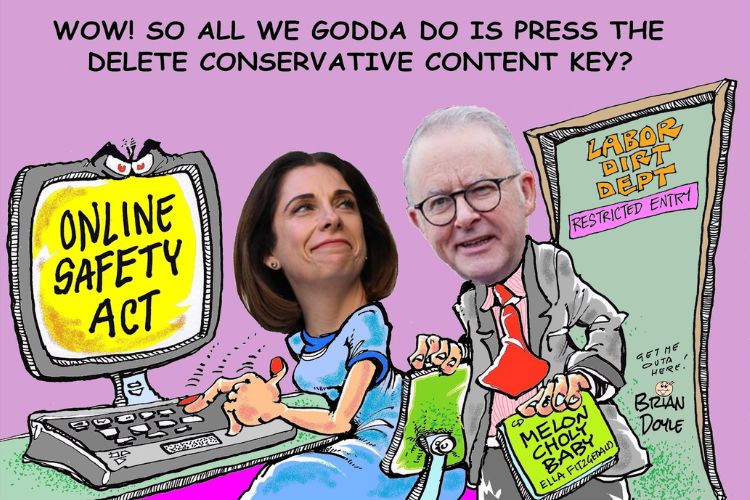
Australia’s proposed digital duty of care laws promise greater online safety and increased user control by switching off algorithms, but critics warn they could give ministers sweeping powers to restrict lawful content and threaten free speech.
A Million Women Movement Marks Second Anniversary: “Look What the Lord Has Done! Ishtar Has Fallen!”
16 October 2026
2.8 MINS
Two years after A Million Women gathered in Washington for ten hours of prayer and fasting, organisers point to victories they believe reflect God’s answers to intercession.
16 October 2026
2.6 MINS
Euthanasia accounted for 4% of all deaths in Belgium in 2025, with growing numbers involving people who were not terminally ill, dementia patients and psychiatric conditions.

16 October 2026
5.2 MINS
Christa Pike’s botched execution has sparked outrage across America, but critics argue that the same concern for human dignity is denied to abortion survivors.

15 October 2026
3.6 MINS
An 80,000-strong gathering in Texas signals a hunger for revival, as Pastor Philip Anthony Mitchell warns that Christian indifference could leave future generations without the faith.



Once again your obsession with Vaccines and Autism is incorrect . Thimerosal has been eliminated from all routine childhood vaccines in Australia since 2001. However the WHO still allows it in third world countries due to costs. The rates of Autism in first world countries is much higher than third world countries. I think they should be looking for another cause for the increase in autism. More likely the processed foods we eat or something else
Hi Kim, this is actually the first article I’ve written on the link between vaccines and autism, so I’m not sure what you mean by “once again” or “obsession”. Also, I simply reported on the study without providing any opinion.
The authors of the study appear to be more nuanced than you on this topic, as they argue that vaccines are just one of many factors that can be linked to rising rates of autism, with many other environmental factors, like the one you’ve suggested, among those factors.
I’d take this study more seriously if Andrew Wakefield wasn’t a co-author.
54 vaccines in young children is just too much and unnecessary! Who profits ? Big Pharma . I would never allow my children to have so many. Society is over -medicated and life is extended with devices and serious operations which extend life for a short time but with side-effects and a low quality of life. Our wishes ( expressed in legal documents ) are often ignored, ie our right to our own body is ignored because the medical profession and Big Pharma demands to make profit at our expense. I am 82 and refuse to take Blood Pressure tablets , etc. I manage very well without them. I have seen the many falls from giddiness , the early bone frailty and mental degeneration of those who take them and rely on Stents which solve nothing. Far better would be to regularly cleanse the liver with natural products.
Another reason for a full inquiry ‘re Vaccines
I take the study seriously because Dr Peter McCullough is a co-author.