


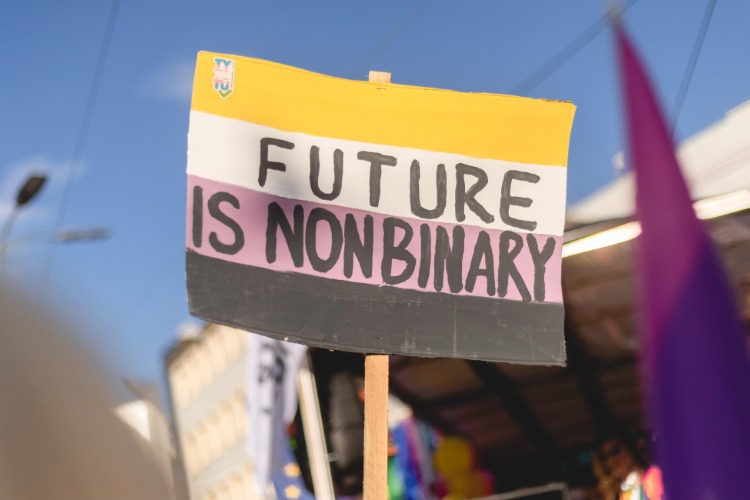
Ten Reasons Why the Tasmanian Greens’ ‘Conversion Practices’ Bill Should Alarm Everyone
Can I ask that you would stop what you’re doing and please pray for Tasmania?
As has occurred in many other states, the Greens are seeking to introduce an “anti-conversion practices” bill and it should be of serious concern to everyone and especially to people of Christian faith. A copy of the draft bill can be found here.
The element of the Greens’ Bill which is of most concern though, and is unique to the Tasmanian legislation, is to be found at the very end of the document. Under the section titled “Consequential Amendments” the Greens want to extend the definition of “child abuse” to include “engaging in a conversion practice, within the meaning of the Conversion Practices Prohibition Act 2026, directed towards the child – but does not include an act that is lawful at the time at which it occurs” (pages 63–64, Section 2(c)).
Christians in particular have always believed that sexual activity should not only be limited to a man and a woman within the sacred covenant of marriage but that faith in Jesus Christ brings forgiveness and the power to repent of behaviours and desires which are contrary to God’s word.
However, the legislation which the Greens are seeking to introduce is based upon the false assumption that conversion practices are “deceptive and harmful to the persons subjected to them and to the community, and should be denounced and eliminated as far as possible” (page 12, Section 8(a)).
What follows is a summary of the numerous problems in the bill which the Greens are proposing and will likely be fully supported by Labor. The Liberals will more than likely allow their members to vote in line with their conscience, which means it has the numbers to be passed into law — unless something is done to stop it.
Ten Problems with the Greens ‘Conversion Practices’ Bill
First of all, a conversion practice is defined as “a practice or conduct directed towards a person, whether with or without the person’s consent” (page 9, Section 5(1)). Note that, even if someone willingly comes to you seeking help, it would be illegal to persuade or even assist them in any way, such as with prayer and pastoral counselling, if it seeks to change their sexual orientation or gender identity.
Second, a “conversion practice” includes anything which seeks to induce, change, suppress or eradicate the sexual orientation or gender identity of the person (page 9, Section 5(1a), (1b)). However, this definition is so vague as to include everything from homosexuality, transgenderism, adultery, pornography, or even the covetous desire for another person’s spouse.
Third, the bill proposes that one can pray or state a religious teaching as long as it doesn’t constitute being a “conversion practice”, namely, that it doesn’t seek to change the person’s desires, behaviour or sexual identity (page 10, Section 5(5c)). One can pray or counsel someone as long as it doesn’t make any practical difference!
Fourth, the bill also proposes an “extra-territorial application” if the “person engages in conduct outside, or partly outside, Tasmania and there is a real and substantial link between the conduct and Tasmania” (page 11, Section 6(1a), (1b), as well as pages 14–15). This means the legislation will apply not only to people in Tasmania, but also to “conversion practices” occurring outside the state where there’s a substantial link to Tasmania.
Fifth, parents will not be able to pray with, seek to persuade, let alone instruct their children regarding their sexuality or gender identity as this is a “conversion practice”. Instead, they are only allowed to “discuss” these matters theoretically — stating their personal views — as long as they don’t seek to make any practical difference or change (page 11, Section 5(3v)).
Sixth, if one is found guilty of an offence then this will be punishable under both the criminal and civil codes (page 13). This will mean not only gaol time and/or financial penalties but will also include civil prosecution and its associated financial damages. And then there will be the enormous legal costs in defending oneself.
Seventh, a child cannot be involved in conversion therapy or taken outside the state for the purpose of conversion therapy which is also punishable under the criminal code (page 14, 10(1); page 16, 12(1)).
What’s more, the draft bill states, “For the avoidance of doubt, it is not necessary to prove that the conversion practice caused injury to the child” (page 16, Section 12(2)). Significantly, there doesn’t have to be proof of any harm having occurred. Simply engaging in the “conversion practice” is itself an offence.
Eighth, anyone can make a report “whether or not affected by a conversion practice” (page 24, Section 24). One doesn’t have to be hurt by another person’s actions, but merely believe that someone else could possibly have been.
Ninth, a person will be compelled to give evidence even if it is personally incriminating (page 33, Section 40(1)). This means no one will have the right to any longer remain silent as is currently practiced under common law. What’s more, accusations against a person can also remain anonymous (page 34, Section 41(2)).
Tenth, the person’s employer (e.g. religious denomination) may also be implicated if an employee engages in said activities during their work unless the employer has put “reasonable” safeguards in place to prevent it (page 42).
Christianity and Conversion
Christianity operates on the premise of the possibility of spiritual conversion (e.g. Acts 9:1–31). While this is something which is not to be forcibly coerced — such as in political Islam — it is powerfully affected by the work of God’s Spirit creating in people new desires and behaviours (Ezekiel 36:26–27; Jeremiah 31:33).
Indeed, this goes to the very heart of Jesus’ final command to the church, i.e., to make disciples of all nations by teaching people to obey all that he commanded (see Matthew 28:16–20).
The bill which the Tasmanian Greens are seeking to introduce will be disastrous for the basic democratic principles of freedom of speech as well as freedom of religion.
The rights of parents in particular should be protected to raise their children in a way which is in keeping with their family values.
But most of all, people should be free to accept or reject the preaching of the gospel.
___
Image via Adobe.
One Comment
Leave A Comment
Recent Articles:
26 October 2026
4.5 MINS
OECD chief Mathias Cormann warns Australia is losing its competitive edge, as excessive regulation, housing pressures, immigration challenges and declining public trust threaten national prosperity.
26 October 2026
2.5 MINS
Nation First exposes the rush to weaponise the Haines attack against Pauline Hanson, conservative voices and men before investigators established a motive.
26 October 2026
5.1 MINS
Anthony Albanese calls for civility after the Helen Haines attack, but revelations of a political dirt file raise uncomfortable questions about his government’s own conduct.

26 October 2026
3 MINS
Australia’s national resilience inquiry overlooks a critical weakness: decades of deindustrialisation have left the nation dangerously dependent on imports, unprepared for compounding threats and strategic disruption.
26 October 2026
2.9 MINS
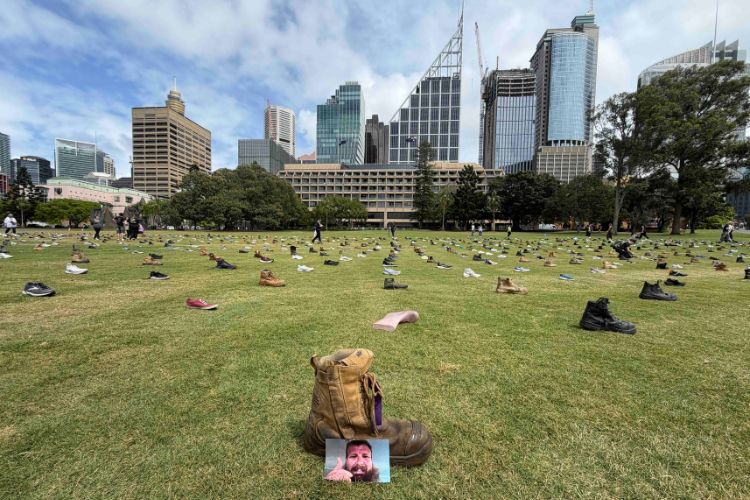
A powerful display of thousands of shoes highlights Australia’s escalating male suicide crisis, while Dads4Kids celebrates fatherhood, family connections and practical action to strengthen generations.
26 October 2026
3.2 MINS
Following Paul's example in Ephesians 1, let us pray for the Father to open the eyes of our hearts so that we may grasp the hope of his calling, the riches of his glorious inheritance in the saints, and the greatness of his power towards us who believe.

25 October 2026
4 MINS
Prayer is active partnership with God, and he is awakening his body to prayer, not by might or by power, but by his Spirit.



I am alarmed, but Jesus is not.
Prayer can stop this diabolical scheme.