


‘Let Them Look Like Clowns’ Says Free-Speech Advocate on Digital Duty of Care Bill
The co-founder of Free Speech Union of Australia, Reuben Kirkham, has cheered on the federal Albanese government with its Online Safety Amendment (Digital Duty of Care) Bill 2026 — but not to succeed.
“If they want to screw it up, let them screw it up. Let them look like clowns,” he told The Daily Declaration during an Australian Jewish Association video conference.
“All we can do is make them look like idiots with the more submissions people put in.”
If passed, the Draft Bill would completely overhaul Australia’s online safety protocols and introduce a new statutory digital duty of care, with Kirkham and fellow critics arguing it would lead to mass censorship and greatly erode our freedom of speech.
In a disastrous interview with News 24 last month, Communications Minister Anika Wells refused six times to rule out a reincarnation of misinformation laws under this bill proposal.
It is this lack of clarity that Kirkham believes will only help him in his efforts to see the bill not get passed, after it received a public rebuke from the Trump Administration.
“They’re persuading the Trump Administration that they need to take stronger steps to deal with online censorship,” he added.
“What I’m more worried about is the abuse of power, so if they are distorting platforms, is that going to distort elections?
“Are we going to have, for example, internal platforms like in workplaces, where speech is censored and skewed?
“Are people going to be punished for what they’ve said online?
“It’s where this all ends up, because they’re on their censorship train and they’re not going to get off it.”
Trump Administration’s Concerns Over Broad Internet Censorship
The Trump Administration has serious concerns about the Albanese Government’s stated goal of mandating broad “duty of care” requirements that dictate how online platforms manage content and user feeds, as published by the US Embassy and Consulates in Australia.
Concerns include how the Albanese Government or Communications Minister would designate “foreseeable harm”, and any resulting requirement that platforms alter their algorithmic systems to suppress freedom of expression.
“A framework that empowers governments to enforce vague definitions of ‘harm’ risks becoming a mechanism for viewpoint-based censorship, as platforms will be incentivised to over-moderate speech that should be protected to avoid regulatory penalties,” Kirkham said.
Kirkham said whether or not the Digital Duty of Care Bill gets passed would come down to how the Greens perceive it in the Senate.
“It’s going to be very interesting to see what they do,” he said.
“Can they agree with Labor on a digital duty of care? And that’s where it gets interesting. What’s going to be in it, and will they understand what they’re agreeing to?
“Will they understand the environmental implications when all that AI censorship is going to require those data centres that they oppose?
“Perhaps the Greens think there is an advantage in driving people away from X onto other platforms?”
Kirkham said another concern about the Digital Duty of Care Bill passing would be if a media outlet is critical of Hamas’ October 7, 2023 terrorist attacks in Israel.
He believes Israeli Defence Forces’ vision of the terrorist attacks, for example, running on a Reuters-partnered platform, could lead to a regulator regarding the repeated depiction of armed attacks on unarmed civilians as cruelty that incites and supports such violence.
“Even though it’s actually criticising it, which is remarkable,” he said.
“This is footage supplied by the IDF and published on a Reuters partnered platform, and according to our ‘Alborithm’, this will be censored.”
A Small Victory in the Overall War on Free Speech
In February, Celine Baumgarten celebrated a victory for common sense in the federal court, after a full bench dismissed an appeal brought by the eSafety Commissioner, Julie Inman-Grant.
This was after Baumgarten published her concerns regarding a queer club online, which was operating in a Melbourne primary school.
“What started this was I posted a 53-second video on X criticising a Melbourne primary school that was operating a queer club for kids eight to 12 years old,” she told the Chris Smith Across Australia Podcast.
“The queer club was published in their public newsletter that was available to anyone – it wasn’t leaked to me.
“Within a week, it (my post) was taken down at the behest of our eSafety Commissioner, so I challenged that decision in the Administrative Appeals Tribunal, with the help of the Free Speech Union.
“We won that fairly decisively.”

Celine Baumgarten’s victory against eSafety Commissioner, Julie Inman-Grant, was part of an ongoing fight for freedom of speech online in Australia. Picture: Facebook.
Baumgarten said there was “no place for a queer club in any school, let alone a primary school” in her post, criticising the school’s principals.
This led to the post being taken down and her subsequent legal battle against Inman-Grant.
It was ruled that the informal notices scheme that the eSafety department uses to operate and take down posts, such as Baumgarten’s, was deemed unlawful for working outside the Online Safety Act.
Inman-Grant appealed to the federal court to overturn the decision of the tribunal, where the process was deemed to be correctly adjudicated in the first instance.
Baumgarten said this ruling, with the help of Kirkham’s Free Speech Union of Australia, would put a massive spotlight on eSafety’s informal notice scheme processes when it attempts to take down or censor future online posts.
Kirkham said people on both the left and right of the political spectrum across the nation were concerned at the way Baumgarten was treated in her fight against the eSafety Commissioner.
Her legal team estimated the case cost taxpayers more than $250,000 in the eSafety department’s efforts to censor her.
“Some of the commentary was quite extraordinary. This is Australian public law essentially saying that this was about the fundamental misuse of government power,” Kirkham said.
“Across the political spectrum, you had a video about a queer club in a primary school turning into people who are relatively left-leaning, judges and academics who were very angry about it because of the process, not the content.”
As significant as Baumgarten’s legal victory was for supporters of free speech in Australia, Kirkham had the following warning about the Digital Duty of Care Bill.
“It is perhaps an attempt to get around the Baumgarten decision,” he said.
“In part, it imposes an unclear duty, which in turn leads to a chilling effect on platforms.
“It is easy to over-censor — you won’t get fined for this.
“This is not just about social media — it covers the entire internet insofar as it is served in Australia.”
If passed, Prime Minister Anthony Albanese said these new laws would put the onus on digital service providers to provide a safe online environment, setting minimum standards for the features and tools they use.
“This is not about giving government control, it is about giving people control,” he said.
“Australia is leading the world with our social media age ban and online safety approach.
“This work has been led by parents and advocates and we have backed them. We will continue to do so.”
Digital platforms will be required to document the measures taken to address identified risks of harm to Australian users and ensure these measures remain effective over time.
Failure to comply with the Duty of Care could attract penalties of up to $109.2 million, with Inman-Grant responsible for compliance and enforcement.
“The digital duty of care will ensure online service providers – including some of the most powerful companies in the world – step up and do more to keep Australians safe from harm on their platforms,” Wells said.
___
Image courtesy of Adobe.
3 Comments
Leave A Comment
Recent Articles:

25 October 2026
4 MINS
Prayer is active partnership with God, and he is awakening his body to prayer, not by might or by power, but by his Spirit.

24 October 2026
3.3 MINS
When we ask God, "What is in my hand?", and see our possessions, money and time as seed that God asks us to sow, life becomes simpler.
23 October 2026
6.8 MINS
Hillsong UNITED’s Joel Houston reflects on fame, faith and the burden of ministry, questioning performative Christianity as he seeks a more authentic walk with God.
23 October 2026
13.1 MINS
Tasmania’s proposed conversion practices legislation raises serious questions about religious freedom, pastoral care and whether Christians can freely pray with those seeking to live according to their faith.

23 October 2026
7.7 MINS
Melbourne Catholic Archbishop Peter Comensoli has spoken out clearly against the deadly promises by both major parties in Victoria ahead of the election, drawing a comparison between abortion and capital punishment.
23 October 2026
3.1 MINS
As Western societies grow more hostile, could abandoning Christianity’s moral foundations be contributing to the rise of ideological extremism, political intolerance and violence?
23 October 2026
5.1 MINS
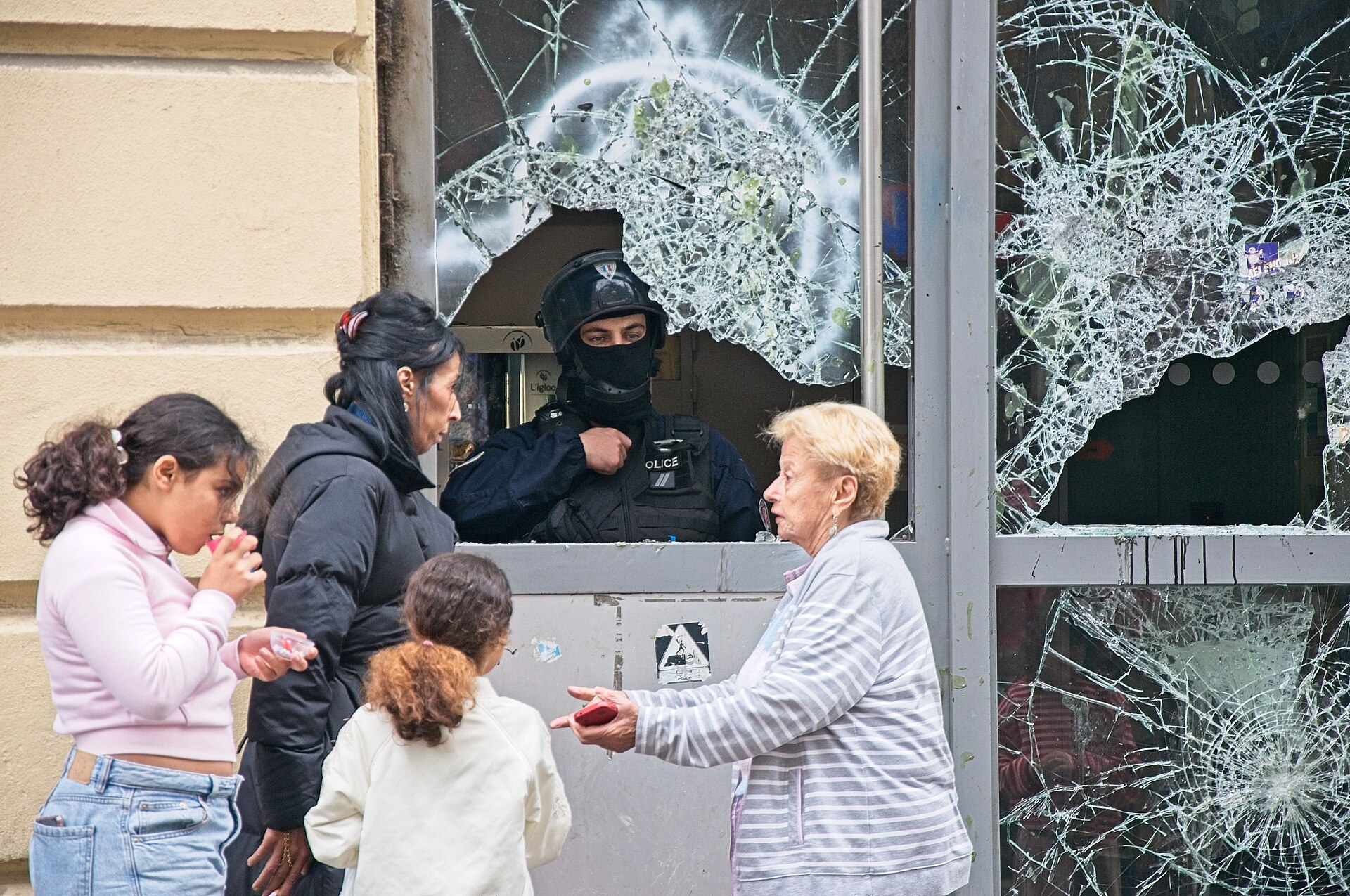
France’s escalating riots expose the dangers of political extremism, antisemitism and radical alliances, offering America a stark warning about the future of Western democracy.



Great article Josh!!!!
This quote above is very telling:
” In a disastrous interview with News 24 last month, Communications Minister Anika Wells REFUSED 6 TIMES to rule out a reincarnation of misinformation laws under this bill proposal”.
This is a very disturbing piece. So many angles, so many ‘regulators’ of other people’s sources of information. What has the world come to! Government should, in my view be creating a safe place for their people to ‘flourish and prosper.’ What is our government doing about our economy? What is our government doing to create a safe place for our citizens?
To be barking up the eSafety tree is simply taking our ability away to be critical thinkers and problem solvers as we be become more and more intellectual zombies who never required to take responsibility for ourselves and our love ones, as that’s all down the state, don’t you know!