


Labor’s Digital Duty of Care Bill Risks Suppressing Online Free Speech
Next month, the Albanese government is expected to introduce legislation that could result in the suppression of free speech online.
The Digital Duty of Care proposal requires social media platforms to proactively identify and remove content deemed “harmful” before any regulator makes a finding. Platforms that fail to comply face multi-million dollar fines.
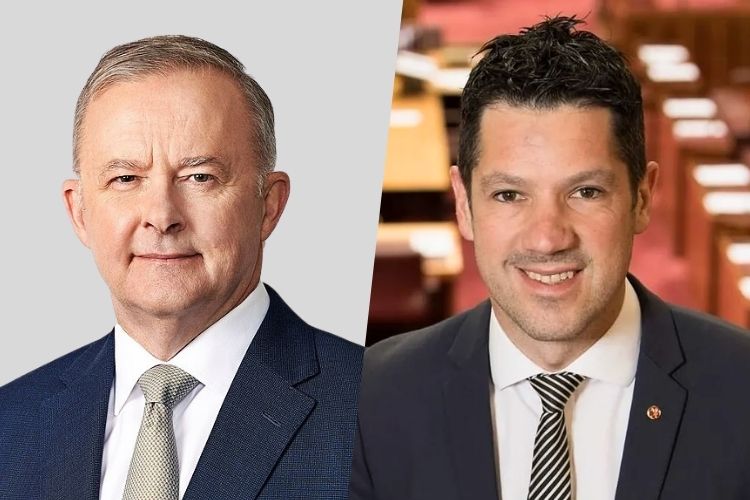
The proposal does not precisely define what “harmful” means, and many fear this could be used as an excuse to silence political dissent and faith-based speech. Senator Alex Antic has warned that this proposal is a repackaged version of Albanese’s abandoned misinformation and disinformation bill.
“Fundamentally, this means the regulation of online spaces would shift from tangible content regulation to a risk management model, making it subjective,” Senator Antic said in a video posted to his YouTube account.
“What this new framework would do is create a model such that when a social media platform is perceived not to be doing enough to remove or prevent harmful content of its own initiative, then this could incur significant financial penalties.”
Expanding Power of the eSafety Commissioner
Under the proposal, the eSafety Commissioner’s powers would be expanded to be the deciding voice on contentious content. Consider what this has looked like in practice.
In 2024, the Commissioner issued a removal notice against a post by Canadian activist Christopher Elston, also known as Billboard Chris. Elston shared a news article about a transgender activist’s appointment to a WHO panel, criticising the appointment.
The Administrative Review Tribunal overturned it as the post did not constitute cyber-abuse. No reasonable person, the Tribunal found, would conclude it was intended to cause serious harm.
More recently, the Commissioner initially cleared a Substack article by feminist journalist Genevieve Gluck about an Australian Medical Association employee’s publicly-posted conduct. She then reversed that decision, and threatened X with a $910,000 fine if the article was not removed. No court had found the content unlawful.
The Commissioner changed her own mind – and then reached for the largest penalty available.
Financially Forcing Social Media Censorship
Under the Digital Duty of Care, these processes would not have run their course. Social media companies facing million-dollar fines for non-compliance have every financial incentive to remove content before any notice arrives. The Tribunal’s protection becomes irrelevant when the post is already gone.
The financial logic is straightforward: a hefty fine for non-compliance; no penalty for removing speech that turns out to be lawful. There is a financial incentive for companies to censor free speech when the cost of removing speech is borne by the person censored but the cost of not removing it is borne by the platform.
As Senator Antic pointed out, this is not a new ambition. The Communications Legislation Amendment (Combatting Misinformation and Disinformation) Bill 2024 sought a comparable power and was withdrawn in November 2024 after facing opposition across the Senate. The Digital Duty of Care does not reintroduce this power directly. It extends the Commissioner’s existing mandate to reach the same destination by a different road.
In the United Kingdom, where comparable online safety legislation has operated, prosecutions for social media posts determined to be “harmful” have followed. Australia is now consulting on a mechanism that would give the Commissioner the foundation to do the same.
Such power over speech should not be left in the hands of one unelected bureaucrat.
Misinfo and Disinfo 2.0 Transcript: Alex Antic on Digital Duty of Care Bill
You might have thought that the Labor government’s attacks on digital free speech were over once they dropped the misinformation and disinformation bill. Well, I’m sorry to tell you that’s not the case, as Labor’s Digital Duty of Care initiative looks set to be implemented later this year under possible amendments to the Online Safety Act.
In April of this year, the government published an issues paper on the framework with a list of recommendations for how to achieve this. The paper outlines an approach requiring social media platforms and other online service providers to be more proactive in preventing harmful content. Instead of waiting for reports and complaints, under this model they would need to proactively determine whether material on their websites is likely to be harmful ahead of time, and take measures to prevent it getting there in the first place, or at least reduce its exposure.
We only need to look at the United Kingdom to see that their citizens are being imprisoned for harmful social media posts. When harm means anything other than literal physical harm, that’s when it gets murky. What this new framework would do is create a model such that when a social media platform is perceived not to be doing enough to remove or prevent harmful content of its own initiative, it could incur significant financial penalties — something like $50 million.
Fundamentally, this means the regulation of online spaces would shift from tangible content regulation to a risk management model, making it subjective.
In the issues paper, we’re informed that the eSafety Commissioner would potentially be afforded even more power — power that might relate to the creation of new categories of harm. It reads:
“Under the duty of care, the Minister for Communications, or at the Minister’s discretion, the eSafety Commissioner, will be given the power to make binding rules for designating additional categories and types of harm as being within the scope of the duty’s obligations, specifying compliance requirements for service providers or specified classes of services with the duty.”
Essentially, the Minister for Communications would be able to create new categories of online harm and determine how compliance with proactively preventing and reducing these harms would be measured. The Minister may also delegate this power to the eSafety Commissioner.
This begs the question: what kinds of online harm have not yet been thought of? If new harms could be invented in the future, this could become a framework for minimising the reach of political content on the basis of pretty much anything deemed psychologically harmful. If there was ever a mechanism for allowing political opinions to be considered psychologically harmful and therefore scrubbed from social media, this new power for the eSafety Commissioner would fit the bill.
And of course, we’re told it’s urgent. But if it’s so urgent, why don’t we already know what new types of harm would be created — what isn’t already covered? Something doesn’t add up here.
Mental or psychological wellbeing is a completely subjective concept. It’s not difficult to see that someone could post something on X disagreeing with a concept and have it construed as mentally harmful. Under this regime, X would have to proactively police all such content. Any ambiguity about what meets the criteria would further incentivise minimising its reach.
Make no mistake — that is what the left wants. They want people who disagree with them to be censored and punished simply for disagreeing. The criteria cannot be this vague in the social and political context we currently find ourselves in. Freedom of expression necessitates the possibility of offending people.
To summarise: if you thought the battle for digital freedom had been won, I’m sorry to tell you that’s not the case. The proposed Digital Duty of Care framework would change online safety regulation from actual content moderation to proactive risk aversion, making it vague and nebulous. It would also grant the eSafety Commissioner the power to create new, yet-to-be-determined categories of harm — entirely subjective ones. It should be obvious that this could easily be used to censor opinions on social media. This all looks like another Trojan horse, introduced under the usual guise of being for your safety.
___
Republished with thanks to The Human Rights Law Alliance. Originally titled, “New Labor proposal could suppress online free speech”. Images via Wikimedia Commons and Facebook/Senator Alex Antic.
3 Comments
Leave A Comment
Recent Articles:

25 October 2026
4 MINS
Prayer is active partnership with God, and he is awakening his body to prayer, not by might or by power, but by his Spirit.

24 October 2026
3.3 MINS
When we ask God, "What is in my hand?", and see our possessions, money and time as seed that God asks us to sow, life becomes simpler.
23 October 2026
6.8 MINS
Hillsong UNITED’s Joel Houston reflects on fame, faith and the burden of ministry, questioning performative Christianity as he seeks a more authentic walk with God.
23 October 2026
13.1 MINS
Tasmania’s proposed conversion practices legislation raises serious questions about religious freedom, pastoral care and whether Christians can freely pray with those seeking to live according to their faith.

23 October 2026
7.7 MINS
Melbourne Catholic Archbishop Peter Comensoli has spoken out clearly against the deadly promises by both major parties in Victoria ahead of the election, drawing a comparison between abortion and capital punishment.
23 October 2026
3.1 MINS
As Western societies grow more hostile, could abandoning Christianity’s moral foundations be contributing to the rise of ideological extremism, political intolerance and violence?

23 October 2026
5.1 MINS
France’s escalating riots expose the dangers of political extremism, antisemitism and radical alliances, offering America a stark warning about the future of Western democracy.



Oh! what are we coming to. Next thing they will try and control what we think!!!
It’s 1984’s Big Brother, communists don’t want opposition, so they are creating a mechanism to stop anyone who even thinks differently, if Marx was alive, he would say, why didn’t I think of this? Also the same the Chinese comrade Xingpin will be elated. As Christians we have to fight this evil, it can be use against anyone who has a Christian point of view.
Thanks HRLA for exposing this control attempt.