


ACL Helps Stop NSW Labor From Supercharging Its Hate Speech Laws
The NSW Government has rejected proposed hate speech law expansions, following pressure from the ACL and others defending free speech and religious liberty.
The Australian Christian Lobby (ACL) has helped stop New South Wales Labor from supercharging its hate speech laws.
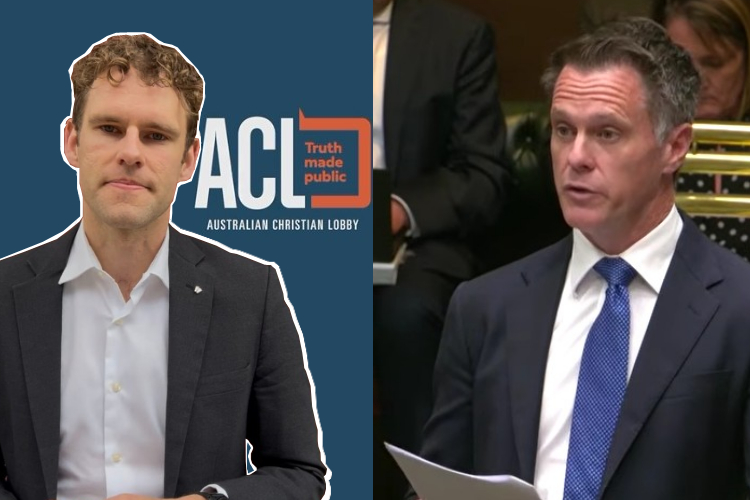
State director Joshua Rowe was instrumental in ACL’s submission, which opposed the Minns government’s further restrictions on speech under the guise of saving social cohesion.
In March 2025, the Premier went on record saying that his temporary hate speech laws were about fighting “racism.”
Minns labelled critics concerned about free speech “agitators” and accused them of wanting to hand “racists” a licence to vilify.
At the press conference, Minns then remarked, “I recognise we don’t have the same freedom of speech laws that they have in the United States.”
“The reason for that is we want to hold together a multicultural community and have people live in peace.”
NSW Government Rejects Key Expansion Proposals
Critics justifiably viewed Minns’ statements as threatening to hinder freedom of speech to ensure the survival of multiculturalism.
A year later, Minns denied the claims, stating he never said, “free speech was incompatible with a multicultural society.”
Fighting Labor’s lust for greater anti-free speech legislation, Libertarian MLC John Ruddick called the Premier to account.
He reminded Minns of the remarks, which included assertions that “hate speech legislation needed to go further.”
Thanks to pressure from groups like ACL and individual legislators such as Ruddick, those expansions were eventually rejected.
These came in the form of recommendations made by the 147-page independent report on hate crime laws produced by former NSW Supreme Court judge John Sackar.
Sackar recommended expanding the law to apply to more than just race.
Rejecting the idea was the right call, given the inevitable clash between policing hate speech laws and protecting the implied right to free speech and freedom of religion.
An August 2026 press release from the NSW Attorney General (AG) explained that the NSW government had, “after careful consideration,” decided not to move forward with the recommendations.
Labor’s position, the AG stated, “is that expanding the racial hatred offence to cover other attributes raises complex questions about freedom of expression.”
This includes concerns about “freedom of religion, and the consistent application of the criminal law across the community.”
They added that “criminal laws need to be clear, workable and capable of being applied consistently, regardless of who is involved.”
Why Religious Freedom and Free Speech Remain at Risk
While a win, the defeated anti-speech proposals weren’t a total victory.
The Government’s commitment to policing speech does not bode well for any future free-speech protections.
For instance, the AG said the Minns government “will continue to consider the remaining recommendations in the report and ways to keep the community safe from hatred alongside ongoing action.”
Part of this is building “a National Hate Crimes Database, which responds to the Sackar Review’s first recommendation.”
ACL’s 15-page submission opposed the recommended expansion and raised red flags about overreach.
“Excessive hate speech restrictions,” they petitioned, “have the potential to divide Australian society and produce frustration.”
“Especially where they are used to suppress the expression of different viewpoints or contributions to public debate.”
They then honed in on how NSW’s broad definition of hatred is not in line with the precise definitions found in international law.
“Existing criminal law provisions more than adequately protect against the incitement to hatred towards vulnerable groups in NSW.”
“The effect of such a broad misunderstanding of ‘hatred’ is likely to produce excessive self-censorship.”
In NSW, “hatred” reaches as low as “a feeling of hostility”, they said.
Why lower it further by ejecting objective meaning?
Illustrating the problem, ACL referred to religious exclusions in Section 93ZAA of the NSW law to show how lowering the threshold lessens the law’s effectiveness.
For example, the law “contains an exclusion for quoting from, or otherwise referencing, a religious text for the purpose of religious teaching or discussion.”
“The fact that this needs to be clarified, or excluded, is indicative that the offence applies to conduct at far too low a level of seriousness.”
“It is highly problematic,” ACL concluded, “if hate speech legislation is capable of limiting public discussion.”
“Yet, that is the unfortunate trend, as legislation prohibits speech at progressively lower thresholds.”
Hate speech laws that “incur liability for those who engage in important public discussions” are symptomatic of a major legislative design flaw.
Joshua Rowe: ‘We Need More Free Speech, Not Less’
ACL argued that “the balance between protecting vulnerable groups and protecting freedoms is essential.”
“To get this balance right, any new hate speech laws must be drafted to comply with ICCPR article 19.”
“Particularly 19(3), ‘necessity’ and ‘proportionality’, and only the most serious conduct should be criminalised.”
“‘Intent’ should be the determining factor, in line with international law, and not negligence or recklessness.”
“There is no need for further protection against hate speech under NSW laws,” ACL declared.
“However, the limited protection in Australian law for freedom of expression is a matter of continuing concern.”
Speaking with The Daily Declaration about ACL’s submission opposing the expansion of hate speech laws, NSW Director Joshua Rowe said,
“ACL were advocating against lowering the threshold for criminality in the hate speech laws. That threshold needs to remain high.”
Calling Section 93ZAA within NSW’s current hate crimes law a “bad provision,” he said, “the ultimate win would be removing Section 93ZAA completely.”
“A compromise would be ensuring it remains confined to race only.”
That’s the NSW Government decision we’re celebrating, Rowe noted.
ACL’s biggest concern, he told The Daily Declaration, “was a biblically illiterate government regulating religious texts and telling us what constitutes an appropriate scripture to teach.”
“For example, the exchange between Jesus and the Pharisees in John 8. Read outside of its context, the scripture has been easily abused.”
“Jesus wasn’t talking about Satan being the father of the Jews. He was telling the corrupt leadership of the day that their father was Satan, seen in their immoral and deceitful conduct.”
“Legal bureaucrats and politicians are terrible theologians,” he commented.
“Religious texts and discussions around their interpretation need to remain inside the realm of the marketplace of free ideas.”
Teachers, Rowe asserted, should remain “publicly accountable where people are free to call out those who abuse texts. Social responsibility is far more effective than bureaucratic overreach.”
“We need more free speech, not less, balanced with laws protecting against actual incitement to violence.”
Unpacking the win on Instagram, Rowe thanked the NSW government “for resisting calls to expand hate laws.”
He also welcomed the “acknowledgement of the need to protect fundamental freedoms.”
Everyone involved in helping stop the Minns government from expanding the erosion of free speech — under the guise of “saving social cohesion” — needs to be applauded.
4 Comments
Leave A Comment
Recent Articles:

24 October 2026
3.3 MINS
When we ask God, "What is in my hand?", and see our possessions, money and time as seed that God asks us to sow, life becomes simpler.
23 October 2026
6.8 MINS
Hillsong UNITED’s Joel Houston reflects on fame, faith and the burden of ministry, questioning performative Christianity as he seeks a more authentic walk with God.
23 October 2026
13.1 MINS
Tasmania’s proposed conversion practices legislation raises serious questions about religious freedom, pastoral care and whether Christians can freely pray with those seeking to live according to their faith.

23 October 2026
7.7 MINS
Melbourne Catholic Archbishop Peter Comensoli has spoken out clearly against the deadly promises by both major parties in Victoria ahead of the election, drawing a comparison between abortion and capital punishment.
23 October 2026
3.1 MINS
As Western societies grow more hostile, could abandoning Christianity’s moral foundations be contributing to the rise of ideological extremism, political intolerance and violence?

23 October 2026
5.1 MINS
France’s escalating riots expose the dangers of political extremism, antisemitism and radical alliances, offering America a stark warning about the future of Western democracy.
23 October 2026
3.1 MINS
The one who is worthy of it all is awakening his Church to be captivated by him, so that we will honour one another and share his gospel with humility and courage.



Great news. Congratulations to everyone who fought these battles!!!!
spot on Warwick Marsh
It seems we used to have to the right to speak up on many topics and we managed to protect freedom of speech in the 1960- 2010 era. In those days migrants and refugees were welcome to our shores and elsewhere. They came from England Greece, Italy, Yugoslavia, Lebanon, Timor, Thailand Vietnam and China.
In that era the aim was to integrate, learning English was compulsory and paid for by the Australian Govt. Teachers, social workers and volunteers welcomed immigrants and helped them settle in (The good Neighbour Council, churches, schools and many groups helped them assimilate.) . The migrants and refugees were so grateful and in turn sought work and established families and settled in to support Australia society, business and contributed to the community by sharing their cultural ways.
BUT gradually there was a great there was a great change of migration patterns and people came in who were from a more aggressive cultural background ideology. This in turn opened the gate to dissent and a lack of integration, a new sense of conflict and division while often draining the economy, causing street protests, car bombings, a fire in a Melbourne synagogue and anti- Semitism. There were also attacks on MP’s offices and the Prime Minister’s office was surrounded for almost 2 years and unusable (held to ransom)
It seems that as all this has occurred and certain groups have been favored by the Federal Govt and Immigration Dept that we have lost much of our freedom to speak up and to ask questions or to point out dangerous trends. It has been easier for the Govt to close down any debate and to forget the Constitution exists to protect our democracy and our value system and culture.
It is so good to hear again that ACL has supported MPs and the NSW public who are concerned about recent trends and who rightly feel tightening ‘Islamophobia’ laws and others laws will gag the NSW population.
Thank you ACL and all who have stood up for common sense, democratic right and the Christian Judeo ethics and values we have always needed in order to live at peace
ACL values and commitment have greatly contributed to this victory.
Thank you ACL!