


The Australian Nurses Who Never Came Home
Twenty-one Australian Army nurses who survived a sinking ship only to be murdered on an Indonesian beach will be remembered through prayer and music at Sydney Town Hall on 8 November.
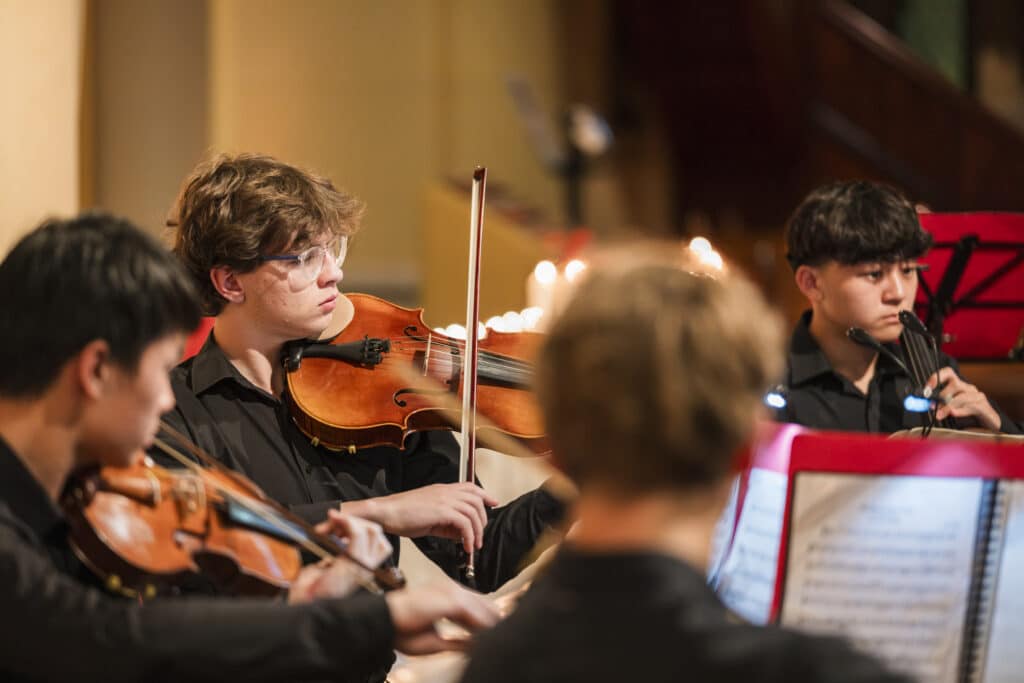
Catholic arts organisation Artes Christi will present Mozart’s Requiem – A Candlelit Tribute to Our Military Nurses, bringing together an 80-strong choir and orchestra ahead of Remembrance Day.
Presented in support of the Australian Remembrance Foundation, the commemoration will honour the nurses killed in the Bangka Island massacre, alongside military nurses across generations, including those serving today.
Organisers are seeking Defence approval for 21 serving military nurses, seven each from Navy, Army and Air Force, to lay 21 wreaths in memory of the women.
A representative of Vivian Bullwinkel’s family is also being invited to participate.
Remembering the Nurses of Bangka Island
On 16 February 1942, Japanese soldiers ordered 22 Australian Army nurses into the sea at Radji Beach on Bangka Island and opened fire. Twenty-one nurses were killed. Bullwinkel, wounded in the shooting, was the only nurse to survive.
The women had fled Singapore aboard the SS Vyner Brooke as Japanese forces advanced.
When Japanese aircraft sank the ship on 14 February, survivors struggled ashore, with some reaching Radji Beach. After surviving the massacre, Bullwinkel hid before being captured and spent the remainder of the war as a prisoner.
Following her return to Australia, she testified at a war crimes tribunal and devoted herself to nursing and preserving the memory of her murdered colleagues.
Finding Hope Through Music in Captivity
Other Australian nurses who survived the sinking endured years of captivity in Japanese camps. Music became one source of consolation for women imprisoned in Sumatra.
Fellow internees Margaret Dryburgh and Norah Chambers established a women’s vocal orchestra, reconstructing classical music from memory and arranging instrumental parts for unaccompanied voices.
Their repertoire included the Largo from Dvořák’s New World Symphony. Amid hunger, illness and confinement, the performances offered prisoners an opportunity to make music together and recall life beyond the camps.
A Candlelit Requiem for the Fallen
The Sydney commemoration will likewise place music at the centre of remembrance, with Mozart’s setting of the Catholic Mass for the Dead performed by candlelight.
The work has particular significance during November, when Catholics traditionally pray for the faithful departed.
For Catholic audiences, the evening will offer an opportunity to unite remembrance of those who died in service with prayer for the repose of their souls.
The Australian Remembrance Foundation, whose patron is former Governor-General General Sir Peter Cosgrove, also presents the annual Anzac Eve Tribute at the Sydney Opera House Forecourt.
Through music, ceremony and personal stories, it seeks to encourage participation in remembrance. The Town Hall performance begins at 5 p.m. on Sunday, 8 November, three days before Remembrance Day.
Tickets start at $40 via Trybooking.
___
Republished with thanks to The Catholic Weekly. Image courtesy of Artes Christi.
2 Comments
Leave A Comment
Recent Articles:

17 November 2026
2.9 MINS
Australian singer-songwriter Jonathan Bone is breaking new ground with a bold pro-life anthem, created alongside his teenage son, celebrating the dignity and value of unborn life.
17 November 2026
2 MINS
Australia’s AUKUS submarine deal faces another bizarre objection, with senior Navy officials warning that American military policies could exclude transgender and non-binary Australian personnel.

17 November 2026
4.6 MINS
As occult practices gain popularity, are churches equipped to confront spiritual darkness? Dr Barry Manuel urges Christians to recognise spiritual warfare and prepare for deliverance ministry.
17 November 2026
1.6 MINS
NSW Labor has devoted 31 pages of legislation to removing the pronouns "he" and "she" from state laws, raising fresh questions about its priorities and understanding of biological sex.

17 November 2026
3 MINS
Rising costs, business closures and rapid technological change are putting Australians under growing pressure. But smarter government, stronger communities and renewed purpose can help turn things around.
16 November 2026
3.6 MINS
Victorian police twice detained Rebel News reporter Avi Yemini while he covered a student anti-One Nation rally, raising serious questions about press freedom and policing.

16 November 2026
1.6 MINS
New ABS modelling has dramatically changed Australia's excess death figures, raising questions about the revised methodology, pandemic-era deaths and whether Australians are getting the full picture.



Thank you for this precious article about the 21 Australian Military nurses who never came home. It is one of the greatest tragedies in Australian history. It remains essential to remember these noble nurses who went to the front line to minister to our soldiers in WW2. The lead nurse told them ‘Chin up girls’ as they were commanded by the Japanese soldiers to walk out into sea – and then unbelievably were gunned down rather than taken prisoner. Only Sister Bullwinkle survived due to her height she was shot at but the wound was not critical and she escaped -a miracle of grace (as decribed above)
I came across this story when looking at war history books in the library during the ANZAC day week and found a number on the subject.
These two books below are incredibly sad to read but the heroic nature of the nurses was evident.
1. ‘Back to Bangka: Searching for the truth about a wartime massacre’ by Georgina Banks (A family-focused narrative tracking the fate of Australian Army nurse Dorothy “Bud” Elmes and uncovering the history of the wartime tragedy)
2. ‘Sisters in Captivity ‘by Colin Burgess (Focuses on Sister Betty Jeffrey OAM and the courageous stories of Australian Army nurses in Sumatra following the events of 1942–1945″
(Google has given this brief description of each)
Lest we forget
PS For anyone intersted.Re the above list of books. I ommitted to add this title : ‘Sisters under Fire’ by Colin Burgess. ‘Sisters under Fire’ re tells this horrifically sad story of the 21 courageous Australian nursing sisters who escaped ship wreeck only to be shot down after capture
The book is described here in some detail
“…. Nursing Sisters Margaret Anderson and Vera Torney of the 2/13th Australian General Hospital felt far from heroic as they evacuated Singapore on the converted cargo ship Empire Star in 1942. After Japanese occupation, every nurse without exception had requested to stay and tend to their wounded patients, but instead were ordered to evacuate as part of a hastily contrived and ultimately perilous escape plan.
The nurses were split among three ships: Wah Sui, Empire Star and the ill-fated Vyner Brooke. On the Empire Star, the courageous and selfless actions of Sisters Anderson and Torney while under fire would deservedly earn them the highest civilian awards for bravery. On the Vyner Brooke, 21 Australian nurses survived the ship sinking only to be shot down in cold blood on Banka Island. Against the odds, there was a solitary survivor of that massacre: Sister Vivian Bullwinkel.”(Google)