



Why is There a Cult of Youth in the Modern West?
The Western world is in the grip of the cult of youth.
Being young is in, and being old is, well, so old. Youth is the gold standard of beauty, of health, and increasingly, of wisdom. Of course, we should celebrate children and youth (just like we do any other age group). They’re a wonderful blessing to families, churches, and society.
But something has shifted in the Western mindset in how we view children and youth.
In earlier times, and in other cultures, being old was a status symbol. Age was seen to bring wisdom and honour. We used to esteem our elders.
Now we say, ‘OK Boomer’.
How did this come about? Author Carl Trueman explores this in his latest book, The Rise and Fall of the Modern Self (Wheaton, Illinois: Crossway, 2020). He writes:
We have in recent years been treated to children and teenagers lecturing the older generation on everything from healthcare to the environment to matters such as Brexit and Donald Trump.
~ Trueman, p. 127.
It’s Important to Hear Children’s Voices (Especially on Issues that Affect Them)
Before we go any further, we need to acknowledge the importance of caring for children, in part by hearing what they’ve got to say about issues that affect them. God listens to the cry of the fatherless in their distress (Exodus 22:21-24). Jesus affirms the value and agency of children when He encourages them to come to Him (Matt 19:14).
And sometimes adults need to give children a voice they might not have otherwise (e.g. when it comes to issues like their right to their mother and father).
Children should not merely be seen, but also heard.
In today’s West, however, we’re doing more than merely listening to children.
Should We Look to Children For Wisdom?
When Greta Thunberg addressed the UN’s Climate Action Summit in 2019, she expressed her concern about Climate Change.
But she was doing more than this: she also told the adults in the room what they should be doing. In her own words, the adults had ‘come to us young people for hope’.
Whatever your views of Climate Change and Greta Thunberg, let’s not miss this vital point: the adults were looking to her — a child — for wisdom.
That’s new. And it’s remarkable.
Sure, some children can be wise beyond their years – and even show a maturity that puts adults to shame (many put Thunberg in that category). But western society never made it a habit to look to children for wisdom. At least, not until now.
As Trueman points out:
Opining on each of these topics in any useful way actually requires some level of experience and knowledge of the kind that only comes when significant time has been spent studying the subjects at hand and observing how the world works. But that has not stopped serious newspapers and pundits taking the voice of youth seriously.
~ Trueman, p. 127.
So how did the Western world get to this point?
In part, through the ideas of a relatively obscure Frenchman.
The Forgotten Source of the Cult of Youth: Jean Jacques Rousseau
Jean Jacques Rousseau was a French philosopher in the 18th century.
He developed an idea that has powerfully shaped the imagination and thinking of Westerners (even if we’ve never heard of him): the (hypothetical) ‘state of nature’. His idea is simple and profound: human beings can be their authentic selves only in the hypothetical state of nature, where they don’t have to conform to external expectations. They can be who they really are.
As Trueman explains:
[According to Rousseau] the need to belong and to conform requires individuals to be false to who they really are. Society creates the rules by which the individual must play in order to be accepted, and those rules are contrary to the simple economy of easily met innate desires created by basic physical needs found in the state of nature.
~ Trueman, p. 127.
In this view, society can be and often is a corrupting influence. People are innately good: it’s their surroundings that make them go bad. Change their surroundings, and people will behave well.
Sound familiar?
Rousseau’s thinking is one reason why the West is in the grip of the cult of childhood and youth, as Trueman goes onto explain.
The Cult of Childhood and Youth
The idea of the innate innocence of the hypothetical state of nature presses toward a cult of childhood and youth. Whereas in a society based on, say, Confucian ideals, age is to be respected because age brings with it wisdom, the Western world of today generally credits youth with wisdom and sees old age as corrupt, myopic, or behind the times.
~ Trueman, p. 127.
And we see this today, don’t we?
When it comes to issues like the Climate Change conversation, society values young people’s contribution to the debate. (See for example the Schools Strikes 4 Climate.) But rather than leaving this issue exclusively to adults to sort out — as we would with other major policy issues — we’re increasingly looking to children to guide us and give us wisdom.
Understanding Maturity and Wisdom
While the biblical doctrine of sin prevents us from unthinkingly coupling age with wisdom (after all, sin still affects adults), the Bible also affirms that people generally mature over time. As Paul declares to the Corinthian Church:
When I was a child, I talked like a child, I thought like a child, I reasoned like a child. When I became a man, I put the ways of childhood behind me.
~ 1 Cor 13:11
Again, children can possess wisdom beyond their years. And many adults behave foolishly. But for a society to look to children for wisdom simply because they’re children is a society that’s slowly losing its way.
In part, because of the ideas of a relatively unknown but highly influential 17th century Frenchman.
___
Originally published at AkosBalogh.com
Photo by Callum Shaw on Unsplash.
Recent Articles:
23 October 2026
13.1 MINS
Tasmania’s proposed conversion practices legislation raises serious questions about religious freedom, pastoral care and whether Christians can freely pray with those seeking to live according to their faith.

22 October 2026
4.7 MINS
Western Australia’s proposed anti-discrimination overhaul has sparked warnings from Christian leaders that religious freedom, parental choice and faith-based schools’ ability to uphold their beliefs are at risk.

19 October 2026
3.3 MINS
Discover why dads make a unique difference in their children’s lives, and how the Dads4Kids Fun Camp creates lasting memories through adventure, connection and fun.

16 October 2026
4 MINS
A desperate Victorian Labor Party is peddling taxpayer-funded abortions as free “healthcare”. In a shameless attempt to stay in power, they're willing to do anything — including killing the unborn and forcing taxpayers to pay for it.
16 October 2026
3.4 MINS
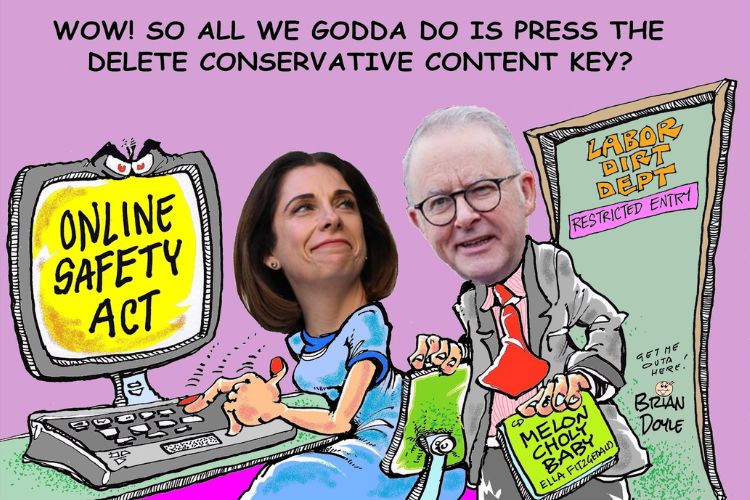
Australia’s proposed digital duty of care laws promise greater online safety and increased user control by switching off algorithms, but critics warn they could give ministers sweeping powers to restrict lawful content and threaten free speech.

15 October 2026
6.1 MINS
Historian Frank Furedi warns that the West is waging a war against its own past, censoring books, rewriting history and severing future generations from their heritage.

14 October 2026
6.7 MINS
A national poll challenges claims that pro-life Australians are extremists, revealing broad support for abortion restrictions, protections for unborn babies and safeguards for vulnerable women.


