



Labor’s Algorithm Laws Sound Good on Paper – Until You Read the Fine Print
Australia’s proposed digital duty of care laws promise greater online safety, but critics warn they could give ministers sweeping powers to restrict lawful content and threaten free speech.
Since Prime Minister Anthony Albanese’s under-16s social media ban went viral worldwide, his Government has proposed legislation to take it a step further — to allow users to “switch off the algorithm”.
On the surface, it’s a noble idea. “This is not about giving government control, it is about giving people control,” Albanese said of his new “My Feed, My Way” initiative under “digital duty of care” draft laws released on 8 September for consultation.
Platforms will be required to send users a notification that offers them a choice to opt in or opt out of seeing personalised, algorithmically driven content on their default feed. If users opt out, their feed will look much like it did before 2016 – they will see posts only from profiles and pages that they follow in reverse chronological order.
The proposed bill to amend the Online Safety Act 2021 will also require online service providers – including social media, online gaming and AI chatbots — to protect under-18s from harmful content promoting eating disorders, “hostile” ideas on women and gender equality, pornography, glorification of crime, abuse and bullying, and other material considered to be harmful. Platforms that don’t comply will face a fine of up to $109 million.
Broad Powers to Define and Restrict Harmful Content
Albanese continues to tout Australia’s pioneer status in online safety, but beneath the attractive language of “giving people choice” lies a catch. The broader proposed laws will give discretionary powers to the Minister for Communications and the eSafety Commissioner to control what content Australians can see online.
The eSafety Commissioner will have the power to enforce the digital duty of care and specify compliance requirements for platforms, and the Minister needs only to be “satisfied” that certain content may cause “serious harm”. The Minister can expand the categories of “material or conduct harmful to children” and “seriously harmful material and conduct” (which applies to all users).
There is no doubt that there is seriously harmful online content that children – and all users – should be shielded from. But the scope of content that constitutes “harm” is not clearly defined because the Minister is able to determine foreseeable harms and add to the list over time. For example, do “hostile attitudes towards women or gender equality” include traditional views on sex, gender and family that are based on religious belief?
The Coalition opposes the exposure draft in its current form, claiming it threatens free speech and gives “unfettered powers” to the Minister. Opposition Leader Angus Taylor said the draft hands Labor “a blank cheque for political censorship”.
Opposition shadow communications minister Sarah Henderson said while there are serious harms that Australians should be protected from, any known harm should be specific and “a matter for the Parliament, not a matter for the Minister”.
Recent Articles:

16 October 2026
4 MINS
Katie Zacharia’s first days as White House Press Secretary have sparked fierce media criticism, but her remarkable testimony of surviving an abortion attempt tells a deeper story.
A Million Women Movement Marks Second Anniversary: “Look What the Lord Has Done! Ishtar Has Fallen!”
16 October 2026
2.8 MINS
Two years after A Million Women gathered in Washington for ten hours of prayer and fasting, organisers point to victories they believe reflect God’s answers to intercession.

16 October 2026
2.6 MINS
Euthanasia accounted for 4% of all deaths in Belgium in 2025, with growing numbers involving people who were not terminally ill, dementia patients and psychiatric conditions.

16 October 2026
5.2 MINS
Christa Pike’s botched execution has sparked outrage across America, but critics argue that the same concern for human dignity is denied to abortion survivors.
16 October 2026
3.3 MINS
Jesus is calling us to love one another “just as I have loved you”. And if the Church does awaken to that agape (love), the world will see a great and powerful witness to Christ and his kingdom.
15 October 2026
3.6 MINS
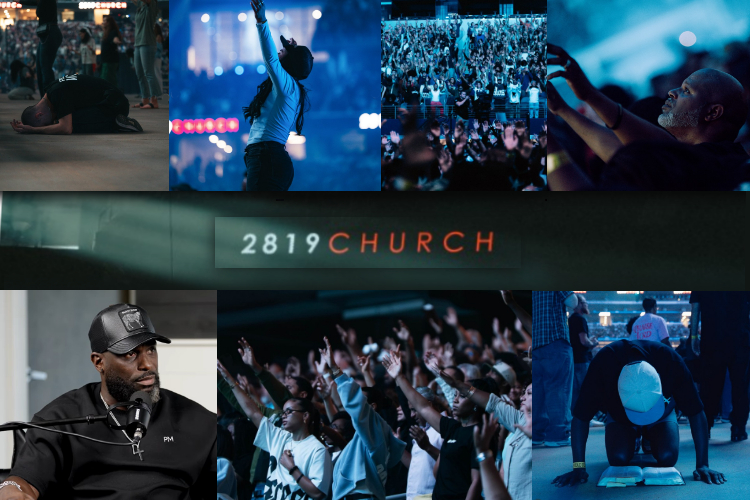
An 80,000-strong gathering in Texas signals a hunger for revival, as Pastor Philip Anthony Mitchell warns that Christian indifference could leave future generations without the faith.

15 October 2026
4.2 MINS
Many Australian Christians don’t know a single Aboriginal person. Robyn Murray argues that reconciliation begins with honest history, prayer and a shared life in Christ.


