


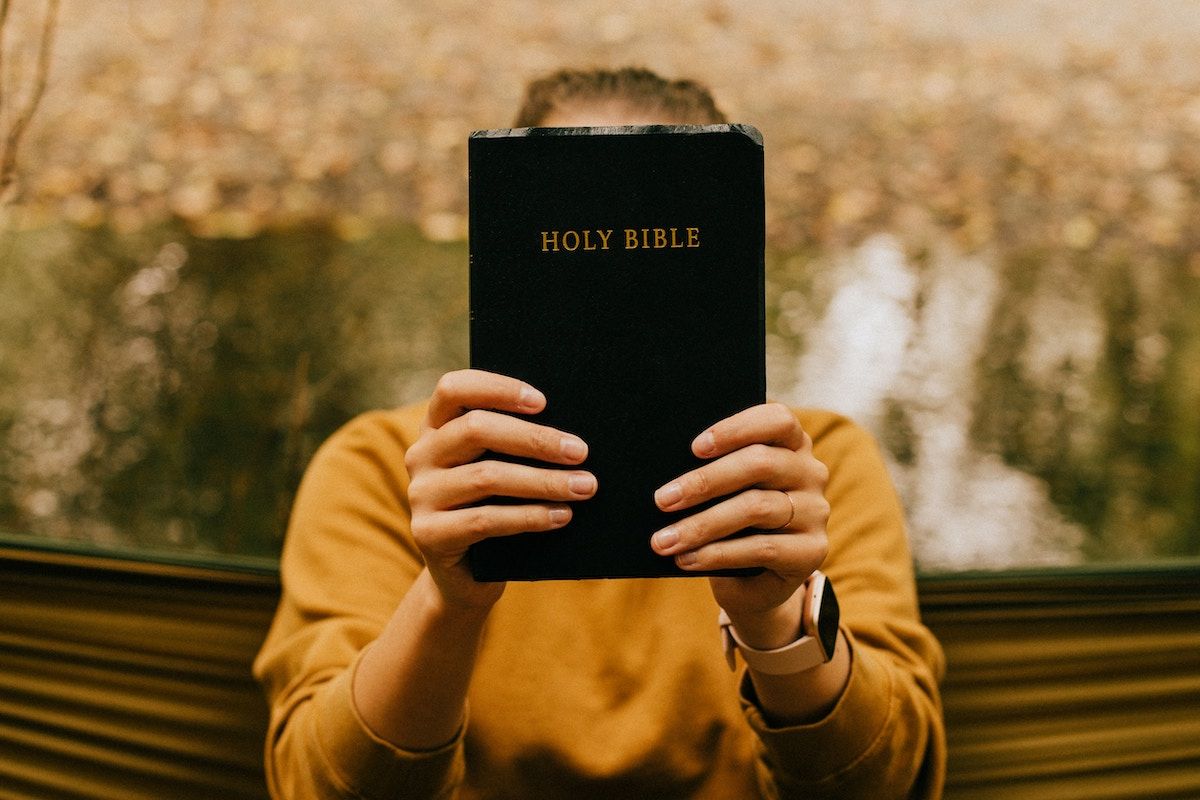
Solving Our Truth Crisis with Sola Scriptura
We live in confusing and confused times. So did the Reformers. Their discovery of Sola Scriptura is the solution we need today.
Our culture has a truth crisis. People are scratching their heads, wondering who they can trust to tell them the truth, or whether it’s even possible to know truth.
Fake news is killing our confidence in the truth. So much of what is communicated today isn’t about being truthful, but upholding a narrative or creating clickbait or appeasing the powerful.
There has to be a better way. And there is a better way: the way of the Reformers.
Reformers like Martin Luther faced their own truth crisis. In 16th century Europe, the established church was teaching as “truth” man-made ideas that were simply untrue.
It took a lot of courage but the Reformers ultimately took a stand against a thousand-year-old institution to once again declare God’s truth. Luther shook the world when he said:
A simple layman armed with Scripture is to be believed above a pope or a council without it… Neither the church nor the pope can establish articles of faith. These must come from Scripture. For the sake of Scripture we should reject pope and councils.
Their discovery (or better, their rediscovery) of Sola Scriptura — Scripture alone — changed the world forever. It democratised knowledge, elevated rational thought, inspired universal education, led to the discovery of individual rights, and paved the way for pluralism, tolerance and many of the freedoms we enjoy today.
What did the Reformers rediscover about Scripture? How can their insights help us navigate our own truth crisis today?
Let us consider five aspects of Sola Scriptura.
1. The Inspiration of Scripture
The first aspect of Sola Scriptura is that the Bible is inspired. 2 Timothy 3:16-17 couldn’t say it more clearly: “All Scripture is inspired by God and is profitable for teaching, for reproof, for correction, and for training in righteousness, that the man of God may be complete, equipped for every good work.”
When we use the word “inspired” here, we don’t mean inspiring, like it gives us nice feelings when we read it. Many times it will do that too, but even if your Bible is sitting on your shelf collecting dust, Scripture is still inspired.
The Greek word for “inspired” in 2 Timothy 3 literally means “God-breathed”. As some theologians have put it, men pushed the pen, but God pushed the men.
2 Peter 1:20 tells us that when the Bible’s authors wrote Scripture, it was never merely from their own understanding or initiative, but they “spoke from God as they were moved by the Holy Spirit”. The Bible is God’s own thoughts, expressed to us in writing.
Each of the human authors of the Bible had their own personalities that come through in their writings. Luke had a heart of compassion for the poor; Jeremiah was a melancholic character; Paul sometimes wrote excessively long sentences!
Even so, God still spoke through them the precise words he wanted to. Think of a stained-glass window. Light shining through stained glass doesn’t corrupt the light; it makes the light beautiful. So it is with Scripture. God used human personalities, and he inspired every word.
2. The Inerrancy of Scripture
The second aspect of Sola Scriptura is that the Bible is inerrant. The Bible’s original manuscripts are without error or contradiction in everything they address.
Inerrancy follows logically from the first point: if God authored the Bible, of course he would make sure there were no mistakes in it.
Modern people can be quick to dismiss inerrancy, and often for very superficial reasons. Let me illustrate.
If I said the sunset was so beautiful last night that the whole city came out to watch it until the sun went down, you probably wouldn’t challenge my statement.
But actually, I’ve made two errors — one scientific, and one factual. First, I said the sun goes down, but we know the sun actually stays where it is and it’s the earth that rotates. Second, it’s almost certain that the whole city did not come out to watch it.
Do you get my point? I have demanded of myself standards that aren’t fair. People often unfairly criticise the Bible in the same way.
The Bible is entirely truthful. It never lies and it never gets things wrong. But it doesn’t always use the precision that people might unfairly demand of it. Did Jesus feed exactly 5,000 people? Did literally all of Judea come out to hear John the Baptist preach? Maybe not, but that’s not the point.
The Bible wasn’t written for nit-pickers, but for truth-seekers and hungry hearts.
We need to come to God’s Word with humility. If we see things that seem like mistakes or contradictions, our first reaction should not be that there is something wrong with the Bible, but that maybe there is something incomplete in my own understanding.
3. The Perspicuity of Scripture
The third aspect of Sola Scriptura is that the Bible is perspicuous, or clear.
The Reformers were especially passionate about this point: we don’t need popes or cardinals to tell us what the Bible means. You don’t need me to tell you what the Bible means. God has made sure that his Word is written in such a way that anyone who seeks the Holy Spirit’s help to understand it will be able to.
Scripture is clear enough that everyday, ordinary believers can understand its message of salvation and its moral guidance. Special theological training or expertise are not essential to hear God speak through his Word. Indeed, why would God bother giving us a book if its contents were a mystery?
Certainly, some passages are complex and require careful study. We can always benefit from pastors, commentaries and the insights of people more experienced than us. But God’s Word is clear, and there is nothing to stop us from understanding it ourselves.
4. The Sufficiency of Scripture
The fourth aspect of Sola Scriptura is that the Bible is sufficient.
This brings us back again to 2 Timothy 3: “All Scripture is inspired by God and is profitable for teaching, for reproof, for correction, and for training in righteousness, that the man of God may be complete, thoroughly equipped for every good work.”
When we say that the Bible is all we need, we are not claiming it is all we need for building suspension bridges or finding a cure for AIDS or piecing together the events of World War 1. We mean it contains everything we need for life and faith and knowing God.
5. The Authority of Scripture
The fifth and final aspect of Sola Scriptura is the authority of Scripture. It is the standard by which God calls us to live our lives — so we should believe it and to obey it.
Of course, God also speaks in other ways. He speaks to us through creation, through church traditions and creeds and councils, through reason, through the sciences, through prophecy and revelation, through our experiences, and through other believers.
But each of these can get it wrong. Creation’s message isn’t always clear. Church traditions and creeds can be culturally skewed. Our reason can fail us. Science can be biased and driven by agendas. Prophecy and revelation can miss the mark. Our experiences can fool us and other believers can give us bad advice.
“But the word of the Lord remains forever.” (1 Peter 1:25a). “Scripture cannot be broken.” (John 10:35a). “Until heaven and earth disappear, not the smallest letter, not the least stroke of a pen, will by any means disappear until everything is accomplished.” (Matthew 5:18).
There are other sources of wisdom and knowledge, but Scripture is our first and last authority. All other claims are governed and should be tested by Scripture. If they contradict what God has already said in His Word, we hold fast to the Bible and let go of all else.
God is There and He is Not Silent
What the Reformers rediscovered changed the world — and it is powerful enough to change our world again.
God is there, and he is not silent. We don’t need to speculate. We don’t need to scratch our heads and wonder who we can trust, or whether truth even exists.
Truth does exist. He has spoken. His name is Jesus, and his Word is the sure foundation upon which we can build our lives.
Image via Unsplash.
One Comment
Leave A Comment
Recent Articles:

4 October 2026
3.5 MINS
As children of the day, let us live freely out of our identity and awaken those around us from spiritual sleep. We carry more than faith for a great awakening — we are the awakeners.

3 October 2026
3.7 MINS
The Church is called to be counter-cultural not to be merely contrarian, but because we love God and people. In this world, that will mean going against culture that is contrary to God.

2 October 2026
3.4 MINS
New research highlights the strong links between active Christian faith, marital happiness, sexual satisfaction, family stability and the formation of future generations.

2 October 2026
3.3 MINS
The Lord wants us to pray from a place of faith and resting in him. We can't awaken the Church, but he can — and he wants to do just that.

1 October 2026
3.1 MINS
Christian schools in Western Australia can currently hire staff who share their faith. Under reforms flagged by the Cook Government, they may lose that protection wherever faith is not deemed an “inherent requirement” of the role.
1 October 2026
3.9 MINS
Billy Corgan and Michael Sweet discuss faith, fear and integrity as two rock frontmen explain why they refuse to hide their belief in Jesus.

1 October 2026
6.2 MINS
Britain’s mounting security failures, immigration pressures and restrictions on public expression raise profound questions about political leadership, national sovereignty and the spiritual state of the West.



Thank you again for clear, concise, thinking and disclosure. I especially liked this quote – The Bible wasn’t written for nit-pickers, but for truth-seekers and hungry hearts.