


Police Management on Drug Crime: The Art of Accountability
Spider-Man once said that with great power comes great responsibility. When it comes to law enforcement, senior police managers carry the authority and weight of both.
During my near 30 years’ service in the Western Australia Police Force, I regularly witnessed senior police management deftly avoid scrutiny and accountability whenever crime results were bad, or strategies failed – and that was often. It was rare to see any acceptance or acknowledgment that they were somehow getting things wrong.
On balance, sometimes side-tracking away from bad results is unavoidable. Senior police management have a primary responsibility to maintain community confidence in public safety; so, without making excuses for them, publicly owning up to problems and failures can inadvertently undermine that.
Probably the most common senior police response to bad results is to say nothing at all and leave it up to a police minister to discombobulate an incurious, blinkered media.
Wastewater Testing
In 2024, the National Wastewater Drug Monitoring Program results showed that meth (methamphetamine) use in Western Australia had increased by 40 per cent and cocaine consumption had tripled since testing began in 2016. At the time, the then WA Police Minister reportedly claimed that his government was winning the war on drugs – go figure.
Another less-used and cruder deflection is the practice of loudly and publicly defending frontline police when they are not the ones being blamed or at fault. Senior police bat away criticism for rising crime rates by defending frontline police officers, when rising crime figures are beyond the control of frontline police. Frontline police do an amazingly consistent job – it is senior police strategies that let them and the community down. This shrewd and calculated deflection catches a comatose media asleep at the keyboards every time.
Senior police become invisible when the news is bad, and even if the media is awake, important questions never get asked or answered. Conversely, whenever there is good news, senior police are front and centre in the media, bathing in the glory achieved through a solved murder or a big drug bust.
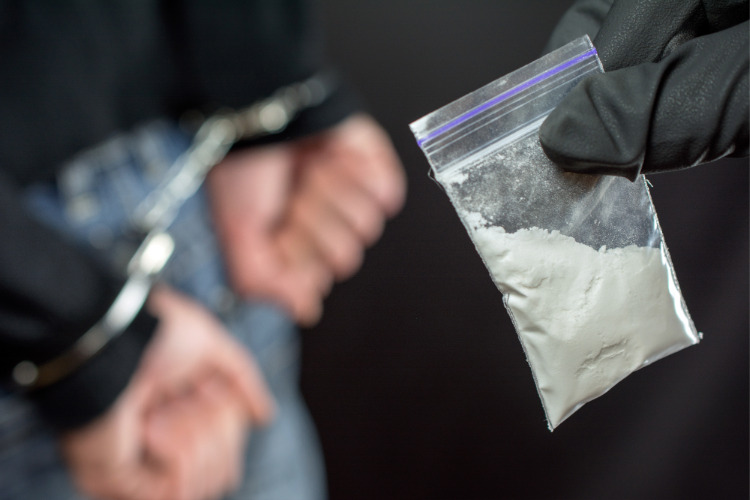
When large drug seizures are made, along with cash, assets and arrests, for senior police, it is “lights, camera, action” amid unsubstantiated claims of putting a “major dent” in drug supply chains. The truth of the matter is that large drug intercepts have zero impact on supply and consumption, and wastewater testing reinforces that.
The Australian Criminal Intelligence Commission’s (ACIC) latest wastewater report reveals that 22.2 tonnes of methamphetamine, cocaine, heroin and MDMA were consumed nationally from August 2023 to August 2024.
This is a 34 per cent increase from the previous year, driven by increases in consumption of methamphetamine (21 per cent), cocaine (69 per cent), MDMA (49 per cent) and heroin (14 per cent). The 2.2 tonne increase in annual methamphetamine consumption is the highest level ever recorded by the Wastewater Testing Program.
The ever-growing drug market in Australia is irrefutable evidence that organised criminals know a profitable marketplace when they see one. And they continue to target that market with a vigour, ingenuity and a quantum of product that make intermittent police seizures and claims of success sound very shrill indeed.
Reality Check
Failed police management strategies in the drug war are notable for their longevity, as is their inability to admit failure. According to the Australian Institute of Health and Welfare, in 2013-14, Australia had one of the highest documented rates of methamphetamine use in the world. But you would never know it by reading police annual reports.
Commentary in annual police reports by some Australian police commissioners read as a confection of effusive, self-congratulating speeches and bear little resemblance to reality when it comes to illicit drugs – in fact, illicit drugs barely rate a mention, despite costing the Australian community $16.5 billion annually.
There is a telling statistic contained in Statistical Report 50, “Estimating the Costs of Serious and Organised Crime in Australia, 2022–23”, released by the Australian Institute of Criminology. Between 2016-17 and 2022-23, there was a 40.9 per cent decrease in the rate of recorded illicit drug offences yet, over the same period, total consumption of four illicit drugs – methamphetamine, cocaine, MDMA and heroin – increased by 22.4 per cent.
So, there is almost a quarter more consumption going on while drug reports decreased by almost half. What are we to make of that?
What people don’t know – and what senior police won’t tell you – is that a decrease in recorded drug offences correlates directly with reduced police productivity. It does not correlate with reduced drug crime, as police bosses would have you believe. Put simply, law enforcement is not keeping up.
Taking a glance across the nation’s state police annual reports. In his 1,400-word 2023-24 annual report introduction, South Australian Police Commissioner Grant Stevens makes no specific mention of illicit drug crime at all, while indulging in a host of self-endorsing platitudes. Under its section “Performance at a glance”, the SA annual report shows meth seizures had reduced from 222 kilos in 2018-19 to 40 kilos in 2023-24.
In her 900-word 2023-24 annual report introduction, New South Wales Police (now former) Commissioner Karen Webb makes no specific mention of illicit drug crime at all, while also indulging in an assortment of self-endorsing platitudes. Similarly, in his 486-word 2023-24 annual report introduction, Victoria Police (also now former) Chief Commissioner Shane Patton makes no specific mention of illicit drug crime or meth.
With the advent of wastewater testing by ACIC in 2016, the first wastewater report showed that Western Australia had the highest meth consumption in the country, with both city and regional sites far exceeding national averages. This caused a stir at the time; the community outrage was palpable.
In the lead-up to the 2017 WA state election, the police annual report mentions meth on 34 occasions. There was no place to hide back then and, after a decade of steady increases in meth addiction, crime and mental-health problems, meth had reached a zenith and widespread community concern demanded it become an election issue. Labor stepped in with its meth action plan and was swept to power.
Fast-forward to the WA police annual report for both 2023 and 2024, and meth is mentioned a total of zero times for both those years. Rest assured that the widespread proliferation of meth in Western Australia was most definitely not a 2025 election issue and once again Labor was swept to power.
It seems senior police obfuscation, or complete silence, has its political rewards for political masters.
That meth wasn’t a 2025 election issue should be considered in the context of the latest ACIC wastewater report, which states that in regional WA, consumption of methamphetamine is at an all-time high, while in Perth it is at levels not seen since 2016.
Recently, WA Police management made a great public fuss over a 40-kilo meth seizure, along with a nice Ferrari, $800,000 in cash and three firearms. This is undoubtedly the result of great police work of a type that needs to continue; but how does law enforcement measure its value or impact? The answer is, it doesn’t.
While this result looks and sounds good on television, will it really make a dent? Or is it just more evidence that Australia is a very lucrative and expanding market for international drug networks?
Sleight of Hand
WA Police Commissioner Col Blanch reportedly said that the amount of drugs seized in Australia exceeded the consumption of the drug itself. That may be, but it certainly doesn’t stack up in Western Australia, where meth consumption, intermittently the highest in Australia, annually outstrips seizures by at least five to one.
The minimal police reporting of drug crime to be found in annual reports is a sleight-of-hand presentation where reduced offence numbers are promoted as a drop in drug crime, when the actual meaning is a drop in police productivity. Between 2016 and 2024, Queensland drug offences fell from 90,000 to 70,000 recorded offences. This is in the context of cocaine use tripling from 2022 to 2023.
Measuring performance and analysing results is key to learning what works, and fine-tuning strategies to improve performance. Unfortunately finding genuine, meaningful police reporting about drug crime is like trying to find an intravenous needle in a haystack – which is euphemistically oxymoronic, since used drug needles are readily found in the streets, parks and public toilets around Australia.
On its website, the Australian Federal Police tell us that illicit drug crime costs Australia $16.5 billion a year. On average, over 50 people are admitted to Australian hospitals daily from methamphetamine, opioid (such as heroin) or cocaine use alone. And every week, on average, 16 Australians die from heroin, amphetamine or cocaine overdose.
It is difficult to comprehend how senior police management in this country can knowingly keep their failures a secret or have no apparent desire to report properly to their respective parliaments when illicit drugs cause so much harm in communities.
So, ultimately, what is more important: keeping quiet about the failure to address drug crime and maintaining a perception that all is well? Or drilling down into what works and what doesn’t, and coming up with some better solutions?
As I mentioned at the outset, I am a former long-serving detective, and I know better strategies are within reach, what they are, and why they are. But until police management comes clean and honestly exposes itself to proper scrutiny, the illicit drug problems are destined to get worse.
Republished thanks to News Weekly. Image courtesy of Adobe.
3 Comments
Leave A Comment
Recent Articles:

11 October 2026
2.6 MINS
Jesus offers us intimate friendship, which produces great joy as we walk closely with him.

10 October 2026
4.1 MINS
When Jesus rebuked the Laodicean church, this was not a sign of his lack of love, but proof of it and how greatly he longs to reward and bless us. He is knocking — will we answer?
9 October 2026
5 MINS
During a recent dialogue between high profile legal experts, a top Australian constitutional law expert was asked if Australia should have a Bill of Rights. His answer may surprise you.

9 October 2026
1.3 MINS
Season 6 of The Chosen is releasing next month, and until 15 November, your church has the opportunity to host a free pre-release screening of Episode 1. Here's how.

9 October 2026
1.8 MINS
Pen Power Australia has been busy confronting antisemitism and double standards, lodging letters, pursuing accountability and celebrating several important wins along the way.

9 October 2026
3.3 MINS
New South Wales healthcare workers who object to abortion and voluntary assisted dying face growing pressure, raising serious questions about conscience rights, employment and moral injury.

9 October 2026
2.9 MINS
God is intensely relational, and he puts us into a community of believers so we can use our gifts in service of Christ's body.



To say that this article is eye opening is an understatement!
Thanks for this exposure Kevin.
Praying that police management comes clean and honestly exposes itself to proper scrutiny, so that the illicit drug problems won’t get worse.
We are constantly lied to by people in authority. Our governments and police need to come up with policies and strategies that work.