


The ‘Christian Nationalism’ Label is Mostly a Scare Tactic to Keep Christians Out of Politics
Accusations of “Christian nationalism” often mask a double standard — where progressive ideas are welcomed in politics, but Christian voices are exiled.
Labels like “theocracy” and “Christian nationalism” are thrown about a lot these days. But they are mostly scare tactics.
Yes, there are some Christians who truly do want to set up a Christian nationalist theocracy — a merger between church and state in which Christian belief is mandated, and blasphemy is punished; a Christian version of sharia law, if you will.
But that crowd is so small and so fringe that it will simply never happen.
It should go without saying that I’ve never advocated for such a proposal and never will.
What I’ve strongly argued for is Christians using their political voice to influence Australia for Christ. That’s not “Christian nationalism” — it’s democracy. It’s the same freedom every other Australian is afforded to shape our nation’s character and identity.
But here’s the trick: Christians having any influence on Australia’s political life is also dubbed “Christian nationalism” by the people who oppose us and want to shut us up. To radical secularists, any semblance of Christianity in the public square is automatically a threat, and must be denounced with smears and name-calling.
This is a very manipulative game — and it’s one we Christians have to stop falling for.
Here’s what the secularists are really saying: “My secular-progressive values are allowed in the public square, but your Christian values are not.”
It’s two different sets of rules depending on your political or religious viewpoint. How is that fair?
It’s designed to be unfair, and yet, for years on end, this very trick has been used with great success to dupe Christians into silence — to marginalise the church, to kerb our influence on the culture, and to forbid righteousness from the public square.
Jesus has a different take:
You are the light of the world. A town built on a hill cannot be hidden. Neither do people light a lamp and put it under a bowl. Instead they put it on its stand, and it gives light to everyone in the house. In the same way, let your light shine before others, that they may see your good deeds and glorify your Father in heaven. (Matthew 5:4-16)
When ‘Christian Nationalism’ is Welcomed
Though it might sound like a contradiction, there are certain forms of “Christian nationalism” that our culture welcomes with open arms.
Above, I noted that secular critics are quick to label any semblance of Christian influence in public life as “Christian nationalism”.
But that’s not entirely true. There’s a type of “Christian nationalism” they support wholeheartedly.
If a Christian uses Jesus’ words “love your neighbour” to justify expanding the welfare state, secular progressives love it.
If Christians use Old Testament passages about caring for sojourners to justify wide-open national borders, secular progressives love it.
If Christians use Christ’s love for the outcast to sanction homosexual relationships or erase the male-female binary, secular progressives love it.
Do you see the glaring double standards at play?
When conservative Christians quote the Bible or cite Christian theology to influence the culture, they are accused of trying to usher in “Christian nationalism” or a “theocracy”.
When progressive Christians do the same thing, they’re praised for promoting “social justice” and “love”.
This is another manipulative game that must be exposed and assigned to the dust heap.
Let’s be consistent. If using biblical principles to shape national laws is “Christian nationalism”, then it’s “Christian nationalism” no matter who does it or for what purpose.
If, on the other hand, progressive Christians are allowed to invoke Christian theology in defence of their favoured policies, then conservative Christians are by all means allowed to do the same.
No more mind games. No more deception.
Let’s be done with the “Christian nationalist” and “theocracy” scare tactic.
The people who push it are trying to minimise Christian influence in national life. Let’s respond by maximising Christian influence in national life.
___
Image courtesy of Unsplash.
2 Comments
Leave A Comment
Recent Articles:

18 October 2026
2.7 MINS
Every season of life belongs to Christ, and we don't retire from discipleship as we grow older. In fact, our older years hold unique gifts for the younger generations.
17 October 2026
3.4 MINS
Seeking the face of God means surrender, laying aside our agenda and wants. Revival begins when we want God himself more than we want the outcome.

16 October 2026
4 MINS
A desperate Victorian Labor Party is peddling taxpayer-funded abortions as free “healthcare”. In a shameless attempt to stay in power, they're willing to do anything — including killing the unborn and forcing taxpayers to pay for it.

16 October 2026
4 MINS
Katie Zacharia’s first days as White House Press Secretary have sparked fierce media criticism, but her remarkable testimony of surviving an abortion attempt tells a deeper story.
16 October 2026
3.4 MINS
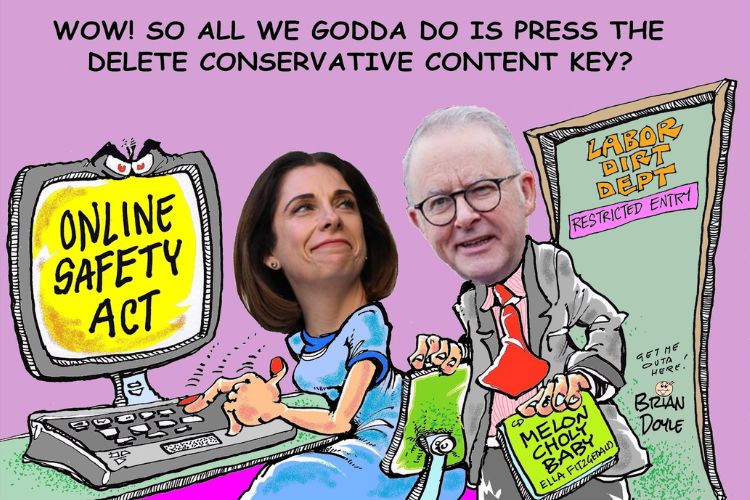
Australia’s proposed digital duty of care laws promise greater online safety and increased user control by switching off algorithms, but critics warn they could give ministers sweeping powers to restrict lawful content and threaten free speech.

16 October 2026
2.6 MINS
Euthanasia accounted for 4% of all deaths in Belgium in 2025, with growing numbers involving people who were not terminally ill, dementia patients and psychiatric conditions.

16 October 2026
5.2 MINS
Christa Pike’s botched execution has sparked outrage across America, but critics argue that the same concern for human dignity is denied to abortion survivors.



Great article!!!!
Well written article on an important subject