


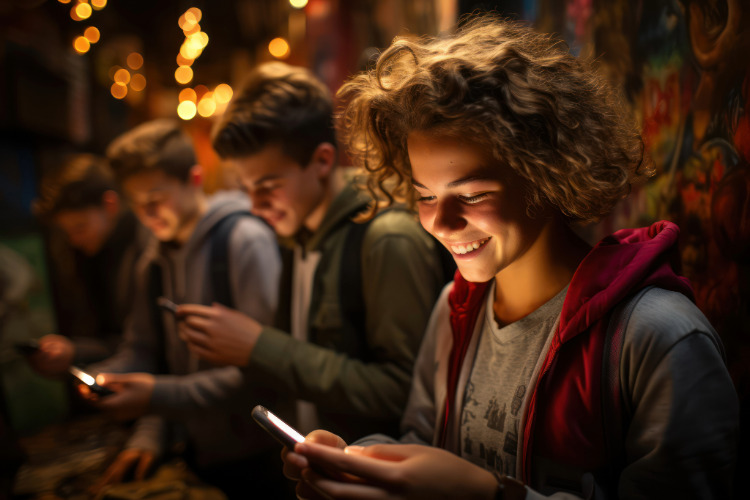
From a 16-Year-Old: The Social Media Ban Will Not Work
A 16-year-old critiques Australia’s under-16 social media ban, questioning its effectiveness, government overreach, data security risks, and whether empowering families—not laws—is the better solution.
On 10 December 2025, people under the age of 16 were banned from creating new or using existing social media accounts. Public opinion is mixed, with some people believing this is an important development in protecting teens from the harms of social media, while others say that the government should make decisions that impact parents’ authority.
As a 16-year-old, although having narrowly escaped the ban, I do believe there will be effects on everyone who uses social media. Specifically, there are three very prominent concerns when it comes to how this law will actually work and the repercussions it could have.
1. No Comments, No Contact, But Still Content?
Perhaps the biggest and most confusing issue is that social media is not technically banned, but rather creating an account. While it is true that some social media platforms, such as Snapchat, Instagram, and Facebook, require accounts to access content, two huge and arguably the most used social media platforms, YouTube and TikTok, do not.
To access content, click, scroll, and watch; you do not need an account. You can still download TikTok and YouTube on your phone and scroll at any time and for any length of time. If the purpose is to get teens off social media, why create a ban that still allows access to two major social media platforms? The algorithm is clever; even without an account, it can feed teens content and creators that they want to consume.
However, without an account, you can’t post, you can’t comment, you can’t engage and share opinions, and you can’t connect with friends and family. Having an account does make cyberbullying, online grooming, cyberstalking, and harassment easier, which are admittedly prevalent concerns.
However, by far the aspect of social media that is contributing to the most mental health problems among teens is the endless doomscrolling, comparison, and the harmful types being consumed, and this is still available.
This law is still taking away what is perhaps the most positive part of social media: having a voice. Sharing, commenting, connecting with friends, and sharing your opinion through content. Even if this is only done with a small group of friends on a private account, out of all the features of social media, it is the least harmful.
2. Government Reach
As famously said by Abraham Lincoln, “The legitimate object of government is to do for a community of people, whatever they need to have done, but can not do, at all, or can not, so well do, for themselves, in their separate, and individual capacities. In all that the people can individually do as well for themselves, government ought not to interfere.”
In other words, the government should do what the people cannot and what the people can do themselves, they oughtn’t to. Parents are capable of regulating social media for their children, and to an extent, teens themselves are too.
Anthony Albanese states that this is giving families a choice, saying this is about families taking control and asserting our authority as a society. But how can that be true? The government has made this choice; they are taking control, not teens, not families. Is there so little trust in the Australian people that the government now needs to take action in areas that were formerly considered a parenting issue?
To be clear — yes, there are concerns social media raises, and yes, parents should get more involved in helping teens find solutions, but that’s the point: parents should. Despite Albanese stating that the aim is to “back parents up”, saying that there will be more support for parents because now, when they encourage their children to get off social media, they will be backed by the country’s law, there is also an argument against this.
For example, a teen who is addicted to drugs and alcohol will not simply stop because it’s illegal. If parents find out that their child is taking drugs, they will likely get angry and could bring up the fact that they are doing something illegal, but will that make the teen any more likely to comply, or will it make them more resentful?
There is almost always a root cause; teens don’t just drink alcohol and take drugs for no reason. And, while parents might find it convenient to believe otherwise, teens don’t just get addicted to social media; it is deeper issues within families and relationships that lead children to use coping mechanisms, and addressing those would be far more effective than banning the coping mechanism.
Perhaps the government would be better engaged in finding ways to lower housing, fuel, and food prices so parents actually have more time again to spend raising their own children: To learn more about them and what could be fueling their social media addiction.
3. Data Leaks
What should seriously concern us is that, when verifying age on social media platforms, we will now potentially need to prove our identity and age. This could be done by uploading our personal documents onto social media, such as our passport, birth certificate, or driver’s license. However, with data leaks becoming more common than one might think, this could potentially become a major security issue.
Or if not identity documents, you will likely have to scan your face into an AI software, which then estimates your age before you can open an account. If this method is used, that raises a whole other conversation on which software is used, how those photos are stored, and what exactly is done with them. Likely, there will be a mix of both methods, raising concerns with both options.
In 2020, researchers discovered an unsecured database containing roughly 235 million scraped Instagram, TikTok, and YouTube user profiles.
This included people’s names, photos, account details, age, gender, and more. This kind of information can eventually find its way onto the dark web, where it is sold, leading to identity theft, financial fraud, scams, blackmail, and such. Billions of leaked account details and credentials are already circulating on the dark web.
This in itself is already extremely concerning, but now imagine the repercussions of leaked identification documents such as IDs, birth certificates, and passports. Think about it: birth information, private document numbers, your address, photos, and signatures. With data leaks more common and dangerous than is generally thought, if this were to happen, it could risk becoming an issue of national security.
Empowering Families
While I certainly agree that social media holds issues of real concern and threat and does have a significant and often negative impact on the health of teens, I do not believe this is a government issue.
As a teen who was on social media throughout the beginning of my teen years, I would now consider myself relatively good at limiting social media; however, it was not always that way, and I know firsthand the dangers that can arise when you are on social media too much, both with the content you watch and the influencers you follow, but also cyberbullying, receiving messages from strangers.
Not all or even most teens should be on social media. But I also don’t consider this an issue that our government should or even can solve; both children and parents need to be informed and empowered to learn and deal with social media, both the negatives and positives, and our government’s focus, in my opinion, should be on giving the power back to the families by working to make positive impact on the thing that they actually have power to change.
___
Image courtesy of Adobe.
10 Comments
Leave A Comment
Recent Articles:

30 September 2026
2.8 MINS
Steve Grace’s Eternity Truck is bringing music and the Gospel beyond church walls, taking a mobile concert stage to remote communities and country towns.
30 September 2026
3.2 MINS
In an increasingly secular and pluralistic Australia, Christians must recover their confidence in proclaiming Jesus Christ as the unique, sufficient and only Saviour.

30 September 2026
3.8 MINS
The Government says online safety requires accountability, yet its proposed powers would let the eSafety Commissioner create anonymous accounts and AI-generated material.
30 September 2026
5.2 MINS
Globalism and nationalism shape how we understand nations, sovereignty and world affairs. But what does Scripture reveal about this tension—and its prophetic significance?

30 September 2026
6.3 MINS
An elderly Christian woman’s disputed death under Canada’s MAiD system raises troubling questions about consent, safeguards, family involvement and the value placed on human life.

29 September 2026
15.9 MINS
Western Christians must carefully consider Palestinian Christian claims about Israel, the legacy of dhimmitude, and how fear and persecution may shape today’s political narratives.
29 September 2026
16.3 MINS
Feminism challenged genuine injustices, but its legacy also reshaped Western ideas about sex, authority, autonomy and human nature in ways Christians must reconsider.



All the ID we may have to supply will lead to bank accounts being clean out, Identity fraud and who knows who will impersonate us once they have our photos, birth and passport details , etc. What a nightmare our govt. is creating for us . The worst govt. ever !
Fraud -with the signature and property details , etc ,Real Estate is no longer protected from transfer to person(s) unknown This digital world is a nightmare.
Fine article by Selah. Reporting from the front line, literally.
If this ban was effective we’d be hearing more from eJulie than ‘I wanna get out of here…’
Thanks for reading my piece. It’s intentionally written from a young person’s perspective because the policy is aimed at young people. That said, I’m 16 and not actually included in the ban. Regardless of my age, the article focuses on three concerns about the effectiveness and consequences of the policy rather than personal complaints. If you disagree with those points, I’m happy to discuss them.
‘As a 16-year-old, although having narrowly escaped the ban, I do believe there will be effects on everyone who uses social media. Specifically, there are three very prominent concerns when it comes to how this law will actually work and the repercussions it could have.’
1. No Comments, No Contact, But Still Content?
So how has this had an effect on everyone who uses social media? You freely admit that teens can no longer create and post content. And isn’t that one of the main purposes of the legislation?
Sure they can still view it, much in the same way they can view TV,
Sadly, you seem to have completely missed the point on this one.
2. Government reach.
Do you think it’s wrong that the government tells us that our kids under 18 are not allowed to drink alcohol?
Yes or no?
It’s all very well to take pop shots at the government. With your example of a teen who is addicted to drugs or alcohol you seem to suggest that the onus still rests with the family.
Listen, the law provides substantial weight for parents to say to kids – ‘No, I don’t want you talking to that 46 year old on Facebook every night because it’s actually against the law ‘.
3. Data Leaks.
This point is almost childish, and I get that this where your championing of the fact you are so young, yet sounding like you are one of your parents brings you undone.
You’re 16, do you not engage in regular bank transactions online? Or no? This whole argument seems to come from your mum and dad who are still so scared of the internet they take their banking to their local branch wrapped in a bread bag.
You said it will have an effect on everyone but failed to detail how.
So my question is: how will this affect over 16 year olds?
My answer is ‘not in the slightest.’ I anticipate yours to be the same.
4. Empowering families.
Well I guess this is where you admit that the legislation actually does empower families.
‘I don’t care whether all your friends are on it, it’s illegal’
You seem to offer no counter argument.
Anyway. Great to get a 16 yo opinion, but just wait until you’re a parent yourself. I wonder then whether your attitude would change.
I’ve never understood why Daily declaration is so opposed to this legislation.
It comes down to the idea that the government wants to provide parents with the basis to say:
‘No, you’re 12 years of age, it’s illegal for you to have a Facebook account’.
End of story.
But for some reason no, Daily Declaration believes that the voice of a 16 yo is the most important one.
Funny that. Seems that the voice of a teenager is more important than the voice of the parents.
‘Mum, Dad, even though I’m only 14 I’ve met a 64 yo in Brighton on Facebook and I’m going there to live with him starting from tomorrow’
‘OK love, well I guess there’s nothing wrong with that, there’s no law against it, and Daily Declaration even had a 16 yo endorsing this sort of stuff.’
As parents we should be applauding this ban.
Who knows what twisted, sick intentions Daily Declaration have in opposing it.
Thanks for taking the time to read my article. I understand that protecting teens is important and that the law is meant to support parents, let me clarify a few points.
When I say this law could “affect everyone,” I don’t mean access to social media. I mean the data and privacy risks. Age verification methods like uploading IDs or using AI face scans could put very sensitive information at risk. If those systems are breached, it is not just under-16s who are affected. You said this perspective is childish but did not provide a counterpoint. There is a clear difference between social media and internet banking. The social media ban does not mandate a standardized way of enforcing the law. Platforms like Instagram, TikTok, and Snapchat decide how to verify age. Banks are under strict government regulations about storing and using data and cannot choose their own security methods. Social media platforms operate under different rules and much less oversight, which makes the risks and enforcement very different.
This is different from alcohol laws. Alcohol is a physical product controlled at the point of sale. Social media is digital and mostly accessible without an account. Enforcement is much more complicated.
I write from a teen perspective because I have grown up with social media and understand how it is used. This does not make my opinion better or worse than a parent’s. Teens cannot speak for all teens and parents cannot speak for all parents, but we can offer insights from experience. Many teens feel disconnected from their families.
In my opinion, a better approach is for parents to spend time with their children, talk to them, and teach them about the risks of social media so that when they do get an account they know how to use it safely. The law might reduce some issues but will not solve the underlying ones. Parents and families are best placed to manage these challenges.
I do not speak for the Daily Declaration but I am sure they would accept an article from a parent’s perspective, whether agreeing or disagreeing with my view, just as they accepted mine. Both perspectives are important and offer different insights.
Love the way you think Selah – and the gift you have of presenting it so well.
Thank you.
‘I write from a teen perspective because I have grown up with social media and understand how it is used.’
Please don’t be so condescending.
I joined Myspace in 2003. Before you were born. Please don’t think that because you’ve been on social media for eight years or whatever and because you’ve got liberal parents you’re somehow in some cocky position that you can lecture the rest of us.
Sure you can scoff at me for being on Myspace, and make fun of me for being on social media for more than 22 years. Why? Oh because apparently you’re a 16 year old and you have the last say on the matter.
Precociousness is not a virtue.
If you were for the ban there is no way Daily Declaration would publish your article. End of story.
My parents gave me alcohol in small amounts under their authority as a child. I left home and mixed with other young adults who took to grog like it was an imperative for survival. I couldn’t understand it! With children of my own , we did the same thing- neither liked the grog and we didn’t push them and today only one drinks occasionally.