


Postcards from Mothers Living on Lebanon’s Front Line
On 2 March, Hezbollah, the Shia militant group in southern Lebanon attacked northern Israel with drones and rockets to demonstrate their support for Iran. The Israeli Defense Force responded by bombing Beirut and villages across the border.
It also advised Shia Lebanese living south of the Litani River to abandon their homes. A million people have fled amid widespread demolitions of villages.
The IDF has said that the refugees will not be permitted to return for some time. No one knows how long that will be.
Southern Lebanon is largely Shia Muslim, but there are a handful of predominantly Christian villages – Melkite Catholics, Maronite Catholics and Greek Orthodox. These have been spared, along with Druze villages, as they were not harbouring Hezbollah militants. But their residents have been cut off from the rest of the country; they live on islands in a sea of destruction.
Christians living alongside Shia have had to abandon their homes, together with their neighbours.
The Catholic Weekly was able to contact some people caught up in this tragedy.
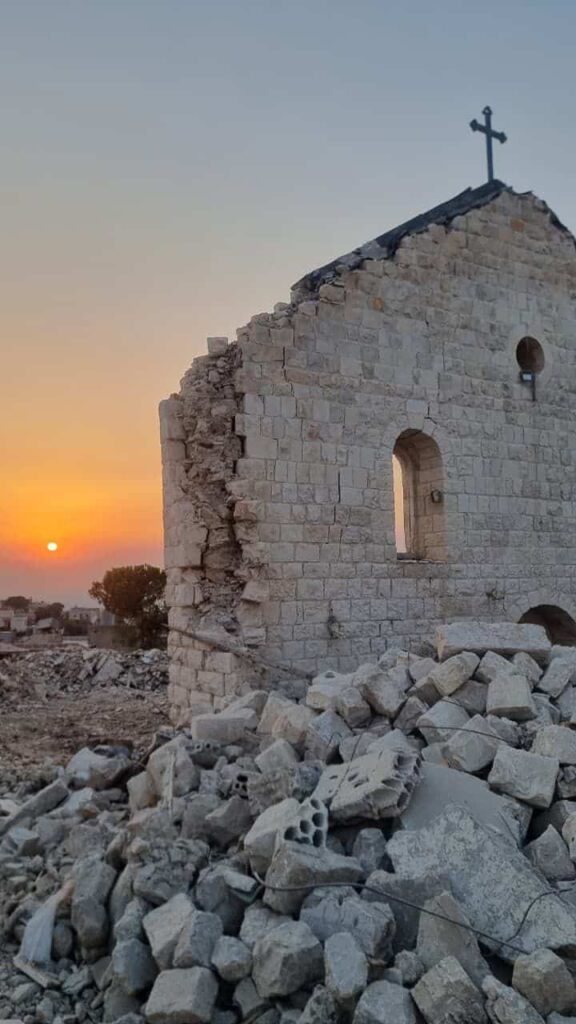
A church destroyed in Yaroun where Fadi is from. Photo: Fadi.
Teddy Norbert Wakim, a Melkite, is from Tyre, an historic city of about 60,000. It is about 75 per cent Shia, but there is an established Christian presence.
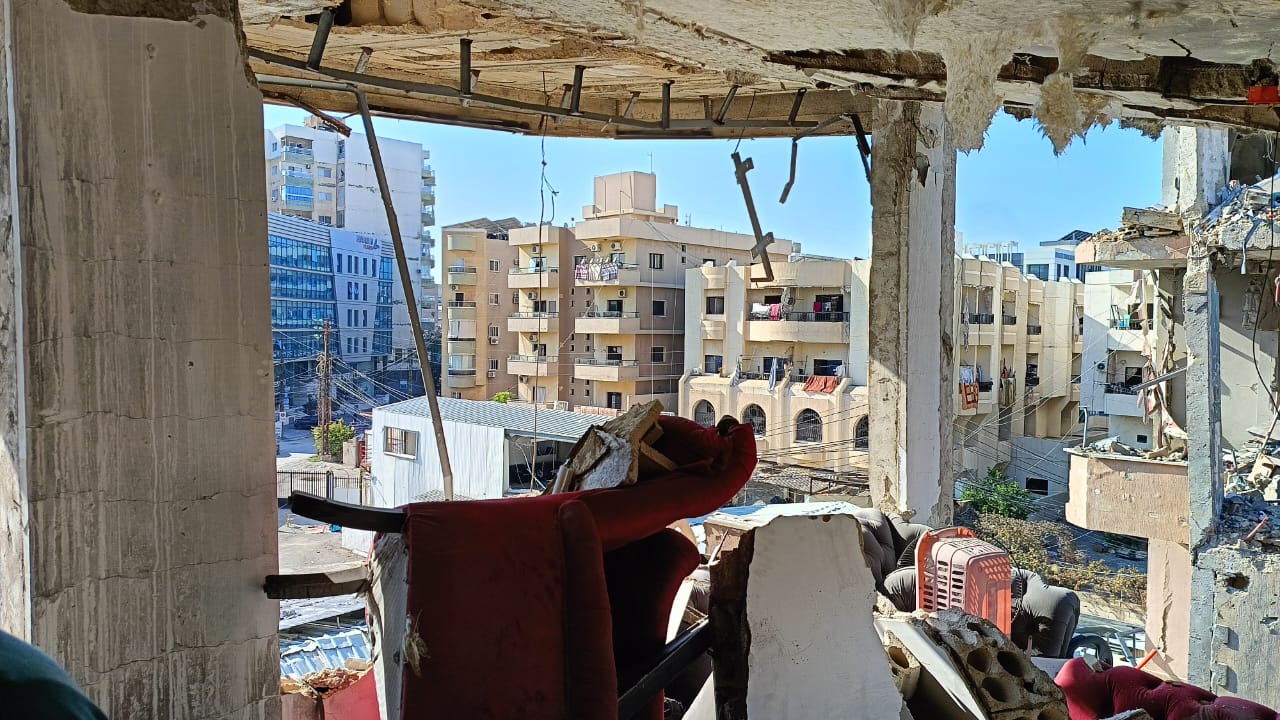
Due to the recent war, my home was bombed and completely destroyed. I was forced to flee my city and I am now displaced in Awkar. I am living with my family. We are four people: myself, my wife, and our two children.
We have lost our home, our belongings, and our sense of stability. Being displaced far from our hometown has made this situation even more difficult for us as a family. Despite everything, I still hold on to hope. Hope to one day return, rebuild my home, and restore our life.
Fadi Hanna, a Melkite, comes from Yaroun, a small village overlooking the border. It is about three-quarters Shia. The IDF has demolished most of its buildings, including a convent.
Yaroun is not just a village of stone houses; it is a memory built over generations. The old and historic homes disappeared, walls that once carried stories, family warmth, and the spirit of the village. Even the convent, a symbol of peace and service, was not spared from destruction. Our own house was also destroyed, and with it we lost more than a building, we lost a part of our history and memories.
In 2025, we returned and repaired our home with hope in our hearts. For a brief period between the two wars, we lived in it again, holding on to a sense of normal life and reconnecting with the place we love. The people of Yaroun were displaced and forced to leave behind their daily lives, yet their hearts never left the village.
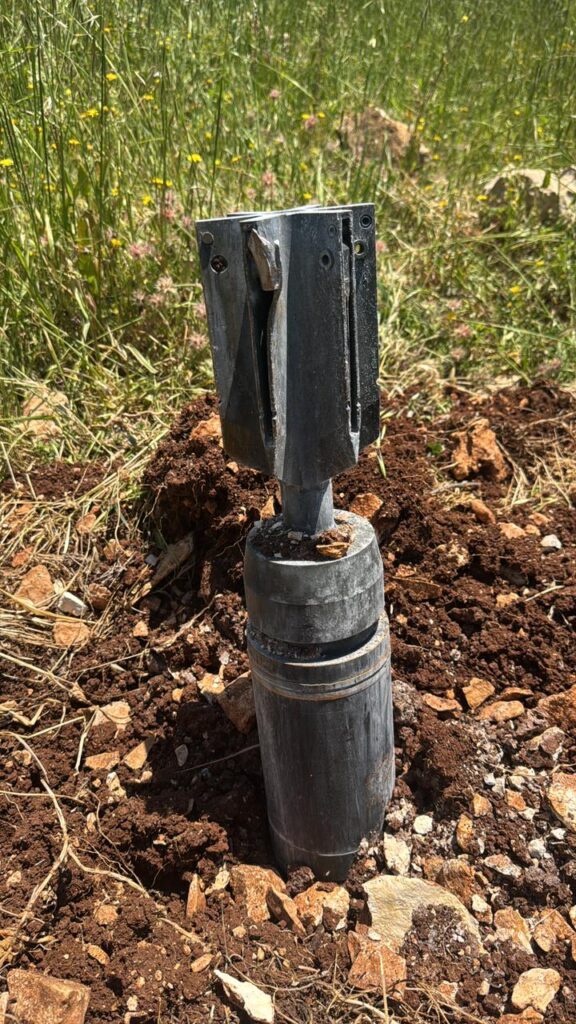
Missile 100 metres from Laurita’s home. Photo: Laurita.
Despite the pain, hope remains that one day we will rebuild Yaroun even more beautifully than before, and that the homes still standing will be preserved, waiting for their people to bring life back to them once again.
Laurita Jarjour is from Rmeish. She is a French teacher married to a lawyer, Sarkis Ghanatos.
I am 35 years old and a mother of three children: George, Jad, and Rina Tanios. For years, we have endured extremely difficult and compounding circumstances. It began with the economic crisis and the collapse of the national currency, followed by the war with Israel in 2023. Today, in 2026, the war has returned in a harsher and more devastating form.
In 2023, we were forced to flee to Beirut. However, we could only stay there for two days for several reasons. My children could not adapt to city life, as they are used to the freedom and wide spaces of our village.
We also do not own a home in Beirut and are not accustomed to living in shelters or schools. Furthermore, our deep attachment to our land and home, along with our fear of losing our property and livelihood, pushed us to return and remain in Rmeish, determined to protect our homes and prevent our town from being destroyed like many others.
Children here are suffering from extremely difficult psychological conditions. As a mother and a social counsellor, I used to work across five different schools before March. Since then, I have been providing remote psychological support sessions to students. The fear they live with is painful—constant exposure to the terrifying sounds of war deprives them of even the simplest joy, such as playing safely outside.
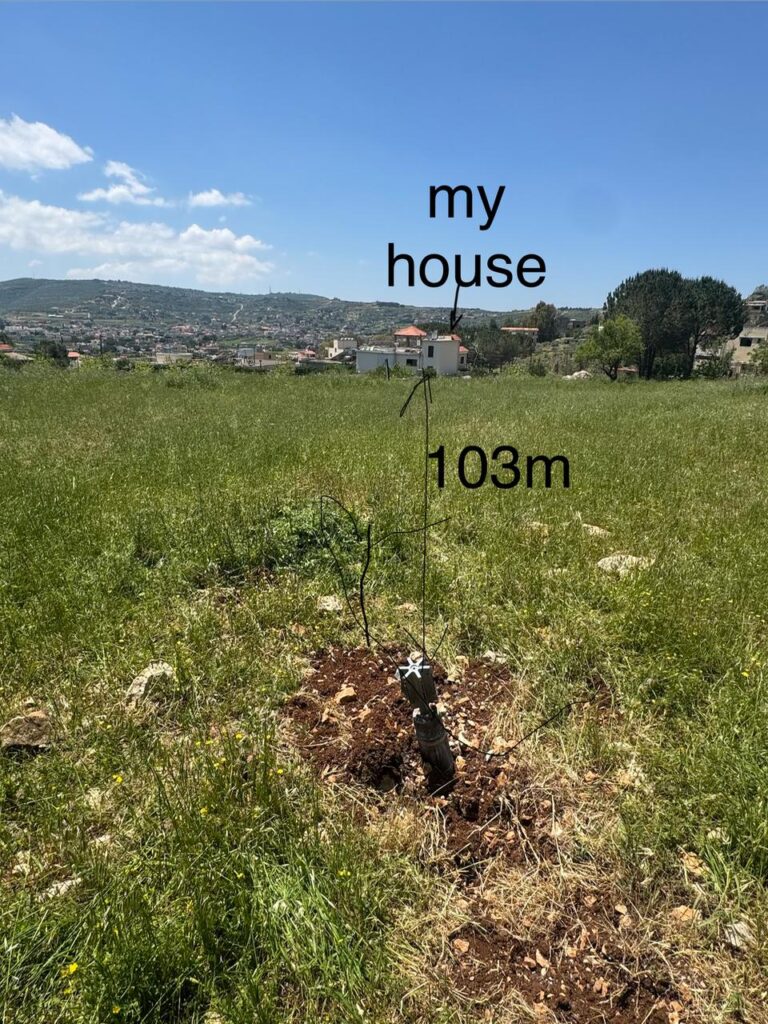
Map of the missile that landed 100m in front of Laurita’s home. Photo: Laurita.
My four-year-old daughter wakes up crying and terrified in the middle of the night because of the loud explosions that shake our entire home. One student told me he is afraid he may not see his father for years because the roads are cut off. Another asked how his family will survive and meet their basic needs when there are no banks available and we are under siege.
The other day, a missile landed just 100 meters from our home. Fortunately, it did not explode, but the impact on my three children has been profound. They are living in constant fear; they are too afraid to play outside, they struggle to sleep through the night, and they refuse to leave my side throughout the day.
We endured a blockade for more than 20 days, during which no supply convoys were allowed to enter. This caused a severe shortage of essential items, including fruits, vegetables, meat, and even medicine. Children have begun to long for basic necessities that should be normal in any human life, such as tomatoes, cucumbers, and chocolate.
We also lack access to healthcare. The nearest hospital is in Sidon, about an hour and a half away, and reaching it requires prior permission, which can take several hours. Schools were closed for two months, and only recently reopened during a ceasefire, giving children a fragile hope of completing the academic year.
Today, we are besieged in Rmeish, cut off from surrounding villages, with access only to the nearby Christian town of Ain Ebel. We also face harassment and threats on social media, which deepens our fear and insecurity.
There is a collective sense of grief and despair in our town, along with a deep fear of an uncertain future. We fear being accused or punished simply for staying in our homes. We fear prolonged occupation or being forced to leave our houses. We are left with many unanswered questions and constant anxiety about what lies ahead.
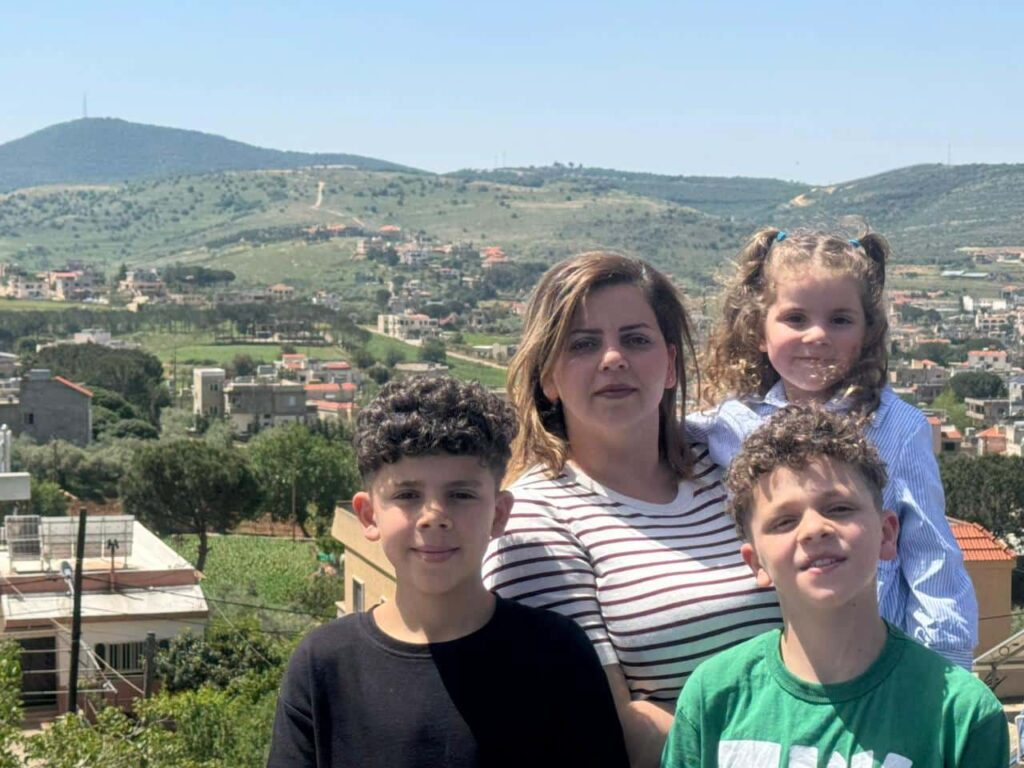
Laurita and her family. Photo: Laurita.
I have always been deeply attached to my land and my country, and I never imagined that I would one day consider leaving. But today, after everything we have endured, I no longer see hope for a near future in this country that has been exhausted by years of war and crisis. And if hope exists, it will take many long years to become reality – years that we, as a people, can no longer endure.
We are not asking for much. We simply want a dignified life for ourselves and our children. From here, I appeal to the Australian government to consider our extremely difficult humanitarian situation and to open the door for humanitarian resettlement for the people of Rmeish. We are a people who value life, education, and progress—things that our homeland is no longer able to provide.
Gloria El Hajj wrote from Rmeish, a Maronite village, to explain the situation of people living there.
Before March of this year, Rmeish was home to around 7,000 residents. Since the escalation of the Israeli war, the population has decreased to approximately 6,000. Despite this decline, the village has also welcomed displaced families from nearby areas such as Yaroun and other neighbouring towns, seeking refuge from the violence.
For many residents, leaving is simply not an option. Their decision to stay is rooted in a strong sense of belonging, attachment to their land, and a determination to protect their homes and properties.
Children in Rmeish have grown up under the shadow of conflict. After nearly two years of continuous tension with Israel, the sounds of warplanes and explosions have become part of their daily reality. What is most heartbreaking, residents say, is that children have adapted to this environment.
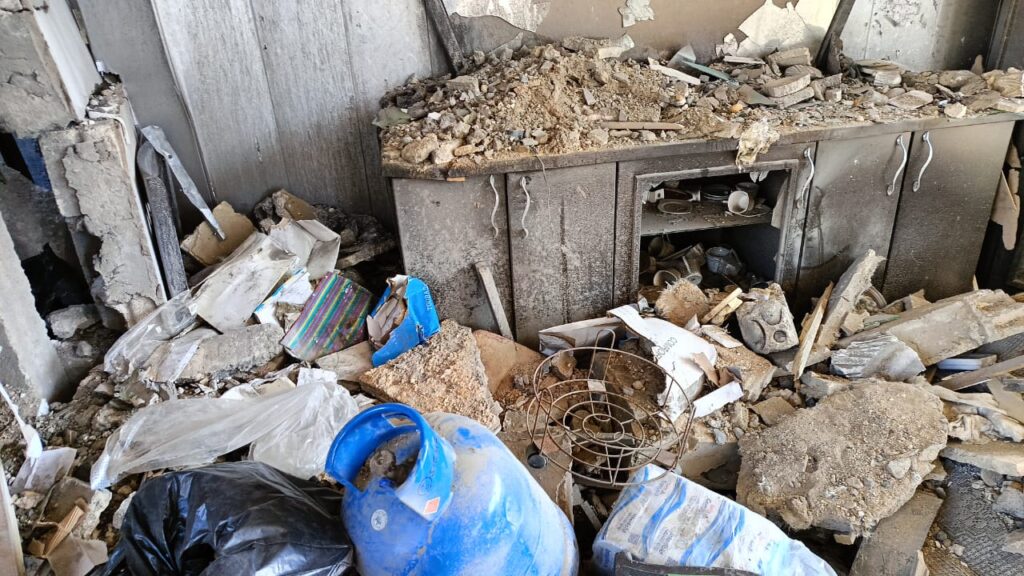
A million people have fled amid widespread demolitions of villages. Photo: Teddy.
Daily life has also become increasingly difficult. Supply shortages are affecting local supermarkets, particularly in fruits and vegetables, due to blocked roads and restricted movement. Residents are unable to travel freely to nearby villages or even to Beirut to secure essential goods, further isolating the community.
Despite the hardships, hope remains strong. The people of Rmeish draw strength from their faith, identifying themselves as “children of Christ” and “people of hope.” They firmly believe that the future can improve and that divine intervention will guide them toward better days.
Their message to the world, and especially to Australians, is clear: the suffering of Christian communities in the region must not go unnoticed. Living in what feels like a form of exile within their own land, they continue to endure through faith and resilience. Yet, beyond survival, they strive to uphold a deeper mission—spreading love and peace, even in the face of adversity.
Monica El Hage writes from Rmeish.
I am a mother of two young daughters. They are very affected by the current situation, especially by the sound of shelling and the general instability, which causes them a lot of fear. At the moment, both my husband and I are not working, as professional life in the village has largely come to a halt.
However, my husband, Zaher Mansour, owns a truck and is currently coordinating with some organisations to help transport aid and supplies to the area. This is the only work he is able to do under the current circumstances.
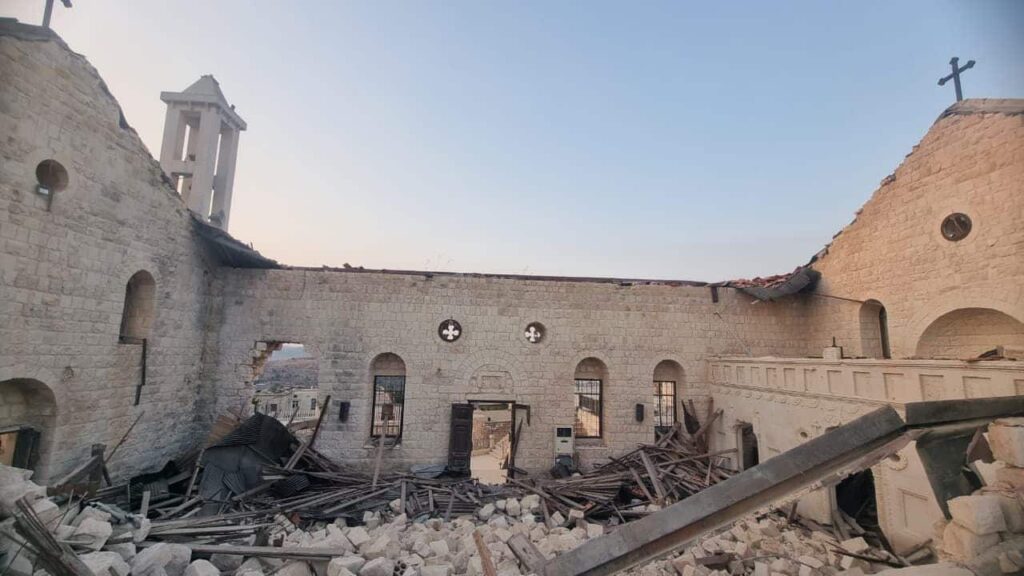
Christians living alongside Shia have had to abandon their homes together with their neighbours. Photo: Fadi.
Before the recent escalation earlier this year, the town of Rmeish had a stable population of residents, including families who have lived there for generations. Since the situation worsened, a number of families have temporarily left the area seeking safety, while others have chosen to remain despite the challenges.
Those who stayed often did so because of strong attachment to their homes and land, or due to limited alternatives. Children are living under stress and uncertainty, and their daily routines have been disrupted, especially regarding education and normal social life.
The town has become almost isolated. While some food and medical aid does reach us, it is not enough to meet all needs. The most serious issue is the lack of a safe route to Beirut or to properly equipped hospitals. In case of any medical emergency, we do not have the necessary facilities for treatment here, which poses a real risk to people’s lives.
The situation with surrounding areas is sensitive and complex. In general, people are trying to avoid tensions and focus on maintaining safety and coexistence as much as possible.
Like many Lebanese, residents hold on to hope that the situation will improve, although the future remains uncertain. There is a strong desire for stability, peace, and the ability to live normal lives again.
A message to Australians would be one of solidarity and humanity. Any awareness, support, or humanitarian assistance can make a meaningful difference for families affected by the current situation.
How You Can Help
The Melkite Charitable Foundation has organised an Emergency Appeal for Lebanon.
The Maronite Eparchy, together with Maronites on Mission Australia, has launched an emergency appeal for families in southern Lebanon.
___
Republished with thanks to The Catholic Weekly.
Featured image: Teddy’s house was bombed and completely destroyed. Photo: Supplied/Teddy.
One Comment
Leave A Comment
Recent Articles:
19 October 2026
6.7 MINS
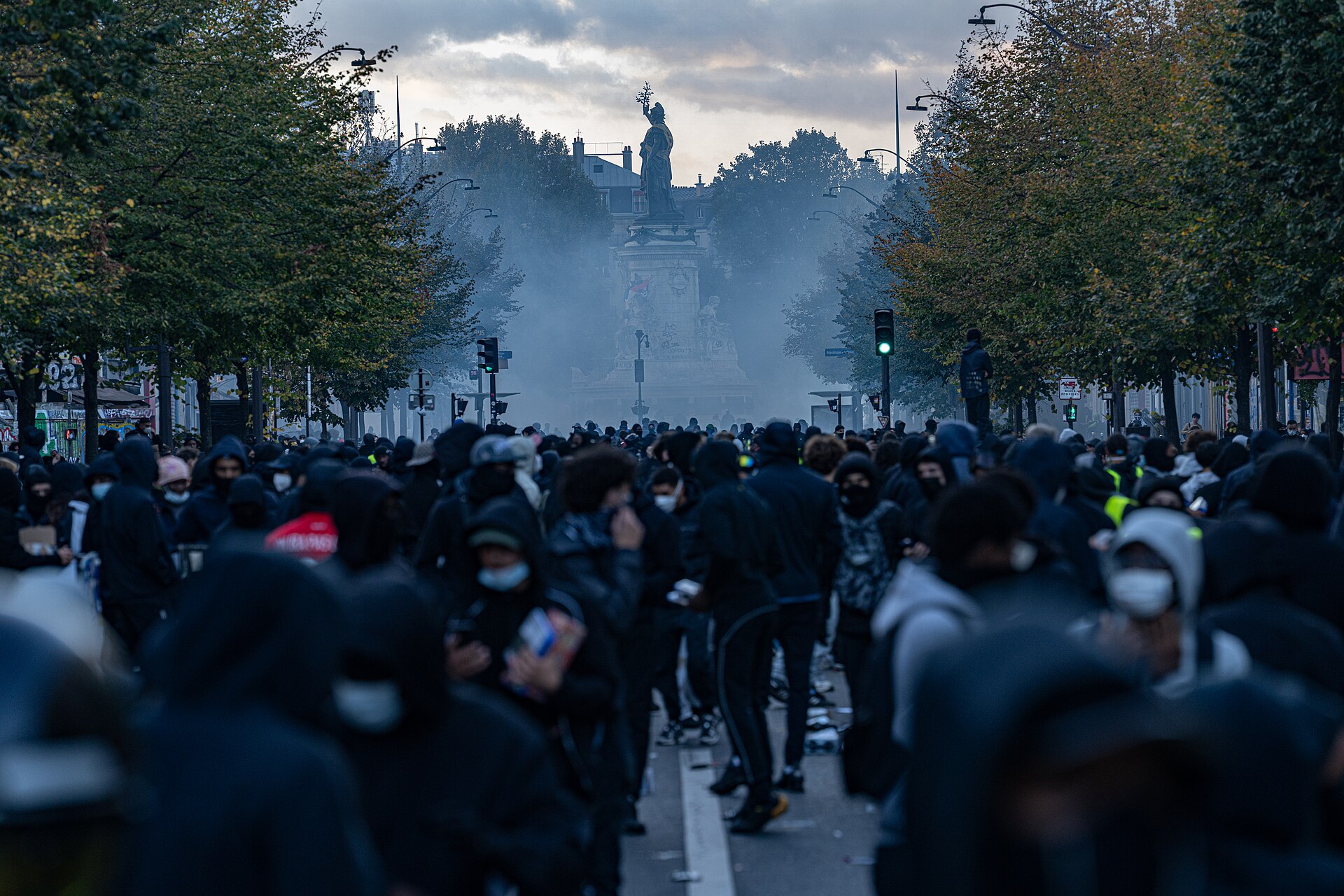
Europe’s escalating unrest raises urgent questions about immigration, national identity, secularism and the decline of Christian influence, prompting calls for repentance, prayer and renewed leadership.
19 October 2026
7 MINS
Western Australia’s euthanasia deaths have surged, prompting calls for an urgent inquiry amid concerns about doctor shopping, waived safeguards, limited palliative care and proposed legal expansion.

19 October 2026
12.4 MINS
Greta Gerwig’s "Narnia: The Magician’s Nephew" trailer raises questions about C. S. Lewis’s Christian vision and the faithfulness of the new Netflix adaptation. Here are my initial impressions and concerns.
19 October 2026
2.7 MINS
The UK Greens’ vote to define Zionism as racism has exposed deep divisions within the party, raising questions about its future leadership and political direction.
19 October 2026
3.3 MINS
Discover why dads make a unique difference in their children’s lives, and how the Dads4Kids Fun Camp creates lasting memories through adventure, connection and fun.
19 October 2026
3 MINS
Paul prayed that we would be awakened to a deeper revelation of the Father and who we are in Christ, so that we will make Jesus known to others more passionately.
18 October 2026
2.7 MINS
Every season of life belongs to Christ, and we don't retire from discipleship as we grow older. In fact, our older years hold unique gifts for the younger generations.



Thanks Michael. Prayers and donation coming.